A Pallet Storage Racking System gives warehouses a disciplined way to use vertical space, protect inventory, and improve pallet access. Instead of spreading goods across the floor, operators can create clear storage levels above each other. A 48-by-40-inch pallet may occupy a defined bay, while forklifts move through planned aisles with fewer obstructions.
The value is practical.
Warehouse consultant and operations expert Taiichi Ohno stated, “Without standards, there can be no improvement.” This principle applies directly to pallet storage. Rack height, beam capacity, pallet condition, aisle width, and loading procedures should follow documented standards. A reliable system also needs visible load notices, stable floor anchoring, proper pallet placement, and scheduled inspections. Small details matter. A damaged beam can affect an entire bay.
Experience shows that the cheapest layout is not always the safest or most efficient. A narrow aisle may increase storage density, yet it can reduce maneuvering room for certain forklifts. A taller rack may create more capacity, but it can demand stronger equipment, better training, and stricter inspection routines. These trade-offs deserve honest evaluation.
No system is perfect.
A strong Pallet Storage Racking System should match the building, pallet dimensions, product weight, handling equipment, and daily workflow. It should also leave room for change. Inventory profiles shift, and rushed expansions often create weak points. Careful planning, competent installation, and regular review help turn storage racks into a dependable operational asset rather than simply a steel structure.
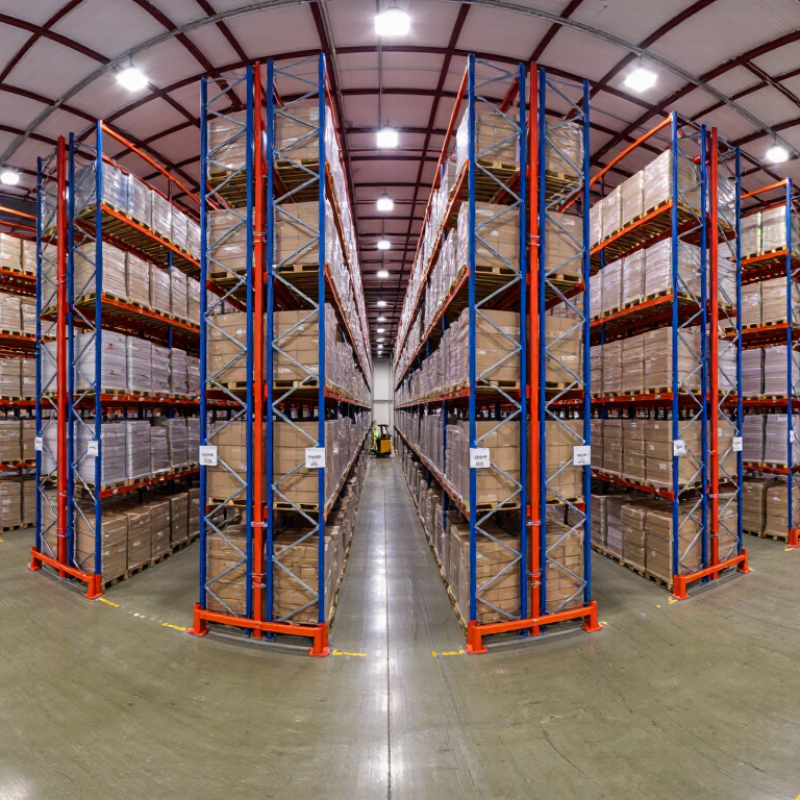
A pallet storage racking system is a steel framework designed to hold palletized goods on horizontal beams. Forklifts place pallets into elevated storage positions, while aisles provide access for inspection and retrieval. Upright frames carry vertical loads, and beams support the pallets. Depth, height, aisle width, and load capacity must match actual warehouse conditions.
The system can increase cubic storage without expanding the building footprint. MHI’s 2024 Annual Industry Report reported that 55% of supply chain professionals expected to increase technology investment. Racking is not automation, but accurate locations make inventory control more practical. In a working warehouse, clear beam levels and visible labels can reduce searching, especially during busy receiving periods. One pallet in, one position recorded.
Safety remains central. OSHA guidance requires employers to maintain a safe workplace, while industry practice recommends regular rack inspections and documented load limits. A qualified assessment should review floor strength, seismic conditions, forklift reach, and pallet quality. Small details matter. Bent frames do not become safe through optimism.
The system is not a universal answer. Slow-moving goods may justify deeper storage, while fast-moving products often need shorter travel paths. A poorly planned layout can waste aisle space and create handling delays. Warehouse teams should measure real pallet dimensions, not rely on ideal specifications. Even experienced planners can miss seasonal peaks. That oversight deserves correction before installation.
A pallet storage racking system turns floor space into a visible inventory map. Each bay gives pallets a defined location, making receiving, picking, and replenishment easier to control. In a busy warehouse, workers can spot open positions instead of searching behind mixed stacks. Clear aisle widths also support safer forklift movement and consistent travel paths. That matters during peak hours.
Organization begins with a practical location code. Labels should identify the aisle, bay, level, and position. A barcode or readable sign can connect each pallet with inventory records. Heavy pallets belong on lower levels, while frequently picked goods should stay near active work areas. Slow-moving stock can use higher positions, provided inspections and equipment limits allow it. This arrangement reduces unnecessary handling and helps staff check quantities faster.
Good racking does not fix poor inventory habits. Damaged pallets, inaccurate counts, and unrecorded moves still create confusion. Teams should inspect beams, uprights, anchors, and load labels routinely. Changes must be recorded immediately. No layout is perfect. Seasonal demand may expose wasted space or congested aisles. Reviewing pick times and misplaced pallets can reveal where the system needs adjustment. In practice, a slightly less dense layout may work better when it improves visibility, access, and safe daily handling.
Pallet storage racking turns unused vertical space into organized capacity. It can keep cartons off the floor, protect aisles, and improve pallet access. Selective racking also allows operators to reach individual pallets without moving several loads first. This matters when products have different turnover rates or expiry dates. In practice, a clear rack layout can reduce searching, although poor slotting may create new travel time.
Safety is another key benefit. The U.S. Occupational Safety and Health Administration reports about 85 forklift-related deaths and 34,900 serious injuries each year. Proper rack design, visible load limits, guarded frames, and routine inspections can reduce avoidable risks. The system must match pallet dimensions, building height, floor capacity, and handling equipment. A rack is not automatically safe. Damaged beams still need immediate attention.
The MHI 2024 Annual Industry Report found that 55% of surveyed supply-chain professionals increased technology investment. Better racking supports this shift by creating consistent locations for barcode scanning and inventory checks.
Tips: measure pallets before ordering. Leave safe clearance around beams and sprinklers. Place fast-moving goods near dispatch areas. Inspect uprights weekly. Review the layout after seasonal changes, because yesterday’s efficient arrangement may become tomorrow’s bottleneck.
Choosing the right pallet racking configuration begins with your inventory, not the rack itself. Measure pallet dimensions, loaded weight, and stacking height. Record aisle width, column positions, sprinkler clearance, and forklift turning space. A warehouse drawing often exposes conflicts that a quick floor walk misses. Select frames and beams with documented load ratings. Never estimate capacity from appearance.
Selective racking suits varied products and frequent access. Drive-in systems offer dense storage, but they reduce direct pallet access. Double-deep layouts increase capacity, though they need suitable reach equipment and disciplined stock rotation. Very high buildings may benefit from narrow-aisle designs. Yet every extra metre adds operating demands. Check pallet condition, fire protection, floor strength, and local safety requirements before finalising the plan. A configuration can look efficient on paper and still slow daily work.
Tips: Map one typical receiving shift before choosing aisle spacing. Watch where forklifts pause, turn, and queue. Leave practical clearance around damaged pallets; real operations are rarely tidy. Ask an experienced installer or qualified engineer to verify anchoring, beam levels, and impact protection. Review the layout after a trial period. Some assumptions will be wrong. That is useful evidence, not failure. Good configuration balances capacity, access, visibility, and safe handling rather than chasing maximum pallet count.
Why Choose a Pallet Storage Racking System?
Installation, Safety, and Maintenance Considerations
A pallet storage racking system uses vertical space efficiently and keeps loads visible. However, safe performance begins before the first pallet arrives. Installers should verify floor strength, anchor positions, aisle widths, and maximum bay loads. Rack frames must stand plumb, with beams fully locked and protected from impact. ANSI/RMI MH16.1 guidance supports engineered design, proper anchoring, and documented load information.
Safety deserves constant attention. OSHA’s Powered Industrial Trucks eTool reports approximately 85 forklift-related fatalities and 34,900 serious injuries annually in the United States. Clear pedestrian routes, trained operators, visible load plaques, and controlled forklift speeds reduce daily exposure. The U.S. Bureau of Labor Statistics recorded 1,069 fatal injuries in transportation and material-moving occupations in 2023. Racking is only one part of that risk. Human decisions still matter.
Maintenance should be practical, frequent, and recorded. Inspect uprights, beams, connectors, anchors, and floor damage during routine warehouse walks. Replace damaged components, rather than straightening them casually. A simple log can show repeated impacts near one aisle. That pattern may reveal poor visibility or rushed work. One weakness remains: inspection records are often incomplete. It is easy to sign a checklist without looking closely. A better practice includes photographs, named inspectors, and immediate isolation of unsafe bays. Small gaps become expensive failures.
A structured inspection schedule helps keep pallet racking safe after installation. Daily operator checks identify visible damage early, monthly documented inspections support maintenance tracking, and an annual competent-person review provides a deeper assessment of the rack structure, anchors, beams, uprights, and load signage.
Planning basis: 365 pre-shift checks, 12 documented monthly inspections, and 1 annual expert inspection. Actual frequencies should be adjusted to site conditions, equipment use, damage history, manufacturer instructions, and applicable local regulations. OSHA requires stored materials to be stable and secure; EN 15635 is commonly used as a reference for annual expert inspection of steel static storage systems.
It is a steel framework that stores palletized goods on horizontal beams. Upright frames carry vertical loads. Forklifts place pallets into elevated positions.
It uses vertical space instead of expanding the building footprint. Clear levels and visible labels can reduce searching during busy receiving periods.
Measure pallet length, width, height, and loaded weight. Record aisle width, column positions, forklift turning space, and sprinkler clearance.
Selective racking usually suits varied products and frequent retrieval. Each pallet has direct access. This can shorten travel paths.
Drive-in layouts can store more pallets in a smaller area. However, they reduce direct access and require disciplined stock rotation.
Check frame condition, beam levels, floor strength, anchoring, and impact protection. Bent frames are not safe. Inspect them promptly.
Beam strength depends on design, spacing, materials, and actual loads. Use documented load ratings. A sturdy appearance proves very little.
Map one typical receiving shift. Watch forklifts pause, turn, and queue. Review the layout after a trial period.
Do not rely on ideal pallet sizes or average demand. Seasonal peaks may expose hidden problems. Some assumptions will be wrong. That is useful evidence.
A Pallet Storage Racking System is a structured warehouse solution designed to store palletized goods vertically and systematically. By assigning products to organized rack locations, it improves inventory visibility, supports efficient stock rotation, and makes loading, picking, and replenishment easier. Different configurations, such as selective, drive-in, or high-density layouts, can be selected according to available space, product characteristics, access frequency, and storage capacity requirements.
The main benefits include better use of warehouse height, improved organization, reduced handling time, and greater flexibility as inventory needs change. Choosing the right pallet racking configuration requires careful evaluation of pallet dimensions, load weights, equipment access, aisle space, and future expansion plans. Professional installation is essential to ensure stability and proper load distribution. Regular inspections, clear load limits, protective measures, and timely maintenance also help preserve system performance and create a safer, more reliable warehouse environment.