Cold Storage Warehouse Racking: High-Density Design, Metallurgy & Energy ROI
How global cold chain operators overcome low-temperature embrittlement, eliminate costly refrigerated air voids, and scale pallet throughput down to -30°C.
Cold storage facilities operate under some of the most unforgiving industrial dynamics in modern material handling. Storing goods at chilled (+0°C to +4°C), frozen (-18°C to -25°C), or blast-freezer levels (down to -35°C) turns conventional ambient warehouse racking into an acute operational vulnerability. When commercial mild carbon steels are subjected to prolonged sub-zero conditions, they cross the Ductile-to-Brittle Transition Temperature (DBTT). Micro-fractures propagate quickly under dynamic impact from reach trucks, while condensation cycles accelerate rust around base plates and mechanical anchors.
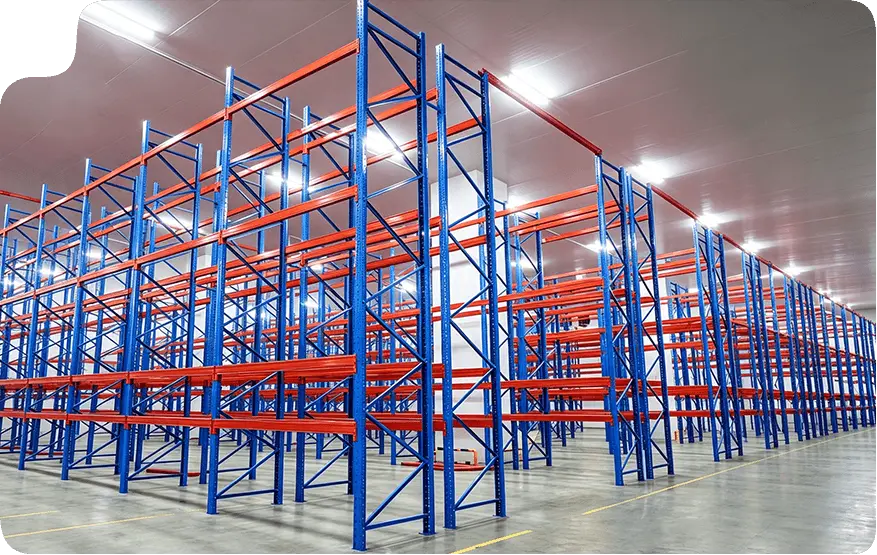
Every cubic metre of refrigerated atmosphere requires continuous kilowatt-hour consumption. In an ambient distribution facility, air space is cheap; in a temperature-controlled facility, empty aisle space represents pure operational loss. At Guangzhou Heda Shelves Co., Ltd., we treat cold storage warehouse racking as an integrated mechanical-thermal envelope. Our structural engineers balance physical density, convective airflow channels, ergonomic operator pick cycles, and specialized metallurgy to maximize your facility's long-term operational profitability.
High-Yield Certified SteelsGuaranteed impact energy absorption at -30°C
Refrigeration Airflow FluesEngineered longitudinal channels prevent hot pockets
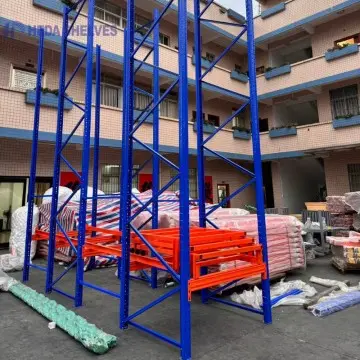
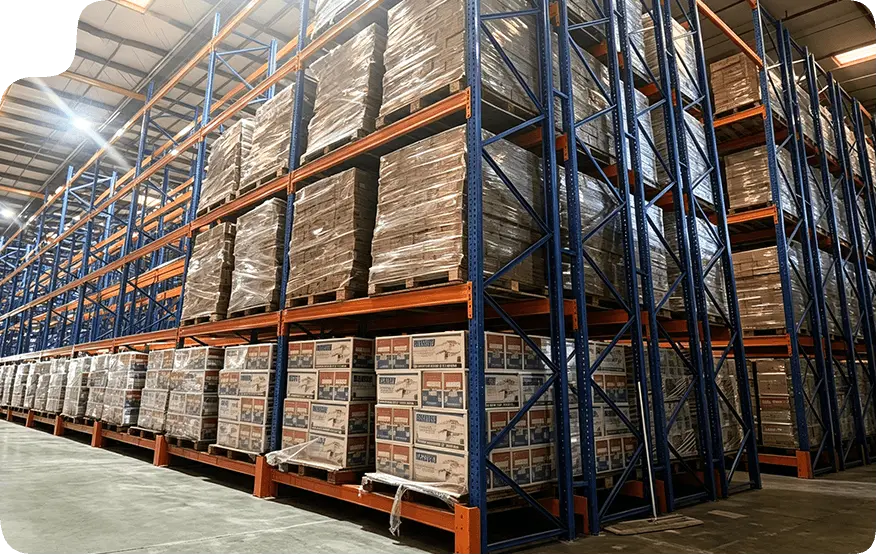
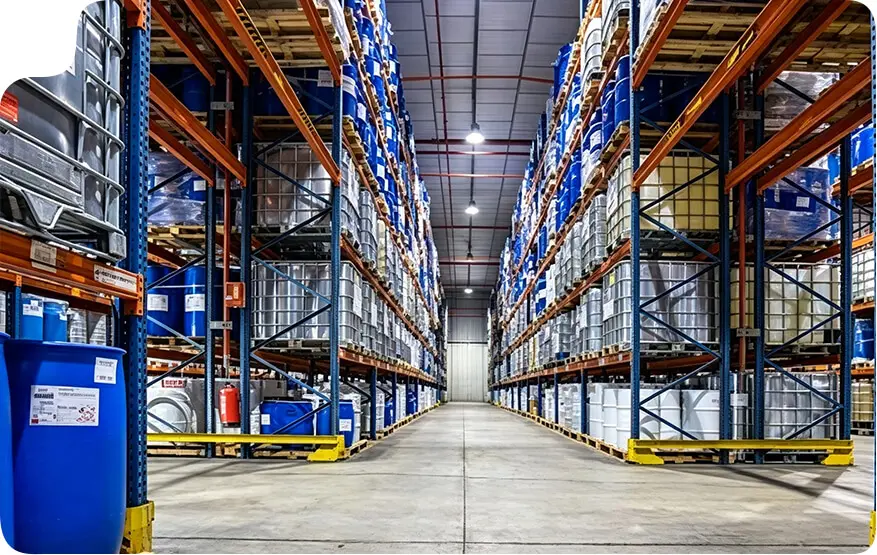
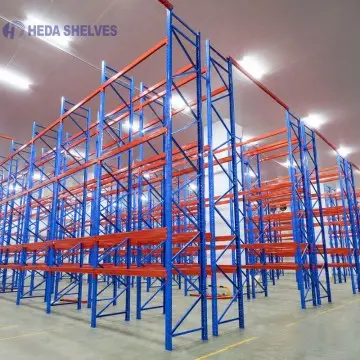
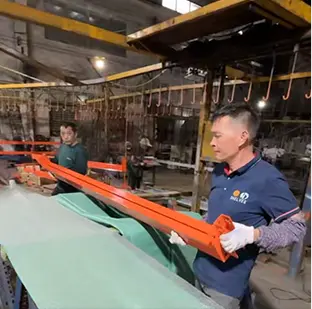
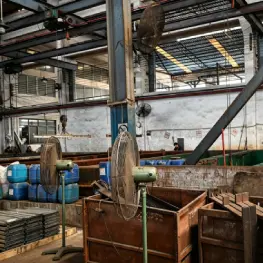
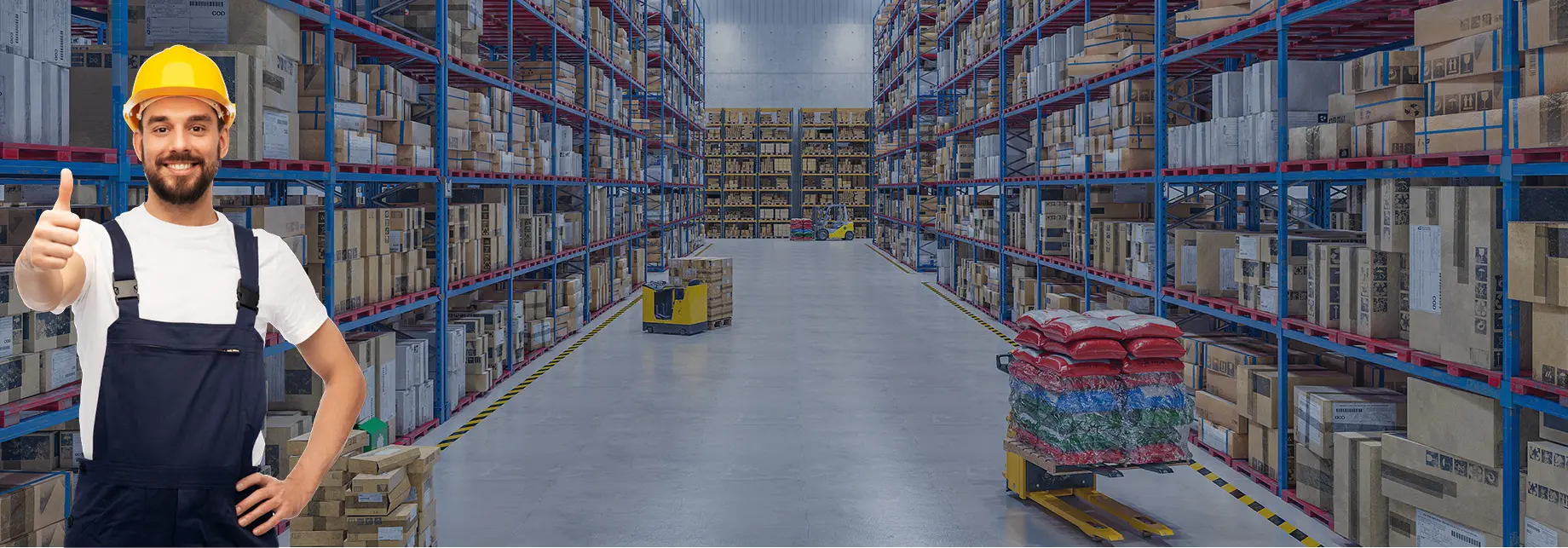
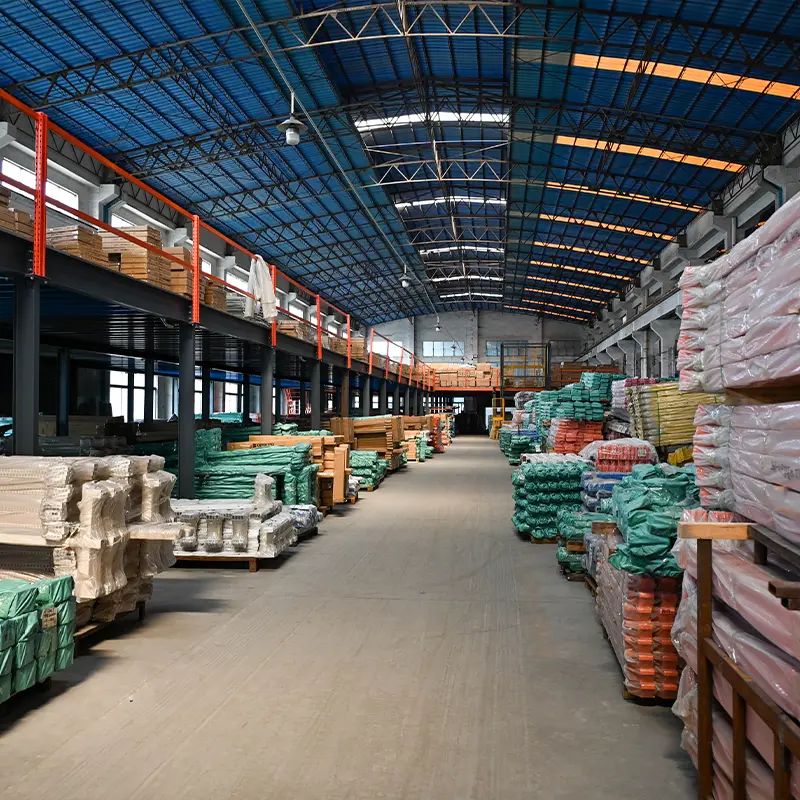
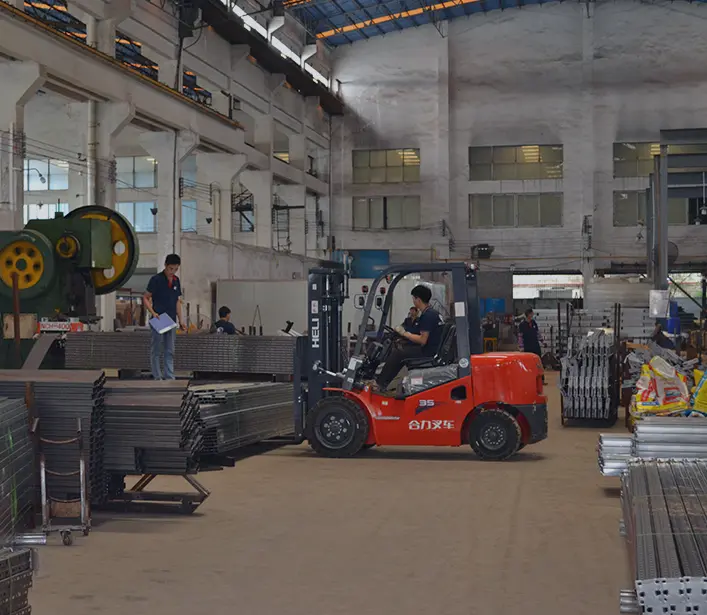
30,000 m² heavy-duty cold store racking manufacturing base
Engineering Selection
Recommended Cold Storage Warehouse Racking Systems
Choosing the right cold store racking architecture depends on SKU variety, throughput velocity, inventory rotation rules (FIFO vs. LIFO), and energy density targets.
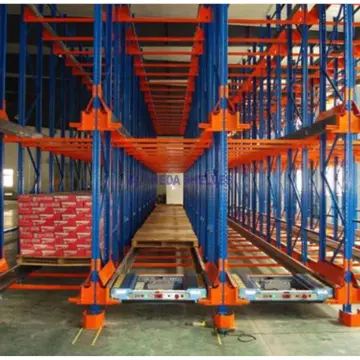
An intelligent semi-automated system where battery-powered shuttles transport pallets within deep lanes. Operators stay on the dock, drastically reducing cabin heating loss and forklift impact incidents.
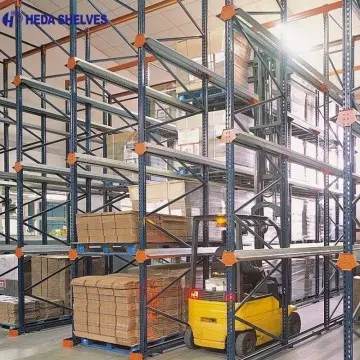
Maximizes cubic capacity by eliminating working aisles. Forklifts drive directly into storage lanes. Ideal for bulk raw food processing, seasonal harvest batch freezing, and uniform meat/poultry exports.
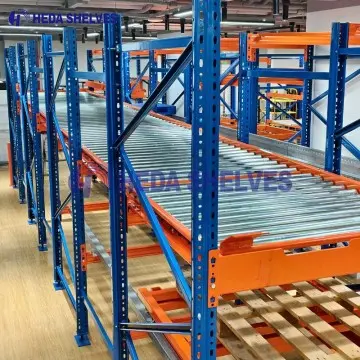
Utilizes inclined roller tracks with integrated centrifugal brake drums. Pallets loaded at the rear travel automatically to the front picking face, delivering pure FIFO flow for perishable dairy and meat logistics.
Nested rolling carts advance along inclined rails. Each pallet lane operates independently, giving higher SKU accessibility than drive-in racking while conserving refrigerated volume across 2 to 6 pallet depths.
The Future of Cold Storage Warehouse Racking: Trends & Innovations
High electricity tariffs, land scarcity, and labor constraints in sub-zero facilities are driving fundamental shifts in global cold chain infrastructure specifications.
01
Transition to Rack-Clad Cold Stores (ASRS)
Global logistics operators are moving away from traditional insulated shed buildings. High-bay rack-clad buildings (reaching 30–45 meters) integrate insulated sandwich panel walls directly onto the racking uprights, achieving an unprecedented 90% cubic volumetric ratio and dropping building footprint costs by 30%.
02
Cold-Rated Automation & Super-Capacitor Carriers
Traditional lead-acid forklift batteries lose up to 40% of their amp-hour capacity at -25°C. Future procurement relies heavily on automated shuttle systems powered by rapid-charging lithium titanate and super-capacitor power units that run uninterrupted in extreme cold environments without thermal degredation.
03
HVAC Aerodynamic Computational Fluid Layouts
Modern cold store procurement incorporates computational fluid dynamics (CFD) airflow modeling into the rack layouts. Flue spacing between pallet bays is calculated precisely to eliminate stagnant boundary heat layers, keeping produce consistently at target temperature while lowering compressor cooling duty cycles.
04
Strict Low-Temperature Material Traceability
Major procurement managers now insist on full chemical composition mill test certificates (MTC EN 10204 Type 3.1). Impact toughness testing at -20°C and -40°C is becoming mandatory in procurement contracts to avoid liability under strict Australian, New Zealand, and European structural safety standards.
05
Hybrid Duplex Anti-Corrosion Systems
Procurement teams are moving away from standard ambient powder coats. Chilled spaces with daily wash-downs and high-humidity defrost cycles now demand duplex coatings—continuous hot-dip galvanizing underneath low-bake architectural polyester—delivering a 25-year service life in wet-chill rooms.
06
High-Density Mobile Racking Retrofits
For existing ambient facilities being converted to cold storage, motorized mobile pallet racking is the primary retrofit choice. By mounting conventional pallet racks onto electronically driven floor carriages, users open a single moving aisle on demand, instantly cutting refrigeration cost per pallet spot in half.
Sector-Specific Cold Chain Designs
Engineered Cold Storage Applications
Every cold storage temperature regime brings different risks: meat export blast freezers have different handling stresses than dairy cool-rooms or temperature-critical pharmaceutical vaccines.
Deep Freeze (-28°C to -35°C) · Extreme Density
Meat, Poultry & Seafood Blast Freezing
Frozen carton boxes and export carcases present massive concentrated dead-loads. Our high-density radio shuttle and drive-in racking solutions eliminate aisle space while maintaining high structural safety factors under continuous sub-zero stress.
Heavy structural steel guide channels protecting upright columns
Low-temp powder coat tested against blood, saline and acidic sanitizers
Chilled (+2°C to +6°C) · Strict First-In First-Out
Dairy, Beverage & Fresh Produce Chiller Stores
Short-life perishables require absolute batch-rotation fidelity. Guangzhou Heda Shelves Co., Ltd. designs dynamic gravity flow systems that ensure product batches move in strict chronological order from receiving face to picking dock.
Gravity roller beds with precision speed governors for smooth pallet travel
Optimized rack clearances to promote continuous evaporator airflow
Hot-dip galvanised frame components to resist high humidity condensation
Precision Cool (+2°C to +8°C) · Total Traceability
Pharmaceutical & Life Sciences Cold Storage
Medical vaccines, biologics, and clinical compounds require strict validation against GDP standards. Our selective and very narrow aisle (VNA) systems guarantee 100% individual pallet selectivity with complete barcoding integration.
Narrow aisle configurations maximizing clear height up to 16 meters
Electrostatically smooth antimicrobial finishes easy to sanitize
Public cold storage facilities accommodate ever-changing client demands, from single pallets to complete truckload consolidations. We deliver versatile hybrid designs combining double-deep pallet racks with mobile racking carriages.
Double-deep reach racking saving 30% aisle space vs standard selective
Beam levels easily reconfigurable for varying pallet load heights
Engineering calculations compliant with AS 4084, EN 15512 and RMI rules
Factory-Direct Quality: 25 Years of Engineering Excellence
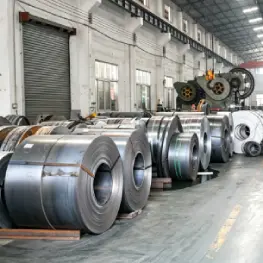
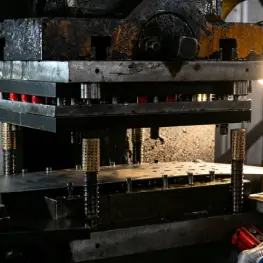
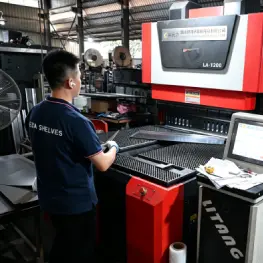
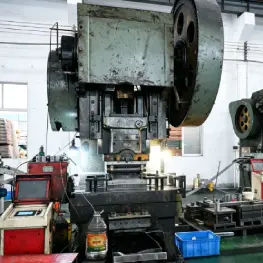
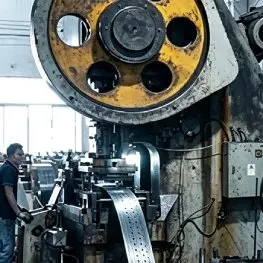
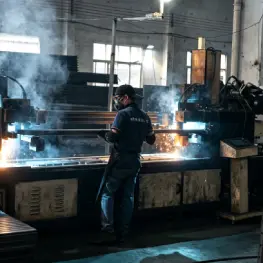
Guangzhou Heda Shelves Co., Ltd. controls every manufacturing phase inside our 30,000 m² facility, guaranteeing metallurgical integrity from raw steel coil slitting to precision robotic welding.
1
Thermal & Load Analysis
We review your building drawings, evaporator layouts, and operating temperature curves to calculate optimal upright load capacities.
2
3D CAD Simulation
Detailed finite element analysis (FEA), aisle clearance modeling, and seismic bracing engineering supplied for client review.
3
Automated Production
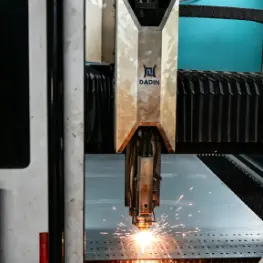
High-precision roll forming, automated punching lines, and low-temperature certified structural steel fabrication.
4
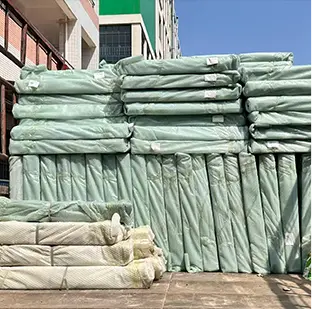
Export Packaging & Sign-off
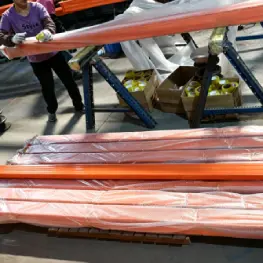
Protected container bundling, full documentation (ChAFTA, MTC 3.1), and remote or on-site installation guidance.
Metallurgical Control
10-Step In-House Cold Store Racking Production Workflow
Step 01
Low-Temp Raw Steel QC
Step 02
Precision CNC Slitting
Step 03
Automated Column Punching
Step 04
Cold Bending & Forming
Step 05
Profile Roll Forming
Step 06
Surface Deburring
Step 07
Robotic Sub-Arc Welding
Step 08
Pickling & Phosphating
Step 09
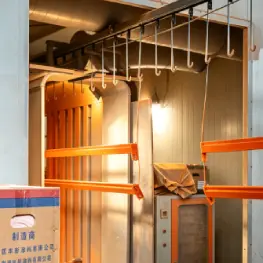
Low-Cure Epoxy Coating
Step 10
Dimensional Inspection & Pack
Proven Field Performance
Global Cold Storage Project Deliveries
Explore how Guangzhou Heda Shelves Co., Ltd. has delivered structural storage solutions under sub-zero conditions across international distribution hubs.
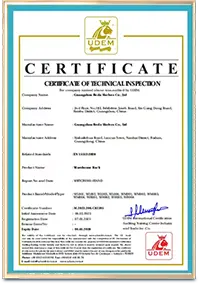
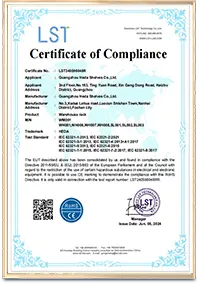
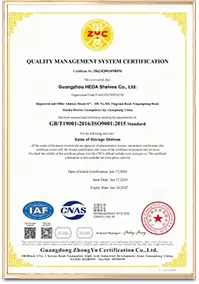
Global procurement teams and structural certification engineers require verified documentation. Guangzhou Heda Shelves Co., Ltd. provides comprehensive factory audits, certified test records, and structural verification.
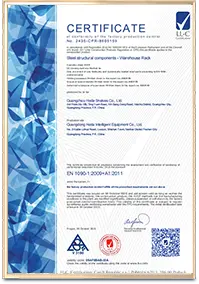
CE Factory Production ControlCertificate No. 2435-CPR-8605159 (EN 1090-1 / EN 15512)
ISO 9001:2015 Management SystemRegistration No. 18624Q00169R0M · Verified Production
AS 4084 & NZS 1170.5 Structural Sign-offCalculations and section properties for local engineer filing
Technical Knowledge Base
Cold Storage Warehouse Racking FAQs
Expert engineering answers to the critical questions global warehouse operators, supply chain directors, and EPC procurement consultants ask before placing an order.
How does sub-zero temperature affect structural steel and pallet racking safety?
Under continuous low temperatures (especially in blast freezers reaching -30°C), ordinary carbon steels experience ductile-to-brittle transition. Cold impact causes sudden brittle fracturing rather than safe plastic deformation. Guangzhou Heda Shelves Co., Ltd. uses specially alloyed, cold-rolled structural steel grades (such as Q355D/E or European S355JR with verified Charpy V-notch impact toughness tested down to -20°C and -40°C). This ensures beam and column connections absorb seismic motion and forklift impacts safely without brittle cleavage.
Which racking configuration delivers the highest ROI in temperature-controlled warehouses?
Radio Shuttle Racking and Electric Powered Mobile Racking consistently yield the highest return on investment. While selective racking only achieves 40-45% floor volume utilization, radio shuttle systems reach 80-85% cubic density by turning static access aisles into storage channels. Because chilled air volume is drastically compressed per stored pallet position, refrigeration compressor power is reduced by up to 25-35%. Furthermore, semi-automated shuttles eliminate the need for reach trucks to enter freezing aisles, lowering forklift maintenance and heating loss.
What surface treatment best prevents corrosion in freeze-thaw cycles?
In wet chilling rooms, loading anterooms, or facilities with frequent defrost and washdown cycles, hot-dip galvanizing (HDG) conforming to ISO 1461 / AS/NZS 4680 provides the best corrosion protection via thick zinc-iron alloy metallurgical bonding. For stabilized sub-zero freezer chambers (-18°C to -30°C) with low relative humidity, our automated multi-stage pre-treatment (acid pickling, iron-phosphating) followed by a 90-120 micron low-bake epoxy-polyester electrostatic powder coating provides strong chip resistance and rust prevention.
How are floor slab insulation, vapor barriers, and anchor bolts protected during installation?
Cold storage floor slabs consist of a structural sub-slab, vapor barrier, rigid extruded polystyrene (XPS) insulation, sub-floor heating conduits, and a reinforced concrete wear slab. Standard mechanical wedge anchors risk puncturing insulation layers or fracturing frozen concrete. Our engineering department designs enlarged baseplates to disperse point loads and specifies specialized chemical mechanical undercut anchors with certified shear ratings, precisely calculated to suit your specific wearing slab depth without puncturing the vapor seal.
How does the rack layout impact refrigeration energy bills and air circulation?
Racking should never obstruct primary evaporator discharge paths. Inadequate flue spaces between back-to-back pallet rows create thermal pockets, forcing refrigeration chillers to run overtime. Guangzhou Heda Shelves Co., Ltd. incorporates engineered 75–100 mm longitudinal and transverse flue separations and clearance channels beneath lower beam tiers. This enables uniform convection currents throughout the room, reducing compressor cycling and cutting recurring operational electricity expenses.
Thermal Logistics Engineering
Request a Custom Cold Storage Layout & Quotation
Send our senior engineering team your warehouse parameters. We will return an optimized CAD floorplan, 3D render, and detailed thermal volumetric density analysis within 24 hours.
Cold Chamber DimensionsLength, width, column grid, clear height to evaporators
Operating TemperatureAmbient, Chilled (0°C to +4°C) or Freezer (-18°C to -30°C)
Pallet ProfileDimensions (e.g. 1165×1165 mm or 1200×1000 mm) & overhang
Pallet Gross WeightsUniform weight distribution and peak static load ratings
Material Handling EquipmentForklift mast collapsed/extended height & turning radius
Local Seismic ParametersSite location, building importance level and slab thickness
 Top Freezer ROI