Why Choose Pallet Rack Systems for Global Warehouses?
Global warehouses face growing pressure from fragmented supply chains, labor shortages, and faster customer expectations. MHI’s 2024 Annual Industry Report identifies resilience, workforce challenges, and technology adoption as major supply chain priorities. Pallet Rack Systems address these pressures by using vertical space more effectively. They can increase storage density without expanding the building footprint. That matters when industrial rents remain high in major logistics markets. A properly planned rack aisle can also create clearer travel paths for forklifts, pickers, and automated equipment.
DHL’s 2024 Logistics Trend Radar highlights robotics, artificial intelligence, and sustainable operations as important logistics developments. Pallet Rack Systems can support these developments when their dimensions match pallet sizes, handling equipment, and warehouse software. Selective racks offer direct access to each pallet. Drive-in racks improve density but reduce selectivity. Push-back systems balance both needs. The right choice depends on product turnover, load weight, fire protection, seismic conditions, and local engineering requirements. There is no universal layout.
That assumption needs testing.
Experienced warehouse designers normally begin with inventory data, not attractive rack photographs. They measure SKU velocity, pallet height, aisle clearance, and future growth. A small error can create damaged goods, blocked travel routes, or wasted cubic capacity. Regular inspections and documented maintenance also protect long-term reliability. The Rack Manufacturers Institute and regional safety authorities provide useful guidance, but site-specific approval remains essential. Pallet Rack Systems are valuable because they combine structure, access, and adaptability. However, their performance depends on disciplined design, installation, training, and continuous review.
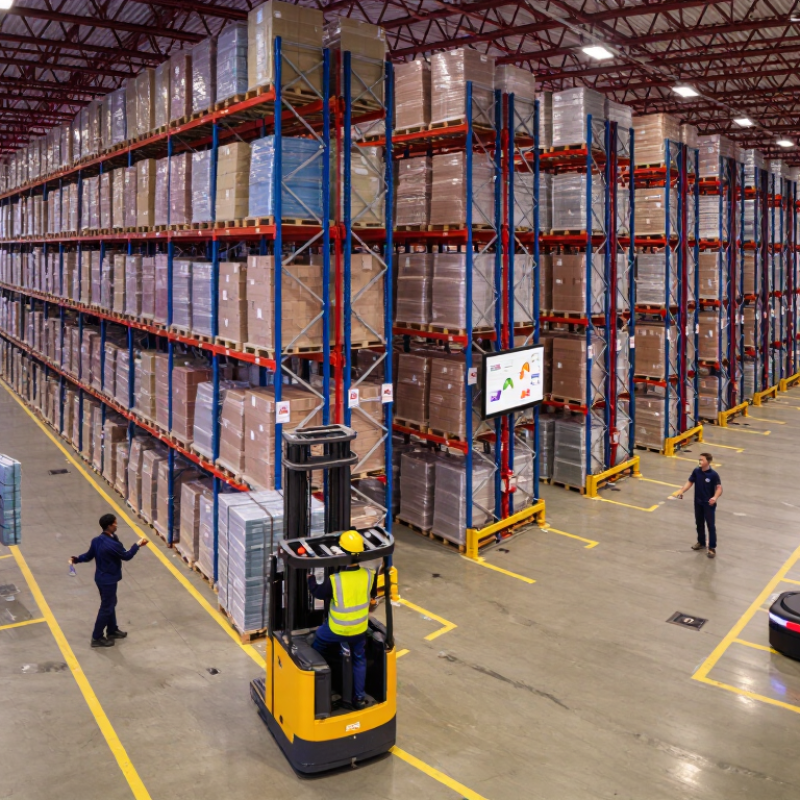
A pallet rack system is a steel storage structure built around upright frames, horizontal beams, and pallet supports. It stores goods vertically instead of spreading them across the floor. In a global warehouse, this matters when land is expensive and product sizes change frequently. The 2024 MHI Annual Industry Report found that 55% of supply chain leaders planned to increase technology and innovation investment. Rack design remains a practical part of that investment.
A forklift places each pallet onto a beam level, while the frame transfers weight to the floor. Selective racking offers direct access to every pallet. Drive-in layouts provide higher density but reduce access flexibility.
Engineers must calculate pallet weight, beam span, seismic conditions, aisle width, and forklift turning space. A small mismatch can create serious operational pressure. It is not only a steel problem.
European standard EN 15635 recommends regular inspection and controlled reporting of rack damage. OSHA guidance also stresses stable stacking, clear aisles, and protection from vehicle impact. These details affect daily reliability more than impressive capacity figures. A warehouse may claim high storage density, yet poor labeling can cause searching, double handling, and blocked access. That is where plans often fail.
Operators should review damaged uprights, loose anchors, uneven floors, and changing pallet loads. The ideal system is rarely permanent; seasonal inventory, labor skills, and local building conditions keep changing.
Why Choose Pallet Rack Systems for Global Warehouses?
Pallet racking maximizes storage capacity by using vertical space that floor stacking leaves empty. A warehouse with 6-meter ceilings can often add several storage levels. This creates more pallet positions without expanding the building footprint. Clear load ratings matter. Each beam level must support the planned pallet weight and dimensions.
Rack layouts also improve movement through the facility. Selective racks provide direct access to individual pallets, which suits warehouses with many product types. Narrower aisles may increase capacity, but they require suitable handling equipment and better operator training. In practice, a few extra centimeters can affect turning safety and picking speed. Small details matter.
Good planning begins with real inventory data, not guesses. Teams should review pallet sizes, stock turnover, fire protection, aisle widths, and local safety requirements. High-turnover goods belong near dispatch areas. Slow-moving goods can occupy higher levels. However, maximum density is not always maximum efficiency. Poor labeling, damaged pallets, or blocked aisles can reduce usable capacity. That is the part many plans underestimate. Regular inspections and documented maintenance help preserve safe, reliable storage performance.
Comparison of common pallet-racking configurations and their typical planning characteristics for warehouses handling standard palletized loads.
| Pallet-Racking System | Typical Storage Density | Direct Pallet Selectivity | Typical Aisle Requirement | Best Inventory Profile | Operational Advantages | Key Planning Consideration |
|---|---|---|---|---|---|---|
| Selective Pallet Rack | Low to medium Approximately 35–50% of floor area may be used for storage positions, depending on aisle width and building constraints. |
100% Every pallet position is directly accessible. |
Generally about 3.0–3.7 m for conventional counterbalance-truck layouts; narrower aisles require suitable equipment. | High-SKU operations with relatively small quantities per SKU and frequent picking. | Simple stock rotation, high flexibility, easy inventory visibility, and straightforward location control. | Lower cube utilization than high-density systems because access aisles serve each rack row. |
| Double-Deep Pallet Rack | Medium to high Often provides approximately 20–40% more pallet positions than comparable selective layouts. |
About 50% The front pallet must normally be moved to reach the rear pallet. |
Usually similar to selective rack, with additional reach and load-depth requirements. | Medium-SKU operations with multiple pallets per SKU and stable replenishment patterns. | Improves storage density while retaining more selectivity than drive-in storage. | Requires reach equipment designed for double-deep placement and disciplined location management. |
| Drive-In / Drive-Through Rack | High Can provide approximately 60–80% more pallet positions than selective rack in suitable layouts. |
Limited Access is typically organized by lane rather than by individual pallet. |
Fewer operating aisles are needed, but each storage lane must accommodate truck entry and safe clearance. | Large quantities of a limited number of SKUs, especially uniform products. | Reduces aisle space and increases use of available floor volume. | Not ideal for many-SKU operations; drive-in layouts generally favor last-in, first-out handling. |
| Push-Back Pallet Rack | High Commonly offers approximately 30–60% more pallet positions than selective rack. |
Limited to lane level Multiple pallets are stored in depth on wheeled carts or nested rails. |
Requires fewer aisles than selective rack, while preserving a front-facing loading and unloading position. | Several pallets per SKU with medium turnover and a need for efficient space utilization. | Fast loading and unloading from one aisle; good balance between density and selectivity. | Usually operates on a last-in, first-out basis and requires compatible pallet dimensions and weights. |
| Pallet Flow Rack | High Can increase pallet-position density by approximately 30–60% compared with selective rack. |
Lane level Loading and picking occur from opposite sides, with pallets moving along roller lanes. |
Separate loading and picking aisles are required, although storage lanes use space efficiently. | High-throughput products requiring first-in, first-out rotation and multiple pallets per SKU. | Supports FIFO rotation, organized replenishment, and efficient order-picking workflows. | Higher initial cost and stricter requirements for pallet quality, load consistency, and maintenance. |
| Narrow-Aisle Pallet Rack | Medium to high May increase pallet positions by approximately 20–40% compared with conventional selective layouts. |
High Individual pallet access is retained when suitable aisle equipment is used. |
Often about 1.5–2.0 m, depending on truck type, load dimensions, and operating clearances. | High-SKU warehouses where direct access and increased vertical storage are both important. | Uses floor space efficiently while maintaining strong stock visibility and selectivity. | Requires specialized trucks, accurate floor tolerances, rack protection, and operator training. |
| Very-Narrow-Aisle Rack | High May deliver approximately 35–60% more pallet positions than conventional selective layouts. |
High Individual positions remain accessible with guided or turret-style handling equipment. |
Commonly about 1.6–2.0 m, subject to equipment specifications and load dimensions. | High-volume distribution centers with tall buildings and highly controlled storage locations. | Combines high vertical cube utilization with direct pallet access. | Higher equipment and infrastructure costs; aisle control and system discipline are essential. |
| Mobile Pallet Rack | Very high Can potentially increase storage capacity by approximately 80–120% over fixed selective layouts by reducing permanent aisles. |
High when aisle is opened A movable aisle provides access to the required rack block. |
One or a limited number of operating aisles can be opened as needed. | High-value, lower-throughput inventory where space cost is significant. | Maximizes floor-space utilization while preserving direct access to stored pallets. | Higher capital cost, slower access to some locations, and greater requirements for safety controls and maintenance. |
Planning note: The capacity ranges are typical industry planning estimates rather than guaranteed results. Actual performance depends on ceiling height, pallet dimensions, rack height, aisle width, fire-protection requirements, handling equipment, SKU count, inventory turnover, building columns, and local safety regulations.
Global warehouses rarely share the same products, labor conditions, or building layouts. Selective pallet racks suit facilities storing many stock-keeping units because every pallet remains directly accessible. They are practical for mixed inventory and frequent picking. For dense, uniform loads, drive-in racks reduce aisles and increase storage density. However, forklifts must enter the structure, so loading discipline becomes essential.
Push-back racks offer better selectivity for several pallets per product. Pallet-flow racks support first-in, first-out movement, making them useful for food, pharmaceuticals, and dated goods. Very narrow aisle systems can increase capacity inside tall buildings, but they require compatible trucks and precise floor tolerances. Cantilever racks serve long products, such as pipes or timber, rather than standard pallets.
MHI’s 2024 Annual Industry Report states that 55% of supply-chain professionals expect to increase innovation investment, reflecting pressure to use warehouse space more intelligently. WERC’s 2024 DC Measures report places median order-picking accuracy close to 99.5% among surveyed distribution centers.
Rack selection affects that result through visibility, travel distance, and replenishment effort. Small errors matter. A dense layout can still perform poorly when operators cannot identify damaged pallets quickly. Local seismic conditions, fire protection, load ratings, and trained installation teams also require review. A standard global design may be efficient on paper, but not always safe or economical in practice.
Pallet rack systems improve inventory access by giving every load a defined location. In a busy warehouse, operators can see product labels without moving several pallets first. Adjustable beam levels also support mixed pallet heights and changing stock profiles. That flexibility matters across global facilities with different products, labor patterns, and storage densities.
MHI’s 2024 Annual Industry Report found that 55% of supply chain leaders planned to increase investment in innovation. Rack systems support that investment through simple, measurable improvements. Clearly marked locations reduce search time, while wider, planned aisles can improve forklift movement. Scanning each pallet into a fixed position also strengthens inventory accuracy and supports FIFO or FEFO processes. Small details matter.
Workflow still depends on design quality. A poorly planned rack layout can create congestion near receiving areas and shipping doors. I have seen fast-moving pallets placed too far from picking zones, adding unnecessary travel throughout the day. Warehouse teams should review order data, pallet dimensions, clearance requirements, and pedestrian routes before installation. The Warehousing Education and Research Council’s DC Measures reports consistently track order accuracy and productivity as core distribution benchmarks. Rack performance should be measured against those outcomes, not appearance alone. Some layouts look organized but still slow workers down.
How rack systems improve inventory access and workflow through direct pallet accessibility.
The chart uses a transparent warehouse model with 100 pallet positions per system. Direct access is calculated as one divided by the average pallet depth: selective rack stores one pallet deep, double-deep and push-back systems store two pallets deep, and drive-in rack stores four pallets deep. Higher direct access generally supports faster picking, easier stock identification, and simpler FIFO workflow.
Global warehouses need rack systems that remain safe across changing products, climates, and work patterns. A suitable design begins with accurate load data. Record pallet weight, dimensions, beam levels, aisle width, and forklift movement. Small errors matter. A beam overloaded by only a few kilograms can weaken long-term performance. Local building codes and seismic conditions also require review by qualified professionals.
Scalability depends on more than adding upright frames. Choose adjustable levels, compatible accessories, and clear expansion zones. Strong floor anchoring helps control movement during daily loading. Guards can protect uprights from forklift impacts near busy aisles. Operators should inspect bent frames, loose connections, and missing safety pins.
Photographs and inspection records improve accountability. Yet, many plans underestimate future stock variety. That assumption deserves another review.
Tips: Keep load signs visible at every rack bay. Train operators to report damage immediately. Leave enough clearance for safe pallet placement and sprinkler access. Schedule formal inspections at defined intervals, especially after layout changes or equipment impacts. Test the plan with a real pallet, not only a drawing. Ask whether one damaged section could affect nearby bays. A scalable rack system should support growth without forcing unsafe shortcuts.
It is a steel structure with upright frames, beams, and pallet supports. It stores goods vertically. This saves floor space and supports changing inventory sizes.
A forklift places each pallet on a beam level. The frames transfer the load safely to the floor. Designers must check weight, beam span, floor conditions, and turning space.
Selective racking gives direct access to every pallet. It suits warehouses needing frequent product retrieval. It offers flexibility, but usually uses more floor space.
High-density layouts store more pallets in limited space. However, they can reduce access flexibility. This trade-off should match inventory movement, not just capacity goals.
Each pallet receives a defined storage location. Clear labels help workers find products without moving other loads. Adjustable beams support mixed pallet heights.
Planned aisles help forklifts move with fewer delays. Fixed locations can improve scanning, inventory accuracy, and stock rotation. Small layout details matter.
Poor planning may create congestion near receiving and shipping areas. Fast-moving pallets placed far from picking zones increase travel time. A neat appearance proves very little.
Review pallet sizes, weights, order data, aisle width, and clearance needs. Include pedestrian routes and forklift turning space. I might overlook labor habits. That would be a costly mistake.
Teams should check damaged uprights, loose anchors, uneven floors, and impact marks. Keep aisles clear and stacking stable. Record problems consistently. Inspections should continue as loads and seasons change.
Pallet Rack Systems are essential storage structures designed to organize, support, and provide efficient access to palletized goods in warehouses. By using vertical space and arranging inventory in clearly defined levels, they help facilities increase storage capacity without requiring a larger footprint. Their modular design can also adapt to different pallet sizes, ceiling heights, load requirements, and operating conditions.
Different rack configurations serve different warehouse needs, including high-density storage, fast inventory rotation, and direct access to individual pallets. A well-planned system improves picking routes, loading and unloading efficiency, stock visibility, and overall workflow. When selecting Pallet Rack Systems, warehouse operators should evaluate load capacity, aisle width, material-handling equipment, seismic and environmental conditions, installation quality, and future expansion plans. Choosing a safe, scalable, and properly maintained solution supports reliable daily operations while allowing warehouses to respond effectively to changing inventory volumes and global supply chain demands.