Heavy Duty
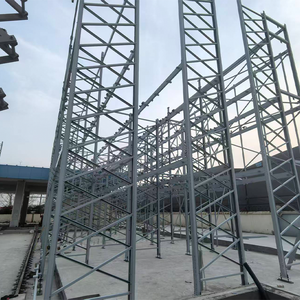
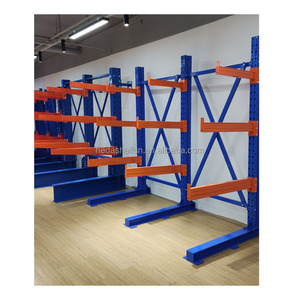
Mine Bulk Materials Anti-Pressure Piling Rack
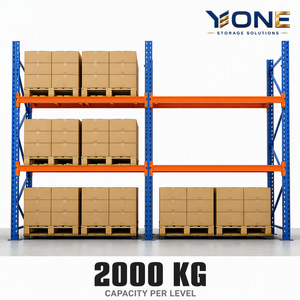
- Capacity: 1000 - 4000 kg / tier
- Feature: 5-Layer Anti-Corrosion Barrier
- Application: Mining & Bulk Heavy Minerals
Explore heavy-duty storage systems manufactured from premium high-yield Q235B and Q355B structural steel, strictly tested for dynamic load capacities, deflection compliance, and warehouse logistics optimization.
A technical guide for logistics engineering consultants, safety auditors, and enterprise procurement directors specifying heavy-duty industrial storage systems.
In modern industrial logistics, specifying racking based solely on steel thickness is an obsolete and hazardous practice. Heavy-duty industrial racking is a temporary, demountable steel structure subject to complex combined stresses: axial compression, biaxial bending, torsional warping, and dynamic horizontal shock forces caused by material handling equipment (MHE). The European standard EN 15512:2020 (Steel static storage systems - Specification of beam-pallet racking) along with EN 15620 governs structural safety margins across the European Economic Area and serves as the baseline for global high-risk engineering validation.
Genuine CE Certification according to the Construction Products Regulation (CPR 305/2011/EU) requires factory production control (FPC) verified by an accredited European Notified Body. It dictates that every profile iteration—from upright omega columns to box beam step welded connectors—must undergo comprehensive physical stub-column testing, baseplate rotational stiffness testing, and cyclic connector shear tests. When purchasing from verified suppliers like Guangzhou Heda Shelves Co., Ltd. (CE Certificate No. 2435-CPR-8605159), buyers obtain comprehensive structural calculation dossiers validating that the system maintains structural stability under total maximum design loads, seismic ground acceleration, and accidental forklift impact scenarios.
Structural reliability starts with raw material selection. Heavy-duty uprights are roll-formed from certified micro-alloyed structural steels (such as Q235B and Q355B, conforming to EN 10025 standards). Steel with controlled yield strength ($f_y \ge 355\text{ N/mm}^2$) allows optimized profile mass while increasing structural elasticity, vital for absorbing energy during earthquake cycles or minor MHE collisions.
Furthermore, column perforation geometry directly influences section properties. Our automated roll-forming lines punch teardrop or omega slotting patterns using CNC indexing with sub-millimeter precision ($\pm 0.1\text{ mm}$ over 12-meter single upright runs). Poorly pressed holes create micro-fissures and localized stress concentrations that drastically degrade column capacity. By applying continuous cold-roll forming post-punching, residual internal stress is evenly distributed across multiple bend radii, ensuring higher resistance against torsional-flexural buckling.
| Engineering Attribute | HEDA Shelves (CE / EN 15512 / AS 4084) | Generic Commodity Fabricators | Operational Impact & Safety Risk |
|---|---|---|---|
| Steel Substrate | Certified Q235B / Q355B with mill test certificates (MTC) | Uncertified scrap-blend re-rolled coil | Prevents brittle crack formation under dynamic shock loading |
| Beam Deflection Limit | $L/200$ (standard), $L/350$ (ASRS/VNA automated) | $L/150$ or unmeasured uncontrolled sag | Guarantees clearance for pallet forks, preventing mast jamming |
| Surface Pre-Treatment | 10-Stage continuous shot-blast & zinc phosphating | Wipe-down solvent degreasing only | Prevents micro-corrosion blistering under paint layers |
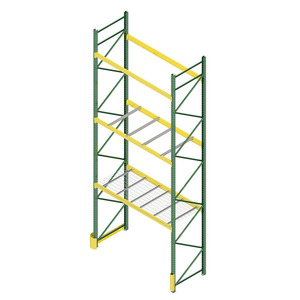
| Upright Upright Profile | Multi-bend Omega cross-section (up to 12 bends) | Simple 4-bend open channel | Substantially higher torsional rigidity and load resistance |
| Beam Connector Claws | 4 or 5-tooth cold-stamped high tensile hooks | 3-tooth welded tab plates | High connector moment capacity resisting dynamic frame sway |
| Biosecurity Packaging | ISPM-15 fumigated timber or custom steel stillages | Raw untreated wooden pallets & dunnage | Guaranteed zero DAFF (Australia) / MPI (NZ) quarantine rejections |
Cross-border supply requires cross-standard fluency. In high-risk territories such as New Zealand (NZS 1170.5 seismic standards) and Australia (AS 4084:2023 steel storage racking), racking cannot be treated as static furniture. Racking under heavy loading acts as a tall, flexible building frame inside another building.
In seismic zone projects, our structural engineers compute ductile behavior factors ($k_\mu$), floor response spectra, and soil amplification parameters. We incorporate oversized, laser-cut baseplates ($12\text{ mm} - 20\text{ mm}$ thickness) anchored by dual M12/M16 chemical or mechanical wedge anchors rated for cracked concrete. Heavy-duty spine braces, top horizontal portal frames, and engineered row-spacers are strategically positioned to transfer seismic shear forces safely down into the concrete foundation slab without buckling the main upright columns.
How supply chain disruptions, warehouse automation, cold chain expansion, and ESG directives are reshaping industrial storage procurement through 2030.
Buyers are moving away from isolated static racks toward structures engineered for automated mobile robots (AMR) and radio shuttles. Racking requires higher dimensional precision ($\pm 1.5\text{ mm}$ deviation over 30 meters), ultra-flat run-in guide rails, and integrated sensor stops.
Procurement teams now factor freight cubic optimization, repair downtime, and modular reconfigurability into purchasing models. Boltless drop-in beam systems and standard profile interchangeability lower lifetime maintenance expenses by up to 34%.
With food and pharma logistics booming, sub-zero storage demands steel grades resistant to cold embrittlement ($Charpy\text{ V-notch}$ impact testing at -20°C and -30°C). Demand for dense radio shuttle systems has surpassed standard drive-in racking to cut energy loss.
Global corporations mandate supply chain environmental accountability. Procuring racking finished with low-VOC, heavy-metal-free thermosetting polyester powder coatings and produced via low-energy cold-forming mills has become a core vendor evaluation criterion.
Combining 25 years of specialized manufacturing prowess with modern engineering support, serving major importers, 3PL distributors, and industrial plants worldwide.
Operating a modern 30,000 m² facility with 300+ skilled personnel. Our automated cold roll-forming lines, robotic welding stations, and automated electrostatic powder coating lines guarantee reliable on-time fulfillment for large-scale containerized rollouts.
We believe in total transparency. Our European CE certification (No. 2435-CPR-8605159) and ISO 9001:2015 Quality Management registration (No. 18624Q00169R0M) are authentic and verifiable by third-party auditors and local government compliance inspectors.
Our in-house design engineering department converts your empty architectural layout into fully optimized 3D CAD and Revit models within 24 hours. We balance pallet density, clear building heights, forklift turning radials, and fire code flue spaces.
We supply complete engineering calculation dossiers, cross-sectional properties, and load capacity plaques referenced against AS 4084, NZS 1170.5, and EN 15512. This documentation streamlines structural approvals with local registered engineers.
Shipments destined for Oceania and Pacific territories strictly follow Australian DAFF and New Zealand MPI regulations. Racks are packed on custom steel stillages or ISPM-15 marked timber, accompanied by preferential FTA documentation for duty savings.
We provide full white-label and custom manufacturing for regional racking distributors, project contractors, and automated logistics systems integrators. Options include custom column widths, specialized paint finishes, and private-label embossing.
Practical technical and operational answers to address common engineering, compliance, and logistics questions before ordering.
Capacities are calculated using finite element analysis (FEA) and verified by physical destructive tests per EN 15512 protocols. This includes stub-column tests to determine effective cross-sectional area, cyclic testing of beam-end connectors for moment-rotation characteristics, and beam bend tests under uniformly distributed loads (UDL).
Yes. While standard indoor operations utilize high-adhesion electrostatic polyester powder coating, we offer full hot-dip galvanization (HDG conforming to ISO 1461) for coastal environments, outdoor yards, and chemical facilities. HDG provides sacrificial zinc coating protection exceeding 65–85 microns.
We incorporate site-specific parameters provided by your consulting engineer (following NZS 1170.5 criteria). We then calculate appropriate ductility factors, reinforce frame base connections with heavy ductile baseplates, widen upright profiles, and add full-height rear diagonal x-bracing systems to dissipate lateral earthquake energy.
Beams are nested in bundles protected by corner boards, shrink film, and heavy plastic strapping. Upright frames are either shipped knock-down (bolted assembly on-site to maximize ocean freight cube efficiency) or pre-assembled in protective steel cradles. All wooden dunnage strictly bears the IPPC ISPM-15 stamp.
Typical factory production lead time is 15 to 25 days depending on project tonnage and surface finish requirements. Ocean transit from our South China shipping ports (Guangzhou/Shenzhen) to major Asia-Pacific destinations takes 10 to 20 days, and approximately 28 to 35 days to European and North American ports.
We require: (1) Warehouse CAD floor plan with clear ceiling height and column grid, (2) Pallet dimensions (W×D×H including cargo overhang), (3) Maximum weight per loaded pallet, (4) Forklift model, mast height, and minimum turning aisle width (AST), and (5) Ambient working temperature.
Collaborate with our structural engineering team. Receive detailed 3D CAD warehouse plans, precise load capacity assessments, and a competitive factory-direct quote within 24 hours.