Certified Heavy-Duty Industrial Racks for High-Throughput Warehouses
Explore our flagship CE-certified pallet storage structures manufactured using cold-rolled structural steel (Q235B / Q355B equivalent to S235JR and S355JR), complete with custom seismic detailing and computerized static load safety certifications.
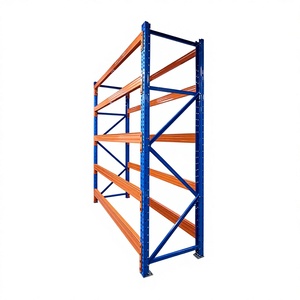
Warehouse Racking Large Capacity Selective Racking System Double Deep Pallet Racking Warehouse Storage
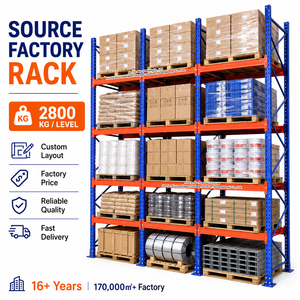
2800KG 5 Levels High Bay Industrial Pallet Racking Heavy Duty Warehouse Rack System
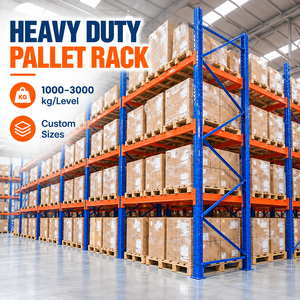
Heavy Duty Selective Pallet Rack Warehouse Storage Racking System for Large Capacity Industrial Pallet Storage
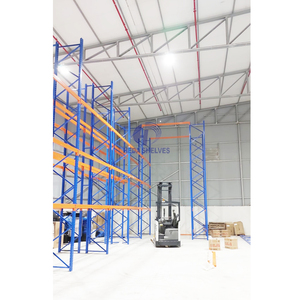
Warehouse Heavy Duty Beam Pallet Racking System for Large Scale Warehouses and Industrial Storage
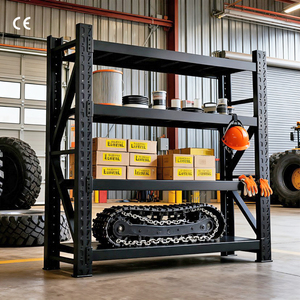
Metal Anti-Rust Durable Storage Shelf Adjustable Multi-Layer Large Storage Capacity Heavy Duty Pallet Rack Warehouse Rack
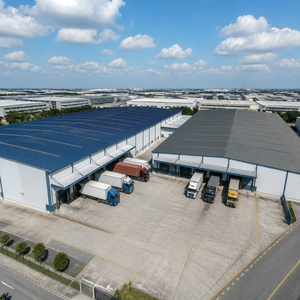
Large Scale Steel Warehouse Building High Bay Pallet Racking Storage Steel Frame Structure Design
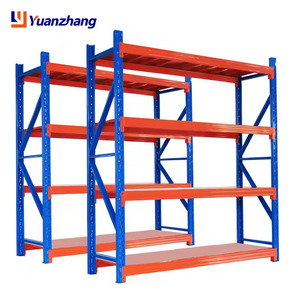
Heavy Duty Steel Adjustable Multi-Layer Super Load-Bearing Industrial Warehouse Pallet Storage Shelf Rack
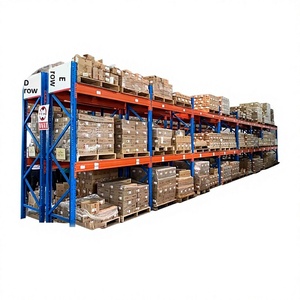
Commercial Heavy-duty Thickened Cold Rolled Steel Shelving Large High-Level Pallet Racking Warehouses High-Rise
Guangzhou Heda Shelves Co., Ltd. — 25 Years of Precision Racking Engineering
Operating since 2001, Guangzhou Heda Shelves Co., Ltd. is a premier global manufacturing facility delivering heavy-duty pallet racking systems, automated high-density radio shuttle racks, cantilever platforms, and multi-tier industrial mezzanine structures. We combine rigorous mechanical design certifications with end-to-end metallurgical quality control.
Verified CE & ISO 9001:2015 Compliance
Our production strictly operates under CE Certification No. 2435-CPR-8605159 and ISO 9001:2015 Management Standard No. 18624Q00169R0M. Racking assemblies comply directly with the European Construction Products Regulation (CPR 305/2011/EU) and EN 15512 execution codes.
Tailored Finite Element (FEA) Engineering
Every industrial racking deployment is modeled under finite element stress simulations (FEA), calculating Euler buckling limits, torsion parameters, and deflection factors (≤ L/200). We deliver comprehensive calculation packages ready for local independent engineering sign-off.
Biosecurity-Compliant Global Logistics
We deliver seamless direct-to-port logistics for Sydney, Melbourne, Auckland, Rotterdam, and Los Angeles. All export cargo is packed on certified ISPM-15 heat-treated skids or custom steel stillages, eliminating quarantine friction and import biological risks.
Our Proprietary 10-Stage Precision Manufacturing Workflow
Metallurgy & Cold Forming
Spectrometric testing of Q235B/Q355B coils, CNC high-speed slitting, and computerized 24-station roll-forming of upright profiles with continuous hole indexing.
Precision CNC Punching & Welding
Automated column keyhole punch lines, robotic twin-wire arc welding of beam end connectors, and ultrasonic inspection of load-bearing structural seams.
Surface Pre-Treatment
Automated 9-stage degreasing, acid pickling, zinc phosphating, and deionized water rinsing to ensure complete rust immunity under humid warehouse environments.
Electrostatic Coating & QC
Thermoset epoxy-polyester powder coating (60-80 μm) cured at 200°C, followed by cross-hatch adhesion testing, load deflection validation, and steel stillage packaging.
Mechanical Integrity, CE Certifications & Limit State Design Standards
Warehouse racking is a structural civil installation subjected to dynamic operational loads, impact forces, and seismic moments. Below is an engineering overview of the standards governing modern heavy-duty racking design.
1. Compliance with the European Construction Products Regulation (CPR 305/2011/EU) & EN 15512
To legally distribute and install industrial pallet racking within the European Economic Area, racking components must adhere to the CPR 305/2011/EU framework. Our facilities manufacture steel static storage systems conforming directly to EN 15512:2020 (Steel static storage systems — Adjustable pallet racking systems — Principles for structural design).
Unlike simple static shelving, large pallet racks undergo limit state design, factoring in Ultimate Limit State (ULS) for structural collapse prevention and Serviceability Limit State (SLS) for operational deflection. Crucial parameters calculated by our engineering team include:
- Second-Order P-Δ and P-δ Effects: Calculating the destabilizing lateral sway moments induced when thousands of metric tons are elevated across multiple tiers.
- Beam-to-Column Joint Semi-Rigidity: Upright and beam connections are neither pinned nor completely rigid; their characteristic rotational stiffness ($C_i$) is derived from specialized physical test beds to determine moment redistribution.
- Perforation Reduction Factors: Punching teardrop or diamond slot patterns reduces the effective cross-sectional area of upright columns; our design accounts for local and distortional buckling of thin-walled cold-formed steel sections.
2. Seismic Resistance & Dynamic Ground Acceleration Engineering (NZS 1170.5 & AS 4084:2023)
Warehouses located across the Pacific Rim, New Zealand, and seismically active European zones require comprehensive dynamic ductility considerations. In accordance with AS 4084:2023 and NZS 1170.5, Heda Shelves configures racking arrays with reinforced back-to-back row spacers, oversize base plates, and M12-M16 chemical anchoring systems.
By simulating spectral response acceleration values ($S_a$), we balance the structure's fundamental period of vibration with pallet payload friction coefficients, preventing pallet slide-off during earthquake events while safeguarding upright bases against shear failure.
Warehouse Racking Architecture Selection Matrix
| Racking Architecture | Space Utilization | Pallet Accessibility | Typical Aisle Width | Floor Height Range | CE Compliance Standard |
|---|---|---|---|---|---|
| Selective Pallet Racking | 40% – 50% | 100% Direct Selective | 3,000 – 3,800 mm | Up to 12,000 mm | EN 15512 / CE Validated |
| Double Deep Racking | 55% – 65% | 50% (Two Pallets Deep) | 3,000 – 3,400 mm | Up to 14,000 mm | EN 15512 / CE Validated |
| Very Narrow Aisle (VNA) | 65% – 75% | 100% Direct Selective | 1,600 – 1,900 mm | Up to 18,000 mm | EN 15620 Class 300 |
| Radio Shuttle High-Density | 75% – 85% | Batch / Lane Dependent | Direct Transfer Aisle | Up to 22,000 mm | EN 15512 / Machinery CE |
| Drive-In / Drive-Through | 60% – 75% | LIFO (Drive-In) / FIFO | Dedicated Forklift Lane | Up to 11,000 mm | EN 15512 / AS 4084 |
| Gravity Flow Dynamic Racks | 70% – 80% | 100% Strict FIFO Flow | Dual Aisle (Load/Pick) | Up to 10,000 mm | EN 15512 / FEM 10.2.02 |
Future Procurement Trends in Industrial Pallet Storage Systems (2025–2030)
Global supply chain logistics are undergoing rapid transformation. Industrial warehouse directors and procurement managers are prioritizing automation integration, sustainability directives, and structural telemetry over bare-metal cost metrics.
1. High-Density Radio Shuttle & ASRS Integration
Manual forklift operations are rapidly giving way to semi-automated and fully automated shuttle racking. Procurement trends show a 42% compound growth in orders for racking channels equipped with specialized cold-formed shuttle runner rails, integrated photo-electric sensor stops, and automated guide-vehicle (AGV) docking interfaces.
2. Green Steel & ESG Carbon Border Alignment
With the implementation of the EU Carbon Border Adjustment Mechanism (CBAM), enterprise buyers are demanding transparent lifecycle analyses (LCA) for structural steel. Heda Shelves leads the industry by incorporating scrap-recycled electric arc furnace (EAF) coil feeds, drastically reducing embodied carbon per pallet position.
3. Ultra-Low Temperature Cold Storage Optimization
The explosive growth of pharmaceutical and quick-frozen cold chains has generated surging demand for cold-resistant racking. Standard carbon steel experiences ductile-to-brittle transitions at -25°C. Modern procurement mandates Charpy V-notch impact-tested steel grades that maintain full energy absorption without brittle fracture under sub-zero freezer loads.
Frequently Asked Questions on Large Pallet Racking Procurement
Technical, compliance, and logistics questions answered by our chief structural engineering team to streamline your procurement process.
How do CE certification and EN 15512 protect commercial warehouse buyers?
Can your racking systems be certified for AS 4084:2023 in Australia and NZS 1170.5 in New Zealand?
What factors determine the permissible deflection limit of pallet rack beams?
How do you prevent corrosion on warehouse racking in coastal or high-humidity regions?
What is the difference between single-deep selective and double-deep pallet racking?
How is structural safety maintained when integrating in-rack fire sprinkler systems?
What is your average export manufacturing and maritime transit lead time?
Request a Free Custom 3D & CAD Layout Design
Provide our structural engineering team with your facility parameters, and we will formulate an optimized layout drawing, finite element stress analysis, and itemized factory-direct quote within 24 hours.