Engineered Medium & Heavy Duty Warehouse Storage Assemblies
Every modular shelving assembly and pallet framework engineered in our ISO 9001:2015 and CE-certified manufacturing hub undergoes automated cold-roll profiling, electrostatic powder curing, and FEA-validated dynamic yield analysis.
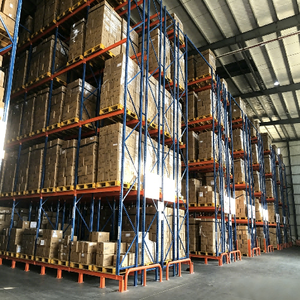
Dual Pallet Depth Design Lower Aisle Quantity Required Pallet Warehouse Double Deep Racking
- Payload: 800 - 2,500 kg/tier
- Steel: Q235B / Q355B Hot-Rolled Strip
- Access: Double-Reach Pantograph Mast
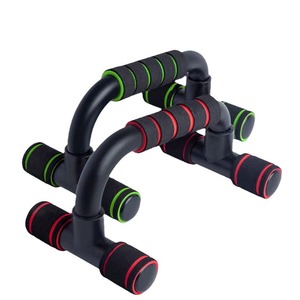
H-Shape Adjustable Push-Up Stands & Workout Rack Arm & Core Fitness Equipment
- Design: Reinforced Structural H-Base
- Coating: Anti-Slip Matte Epoxy Finish
- Tolerance: Precision Robot MIG Welded
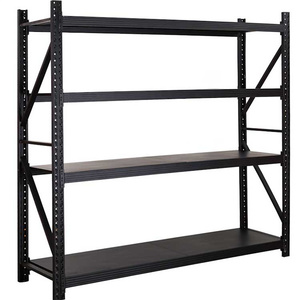
Customized Industrial Rack Heavy Duty Pallet Rack System Warehouse Storage Shelf Shelving
- Beam Pitch: 50 mm / 75 mm Adjustable
- Safety Factor: 1.5 (EN 15512 Baseline)
- Profile: Box-Beam Interlocking Connectors
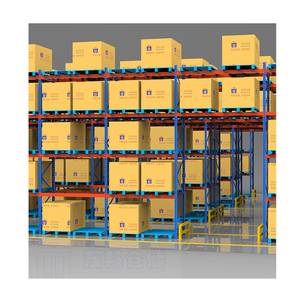
Industrial Heavy Duty Metal Shelving Single Deep Pallet Rack Selective Storage Warehouse
- Selectivity: 100% Instant Unit Access
- Uprights: Omega Profile Ω-80/Ω-90/Ω-100
- Compliance: CE Marking / EN 15635
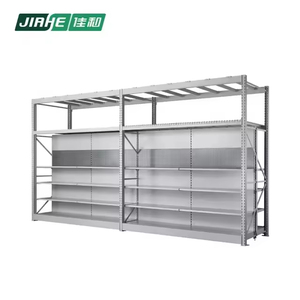
Heavy Duty Hypermarket Shelving Industrial Shelving Warehouse Storage Integration Racking
- Utility: Dual Cash-and-Carry Pallet Overstore
- Backing: Perforated Steel or Wire Panel
- Load Capacity: 350 - 800 kg/tier
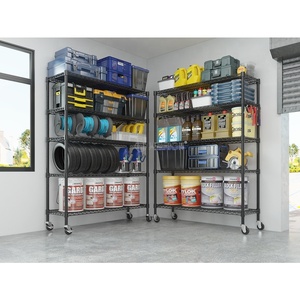
Heavy Duty 5 Tiers Epoxy Black Steel Racking Garage Storage Workshop Shelf Corner Rack
- Assembly: Rivet Boltless Keyhole Fitment
- Decking: Corrosion-Proof Powder Steel/Wire
- Capacity: 200 - 450 kg Uniform per Layer
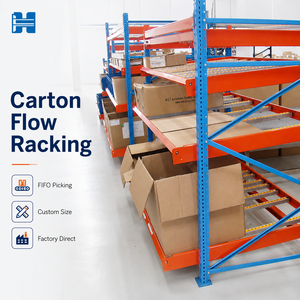
Warehouse Flow Rack Carton Gravity Roller FIFO Storage System Dynamic Metal Anti-Rust
- Track: Galvanized Sheet Roller Tracks
- Incline: 3° - 4.5° Ergonomic Gravity Feed
- Throughput: High-Speed Split-Case Picking
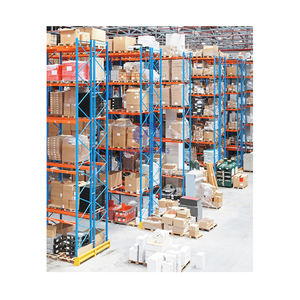
Heavy Duty Selective Pallet Racks Warehouse Rack System with Wire Mesh Decking
- Decks: Reinforced Inverted Flare Channels
- Fire Code: 70%+ Open Sprinkler Permeability
- Finish: Zinc Electro-Plate or Hot-Dip Galv
Structural Metallurgy, Cold-Formed Standards, and CE Conformity in Racking Fabrication
For modern multi-tier fulfillment hubs, high-density parts depots, and commercial distributions, procurement decisions hinge entirely on engineering integrity. Specifying a medium-duty or intermediate heavy-duty racking framework requires an exhaustive understanding of cold-formed structural steel profiles, safety coefficients, yield tolerances, and compliance standards such as EN 15512, EN 15635, and Australia's AS 4084.
A genuine CE Certified Medium Duty Racking Factory operates under Construction Products Regulation (CPR 305/2011/EU) mandates, ensuring rigorous Factory Production Control (FPC) verified via EN 1090-1 and EN 1090-2 execution standards. At Guangzhou Heda Shelves Co., Ltd., our manufacturing pipeline relies on high-grade Q235B and Q355B cold-rolled coiled strip, precision-slit, CNC-punched, and roll-formed through continuously monitored roll-tool stations. This structural rigor prevents localized flange buckling, guarantees torsional stability under asymmetric beam loads, and delivers long-term durability in seismic zones and high-throughput distribution environments.
Certified Cold-Formed Steels
We source certified structural steels (SS400, Q235B, and Q355B micro-alloyed steel) exhibiting elongation limits exceeding 21% and tensile yield points up to 355 MPa. Mill test certificates (EN 10204 Type 3.1) verify carbon equivalence and Charpy V-notch impact toughness for cold storage resilience.
Finite Element Analysis (FEA)
Every profile design undergoes non-linear ANSYS FEA simulation to verify global and distortional buckling limits. Perforations (butterfly, tear-drop, or hex-slots) are mathematically positioned along the neutral axis to maintain maximum section modulus ($Z_x, Z_y$) without web deformation.
Automated Surface Passivation
Ten-stage immersion pickling, zinc-phosphating pre-treatment, and negative-pressure electrostatic powder coating apply an 80–110 µm thermosetting polymer shield. Components withstand 500+ hours of ASTM B117 salt spray testing, preventing corrosion in coastal, tropical, or wash-down facilities.
| Structural Sub-Assembly | Material Specification | Standard Dimension Range | Deflection Threshold | Governing European Standard |
|---|---|---|---|---|
| Upright Columns (Omega Section) | Q235B / Q355B Cold-Formed | 55×47, 60×50, 80×60, 90×70 mm | Height / 1000 plumb verticality | EN 15512:2020 |
| Step Beams & Box Beams | Continuous Welded Twin C-Profile | 50×30, 60×40, 80×50, 100×50 mm | Span / 200 (Elastic limit $L/200$) | EN 15512 / FEM 10.2.02 |
| Intermediate Solid/Wire Shelves | Cold-Rolled Sheet / Drawn Q195 Wire | 0.7 mm - 1.5 mm / 4.0 - 5.0 mm Wire | Span / 200 uniform distributed load | EN 15635 In-Service Code |
| Diagonal & Horizontal Bracing | Cold-Rolled C-Channel / Tubing | 25×15 mm, 30×20 mm (1.2 - 1.5 mm t) | Tension & Compression axial yield | EN 1993-1-3 Eurocode 3 |
| Baseplates & Anchor Bolts | Hot-Rolled Structural Plate / Grade 8.8 | 100×100×4 mm to 160×140×8 mm | Pull-out shear > 25 kN concrete slip | ETAG 001 / EN 1992-4 |
Supply Chain Modernization & Racking Evolution Trends
Procurement directors and warehouse infrastructure engineers are facing unprecedented shifts in inventory handling paradigms. E-commerce SKU proliferation, rising square-meter lease costs across metro centers, and workforce scarcity are driving three primary structural trends in medium-duty and high-bay storage procurement:
1. Hybridizing AMR & Manual Picking Corridors
Medium-duty racking is moving from isolated manual pick shelves toward unified interfaces compatible with Autonomous Mobile Robots (AMRs) and Automated Guided Vehicles (AGVs). Facilities require standardized lower shelf clear heights, recessed upright anchors, and high-visibility barcoding targets integrated directly into rack beam profiles.
2. Multi-Tier Mezzanine Micro-Fulfillment Conversions
Rather than building or leasing new sites, logistics operators increasingly procure medium-duty racking systems engineered as multi-tier pick towers (up to 4 levels high). This vertical stacking quadruples usable square footage without violating localized municipal roof-clearance restrictions.
3. Green Steel Procurement & Low-VOC Epoxies
Corporate ESG metrics mandate verified Environmental Product Declarations (EPDs). Leading international importers specifically partner with factories deploying closed-loop powder recovery systems, zero-lead coating chemistries, and mill suppliers using electric arc furnace (EAF) low-carbon steel billets.
Precision Roll-Forming & Boltless Modular Engineering
Historical medium-duty shelving suffered from labor-intensive nut-and-bolt assembly and structural play under unbalanced loading. Advanced automated manufacturing technologies have revolutionized installation speed, structural rigidity, and life-cycle economics:
Precision Roll-Tool Calibrations
Our computer-controlled 18-stage roll-forming lines operate within dimensional tolerances of ±0.2 mm across 12-meter continuous sections. This extreme precision ensures that connector claws (with 3-prong or 4-prong heavy-duty drop hooks) seat with zero gap into upright butterfly holes, preventing systemic racking tilt or shear-induced deformation.
Dynamic Seismic Ductility
In seismically active regions such as New Zealand (NZS 1170.5) or the US West Coast (RMI MH16.1), medium-duty systems are calculated to act as ductile energy-dissipating frameworks. By engineering calibrated base-plate deformability and high-tensile anchor embedment depths, frame collapse hazards during minor to moderate ground accelerations are eliminated.
Guangzhou Heda Shelves Co., Ltd.: Your Global OEM/ODM Racking Partner
For over two decades, Guangzhou Heda Shelves has delivered certified storage solutions to logistics contractors, international distributors, and multi-national corporations. We bridge direct factory economics with Western engineering accountability.
Audited Verification
We publish active credential serial numbers for transparent verification: CE Certification No. 2435-CPR-8605159 and ISO 9001:2015 Quality Management No. 18624Q00169R0M. We welcome third-party inspections by SGS, TÜV Rheinland, and Bureau Veritas prior to container stuffing.
End-to-End In-House Supply
Unlike trading intermediaries, our 30,000 m² campus integrates automated slitting lines, 60-ton hydraulic CNC punch presses, roll-forming tracks, Panasonic robotic welding cells, and continuous overhead pre-treatment and powder-curing loops under one roof.
Oceania & Global Shipping Ready
Every shipment is packaged using ISPM-15 certified heat-treated skids or heavy-duty custom steel stillages to streamline clearance through strict biosecurity gates (such as Australia’s DAFF and New Zealand’s MPI). Complete packs include Bills of Lading, COO, and preferential tariff documentation.
Frequently Asked Engineering & Sourcing Questions
Detailed technical answers to common questions raised by supply chain directors, structural engineers, and warehouse logistics buyers when sourcing medium-duty racking systems from overseas manufacturing facilities.
What defines the technical boundary between "Medium-Duty" and "Heavy-Duty" racking?
The standard technical boundary is determined by structural load capacity per storage level and structural profile geometry. Medium-duty storage racking (often referred to as Longspan Shelving) typically spans capacities between 200 kg and 800 kg per shelf tier (Uniformly Distributed Load - UDL). It is primarily optimized for carton storage, plastic tote bins, split-case hand-picking, or lightweight machinery parts.
Heavy-duty systems exceed 1,000 kg per pair of beams (frequently reaching 2,000 to 4,500 kg per level) and use heavier Omega-profile uprights (up to 120 mm width) with box beams designed for fork truck interface. Medium-duty systems frequently utilize step beams with drop-in steel, wire mesh, or timber decking, making them ideal for multi-tier hand-loaded mezzanines.
How does CE certification under EN 1090-1 and CPR 305/2011 safeguard our legal liability?
Across the European Union, the UK, and regions referencing British/Eurocode frameworks, warehouse racking falls under the scope of structural steel components. CE marking (specifically Execution Class EXC1 or EXC2 under EN 1090-2) mandates that the manufacturing factory maintain an audited Factory Production Control (FPC) system.
Procuring from a certified factory like HEDA Shelves (CE Certificate No. 2435-CPR-8605159) guarantees that steel yield strengths, certified welder qualifications (ISO 9606-1), non-destructive weld testing, and dimensional tolerances are legally verified. In the event of an occupational safety audit or structural insurance review, non-certified racking can lead to facility shutdown, voided insurance, and severe regulatory fines.
Can your medium-duty uprights and load beams be engineered for seismic zones?
Yes. For seismic environments—such as New Zealand (NZS 1170.5), Australia (AS 1170.4), and parts of Southern Europe and the Americas—our structural engineering department performs dynamic spectral response analysis. Seismic tuning for medium-duty racking involves widening base-plate dimensions, using double-anchor configurations per upright foot, increasing diagonal truss bracing wall thickness, and upgrading beam connector safety lock pins.
We provide full structural documentation, section properties ($I_x, I_y, Z_x, Z_y$), and calculation notes so that your local structural engineer can verify and file installation sign-offs with local building consent authorities.
What is the standard allowable deflection limit for medium-duty shelf beams?
Under both European FEM 10.2.02 and EN 15512 guidelines, the maximum allowable vertical deflection ($\delta$) for a horizontal load-bearing beam under its full safe working load (UDL) is $\delta \le L / 200$ (where $L$ is the clear distance between the inner faces of the uprights). In high-precision automated or pick-to-light picking applications, a stricter threshold of $L / 250$ is often specified.
During quality assurance testing at our factory, beams are loaded to 1.5 times the nominal working capacity (the EN 15512 safety factor) to confirm that after load removal, residual permanent plastic deflection remains below 0.2% of the span length.
How do you handle biosecurity and timber packaging compliance for Oceania exports?
Oceania borders (notably Australia’s DAFF and New Zealand’s MPI) enforce some of the world's strictest biosecurity controls regarding timber packaging materials. To prevent port delays, chemical fumigation charges, or re-export orders, HEDA Shelves utilizes either 100% heavy-duty reusable steel frames/stillages or timber certified under ISPM-15.
All timber dunnage undergoes certified heat treatment (HT) and displays legible IPPC verification stamps. Furthermore, container packing lists, fumigation certificates (if requested), and clean container inspection dockets accompany ocean bills of lading.
What specific warehouse operational data is required to generate a custom 3D layout?
To produce an optimized CAD floor layout and structural proposal within 24 hours, our engineering desk requires six key project parameters:
- Warehouse Dimensional Plan: Length, width, clear height under roof joists, and precise column grid / roller shutter coordinates.
- Unit Load Specs: Pallet or carton dimensions ($L \times W \times H$), including cargo overhang and maximum single unit weight.
- SKU Profile & Picking Style: 100% direct access (selective hand pick), FIFO flow, or high-density batch storage.
- Material Handling Equipment: Reach trucks, pedestrian stackers, or order pickers (including minimum turning radius and mast lift heights).
- Environmental Factors: Ambient warehouse, cold storage (-25°C), or outdoor yard storage requiring hot-dip galvanization.
- Floor Slab Engineering: Concrete slab thickness (e.g., 150 mm - 200 mm) and compressive strength ($f'_c$ MPa).
Request Your Certified Racking Layout & Production Estimate
Connect directly with our senior racking engineering specialists. Submit your warehouse floor plan to receive a comprehensive 3D CAD visualization, static load data sheet, and factory-direct volume pricing within one business day.