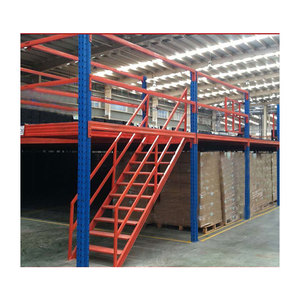
Heavy Duty Multi Tier Steel Grating Floor Mezzanine Platform Mezzanine Racking System Pallet Rack Supported Mezzanine
300-1000 kg/m²
Multi-Tier Grid
Open Steel Plank
Manufactured using prime structural steel certified under European Construction Products Regulation (CPR 305/2011) and ISO 9001:2015 traceability. Browse our direct production models engineered for global logistics hubs.
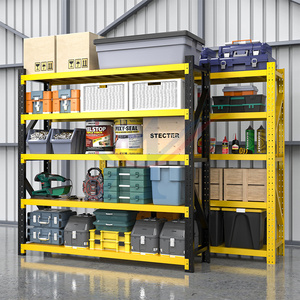
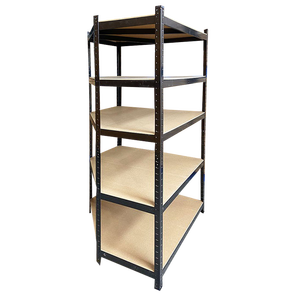
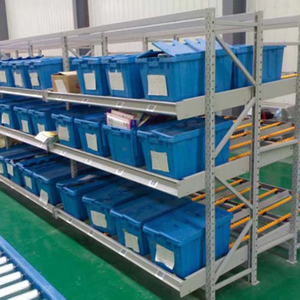
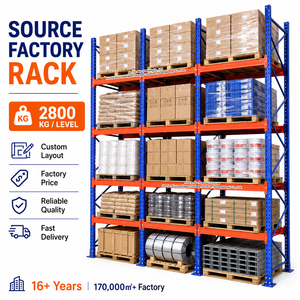
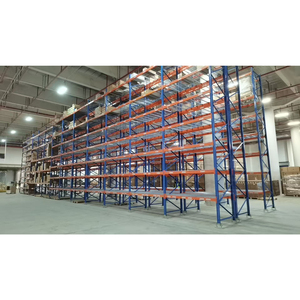
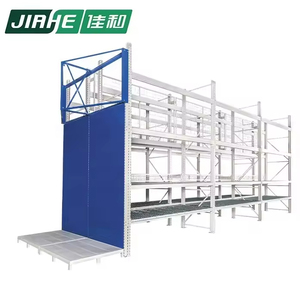
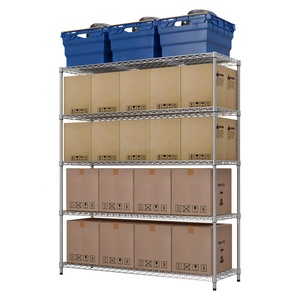
Guangzhou Heda Shelves Co., Ltd. delivers direct engineering-led manufacturing. Our facilities bridge raw metallurgical science with certified structural execution to eliminate systemic supply chain vulnerabilities.
Our manufacturing protocols are certified under CE No. 2435-CPR-8605159. Racking systems are classified under the Construction Products Regulation, mandating verified Factory Production Control (FPC), initial type calculations per EN 15512, and continuous third-party mechanical surveillance.
Operating under ISO 9001:2015 Registration No. 18624Q00169R0M, our fabrication flow features end-to-end metallurgical traceability. Every steel coil batch is logged from arrival testing to final slit-edge dimensional inspection, ensuring yield strength compliance under full operational load.
Our environmental coating lines utilize automated ultrasonic degreasing, zinc-phosphate micro-etching, and dual-zone water rinsing. This guarantees optimal substrate adhesion for electrostatic thermosetting epoxy-polyester coatings (60–90µm), validated by rigorous cross-hatch adhesion and salt-spray resistance assays.
Procuring industrial racking without accredited CE structural verification exposes distribution facilities to progressive collapse liabilities, catastrophic beam disengagement, and insurance repudiation. Real compliance requires verified engineering parameters.
| Evaluation Parameter | Certified CE Factory (HEDA Standards) | Unregulated Commercial Workshop | Structural Consequence |
|---|---|---|---|
| Structural Design Standard | EN 15512:2020 limit-state design with non-linear second-order analysis | Rudimentary elastic calculations or generic copycat profiles | Inaccurate prediction of global sway and torsional buckling limits |
| Steel Grade Verification | Mill Test Certificate (EN 10204 3.1) Q235B/Q355B verified yield limits | Uncertified secondary market scrap or variable-gauge steel coils | Premature micro-yielding below nominal operational working loads |
| Connector Moment Capacity | Empirical physical stub testing per EN 15512 Annex A (Rotational stiffness) | Assumed rigid joints without dynamic cycle or shear evaluation | Catastrophic beam detachment during seismic or eccentric forklift impact |
| Seismic Qualification | Modal response spectrum analysis per NZS 1170.5 / Eurocode 8 / AS 4084 | None; reliance on oversized footplates without anchor calculations | Anchor shearing, frame shearing, and complete progressive collapse |
| Biosecurity & Packaging | Dedicated steel stillages or ISPM-15 heat-treated wood with full export docs | Raw uncertified scrap timber dunnage and loose bundle strapping | Border quarantine seizure, fumigation demurrage, and physical transit deformation |
Need an engineer-certified layout calculation package for your municipal building consent?
Send an InquiryGlobal supply chain leaders are shifting procurement parameters from simple unit pricing to lifecycle resilience, automated warehouse compatibility, and regulatory auditability. Consider these dominant market evolutions.
Procurement specifications increasingly mandate compatibility with Autonomous Mobile Robots (AMRs), automated guided vehicles (AGVs), and 4D radio shuttle runners. Structural deflection limits are tightening from standard L/200 to L/400 to prevent automated sensor aborts and optical alignment errors inside deep-lane storage systems.
Due to seismic activity across the Pacific Rim and Mediterranean zones, procurement contracts demand project-specific geotechnical site spectra (AS 4084, NZS 1170.5, and Eurocode 8). Uprights now integrate high-ductility steel formulations and oversized multi-anchor base plates to absorb cyclic ground motion without frame detachment.
Tier-1 distribution developers require Environmental Product Declarations (EPDs) and documented Scope 1–3 emissions data. Factories employing renewable solar power arrays in continuous roll-forming lines and adopting powder coatings free of toxic heavy metals (RoHS compliant) command prime selection in multi-national tenders.
Pallet racking has evolved from heavy structural hot-rolled channels into high-yield, cold-formed profiles engineered through finite element analysis. Discover how modern cold-forming roll geometry maximizes structural load-to-weight ratios.
Modern upright geometry features 11 to 13 distinct profile bends. Cold work hardening during continuous automated profile roll-forming increases local yield strength at high-stress bends. This yields remarkable compression performance while minimizing excess steel mass and shipping tonnage.
Standard open-channel beams have been superseded by twin-C interlocking roll-formed box beams. Continuously welded using robotic gas-metal arc welding (GMAW), these closed sections provide high torsional stiffness, eliminating lateral-torsional buckling under rated Uniformly Distributed Loads (UDL).
Contemporary factories replace empirical guesswork with advanced ANSYS and RFEM FEA simulations. By modeling local, distortional, and global buckling modes under combinations of live, dead, wind, and seismic forces, engineering teams guarantee exact safety factors matching regional structural codes.
Direct, unvarnished technical answers regarding structural certification, site-specific engineering calculations, factory audits, and international import compliance.
Collaborate directly with our 300+ engineering and manufacturing experts. Provide your project parameters below to receive full 3D CAD drawings, system capacity calculations, and factory-direct pricing within 24 to 48 hours.