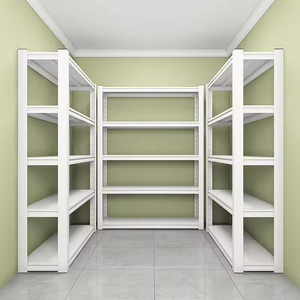
 CE Certified
30,000t
Monthly Steel Processing Capacity
2435CPR
Official CE Conformity Registration
30,000m²
Dedicated Automated Plant Facility
10,000+
High-Bay Installations Worldwide
Engineered Warehouse Racking Solutions
Precision-formed structural Q235B/Q355B cold-rolled steel engineered to withstand extreme static and seismic kinematic forces across modern logistics environments.
CE Certified
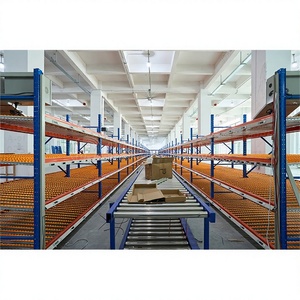 Dynamic FIFO
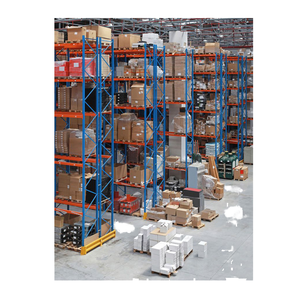 100% Selectivity
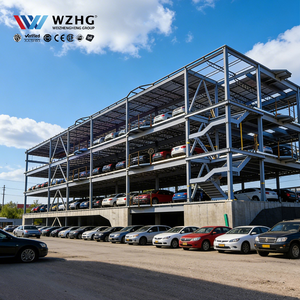 Heavy Duty Fab
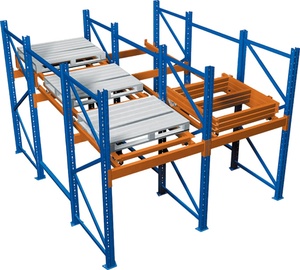 LIFO Intensive
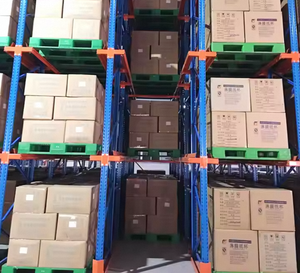 Factory Direct
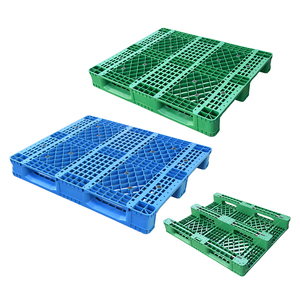 Euro Pallet Opt
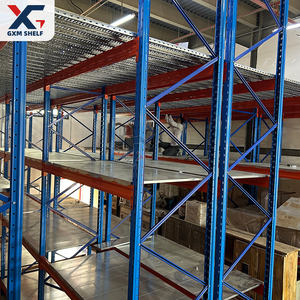 Multi-Tier Solid
Engineering White Paper: Specification Standards for Selective Pallet Racking
In modern international intralogistics procurement, selective pallet racking systems represent the critical operational foundation for high-throughput distribution hubs, cold storage distribution centers, and high-density industrial facilities. Unlike standard boltless shelving or light commercial racks, heavy-duty industrial pallet racking systems are categorized as structural steel systems subjected to both long-term sustained static loads and complex dynamic stress cycles caused by material handling equipment (MHE) motion, dynamic pallet placement, and regional seismic acceleration.
Procuring from a verified original equipment manufacturer (OEM) demands a granular understanding of structural engineering compliance. Selective pallet racking systems engineered under European standard EN 15512:2020 (Steel static storage systems – Adjustable pallet racking systems – Principles for structural design) and the Construction Products Regulation (EU) No 305/2011 (CE Marking No. 2435-CPR-8605159) guarantee that material yields, column perforations, connection node moment rotations, and overall frame stability have been rigorously evaluated via physical laboratory prototype testing and finite element analysis (FEA).
Cold-Rolled Omega Uprights
Fabricated from certified continuous coil structural grade Q235B to Q355B high-tensile steel. Formed with multi-bend profiles (typically 11-13 cold-formed folds) to optimize torsional rigidity, flexural-torsional buckling resistance, and load-to-weight structural efficiency.
Interlocking Box-Beams
Precision dual-C interlocking seam-welded box section profiles engineered to eliminate lateral deflection. Features precision robotically welded multi-claw end connectors with integral drop-out safety retaining pins to resist accidental vertical fork dislodgement.
Anti-Corrosion Surface Finish
Pre-treatment involves a multi-stage hot alkaline degreasing, ultrasonic acid pickling, and iron phosphating wash. Coated via electrostatic thermosetting epoxy-polyester powder baking at 180°C–200°C, producing high impact resilience and abrasion resistance exceeding 500-hour salt spray benchmarks.
System Metric Comparison: Selective Racking vs. High-Density Alternatives
Logistics directors must balance space utilization factors against immediate SKU access velocity. Selective pallet racking remains the universal benchmark for operations requiring unrestricted pallet accessibility and flexible SKU variation:
| Racking Architecture | Pallet Selectivity | Space Utilization | Stock Rotation Method | Forklift Compatibility | Primary Sector Application |
|---|---|---|---|---|---|
| Standard Selective Racking | 100% (Instant Direct) | 40% – 45% Floor Area | FIFO or LIFO Arbitrary | Standard Counterbalance, Reach Truck | 3PL Logistics, Retail Distribution, High-SKU Hubs |
| Very Narrow Aisle (VNA) | 100% (Instant Direct) | 55% – 65% Floor Area | Strict FIFO / High Throughput | Articulated Trucks, Wire-Guided VNA Trucks | E-commerce, High-Value Spare Parts, Pharmaceuticals |
| Drive-In / Drive-Through | 15% – 20% (Batch Access) | 70% – 80% High Density | LIFO (Drive-In) / FIFO (Drive-Through) | Narrow Counterbalance, Reach Trucks | Cold Storage, Seasonal Produce, Bulk Single-SKU |
| Push-Back Cart System | 30% – 50% (Per Lane SKU) | 65% – 75% High Density | Strict LIFO (Last-In First-Out) | Standard Reach & Counterbalance Trucks | Food & Beverage Wholesalers, Intermediate Buffer |
| Pallet Live / Gravity Flow | One SKU per Lane | 70% – 85% Maximum Density | Automatic Gravity FIFO | Standard Loading & Retrieval Forklifts | Perishable Groceries, Cold Chain Distribution |
Global Procurement Trends in Warehouse Storage Systems
Procurement strategies for structural racking systems among multinational supply chain operators are undergoing profound structural changes driven by three major macroeconomic dynamics:
1. Shift Toward Total Cost of Ownership (TCO) Over Initial Unit Price: Savvy supply chain procurement directors no longer calculate capital expenditure purely based on metric ton raw steel pricing. With warehouse lease rates in key logistics gateways surging worldwide, racking layout designs are optimized using advanced algorithmic space planning and high-bay vertical integration (reaching beam clearances exceeding 12–15 meters). Structural safety margins, load sign compliance, base plate anchor sizing for dynamic seismic zone dissipation, and durability under repeated forklift impacts define the modern long-term TCO calculation.
2. Hybrid AGV/AMR Automation Readiness: Modern selective pallet racking installations must be geometrically compatible with both manual forklift drivers and emerging autonomous mobile robots (AMRs), automated guided vehicles (AGVs), and vision-guided reaching equipment. This trend demands tighter engineering tolerances in beam deflection ratios (often moving from 1/200 down to 1/300 or 1/350 of span under maximum design load) to prevent automated vision guidance sensing errors during pallet docking.
3. Certified Regulatory Supply Chain Audit Compliance: Global tier-one warehouse operators and institutional real estate developers require fully documented chain-of-custody mill test certificates (MTCs), ISO 9001:2015 tracking, third-party CE structural certificates under the Construction Products Regulation, and localized compliance alignments with international codes such as European EN 15512, Australian AS 4084, and American RMI ANSI MH16.1.
Future Development Trends: Smart Racks & Sustainable Metallurgy
The industrial racking sector is advancing toward integrated sensing and sustainable manufacturing practices:
IoT-Enabled Structural Health Monitoring (SHM): The integration of low-power triaxial accelerometers, strain sensors, and RFID impact sensors directly into critical upright frame bases and beam-to-column connectors is transitioning from experimental testing to commercial deployment. These sensor nodes continuously monitor real-time beam stress, permanent plastic deformation, and accidental structural impacts from material handling equipment, instantly transmitting critical telemetry to facility Warehouse Management Systems (WMS) before catastrophic progressive rack failure can occur.
Green Steel Metallurgy and Eco-Coatings: In compliance with global carbon-neutrality mandates, tier-one manufacturers are increasingly transitioning to scrap-based electric arc furnace (EAF) low-embodied-carbon steel coils. In parallel, advanced heavy-metal-free, solvent-free epoxy-polyester powder formulations cured at lower thermal thresholds are significantly reducing carbon intensity per fabricated metric ton without degrading mechanical wear characteristics.
Guangzhou Heda Shelves Enterprise Manufacturing Capabilities
With an established heritage dating back to 2001, we combine multi-disciplinary engineering design with end-to-end industrial manufacturing muscle to eliminate middleman margins and compliance risks.
Manufacturing Scale
30,000 m² Modern Production Base
Equipped with fully automated high-precision roll-forming lines, automated continuous punching machines, robotic beam-connector welding units, and computerized continuous electrostatic powder-coating spray systems ensuring dimensional consistency across large-volume containerized shipments.
Certified Engineering
CE & ISO 9001:2015 Accredited
Our complete structural racking series holds verified CE Marking certification (Certificate No. 2435-CPR-8605159) and complies with ISO 9001:2015 quality assurance protocols. Every raw steel coil batch is inspected with spectral analysis and mechanical tensile testing before processing.
Engineering Support
Free Turnkey 3D & CAD Layouts
Our in-house technical department of over 300 experienced professionals crafts fully customized AutoCAD and 3D architectural layout renderings. We calculate column loads, structural deflection margins, seismic anchoring parameters, and optimal flue clearances tailored to your specific forklift specifications.
Global Export Rigor
Customs & Biosecurity Ready Packing
Products are secured in robust custom steel stillages or ISPM-15 heat-treated export timber with multi-layer protective moisture barriers, ensuring smooth clearance through rigorous biosecurity authorities worldwide (including Australia DAFF and New Zealand MPI inspection protocols).
Custom OEM / ODM
Bespoke Engineering & Colors
Full support for private-label OEM distributor manufacturing, custom upright hole punch pitch profiles (50mm, 75mm, 76.2mm teardrop), specialized column reinforcements, outdoor galvanization finishes, and RAL color matching for corporate branding.
Complete Documentation
Full Engineering & Customs Dossiers
Every shipment is delivered with comprehensive installation engineering guides, structural load rating calculation sheets, component weight breakdown lists, and preferential Certificate of Origin documents to streamline import clearance.
Frequently Asked Questions on Pallet Racking Procurement
Direct technical answers addressing engineering verification, safety standards, logistical transit, and installation support.
What specific certification should I demand when sourcing industrial pallet racking globally?
You must verify structural certification according to recognized international structural storage codes. In the European Union, compliance with EN 15512 and factory production control under CE Marking (CPR 305/2011/EU) is mandatory for permanent steel structures. For Oceania, adherence to AS 4084 and NZS 1170.5 seismic standards is required. In the USA, verify design calculations against the RMI (Rack Manufacturers Institute) ANSI MH16.1 specifications. Always request the manufacturer's accredited third-party test verification certificate and corresponding raw steel Mill Test Certificates (MTC).
How do we calculate the correct beam load capacity and safety deflection limits?
Beam capacity is calculated based on maximum uniformly distributed load (UDL) per pair of beams. Under standard EN 15512 codes, the maximum vertical deflection of a horizontal beam must not exceed L/200 (where L is the clear span distance between uprights). For automated operations or high-bay narrow aisles, tighter deflection thresholds of L/300 to L/350 are standard practice. Each pair of load-carrying beams must also incorporate mechanical steel safety lock pins to prevent accidental dislodgement when lift truck operators withdraw pallets.
Can selective pallet racking be installed outdoors or in high-humidity facilities?
Standard indoor warehouse racking utilizes high-quality electrostatic powder coating, ideal for dry, climate-controlled ambient warehouses. For outdoor lumber yards, coastal port regions, chemical fertilizer plants, or high-humidity greenhouse environments, components must undergo Hot-Dip Galvanization (HDG) according to ISO 1461. This metallurgically bonds a zinc protective layer of 60–85 microns directly to the steel substrate, delivering decades of maintenance-free cathodic rust protection.
What essential warehouse data is required to generate a custom 3D CAD design layout?
To prepare an optimized CAD drawing and static structural calculation, our engineering team requires:
1. Architectural floor plan: Facility length, width, column grid locations, dock door locations, and fire exit clear zones.
2. Clear ceiling height: Height from finished slab to underside of lowest roof purlin, lighting fixture, or sprinkler pipes.
3. Pallet metrics: Type (Euro 1200x800mm, Standard 1200x1000mm, or Australian 1165x1165mm), overall depth, width, total height including cargo overhang, and maximum pallet gross weight.
4. Forklift fleet specifications: Model type, minimum right-angle stacking aisle width (Ast), and maximum mast lift reach height.
How are heavy steel racking components packaged to prevent damage during ocean transit?
Because pallet racking uprights and beams represent long-span structural components, proper container bundling is critical to prevent surface abrasions and structural warping. Upright frames are nested with protective corrugated separators and strapped with high-tensile polyester bands onto rigid steel stillages. Beams are securely bundled with cushioned corners and shrink-wrapped in weather-proof polyethylene films. All timber used for crating strictly complies with ISPM-15 international heat-treatment quarantine standards.
Configure Your Warehouse With Factory-Direct Engineering
Partner directly with Guangzhou Heda Shelves. Send our structural engineering team your warehouse layout today for a complimentary 3D CAD design, spatial volume optimization report, and a detailed project quotation within 24 hours.