[email protected] Supplying Australia, New Zealand & the Pacific Islands
ISO 9001:2015 & CE Certified Manufacturer

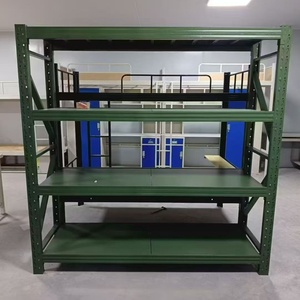
CE Certified Structural Pallet Rack Manufacturers & Supplier

Engineered heavy-duty hot-rolled C-channel & I-beam racking systems manufactured to EN 15512, AS 4084-2023, and high-ductility seismic parameters for high-throughput distribution hubs.

Product Engineering Portfolio

High-Capacity Industrial Racking & High-Density Storage Solutions

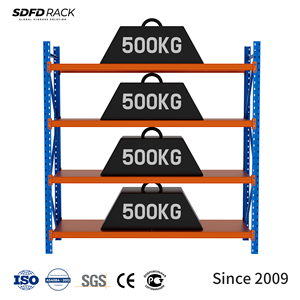
Explore our heavy-duty warehouse racking solutions manufactured from certified structural steel grades. Each system is engineered to withstand intensive forklift impact, high dynamic loads, and rigorous logistics operations.

Require Engineered Pallet Racking Built to Certified Standards?

Our structural design engineers provide complimentary 2D CAD layouts, 3D spatial renderings, and certified structural load capacity tables tailored to your forklift fleet and floor slab specifications.

Send an Inquiry
2001
Established Year
30,000m²
Modern Manufacturing Base
30,000T/Mo
Certified Production Output
10,000+
Global Turnkey Projects
Engineering White Paper

Structural Pallet Racking vs. Roll-Formed Racking: An In-Depth Structural Evaluation

In modern high-throughput logistics terminals and sub-zero distribution cold chains, selecting between Hot-Rolled Structural Steel Racking and Cold Roll-Formed Sheet Steel Racking is a critical engineering decision that dictates long-term facility safety, seismic resilience, operational uptime, and total life-cycle cost.

Structural pallet racks are fabricated from heavy-gauge hot-rolled structural steel shapes—primarily structural C-channels (ASTM A36, Q235B, or Q355B) and structural I-beams. Unlike cold roll-formed components, which are progressively folded at ambient temperatures from light-gauge coiled strip sheet steel (typically 1.5mm to 2.5mm thick), structural members are hot-formed at temperatures exceeding 900°C. This hot-rolling metallurgical process eliminates residual internal shear stresses, producing uniform grain structures, thicker corner radiuses, and vastly superior ductile toughness.

Key Engineering Finding: Hot-rolled structural C-channel columns exhibit up to 250% higher torsional rigidity and over 300% greater energy absorption capacity during dynamic forklift fork impact compared to thin-gauge roll-formed uprights. When bolted with Grade 8.8 structural fasteners, structural racking eliminates the risk of sudden dislodgement inherent in teardrop keyhole tabs under violent upward lift shocks.

Comprehensive Technical & Operational Comparison Matrix

The following engineering data table highlights the material properties, load tolerances, and durability parameters evaluated under international testing guidelines (EN 15512, RMI ANSI MH16.1, and AS 4084-2023):

Engineering Property / Metric Hot-Rolled Structural Pallet Rack Cold Roll-Formed Pallet Rack Procurement & Operational Impact
Primary Material Specification Hot-Rolled Structural C-Channel (Q235B / Q355B / ASTM A36) Cold-Rolled Sheet Steel Strips (Q235B / Cold-formed coils) Structural profiles feature uniform grain structure with zero work-hardening brittleness.
Upright Web & Flange Thickness 3.5 mm to 8.0 mm heavy structural section 1.5 mm to 2.5 mm thin gauge profile Structural columns resist puncture, local buckling, and torsional twist from reach truck mast collisions.
Beam-to-Column Connection Mechanism Heavy structural end-plates bolted with High-Tensile Grade 8.8 Bolts Drop-in hook tabs / Teardrop pins with safety clip Bolted structural connections provide high moment-frame resistance; will not shear or unseat during accidental upward pallet snags.
Impact Resistance Threshold (Forklift Strike) Exceptional: Absorbs high-energy kinetic impact without structural yield collapse Vulnerable: High susceptibility to local flange crippling, tearing, and twist Reduces annual warehouse rack maintenance and upright replacement downtime by over 75%.
Low-Temperature Performance (-30°C Freezer) High ductile transition retention; Charpy impact verified (Q355D/E available) Susceptible to cold-temperature brittleness and stress cracking along cold-formed bends Structural racks represent the global standard for refrigerated logistics and sub-zero ASRS high-bay silos.
Design Service Life Under Intensive Cycles 25 to 35+ Years in demanding multi-shift distribution centers 7 to 12 Years (frequently shortened by cumulative collision damage) Substantially lower Total Cost of Ownership (TCO) across a 15-year facility investment window.
Wash-Down & Sanitary Cleanability Open C-Channel Profile: No hidden interior voids; 100% accessible for sanitizing Closed tubular or semi-closed slotted box columns; traps moisture and organic debris Meets USDA, HACCP, and EU food-grade hygiene standards in seafood, meat, and dairy facilities.

For operations experiencing rapid SKU turnover, multi-shift order picking, and heavy counterbalance forklift traffic, structural pallet racks prevent catastrophic column failure. In contrast, while roll-formed racking offers a lower initial capital expense for lightweight retail reserves, its vulnerability to forklift strikes generates substantial ongoing repair expenses, safety audit violations, and rack collapse hazards.
Audit-Ready Engineering

CE Certification (CPR 305/2011) & International Structural Codes

Industrial storage systems are life-safety load-bearing structural installations. Guangzhou Heda Shelves Co., Ltd. operates under third-party audited quality control systems to guarantee full regulatory compliance across international jurisdictions.

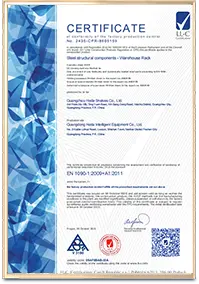
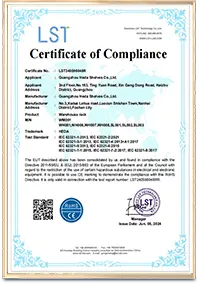
CE Mark: 2435-CPR-8605159

Certified in strict conformance with the European Construction Products Regulation (EU 305/2011) and EN 1090-1 / EN 1090-2 (Execution of steel structures). Our structural manufacturing passes rigorous Factory Production Control (FPC) audits up to Execution Class EXC2 and EXC3.

Permits lawful CE declaration throughout the European Economic Area (EEA).

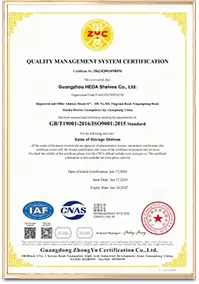
ISO 9001:2015 Quality System

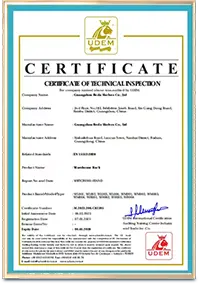
Certified under Registration No. 18624Q00169R0M with continuous multi-year recertification. Controls raw material mill certificates (MTRs), spectral chemical assays, automated submerged arc welding, shot blasting cleanliness, and dry film thickness (DFT) verification.

100% full metallurgical traceability back to steel melt ladle batches.

AS 4084-2023 & NZS 1170.5

Engineered to comply with the latest Australian Steel Storage Racking Standard (AS 4084-2023) and New Zealand seismic provisions. We deliver certified engineering calculations, baseplate sizing, and floor anchor embedment design suitable for verification by local Chartered Professional Engineers (CPEng).

Fully verified section moduli and seismic ductility factor calibrations.

HEDA CE Certification Document

CE Certification

No. 2435-CPR-8605159
HEDA ISO 9001 Certificate

ISO 9001:2015 QMS

No. 18624Q00169R0M
RoHS Testing Report

RoHS Compliance

Heavy Metal Free Coating
Structural Load Test Report

SGS & Load Test Report

Deflection & Dynamic Testing
Procurement Forecasting

Future Procurement & Industry Development Trends in Structural Racking

Global warehousing is undergoing rapid structural transformation driven by supply chain volatility, urban logistics land scarcity, high-density automation, and environmental sustainability mandates.

1. CapEx to TCO Paradigm Shift in Asset Procurement

Procurement directors at tier-1 3PLs and retail giants are transitioning from evaluating solely "initial cost per pallet position" to evaluating 20-year Total Cost of Ownership (TCO). While cold-rolled racking carries lower purchase pricing, frequent column collapses, replacement frame downtime, and yearly re-certification repairs drive up the total cost. Structural hot-rolled steel virtually eliminates replacement cycles, delivering an ROI advantage within 4 to 6 operational years.

2. Hybrid Automation: Merging Structural Racks with Robotics

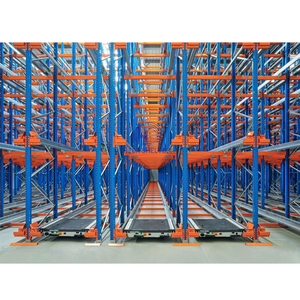
The rise of 4-Way Radio Shuttle Matrixes, Automated Storage & Retrieval Systems (ASRS), and autonomous forklift fleets (AMRs) requires ultra-rigid tolerance thresholds. Roll-formed racking often flexes under dynamic acceleration, causing shuttle vehicle navigation errors. Structural steel uprights and heavy C-channel guide rails maintain strict millimeter tolerances across high vertical elevations, providing the rigid framework automated robotics require.

3. Rigorous Seismic Mandates & Non-Linear Structural Analysis

Earthquake design codes (such as New Zealand's NZS 1170.5, California's CBC, and Eurocode 8) require finite element analysis (FEA) modeling for lateral sway and base ductility. Structural racking fabricated with welded heavy-gauge baseplates and thick flange profiles provides high structural damping and ductile plastic hinge formation, preventing catastrophic progressive collapses during major seismic events.

4. ESG, Circular Steel & Low-Carbon Supply Chains

International enterprise buyers now require Environmental Product Declarations (EPDs) and low-VOC manufacturing credentials. Structural hot-rolled steel maintains a 98%+ recyclability rate at end-of-life without metallurgical degradation. HEDA utilizes automated electrostatic powder coating lines with zero toxic heavy metals and closed-loop water treatment, assisting clients in achieving LEED and BREEAM industrial facility certifications.

5. Direct Factory Sourcing with End-to-End Compliance Packs

Rather than purchasing through multiple regional broker layers with high markups, global logistics managers are partnering directly with certified manufacturing suppliers. To mitigate offshore risk, leading manufacturers must provide complete pre-export engineering verification: full 3D CAD/BIM models, structural section calculations, ISPM-15 compliant shipping cradles, and local biosecurity export documentation (DAFF/MPI ready).

Manufacturing Excellence

Why Partner with Guangzhou Heda Shelves Co., Ltd.?

Founded in 2001, Guangzhou Heda Shelves Co., Ltd. has grown over 25 years into an internationally recognized engineering manufacturer specializing in industrial pallet racking, warehouse shelving, and structural mezzanine systems.

30,000 m² Facility & 30,000 Ton/Mo

Massive in-house production scale ensures rapid turnaround on high-volume 3PL distribution centers and multi-container project schedules.

300+ Engineering & QC Specialists

Dedicated structural calculation teams delivering FEA stress simulations, custom seismic detailing, and 24-hour CAD design response.

OEM / ODM Global Distributor Support

Private-label manufacturing, custom section stamping, color-matched epoxy coatings, and client-tailored structural component fabrication.

Export Logistics & Biosecurity

Complete export clearance documentation, preferential FTA certificates (ChAFTA, NZ-China FTA), and Australian DAFF / NZ MPI compliant packing.

Standardized 10-Step Quality Controlled Production Process

Every structural beam, upright column, frame brace, and baseplate passes through our rigorous 10-stage factory workflow before container loading:

01. Raw Steel Coil Inspection
02. Precision Laser & Saw Cutting
03. CNC Column Hole Punching
04. High-Precision Cold Bending
05. Profile Roll Forming Lines
06. Surface Deburring & Polishing
07. Robotic Submerged Arc Welding
08. Pickling & Phosphating Pre-treatment
09. Electrostatic Powder Coating
10. Pre-Shipment QC & Export Stillage
Buyer Guidance

Frequently Asked Questions: Industrial & Structural Racking Procurement

Detailed engineering, compliance, freight, and installation answers to assist warehouse operations directors, logistics engineers, and purchasing teams.

1. What specifically distinguishes structural hot-rolled pallet racks from standard roll-formed teardrop racks?
Structural pallet racks are manufactured using heavy hot-rolled steel shapes—predominantly structural C-channel profiles (ASTM A36, Q235B, or Q355B) with steel thickness ranging from 3.5mm up to 8.0mm. Roll-formed racking is cold-folded from thin-gauge steel sheet (1.5mm–2.5mm). Structural racks are assembled with high-tensile Grade 8.8 bolts rather than drop-in clips. This design provides over 250% higher resistance to forklift fork impacts, eliminates clip unseating hazards, and delivers an operational lifespan exceeding 25–30 years in harsh distribution and sub-zero freezer environments.
2. What documentation and legal compliance are provided under CE Certificate No. 2435-CPR-8605159?
Under CE Certification No. 2435-CPR-8605159 (conforming to Construction Products Regulation EU 305/2011 and EN 1090-1 / EN 1090-2), every shipment is accompanied by a formal Declaration of Performance (DoP), factory production control certificates, raw material mill test reports (EN 10204 3.1 MTRs), and welder qualification records. This documentation satisfies municipal building inspectorates and structural safety authorities across the EU, the UK, and Australasia.
3. How does HEDA engineer structural racking to comply with AS 4084-2023 and NZS 1170.5 seismic standards?
For Australian projects, our engineers apply design methodologies referenced to the newly updated AS 4084-2023 standard, calculating allowable beam deflection limits ($L/200$) and upright section shear properties. For New Zealand projects, we calculate dynamic seismic site coefficients ($C(T)$) based on NZS 1170.5 criteria, providing enlarged baseplates, heavy seismic bracing configurations, high-embedment seismic anchors, and engineering computation packs ready for local CPEng engineering producer statement (PS1) sign-off.
4. Why are structural C-channel racks the preferred choice for refrigerated and -30°C cold storage warehouses?
Sub-zero cold storage induces cold-temperature embrittlement in thin sheet metals. Structural hot-rolled steel maintains ductile toughness at low temperatures (with Charpy impact-tested Q355D/E options). Additionally, structural C-channel uprights possess open, unsealed geometries that allow easy washdown sanitation without trapping trapped condensation or ice buildup—meeting stringent food safety guidelines for frozen meat, seafood, and dairy operations.
5. What protective surface finishes are available for corrosive or outdoor environments?
We provide two primary finish options: (1) Thermoset electrostatic epoxy-polyester powder coating (60–90 microns DFT) cured at 200°C for dry indoor ambient facilities, and (2) Hot-Dip Galvanizing in accordance with ISO 1461 / ASTM A123 (65–100+ microns zinc coating) for outdoor lumber yards, coastal regions, chemical warehouses, and Pacific Island sites subject to high humidity and marine salt exposure.
6. How do you handle export packaging to meet strict Australian DAFF and New Zealand MPI biosecurity rules?
To prevent delays at Sydney, Melbourne, Brisbane, Auckland, or Tauranga container inspection terminals, all racking is packed onto heavy steel stillages or ISPM-15 heat-treated, certified stamped timber dunnage. Every bundle is securely strapped, shrink-wrapped with vapor-barrier films, and clearly tagged with itemized shipping marks corresponding exactly to the commercial invoice and packing list.
7. Can your structural racking be integrated with automated radio shuttle cars and ASRS crane systems?
Yes. Our structural racking frames can be manufactured with precision-machined laser alignment plates and heavy-duty cold-formed guide rail assemblies to interface seamlessly with 2-way and 4-way automated pallet shuttles as well as unit-load ASRS stacker cranes. The high structural rigidity of hot-rolled uprights minimizes vertical deflection and column sway under high-speed shuttle accelerations.
8. What project details are required for HEDA to prepare a complimentary 3D layout and load calculation quote?
To generate an optimized structural layout within 24 hours, our engineering office requires: (1) Warehouse architectural CAD floor plan showing building columns, entry doors, and dock locations; (2) Building clear interior height beneath ceiling rafters and fire sprinklers; (3) Pallet dimensions (Width x Depth x Height including cargo overhang); (4) Maximum pallet gross weight; (5) Forklift model, maximum lift height, and minimum aisle turning radius; and (6) Project location for seismic and geotechnical slab review.
9. What is the typical sea freight transit schedule and production lead time?
Standard factory production lead times range between 20 to 30 days depending on total project tonnage and surface finish. Direct sea freight voyages from our southern China manufacturing port to major Australian ports (Sydney, Melbourne, Brisbane) take approximately 14 to 20 days; to New Zealand ports (Auckland, Lyttelton), 18 to 24 days; and to major European and North American container hubs, 25 to 35 days.
10. Do you provide installation supervision, engineering stamping, and spare components?
Yes. Every delivered system includes comprehensive step-by-step 3D assembly shop drawings, torque tightening schedules for Grade 8.8 bolts, and load rating signage plaques. For large-scale projects, we can deploy seasoned installation supervisors on-site or coordinate with verified regional installation partners across Australia, New Zealand, Europe, and North America. Additional anchor bolts, frame shims, and beam locking devices are packaged with each export container.
Start Your Engineering Review

Request an Engineered Layout & Factory-Direct Quote

Connect directly with our Guangzhou engineering headquarters. Send your site parameters, pallet specifications, or tender drawings to receive a complete 3D layout, load table, and CIF shipping quotation.

Step 1: Floor Plan Review Share your architectural DWG/PDF drawing including columns, docks, and clear heights.
Step 2: 3D Layout & FEA Model Our team delivers compliant CAD layout designs optimizing aisle widths and pallet density.
Step 3: Direct Factory Pricing Transparent itemized quotations with competitive ocean freight delivery to your destination port.