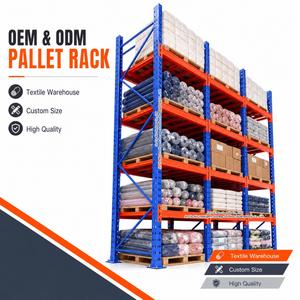
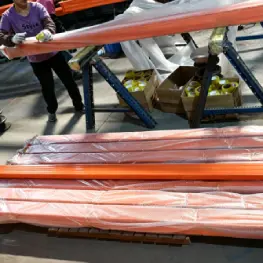
EN 15512:2020 & AS 4084 Certified Structural Racking
CE Certified Types Of Racking Suppliers & Exporter
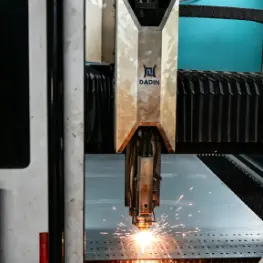
Engineering high-density warehouse storage systems for intralogistics, 3PL hubs, and cold storage chains. Factory-direct export of selective, shuttle, cantilever, and mezzanine systems directly from Guangzhou Heda Shelves.
30,000 m²
Automated Production Site
300+
Engineers & Technicians
30,000 T
Monthly Steel Processing
CE / ISO
CPR 305/2011 Verified
Industrial Storage Systems
CE Certified Racking Configurations & Specifications
Explore our certified cold-formed and structural steel storage solutions. Precision-engineered for AS 4084, EN 15512, and FEM standards, tailored for heavy payloads, automated pick paths, and extreme seismic environments.
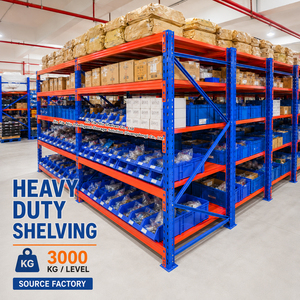
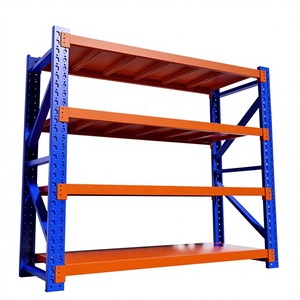
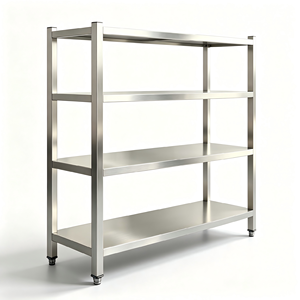
Cost-effective longspan racking engineered for high-turnover manual order fulfillment, automotive spare parts, and non-palletized distribution centers.
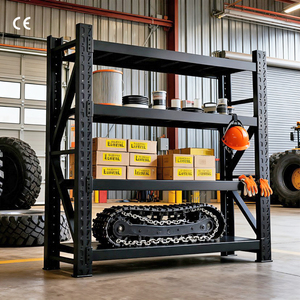
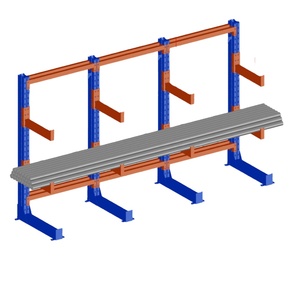
Free-standing, unobstructed frontage for timber packs, steel bars, PVC piping, and structural profiles. Configurable in single or double-sided layouts.
Structural Safety, Deflection Indices & System Archetypes
Industrial racking is a specialized civil engineering structure governed by limit-state structural dynamics. Understand load distribution factors, Eurocode compliance, and floor space utilization across major systems.
1. Mechanical Rigidity & Limit State Deflection Under EN 15512:2020
Unlike static building frames, adjustable pallet racking (APR) undergoes cyclic, asymmetric, and live impact forces from handling equipment. According to EN 15512:2020 (European Standard for Steel Static Storage Systems — Adjustable Pallet Racking Systems — Principles for Structural Design), beam design must strictly control maximum deflection limits ($L/200$) under maximum allowable working load, while frame column design requires finite element analysis (FEA) taking second-order sway effects ($P-\Delta$ and $P-\delta$) into account.
As an internationally accredited supplier, Guangzhou Heda Shelves validates column stability, connector rotational stiffness ($C_d$), and base plate anchor tensile pullout resistance using physical strain-gauge tests alongside digital ANSYS simulation models. This guarantees complete compliance with EU Construction Products Regulation (CPR 305/2011), granting CE Marking under harmonized structural steel execution standards (EN 1090-1 / EN 1090-2 Execution Class 2).
Bending & Buckling Mechanics
Uprights utilize cold-formed multi-ribbed profiles rolled from continuous high-tensile Q355B coils. Upright profile perforation ratios are precision-calculated to maximize net cross-sectional modulus while preventing localized flange crippling.
Rotational Beam End Connectors
Beams feature 3-hook, 4-hook, or 5-hook cold-stamped brackets that clamp around the upright columns. This creates a semi-rigid frame joint that absorbs dynamic torque from forklift placements without structural fatigue.
Seismic Dampening Geometry
For sites in New Zealand (NZS 1170.5), Australia (AS 4084:2023), and Mediterranean zones, frames incorporate augmented diagonal cross-bracing, heavy-duty floor anchoring spigots, and oversized footplates to absorb seismic ground acceleration.
2. Comparative Engineering Typology Matrix
Selecting the ideal racking typology requires balancing SKU count, throughput velocity, inventory turnover (FIFO vs. LIFO), and capital expenditure. The table below illustrates the physical and operational parameters of industrial racking configurations manufactured in our facility:
Racking Typology
Aisle Width (Clear)
SKU Selectivity
Floor Area Utilization
Inventory Flow
Standard Load Limit
Automation Readiness
Selective Pallet Racking
3.0 m – 3.8 m
100% (Instant)
35% – 45%
FIFO / LIFO
Up to 4,500 kg/level
Medium (Reach/AGV)
Very Narrow Aisle (VNA)
1.6 m – 1.9 m
100% (Direct)
55% – 65%
FIFO / LIFO
Up to 4,000 kg/level
High (Wire-Guided)
Drive-In / Drive-Through
Lane-based (FLT in)
20% – 30%
65% – 75%
LIFO (Drive-In)
Up to 1,500 kg/pallet
Low (Manual FLT)
Radio Shuttle System
1.8 m – 2.4 m (Pick face)
40% – 60%
75% – 85%
FIFO or LIFO
Up to 2,000 kg/pallet
Very High (Semi-Auto)
Gravity Pallet Flow
Dedicated In/Out Face
30% – 50%
70% – 80%
Strict FIFO
Up to 1,200 kg/pallet
High (Conveyor Link)
Cantilever Racking
Unobstructed Arms
100% (Linear)
50% – 60%
Flexible
Up to 1,500 kg/arm
Medium (Side-loader)
Multi-Tier Mezzanine
Platform Walkways
100% (Manual)
100% – 200% (Gain)
Zone Batch Pick
300–1,000 kg/m²
High (Chutes/Lifts)
Market Intelligence & Sourcing Outlook
Future Procurement Trends in Industrial Storage (2025–2030)
Strategic procurement officers are shifting from basic commodity buying to evaluating total cost of ownership (TCO), automated material handling system (AMHS) interoperability, and environmental footprint.
1. Autonomous Mobile Robot (AMR) & Shuttle Synergies
Standard manual drive-in racks are quickly being phased out in favor of hybrid Radio Shuttle and 4D Shuttle systems. Modern warehouse specifications now demand beam clearances and rail levelness within $\pm 1.5\text{ mm}$ tolerance (EN 15620 Class 400) to allow Autonomous Mobile Robots (AMRs) and automated forklifts to operate without line-of-sight obstruction.
2. Cold Chain Thermal & Volumetric Densification
With refrigerated power consumption accounting for up to 60% of operating expenses in food logistics, procurement is turning to compact pallet storage architectures. Automated shuttle storage and mobile racking reduce chilled air volume waste by 40% compared to conventional selective aisles, lowering cooling energy consumption per pallet position.
3. Decarbonized Steel & Eco-Coating Mandates
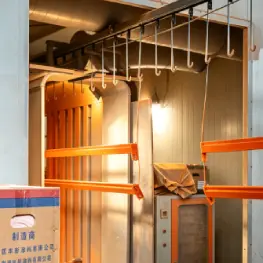
European and multinational 3PLs increasingly prioritize Environmental Product Declarations (EPD) and Scope 3 carbon reduction. Procurement specifications require electric arc furnace (EAF) low-carbon steel, heavy metals-free (RoHS compliant) thermoset polyester powders, and non-toxic zinc phosphating bath treatments with zero VOC emissions.
4. Dynamic Digital Twin & Stress Sensor Integration
Next-generation warehousing integrates IoT strain gauge sensors into critical upright base plates and cantilever arms. These sensors stream structural load telemetry to facility management software, alerting warehouse managers to dangerous column deflection or forklift impact damage before failure occurs.
5. Strict Global Seismic Sign-Off Requirements
Buyers in Australasia, the Americas, and Japan are enforcing independent structural peer reviews. Engineering documentation must now include complete section modulus properties, load tables, anchor embedment calculations, and certification by local chartered engineers before installation permits are issued.
6. Turnkey Factory-Direct Engineering & Staging
Global distributors and EPC logistics contractors bypass local trading intermediaries. By dealing directly with primary manufacturers offering in-house CAD layouts, custom slotting, containerized bundle staging, and bilingual installation manuals, enterprise buyers reduce overall project costs by 25%–35%.
Enterprise Manufacturing Moat
Guangzhou Heda Shelves Co., Ltd. — 25 Years of Engineering Excellence
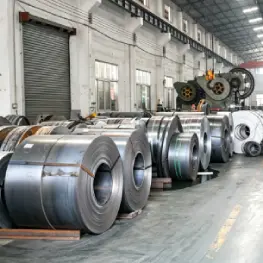
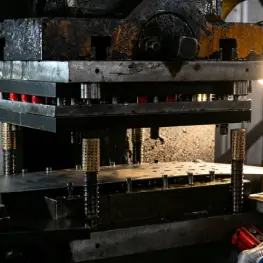
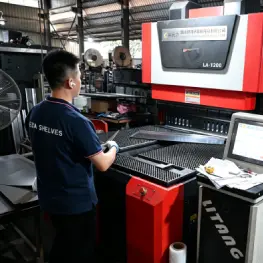
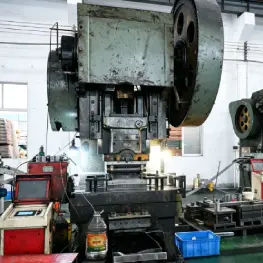
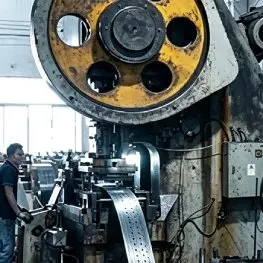
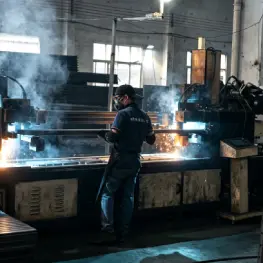
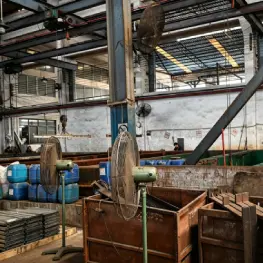
Established in 2001, Guangzhou Heda Shelves has grown from a specialized metal fabricating workshop into an internationally recognized manufacturer of automated warehouse storage structures. Spanning a 30,000 square meter modernized factory, we maintain a monthly processing output exceeding 30,000 tons of cold-formed structural steel.
Our core competency lies in delivering engineering-backed, fully compliant racking kits directly to port. With over 10,000 warehouse projects completed across 130 countries, we provide comprehensive engineering data packs—including section properties, 3D BIM/CAD layouts, and load tables—that streamline approval by local structural engineers and municipal inspectors.
Ultrasonic thickness checks, ISPM-15 wooden framing, and international sea-packing.
Procurement Engineering FAQ
Answers to Critical Technical & Sourcing Questions
Detailed engineering answers covering certification, safety codes, seismic calculations, and international freight logistics.
How do you verify genuine CE compliance for structural steel storage racking?
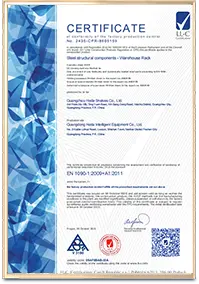
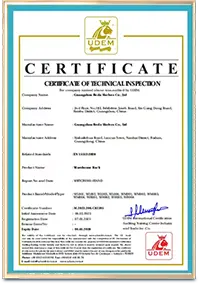
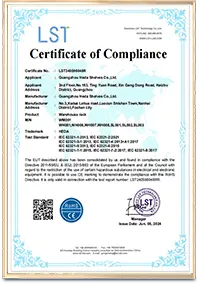
Under European Union Construction Products Regulation (EU CPR 305/2011), static steel racking falls under standard EN 1090-1 (Execution of steel structures and aluminum structures) and EN 15512. Authentic compliance requires an official Factory Production Control (FPC) audit certificate issued by a recognized Notified Body. Guangzhou Heda Shelves holds verified CE Certification No. 2435-CPR-8605159, entitling our products to carry the official CE mark, complete with full Declaration of Performance (DoP) documents and mill test certificates (MTC) traceably linking steel raw coils to EN 10204 3.1 standards.
Can your racking systems be certified for AS 4084:2023 in Australia and NZS 1170.5 in New Zealand?
Yes. The latest AS 4084:2023 (Steel Storage Racking) standard harmonizes closely with European EN 15512 limit-state methods. We supply complete structural packages including cross-sectional geometric properties, section modulus ($Z_{xx}, Z_{yy}$), beam connection rotation curves, and base plate shear computations. For New Zealand projects requiring verification under NZS 1170.5, we configure augmented portal bracing, thicker upright gauge steel, and chemical anchor bolt embedment depths matching your local geotechnical soil classification (Classes A through E).
What is the standard deflection limit calculation for heavy-duty pallet rack beams?
In accordance with international codes (EN 15512, FEM 10.2.02, and ANSI/RMI MH16.1), the maximum vertical elastic deflection of a horizontal pair of pallet beams under uniformly distributed design load must not exceed $L/200$, where $L$ is the clear distance between the upright frame columns (e.g., for a 2,700 mm beam spanning three standard pallets, max permissible deflection is $\frac{2700}{200} = 13.5\text{ mm}$). Additionally, beam-end connector safety locks must resist an upward accidental dislodgement shear force of at least $5\text{ kN}$.
When should a buyer select Hot-Dip Galvanizing (HDG) over Epoxy Powder Coating?
Standard electrostatic powder coating ($60\text{–}100\ \mu\text{m}$) is the industry benchmark for dry, temperature-controlled ambient warehouses, offering impact resistance and color-coded picking identification. However, for outdoor lumber/steel cantilever storage, coastal facilities exposed to marine atmospheric corrosion (ISO 12944 C4/C5 environments), or sub-zero blast freezers experiencing persistent condensation cycles, we supply Hot-Dip Galvanized (HDG) steel components according to ISO 1461, delivering over $70\ \mu\text{m}$ of sacrificial zinc protection.
How are import biosecurity and timber packaging regulations handled?
All export shipments leaving our Guangzhou manufacturing plant conform to ISPM-15 wood packaging international directives. Timber pallets, dunnage, and spacers undergo certified Heat Treatment (HT) and carry the registered IPPC stamp. Alternatively, for strict quarantine jurisdictions like the Australian Department of Agriculture, Fisheries and Forestry (DAFF) and New Zealand Ministry for Primary Industries (MPI), we provide 100% steel stillage and steel-framed packaging, avoiding fumigation delays at destination ports.
What initial warehouse data is required to generate a custom 3D CAD proposal?
To prepare a complimentary layout and load calculation within 24 hours, our engineering office requires six core operational data points:
(1) Warehouse architectural CAD drawing showing internal columns, dock doors, and fire exits;
(2) Clear ceiling height to the lowest obstruction (lighting or ESFR fire sprinkler head);
(3) Pallet dimensions ($W \times D \times H$, including overhang);
(4) Maximum weight per pallet;
(5) Forklift model, mast lift height, and minimum right-angle stacking aisle turning radius ($A_{st}$);
(6) Operational temperature range and facility location for seismic calculations.
Direct Factory Consultation
Accelerate Your Storage Project with Certified Engineering
Submit your warehouse floor plan to our structural team. Receive a comprehensive CAD proposal, static calculation pack, and factory-direct export quote within 24 hours.
Free 3D Layout & Pallet Slotting
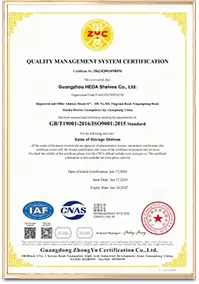
CE & ISO 9001 Compliance Packs
Door-to-Port Global Shipping
OEM / ODM Private Label Support
Download Master Catalog
Get technical engineering profiles, load tables, upright punching details, and case studies.
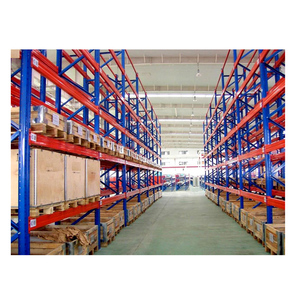 EN 15512 Standard