Industrial Storage Systems & Heavy-Duty Structural Shelving
From wall-anchored mezzanine platforms to high-throughput automated shuttle racking, our CE-certified manufacturing line delivers structural safety factors exceeding EN 15512 standards.
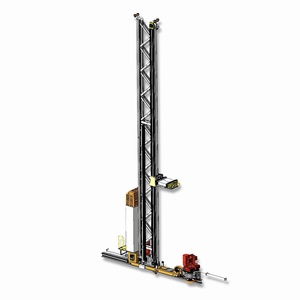
Pteris Miniload-Single Column-High Speed ASRS Automated Shuttle Pallet System
Automated high-density buffer storage system featuring rapid single-column mast extraction, integrated wall-tie stabilization, and automated pallet shuttles.
- High-Speed AS/RS
- Single Mast Alloy
- Wall-Tied Stability
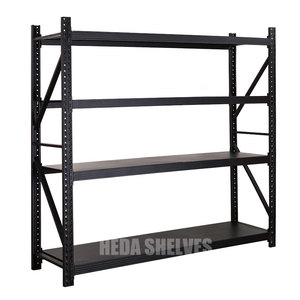
Customizable Black Warehouse Medium Duty Steel Shelving For Storage Wholesale
Electrostatic matte powder-coated medium duty shelving with wall-mounting bracket kits, adjustable level tiers, and high rigidity cold-formed upright profiles.
- 300-800 kg/Tier
- Wall-Braced Uprights
- Boltless Quick-Lock
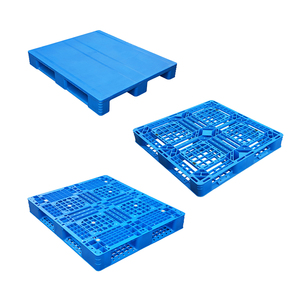
Preface 1200x1000 Light Duty HDPE 4-Way Entry Euro Rack Plastic Pallet
Eco-friendly virgin HDPE structural pallet designed for seamless integration with wall-supported cantilever racks, roller conveyors, and automated pick modules.
- 4-Way Entry
- 1200x1000 mm Euro
- Anti-Slip Deck
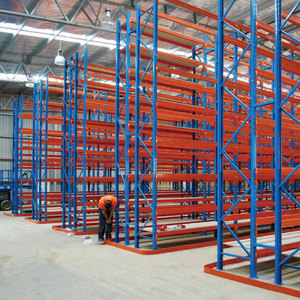
Heavy Load Cold Rolled Steel Narrow Aisle Racking for Warehouse Optimization
Very Narrow Aisle (VNA) system engineered with precision tolerances, lateral wall-tie overhead portals, and Q355B cold-rolled steel section properties.
- Up to 4,500 kg/Beam
- Overhead Wall Ties
- VNA High Space Use
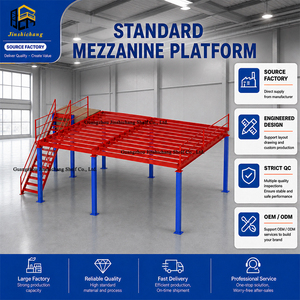
OEM Customized Steel Mezzanine Floor for Warehouse Storage & Factory Projects
Multi-tier structural platform supporting wall-mounted perimeter anchoring, heavy-gauge beam runs, steel grating decking, and high capacity mezzanine loads.
- 500-1500 kg/m²
- Wall Anchorage Point
- Modular Expansion
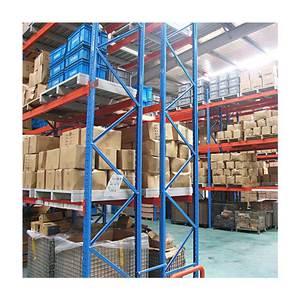
Industrial Heavy Duty Rack Manufacturing Pallet Rack Storage Logistics Racks
Selective heavy duty racking incorporating wall-clamped row spacers, dual column protectors, and high-tensile connection lugs for seismic stabilization.
- Heavy Pallet Storage
- Wall Spacer Clamps
- Full Direct Access
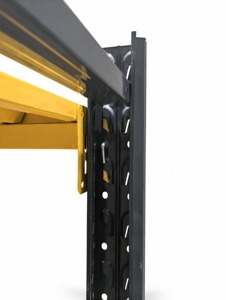
Detachable Butterfly Hole Rack Storage System for Warehouse Manual Picking
Fast assembly modular shelving system featuring butterfly perforation columns, wall stabilization brackets, and modular galvanized steel deck shelves.
- Butterfly Perforation
- Bolt-Free Locking
- Wall Anchor Support
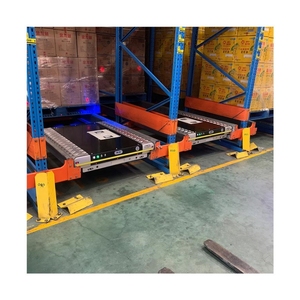
Customizable Industrial Heavy Duty Steel Pallet Shuttle Racking System
Semi-automated deep lane shuttle racking with heavy-duty cold rolled steel frames, reinforced wall perimeter backstops, and programmable optical guide runners.
- High-Density Shuttle
- Deep-Lane LIFO/FIFO
- Seismic Wall Bracing
Guangzhou Heda Shelves Co., Ltd. Structural Authority
Founded in 2001, HEDA Shelves operates a state-of-the-art 30,000 square meter facility delivering CE and ISO certified industrial wall-mounted and heavy-load racking systems to tier-1 logistics operators across Europe, Oceania, and the Americas.
CE Certification & Wall-Mounted Structural Mechanics
Wall mounted rack shelving systems and wall-supported cantilever racks require strict adherence to mechanical stress distribution models, anchoring shear calculation, and the European Construction Products Regulation (CPR 305/2011).
CE Compliance (2435-CPR-8605159)
Under European Union standard EN 15635 and EN 15512, steel storage racking is classified as an engineered load-bearing structural component. Guangzhou Heda Shelves Co., Ltd. holds CE Certificate No. 2435-CPR-8605159, certifying that our Factory Production Control (FPC) system rigorously complies with structural steel tolerances, material traceability, and cold-bending profile execution classes (EXC2).
Every structural batch undergoes chemical composition spectroscopy and tensile strain testing to confirm that yield points ($R_{eH}$) and ultimate elongation properties match harmonized design equations.
Anchor Shear & Moment Physics
Unlike free-standing warehouse pallet racks that rely primarily on baseplates for downward compressive force, wall-mounted rack shelving relies on a calculated combination of vertical column compression, horizontal pull-out tensile forces, and bracket-arm bending moments ($M = F \times L$).
Our engineering team performs Finite Element Analysis (FEA) on wall-mounting brackets to evaluate anchor bolt shear capacity across varied substrates including C20/25 to C50/60 reinforced concrete, solid clay brick masonry, and structural building steel framework.
Substrate Verification & Fastening
A primary failure mode in sub-standard industrial wall shelving is anchor tear-out caused by unrecognized masonry cavity voids or dynamic load resonance. HEDA Shelves specifies calibrated chemical capsule anchoring (vinyl ester resin) or undercut heavy-duty mechanical expansion bolts (Class 8.8 and 10.9 zinc-plated carbon steel).
Each engineered wall-bracket assembly includes pre-slotted expansion tolerance ports that accommodate building thermal deflection without transferring bending moments into secondary building partition framing.
| Performance Dimension | CE Certified Wall-Mounted Shelving | Standard Boltless Free-Standing Rack | Structural Cantilever Racking System |
|---|---|---|---|
| Primary Steel Grades | Q235B / Q355B Cold-Rolled Carbon Alloy | Commercial Light Gauge SPCC / Q195 | Heavy Q355B Hot-Rolled I-Beams |
| Aisle Footprint Required | Zero (Elevated Wall Envelope) | Standard Forklift Aisle (2.8m - 3.5m) | Wide Direct Aisle (3.2m - 4.5m) |
| Lateral Deflection Limits | $1/200$ to $1/350$ of Clear Span ($L$) | $1/150$ to $1/200$ Frame Height | $1/180$ Arm Length Deflection |
| Seismic Acceleration Resiliency | NZS 1170.5 & Eurocode 8 Compliant Ties | Dependent on Floor Anchor Thickness | Dual-Plane Base gusset & Splice Pins |
| Corrosion Resistance Treatment | 12-Stage Phosphating + 75μm Powder | Basic Single-Pass Liquid Spray Coat | Hot-Dip Galvanized / Epoxidized Powder |
| Third-Party Structural Validation | CE No. 2435-CPR-8605159 / ISO 9001 | Self-Declared Supplier Rating | CE Certificate / Mill Test Reports (MTR) |
Future Procurement Trends in Industrial Wall-Mounted Shelving
Procurement executives and supply chain directors are navigating rapid transformation in warehouse spatial efficiency, carbon reporting, and automation integration across global fulfillment centers.
Micro-Fulfillment & Vertical Airspace Monetization
With industrial urban warehousing lease costs rising 28% across key logistics gateways, facility managers are shifting from ground-only footprints to multi-tier perimeter storage. CE-certified wall-mounted systems allow operations to reclaim obsolete vertical space above dock doors, packing tables, and battery charging stations without building new structural mezzanines.
Standardized Modular Interoperability (OEM / ODM)
Global multi-site operators no longer procure proprietary racking profiles that lock them into single-region vendors. The trend heavily favors butterfly-hole and universal teardrop punch patterns that interface seamlessly with standard industrial wire decks, plastic bin rails, and automated small-parts AMR (Autonomous Mobile Robot) pick stations.
Decarbonized Metallurgy & Life Cycle Traceability
European and American carbon border mechanisms (CBAM) are compelling procurement teams to demand verified Environmental Product Declarations (EPD). HEDA Shelves manufactures racking utilizing prime electric arc furnace (EAF) and optimized blast-furnace steel coils that minimize embedded carbon, accompanied by ISO 9001:2015 and RoHS chemical compliance certification.
Digital Twin & BIM-Ready Engineering Modeling
Procuring industrial shelving today begins in a digital environment. Modern tenders demand 3D IFC/Revit models with calculated load vectors, enabling general contractors to conduct building clash detection with HVAC ducting, fire sprinklers, and overhead crane rails prior to component fabrication and shipping.
Nano-Composite Anti-Wear Powder Metallurgy
High-friction logistics environments require coating durability that resists forklift scrapes, corrosive chemical outgassing, and sub-zero thermal cycling. The adoption of TGIC-free polyester thermosetting powder applied at controlled film thicknesses (60–90 microns) ensures over 500 hours of salt spray resistance (ASTM B117).
Technological Development of Industrial Modular Shelving
Trace the engineering evolution of wall-mounted and structural warehouse rack systems from static, manual bolted iron frames to dynamic, robotic-assisted structural modules.
Gen 1 to Gen 2: Bolted vs. Cold-Formed Locks
Historical wall racks relied on labor-intensive bolted perforated angle iron that suffered from localized bolt hole ovalization under fluctuating dynamic loads. The advent of high-precision CNC punch presses allowed cold-rolled Omega ($\Omega$) column profiles with integrated butterfly-hole and tear-drop punch geometries. These enable toolless installation while delivering superior mechanical hook wedging under payload pressure.
Gen 3: High-Tensile Steel Alloying
By migrating from generic low-carbon mild steel to micro-alloyed structural grades like Q355B and high-strength steels, upright section thickness can be optimized from 2.5mm down to 1.8mm–2.0mm without sacrificing vertical buckling threshold. This structural weight reduction lowers ocean freight emissions and enables swift handling for on-site installation crews.
Gen 4: Hybrid Wall-Supported Mezzanine Integration
Modern industrial projects increasingly merge wall-mounted structural frameworks with raised access platforms. By anchoring primary floor stringers directly into building perimeter columns or masonry walls via engineered gusset brackets, facilities eliminate rows of obstructive vertical ground posts, freeing wide forklift clearways on the active ground level.
HEDA Shelves 10-Stage Precision Manufacturing Workflow
Every structural upright, wall-bracket assembly, and beam is engineered under strict ISO 9001:2015 and CE quality assurance protocols to guarantee micron-level installation fit.
Raw Steel Inspection
Ultrasonic thickness verification and spectral metallurgical verification of prime Q235B/Q355B coils.
Precision Slitting
High-speed uncoiling and precision longitudinal strip slitting with laser-monitored width tolerances.
Automated Punching
Multi-ton continuous hydraulic CNC punch lines stamping butterfly and teardrop hole arrays at exact 50mm pitch.
Roll Forming
Continuous 18-to-24 station roll forming lines shaping cold steel strips into rigid multi-bend Omega sections.
Laser Arm Cutting
3D fiber laser profiling of wall mounting bracket arms, gussets, and anchor base plates.
Robotic Welding
Shielded gas robotic arc welding (MIG/MAG) of bracket connectors and beam end-connectors.
Surface Pretreatment
Automated multi-stage immersion: alkaline degreasing, acid pickling, rust removal, and zinc phosphating.
Powder Coating
Automated electrostatic spray booths applying lead-free, non-toxic architectural grade epoxy-polyester powder.
High-Temp Curing
Tunnel oven polymerization at 180°C to 200°C ensuring cross-linked coating hardness ($>2H$) and adhesion.
Export Packing
Components bundled on custom steel stillages or ISPM-15 treated timber with shrink wrapping for sea freight.
Frequently Asked Questions for Sourcing & Engineering
Detailed technical, structural, and regulatory responses to questions frequently raised by commercial buyers, consulting engineers, and logistics procurement directors.
How do you verify whether a facility wall can support wall-mounted rack shelving?
Evaluating wall capacity requires structural verification of the building substrate. Reinforced poured concrete walls (minimum compressive strength $\ge 20 \text{ N/mm}^2$) and core-filled concrete block masonry provide the highest structural load capacity, capable of supporting heavy wall-mounted cantilever arms and dynamic shelving. For steel-framed structures, wall mounting brackets must be fastened directly into structural building columns (I-beams or H-columns) or intermediate steel girts rather than light sheet-metal cladding.
Our engineering team provides comprehensive Anchor Reaction Force Schedules detailing maximum shear ($V_{Ed}$) and tensile pull-out forces ($N_{Ed}$) under maximum uniformly distributed load (UDL) and seismic condition models, enabling your local consulting structural engineer to approve building wall attachments without risk.
What documents are provided to demonstrate CE certification compliance under CPR 305/2011?
Every commercial consignment exported by Guangzhou Heda Shelves Co., Ltd. is accompanied by a formal Declaration of Performance (DoP) tied to our CE Certificate No. 2435-CPR-8605159. In addition, we supply Certified Mill Test Reports (MTRs) according to EN 10204 3.1 detailing the steel coil heat number, chemical composition (C, Mn, Si, P, S), yield strength ($R_{eH}$), tensile strength ($R_m$), and elongation percentages.
For custom engineering and mezzanine solutions, we also supply complete calculation dossiers referencing EN 15512, welding procedure specifications (WPS), and quality inspection logs for your local building certifier or municipal safety auditor.
What is the difference between chemical anchors and mechanical wedge anchors for wall brackets?
Mechanical wedge anchors work by radial friction expansion against the drilled concrete wall. While rapid to install and cost-effective, they exert high internal expansion stress on the base substrate, requiring generous edge distances and substantial spacing to prevent concrete spalling or cracking under tension.
Chemical anchoring systems (injectable vinyl ester or pure epoxy resins with threaded steel studs) bond the anchor rod stress-free across the full hole depth. This distributes tensile pull-out forces uniformly along the entire drilled length without internal bursting pressure, making chemical anchors the superior, code-preferred choice for close-to-edge wall configurations, dynamic vibration loads, and older masonry structures.
Can HEDA wall-mounted shelving and mezzanine systems comply with regional seismic requirements?
Yes. We regularly design storage structures for earthquake-prone territories including New Zealand (NZS 1170.5), Australia (AS 4084 / AS 1170.4), and seismic zones across Europe (Eurocode 8 / EN 16681). Depending on your site’s Spectral Acceleration ($S_a$), soil profile type, and building importance level, we integrate cross-bay portal bracing, heavy-gauge welded baseplate stiffeners, anchor embedment enhancements, and positive wall-tie row dampers to mitigate cyclical ground movement.
How does electrostatic powder coating protect against corrosion in high-humidity or coastal zones?
Our automated finishing line utilizes a continuous 12-stage chemical pretreatment incorporating hot alkaline degreasing and micro-crystalline zinc phosphating. This forms an inorganic protective conversion layer that physically prevents oxidation creep beneath the topcoat. We then electrostatically apply TGIC-free polyester or epoxy-polyester architectural powders cured at 190°C, producing an impervious 65–85 micron protective shield.
For open-sided sheds, chemical wash-down rooms, or high-humidity tropical sites, we offer hot-dip galvanization conforming to EN ISO 1461, delivering over 40–80 years of maintenance-free cathodic barrier protection.
What are the sea-freight packaging and biosecurity protocols for overseas delivery?
To eliminate maritime transit corrosion and comply strictly with agricultural import requirements (such as Australia’s DAFF and New Zealand’s MPI), HEDA Shelves packages structural profiles on customized heavy steel stillages or ISPM-15 certified heat-treated timber. Components are banded with tensioned steel strapping, cushioned with corner edge-protectors, and sealed in multi-layer PE shrink wrap with industrial desiccant sachets to prevent condensation tarnishing inside maritime containers.
Accelerate Your Storage Optimization With Certified Engineering
Share your warehouse floor layout, wall substrate specifications, and target storage capacities. Our engineering department will return a comprehensive 3D CAD layout, load capacity calculation, and itemized quotation within 24 hours.