High Density
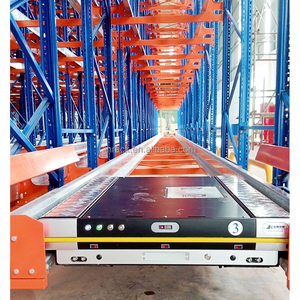
Customized High Density Storage LIFO Pallet Shuttle Racking System
- Semi-Automated
- Cold-Resistant
- Deep-Lane LIFO/FIFO
Engineered for rigorous warehouse throughput, cold-chain longevity, and seamless automated guided vehicle (AGV/ASRS) compatibility.
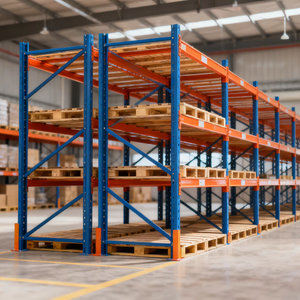
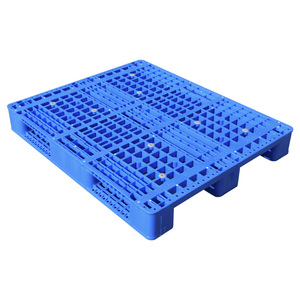
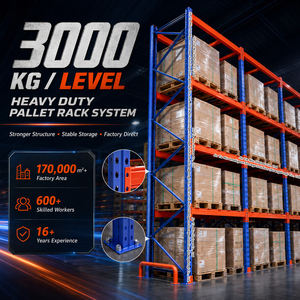
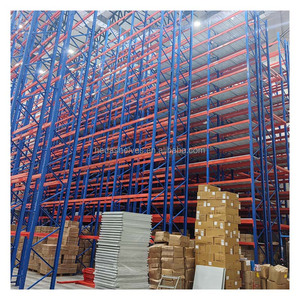
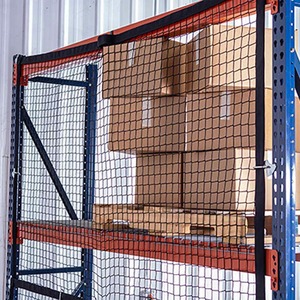
Modern warehousing faces a dual challenge: skyrocketing square-meter land values and rapid automation shifts. Sourcing CE-certified pallet storage requires navigating strict structural engineering compliance (such as EN 15512:2020 and AS 4084:2023), raw steel microstructure stability, and automated subsystem tolerance limits. Industrial supply chains cannot afford deflections, stress fractures, or uncertified weld failures.
When engineering high-bay structures or dynamic shuttle environments, procurement directors must evaluate not merely initial steel tonnage costs, but the Total Cost of Ownership (TCO). This includes beam-to-column connector mechanical interlocks, ductile response under seismic excitation (NZS 1170.5), surface pretreatment efficacy against atmospheric pitting, and cross-compatibility with fleet lift equipment.
| System Architecture | Space Utilization | Pallet Accessibility | Forklift Cycle Efficiency | Target SKU Density | Seismic & Structural Dynamic Load |
|---|---|---|---|---|---|
| Selective Pallet Racking | Moderate (35%–40% Cube) | 100% Immediate | Standard Direct Handling | High SKU Variance / Fast Turn | Uniform static; low frame torsion |
| Radio Shuttle System | Very High (75%–85% Cube) | FIFO or LIFO Batch Access | Optimized Automation Transfer | Low-Medium Variance / High Vol. | Rigid rail system; lateral dampening required |
| Drive-In Pallet Storage | High (65%–75% Cube) | Strict LIFO Lane Picking | Slow (Masts Enter Structure) | Homogeneous Raw Materials | Higher impact susceptibility; heavy portal bracing |
| Push-Back Cart Racking | Substantial (55%–65% Cube) | Lane Dependent (2–6 Deep) | Moderate Gravity Fed Return | Medium Turnover Batches | Dynamic rolling momentum on beam connections |
Global standards mandate non-linear analysis for localized seismic zones (e.g., Pacific Rim, New Zealand NZS 1170.5). Structural uprights now leverage advanced cold-formed profile geometries and reinforced base-plate assemblies capable of dissipating lateral sway momentum without catastrophic joint shearing.
Modern industrial procurement prioritizes sub-millimeter beam deflection tolerances. Integrated shuttle runners, sensor-guided safety stops, and automated vertical lifts necessitate high-precision rolling lines to guarantee autonomous vehicles never jam during high-speed cycle runs.
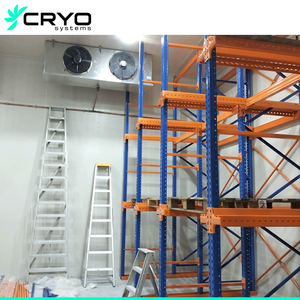
Refrigerated warehouse energy consumption demands extreme storage density. The trend favors radio shuttle racking within -30°C freezer facilities, lowering the thermal envelope volume per pallet footprint while utilizing low-temperature epoxy powder formulas that avoid brittle fracture.
Operating a dedicated 30,000 m² industrial manufacturing complex with over 300 experienced fabrication engineers, delivering turn-key logistics infrastructure since 2001.
From primary Q235B/Q355B coil slitting to precision punch indexing, robotic continuous seam welding, and full-spectrum non-destructive testing (NDT), all production remains strictly in-house under ISO 9001:2015 cert No. 18624Q00169R0M.
Our structures carry independent European CE certification (No. 2435-CPR-8605159) satisfying EN 15512 safety directives. Design calculations, moment-rotation test curves, and Australian AS 4084 compliance packs are provided for local structural engineer certification.
Features automated multi-stage pickling, phosphating, and electrostatic powder coating ensuring maximum bonding. Optional hot-dip galvanized finishes deliver zero-maintenance operation in humid, high-salinity maritime, or chemical ambient conditions.
Our logistics architects turn floor plans, dock positioning, column grids, and pallet dimensional envelopes into comprehensive 3D CAD and Revit models, factoring clear heights and egress flue spaces within 24 hours.
Heavy upright components and beams are bundled on customized steel stillages or ISPM-15 treated lumber, avoiding quarantine clearance bottlenecks across strict biosecurity jurisdictions including Australia (DAFF), New Zealand (MPI), and North America.
Every shipment contains detailed structural erection manuals, laser-indexed piece numbering, and hardware allocation schedules. Remote video engineering consultations or on-site project management engineers are dispatched for large multi-tier distribution builds.
Essential considerations covering international structural standards, engineering computations, shipping logistics, and site design.
Connect with Guangzhou HEDA’s industrial structural engineering department for structural calculations, customized CAD floor drawings, and competitive direct-factory quotations.
Inquire Now