Industrial Heavy-Duty Rack Systems Portfolio
High-density structural configurations certified under CE 2435-CPR-8605159 and ISO 9001:2015. Optimized for high throughput, heavy pallet loading, and seamless automated warehouse material handling.
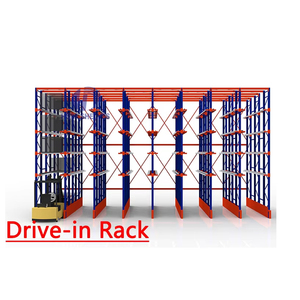
High-Capacity Drive-In Pallet Racking System Drive-Through Pallet Rack for Storage Warehouses
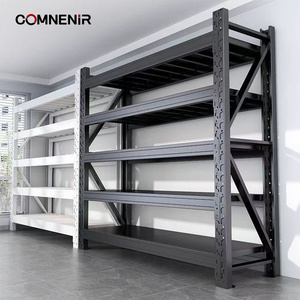
Industrial Shelving Warehouse Rack Heavy Duty Pallet Racking System for Distribution Centers CE Certified
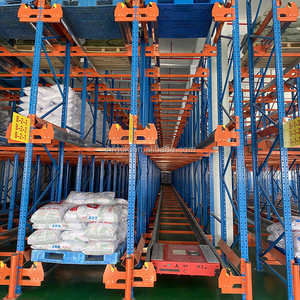
Factory Direct Advanced High-Density Automated Storage & Retrieval System (AS/RS) with Pallet Shuttle Rack for Logistics Center
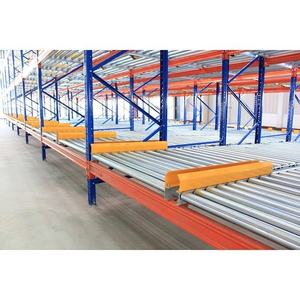
Factory Supply High Quality Steel Industrial Warehouse Storage 4-Layer Gravity Flow Carton Rack With Shelves
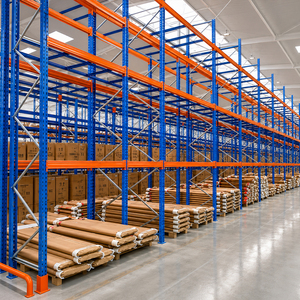
Selective Pallet Rack Q235B Steel Steel Storage Rack Storage Shelving Beam Shelves Warehouse Adjustable
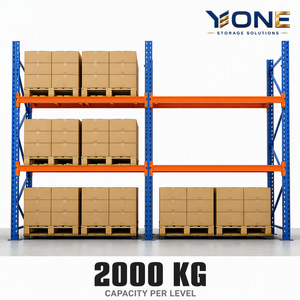
Adjustable Warehouse Storage Rack Steel Pallet Racking System Heavy Duty Boltless 5-Tier for 3PL Warehouse
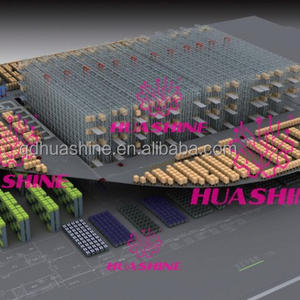
Project of BIG/MID SCALE ASRS Automatic Storage Racking System with Stacker Crane and shuttle car in supermarket Warehouse
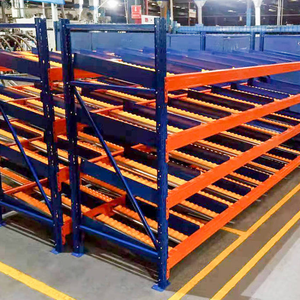
Easy Assemble Steel Carton Flow Racking Shelving with Corrosion Protection Sliding Box Storage for Inventory Management
Strategic Procurement Shifts in Industrial Warehouse Racking
An analytical overview of structural safety, international compliance protocols, and total cost of ownership (TCO) benchmarks facing global logistics directors.
Stringent Regional Standard Cross-Mapping
Procurement is moving rapidly away from generic manufacturer claims toward third-party verified mechanical calculations. Tier-1 warehouse developers now demand structural compliance mapping across EN 15512 (European Standard), AS 4084:2023 (Australia), and RMI ANSI MH16.1 (USA). Our cold-formed uprights utilize traceable Q235B and Q355B mill steel, providing certified modulus and section elasticity required for statutory local building authority sign-offs.
Total Space Density vs. Selective Access
Rising industrial land valuations in North America, Western Europe, and Australasia have redefined return-on-investment parameters. Procurement directors increasingly replace conventional selective rows with dense drive-in or automated pallet shuttle lines. A hybrid design approach preserves rapid floor-level pick faces while leveraging higher vertical cube clearance—frequently driving pallet position counts up by 40% to 65% within unchanged building footprints.
Traceable Anti-Corrosive Metallurgy
Cold chain facilities and coastal fulfillment centers demand customized protective finishes to avoid premature oxidation and catastrophic steel fatigue. Modern procurement matrices dictate a transition to multi-stage phosphating pre-treatment followed by thermosetting electrostatic powder coating. For exterior coastal zones and sub-zero blast freezers, heavy-dip galvanization verified via salt-spray testing ensures 20+ year lifecycle resilience.
Technological Trajectories in Intralogistics & Structural Racking
How automation compatibility, seismic damping innovations, and algorithmic FEA analysis are transforming industrial storage systems.
Deep Integration with AS/RS & Autonomous AMR Fleets
Static storage is yielding to dynamically automated ecosystems. Contemporary rack fabrication tolerances have tightened from millimeters to fractional fractions of an inch to accommodate high-speed stacker cranes, mother-child pallet shuttles, and autonomous mobile robots (AMRs). Beams must maintain deflection limits below L/200 under maximal permissible working load limits (WLL), eliminating sensor blind spots and misaligned robotic optical guidance.
Nonlinear FEA Stress & Seismic Damping Modeling
Global logistics hubs deployed across active seismic belts (such as New Zealand, the Pacific Rim, and Mediterranean zones) require customized finite element analysis (FEA). By calculating second-order dynamic P-Delta effects, our structural engineers introduce gusseted heavy-duty baseplates, increased tie-rod bracing profiles, and energy-dissipating row spacers designed to withstand high ground-acceleration coefficients without progressive row collapse.
IoT-Enabled Structural Health Monitoring
Warehouse asset management is moving towards real-time telemetry. Emerging mega-distribution projects now trial embedded piezoelectric strain gauges and accelerometer nodes on uprights at vulnerable forklift intersect points. These IoT arrays flag frame deformation, impact events, and micro-deflections directly to enterprise WMS software before structural stability is compromised, drastically mitigating catastrophic rack collapse hazards.
Global Direct Manufacturing Power & Turnkey Engineering Expertise
Since our establishment in 2001, Guangzhou Heda Shelves Co., Ltd. has developed into an internationally respected manufacturing facility spanning over 30,000 m² with an active workforce exceeding 300 experienced engineers and technical staff. Delivering a monthly fabrication throughput of 30,000 tons of structural steel components, our facility services logistics providers, 3PL giants, and industrial supply distributors across more than 130 global territories.
Every phase—including automated raw material uncoiling, laser punching, multi-roll profile forming, automated robotic beam welding, pickling phosphating, and powder coating—is executed entirely in-house. We provide global clients with complimentary 3D rendering designs, structural static calculation sheets, stamped engineering load notices, and complete export shipping paperwork under bilateral FTA preferential channels.
Request Technical Whitepaper
Receive comprehensive structural deflection tables, certified material test certificates, and full profile catalogs for selective, shuttle, and mezzanine configurations.
Get CatalogFrequently Asked Questions by Industrial Buyers
Essential technical, structural, and international logistics criteria analyzed by our senior storage rack structural engineering panel.
Q1: How does HEDA verify compliance with regional building and safety codes (AS 4084, EN 15512, RMI)?
Our engineering design department performs comprehensive stress calculations referencing the specific cold-formed design criteria required by destination territories. For projects in Australia/Oceania, our layouts align with AS 4084:2023 design principles, supplying section moduli, yield strengths, and beam deflection ratios so client-appointed local chartered structural engineers can easily stamp and certify the final installation.
Q2: What seismic calculations and design provisions are made for earthquake-prone geographic zones?
For regions exhibiting elevated seismic acceleration, our engineers calculate base shear and frame overturning moments according to localized seismic codes (such as NZS 1170.5 in New Zealand or UBC/IBC in seismic regions). We modify column gauges, incorporate heavy structural baseplates with multiple mechanical chemical anchors, reinforce horizontal and diagonal bracing nodes, and integrate heavy-duty row tie bars to maintain rack line ductility.
Q3: What steel grades and surface finishing systems are used for harsh cold storage environments?
We source prime, traceable hot-rolled coil steel in certified Q235B and Q355B structural grades conforming to international tensile benchmarks. For ambient and dry facilities, components receive an automated multi-stage pre-wash, iron phosphate treatment, and high-adhesion electrostatic thermoset polyester powder coating. For sub-zero freezers (-30°C) or corrosive chemical depots, we provide full hot-dip galvanization (HDG) to eliminate sub-surface rust expansion.
Q4: What essential spatial parameters are necessary to generate an accurate 3D CAD proposal?
To produce an optimized CAD layout within 24 to 48 hours, our technical team requires: warehouse architectural drawings showing clear heights, column grids, dock doors, and sprinkler header clearances; detailed pallet profiles (dimensions W × D × H and gross load limits); forklift specifications (mast type, maximum lift height, turning radius, and minimum right-angle aisle requirement); and target throughput velocity (FIFO vs. LIFO).
Q5: How does HEDA manage biosecurity, phytosanitary requirements, and damage-free container packing?
All international maritime exports are packed either directly into custom-fabricated heavy steel transport stillages or strapped onto heat-treated timber dunage bearing the ISPM-15 IPPC stamp. This guarantees rapid clearance through stringent biosecurity inspections (such as Australian DAFF or New Zealand MPI) without chemical fumigation quarantine delays. All structural uprights and beam packages are bundled with protective edge guards and waterproof plastic wrapping to prevent transit friction damage.
Ready to Engineer Your Facility's Storage Density?
Connect directly with our senior racking applications engineers to request customized structural drawings, load capacity charts, and factory-direct export quotes.
Get Catalog