Jracking Warehouse Steel Automatic Storage Racking ASRS
Ultra-high density stacker crane racking engineered for retail distribution hubs. Features finite-element-verified uprights up to 40 meters, tight beam deflections, and high dynamic stability.
Discover high-precision, structural-grade automated intralogistics racking solutions manufactured to FEM 10.2.02, AS 4084, and RMI standards. Below are the 8 premier automation and heavy-density storage systems deployed across Tier-1 distribution facilities worldwide.
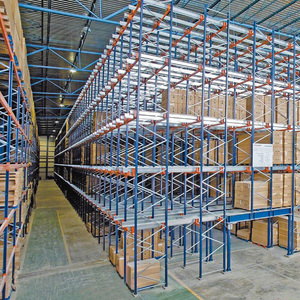
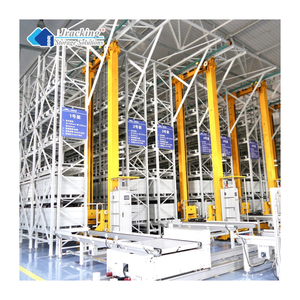
Ultra-high density stacker crane racking engineered for retail distribution hubs. Features finite-element-verified uprights up to 40 meters, tight beam deflections, and high dynamic stability.
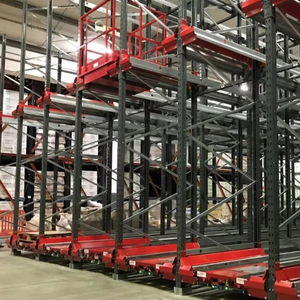
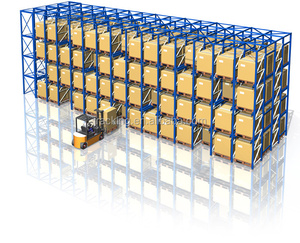
Deep-lane automated pallet storage utilizing cold-rolled Q235B/Q355B structural steel with powder-coated finish. Eliminates lift-truck entry into rack lanes, maximizing warehouse safety and cycle speed.
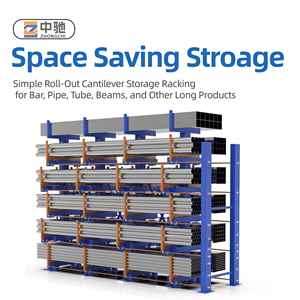
Specialized automated storage and retrieval infrastructure specifically calculated for tubular steel, profiles, and industrial conduit. Integrates automated grab hoists and cradle conveyors.
Automated drawer-type and cassette racking designed for high-density sheet metal inventory management. Seamlessly feeds fiber laser cutting systems and punch-press manufacturing lines.
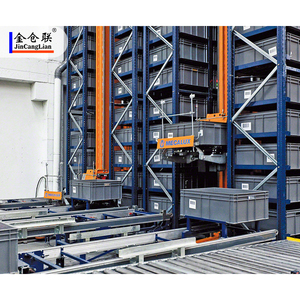
Next-generation multi-directional shuttle storage. Provides dynamic aisle-switching and layer-switching via automated vertical reciprocating lifts, unlocking flexible, high-throughput buffering.
Heavy-duty pallet consolidation engineered specifically for sub-zero freezer and refrigerated distribution centers. Thermal-stress resistant coatings prevent steel embrittlement down to -30°C.
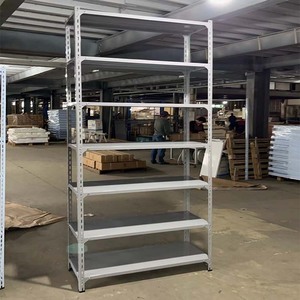
Corrosion-resistant galvanized slotted angle shelving for peripheral automated picking stations, mezzanine buffers, and small parts order preparation. Quick assembly with modular expansion.
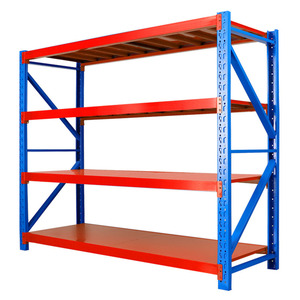
Heavy-capacity industrial storage engineered for bulk cargo buffering, heavy component storage, and automated assembly staging. Finished with anti-corrosion electrostatic epoxy powder coat.
Founded in 2001, Guangzhou Heda Shelves Co., Ltd. has evolved from an elite industrial shelving fabricator into China’s premier engineering and export powerhouse for complex automated storage racking systems. Operating out of an expansive 30,000-square-meter precision manufacturing hub, our company deploys over 300 skilled mechanical engineers, structural draughtsmen, and certified quality-control specialists.
Automated storage and retrieval systems demand tolerances radically more stringent than traditional static forklift racking. In an automated high-bay warehouse where stacker cranes or 4-way shuttles operate at travel velocities exceeding 4 m/s with millimeter-precise laser positioning, racking deflection must adhere strictly to FEM 10.2.02 and EN 15512 standards. A beam deflection variance of even 1.5mm can trip optical safety sensors, creating costly automated system shutdowns.
Backed by official CE Certification (No. 2435-CPR-8605159), ISO 9001:2015 Quality Management certification (No. 18624Q00169R0M), and certified compliance with RoHS standards, our structural fabrications routinely pass third-party audits by SGS and TÜV Rheinland. We don't just export racking; we deliver fully certified structural calculations, finite element analysis (FEA) packages, and biosecurity-compliant containerized shipments configured directly for turnkey field erection.
Specialized structural calculation models for high-seismic zones (New Zealand NZS 1170.5, Australian AS 4084, and US RMI/UBC standards). Uplift footplates, stiffened bracing nodes, and reinforced anchor bolt patterns engineered for high ground acceleration.
Engineered packaging systems meeting Australian DAFF and New Zealand MPI requirements. Racking profiles are bundled on reusable structural steel stillages or ISPM-15 certified kiln-dried dunnage, eliminating port fumigation bottlenecks.
Comprehensive engineering data dossiers supplied before production: 3D Navisworks models, beam load vs deflection charts, upright Euler buckling load calculations, and complete CAD installation schematics to streamline local engineering sign-offs.
Modern warehousing has surpassed basic static racking. The intersection of skyrocketing industrial real estate valuations, extreme micro-fulfillment speed demands, and persistent global warehouse labor shortages is driving fundamental shifts in racking hardware architecture.
Instead of erecting a conventional warehouse and placing racks inside, global developers increasingly choose rack-supported building structures where the racking itself supports the building roof and side paneling. This eliminates massive structural building columns, unlocks clear ceiling heights up to 45 meters, and drastically lowers total structural steel weight and civil construction timelines.
Traditional single-crane ASRS creates a single point of failure: if the crane breaks down, the entire aisle stops. The market is shifting toward 4-way robotic shuttle fleets operating across heavy-load guide rails. Shuttles traverse seamlessly between X and Y axes, changing vertical tiers via vertical lifts. Fleet-management algorithms assign dynamic robot swarms to bottleneck areas during peak throughput waves.
Cold chain logistics (pharmaceutical vaccines, flash-frozen meat, and dairy) is expanding exponentially. Traditional structural steel undergoes cold brittleness at sub-zero temperatures, compromising impact resistance. Advanced automation racking utilizes low-carbon micro-alloyed steel formulations with specialized Charpy V-notch impact toughness ratings certified down to -35°C.
When evaluating high-density storage solutions, mechanical engineers and logistics consultants must balance volumetric utilization against hourly throughput capacity and capital expenditures.
| Storage System Type | Space Volume Utilization | Pallet Throughput (Cycles/Hr) | Maximum Practical Height | Selectivity Profile | Labor Dependency | Typical CAPEX Payback |
|---|---|---|---|---|---|---|
| Automated High-Bay ASRS (Crane) | Extreme (85–90%) | 40 – 60 Pallets/Crane | Up to 45 meters | 100% Direct Access (Single-Deep) | Zero (Fully Automated) | 3.0 – 4.5 Years |
| 4-Way Autonomous Shuttle Racking | Maximum (88–95%) | Dynamic (Swarm Scalable) | Up to 24 meters | Deep-Lane High Selectivity | Zero (Fully Automated) | 2.5 – 3.8 Years |
| Semi-Automated Radio Shuttle Racking | High (75–85%) | 25 – 35 Pallets/Truck | Up to 14 meters | Channel-Dependent (FIFO/LIFO) | Low (Forklift to Lane Face) | 1.5 – 2.5 Years |
| Drive-In Racking (Static System) | Moderate (60–70%) | 12 – 18 Pallets/Truck | Up to 11 meters | Strict LIFO Only | High (Driver inside racks) | Immediate / Low CAPEX |
| Automated Sheet Metal / Pipe ASRS | High (80–85%) | Automated Cassette Cycle | Up to 15 meters | 100% Cassette Selectivity | Very Low (Integrated CNC feed) | 2.0 – 3.2 Years |
Global procurement directors, supply chain VPs, and distribution center planners face distinct operational challenges. Understanding structural cost drivers and long-term procurement trends ensures lower Total Cost of Ownership (TCO) and rapid project commissioning.
Enterprise procurement teams are actively migrating away from locked-in proprietary monolithic vendors. Modern buyers procure heavy-duty, high-precision racking steel structures directly from Tier-1 Chinese manufacturers like HEDA Shelves, while integrating open-architecture WMS/WCS software and shuttles from specialized regional robotics integrators. This hybrid sourcing strategy delivers 35% to 50% CAPEX savings without compromising system software flexibility.
Rising international ocean freight tariffs make container space utilization critical. Next-generation automation racking components are engineered with nested roll profiles and interlocking upright connectors, achieving 98%+ volumetric container packing efficiency. Simultaneously, forward-thinking exporters are adopting low-emission electric-arc furnace (EAF) steel coils to comply with European CBAM regulations and global corporate ESG mandates.
Procuring automation racking offshore requires verified structural compliance. Building certifiers in Australia, New Zealand, North America, and the UK demand rigorous third-party engineering calculations verifying anchor embedment, concrete slab punch shear, wind uplift (for clad racks), and ductility coefficients under major seismic events. HEDA provides comprehensive engineering documentation directly to local certifying engineers.
Detailed answers to the critical engineering, quality assurance, compliance, and logistics questions asked by warehouse operators and international procurement teams.
We enforce CNC roll-forming accuracy within ±0.5mm across all beam lengths and upright column pitches. Each production run is validated using automated laser coordinate measurement tools. Upright frames are verified for twist, out-of-straightness, and punch pitch alignment before leaving our factory. Finite element analysis (FEA) calculation dossiers are cross-checked against allowable deflection limits (typically L/200 or L/300 for static beams, and L/400 to L/500 for high-precision ASRS crane running tracks).
Yes. Our engineering department routinely models projects according to AS 4084 steel storage racking design specifications. For New Zealand, our structural team factors in regional seismic hazard coefficients, subsoil classifications, and importance levels defined under NZS 1170.5. We calculate seismic bracing members, oversized baseplates, high-tensile epoxy anchor bolts, and dual-spine frame spacers, providing complete calculations for local engineer (CPEng) sign-off.
Every commercial export order includes a full engineering documentation package: certified mill test certificates (MTC 3.1) showing chemical composition and yield tensile strength of the steel coils, CE Declarations of Conformity, ISO 9001:2015 QC inspection reports, coating thickness verification logs (minimum 60–80 microns for epoxy powder coat), step-by-step CAD layout drawings, 3D installation blueprints, piece-by-piece packing lists, and preferential Certificates of Origin (Form E, ChAFTA, RCEP).
For cold storage and deep-freeze environments running from 0°C down to -35°C, we select specialized low-carbon micro-alloyed structural steels that preserve grain-structure ductility under sub-zero thermal stress. Surface treatments include high-spec epoxy-polyester electrostatic powder coats designed for low-temperature elasticity or full hot-dip galvanization according to ISO 1461. This prevents paint flaking, micro-cracking, and rust formation under thermal cycling.
Standard fabrication timelines for typical high-density automated racking projects (500 to 5,000 pallet positions) run between 25 and 40 calendar days from formal engineering CAD approval. Direct ocean transit from Guangzhou or Shenzhen ports to major global destinations typically averages: Southeast Asia: 5–10 days; Australia/New Zealand: 14–24 days; US/Canada West Coast: 16–22 days; European main ports (Rotterdam, Hamburg, Felixstowe): 28–38 days.
We assign clear alphanumeric markings to every beam, upright, diagonal brace, and shuttle rail section matching our 3D CAD erection drawings. In addition to supplying comprehensive 3D digital installation manuals and step-by-step videos, we can deploy seasoned site installation supervisors and bilingual project engineers directly to your overseas job site to guide local labor crews and ensure alignment with required operational tolerances.
Send our senior engineering team your warehouse architectural floor plans, ceiling clear heights, and target pallet specifications. We deliver an engineered 3D conceptual layout, structural load analysis, and containerized pricing within 24–48 hours.