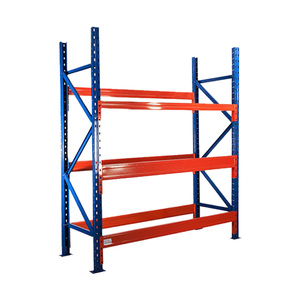
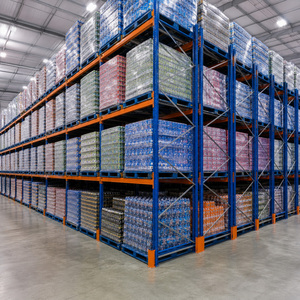
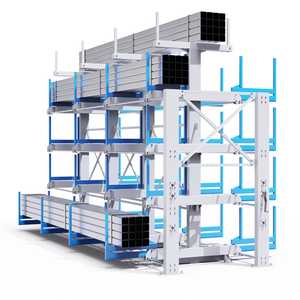
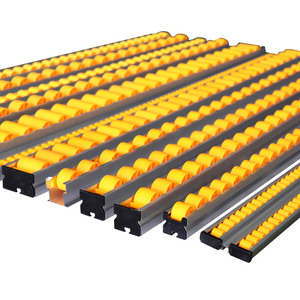
Gravity Flow Rail Roller Track PE ABS Wheel 200KG Load Carton Flow Rack FIFO Storage Sliding Shelf for Warehouse
- Capacity: 200kg/Level
- Track: High-Impact ABS/PE
- Pitch: Fully Adjustable
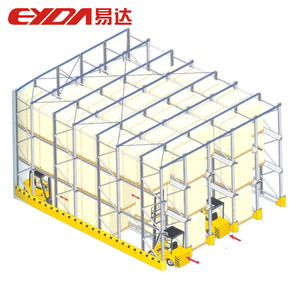
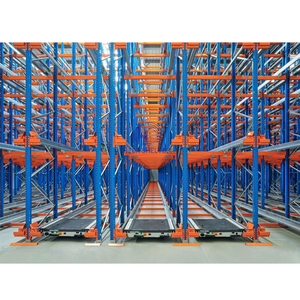
Manufactured from premium certified Q235B/Q355B structural steel, our gravity flow tracks, drive-thru racks, and automated shuttles deliver millimeter-exact pallet separation and perpetual first-in, first-out sequence integrity.
Operating a vertical production ecosystem spanning 30,000 square meters, our structural engineering team translates complex throughput models into seismically stable, precision-calibrated racking systems.
Every dynamic FIFO beam, upright profile, and cantilever arm undergoes finite element analysis (FEA). We supply third-party certified structural design calculation packs verifying deflection ratios under full static and kinetic pallet load configurations.
Equipped with 10 continuous CNC roll-forming lines and an environmentally compliant multi-stage pickling, phosphating, and electrostatic powder coating plant. Finishes resist abrasion, high moisture, and sub-zero cold room environments down to -30°C.
Factory-direct dispatch with strict export-grade packing protocols. Systems are secured on dedicated steel stillages or ISPM-15 heat-treated certified timber, eliminating quarantine fumigation delays at major Australian, New Zealand, and European ports.
Evaluate flow rate, aisle utilization, forklift travel reduction, and capital expenditure across major high-density storage configurations to select the optimum topology for your distribution center.
| System Architecture | Inventory Logic | Space Utilization | Forklift Cycle Time | SKU Selectivity | Primary Industrial Sector |
|---|---|---|---|---|---|
| Gravity Pallet Flow Racking | Strict FIFO | 85% – 90% (Ultra High) | Minimised (Dedicated Load/Pick Faces) | Moderate (1 SKU Per Lane) | Cold Storage, Dairy, Fast-Moving Consumer Goods (FMCG) |
| 4-Way Radio Shuttle ASRS | Dynamic FIFO & LIFO | 90% – 95% (Maximum) | Automated Internal Movement | High (Programmed Automated Retrieval) | Pharmaceuticals, High-Volume E-Commerce, Chilled Hubs |
| Drive-Thru Racking | FIFO Capable | 75% – 85% (High) | Slow (Mast Enters Rack Structure) | Low (Block Batches) | Raw Materials, Bulk Seasonal Buffers |
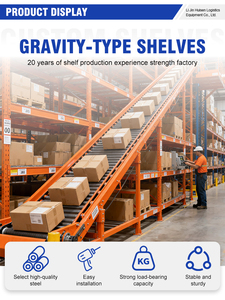
| Carton Flow Sliding System | Strict FIFO | 70% – 80% (Floor-Level Optimization) | Eliminates Walk Time (Manual Picking) | High (Multiple Pick Faces per Bay) | Assembly Lines, Retail Fulfillment Centers, Spare Parts |
| Selective Pallet Racking | Operator-Dependent FIFO | 40% – 50% (Standard) | High (Multiple Aisle Navigation) | 100% Immediate Access | General Logistics, 3PL Multi-Tenant Warehousing |
In high-density industrial FIFO gravity pallet racking, the controlled glide of laden pallets (from 500 kg to over 1,500 kg) down an inclined track requires precise kinetic energy management. The gravity slope is engineered within a tight angular tolerance, normally between 2.5° and 3.5° (approximately a 3.5% to 5.0% gradient), depending upon pallet base characteristics, timber deflection factors, and total payload mass.
Without mechanical speed governing, a continuous 30-meter live lane would cause accelerating pallets to reach dangerous terminal velocities, risking catastrophic frame impact, product spillage, and upright structural deformation. HEDA Shelves integrates self-energized centrifugal and magnetic brake rollers evenly distributed along the roller tracks (typically every one pallet length). These rollers generate counter-torque directly proportional to the incoming velocity, holding pallet transit speeds to a secure and steady 0.2 to 0.3 meters per second regardless of payload differences.
At the unloading face, the front pallet absorbs massive back-pressure from accumulating trailing pallets if left unmitigated. In a 10-deep lane, cumulative hydrostatic force can exceed several thousand kilograms, pinning the front pallet and preventing forklifts from lifting safely. Our FIFO designs deploy an automatic, mechanical foot-activated separator mechanism. The front pallet triggers an isolation stop that holds back the entire trailing lane by 150 mm to 200 mm, allowing the forklift operator clean, unhindered pallet extraction. Once removed, the separator releases, gently advancing the subsequent load to the picking face.
Dynamic live flow systems rely on consistent interaction between the roller bed and the pallet underside runners. Warped, damaged, or sagging bottom runners increase rolling resistance. For spans exceeding 1,000 mm, runners must not deflect more than L/200 under maximum rated load to prevent bottoming out against the roller frames.
Global supply chain volatility, urban real-estate cost escalation, and automated compliance tracking are fundamentally altering how warehouse managers specify and procure industrial racking from China.
Procurement is shifting from passive gravity lanes to intelligent multi-directional autonomous carriers. Shuttles integrate with enterprise WMS/WCS platforms via Wi-Fi 6, dynamically alternating between FIFO and LIFO modes without altering rack steelwork.
With industrial refrigeration energy costs escalating by over 35% in major markets, cold storage operators are standardizing on deep-lane FIFO arrays to eliminate aisles, compressing refrigerated cubic space requirements by up to 60% per pallet position.
Overseas buyers require complete digital transparency before dispatch. Mill test certificates, ultrasonic weld inspections, and Finite Element structural compliance dossiers verified by accredited third parties are now mandatory baseline procurement prerequisites.
Modern fast-fulfillment operations are moving away from monolithic rack layouts toward hybrid mezzanines. Heavy gravity pallet lanes at ground level provide bulk replenishment directly beneath multi-tier carton flow pick modules for high SKU picking velocity.
Tracing the engineering progression of storage systems from basic manual roll racks to software-synchronized dynamic flow environments.
Over the past three decades, warehouse material handling has undergone a structural transformation. In early industrial configurations, FIFO management relied on manual warehouse practices within standard static racks—an approach that frequently broke down during peak operational cycles, resulting in batch expiration, stock obsolescence, and product damage.
Early gravity systems used bare, unregulated skate-wheels mounted on steep angles. These systems suffered from high failure rates: light pallets frequently stalled midway, while heavy pallets built up excessive inertia, colliding with end-stops and buckling frame members. The lack of reliable braking restricted lane depths to fewer than 5 pallets.
The introduction of heavy-gauge cylindrical steel rollers equipped with internal planetary gearboxes and magnetic eddy-current brake mechanisms enabled lanes to safely extend beyond 20 pallets deep. Guangzhou Heda Shelves pioneered precision-extruded beam brackets, modular roll tracks, and load-dependent separators, making high-density gravity flow a core choice across pharmaceutical, brewing, and cold-storage operations worldwide.
Today, FIFO architecture merges mechanical gravity reliability with autonomous robotics. Optical sensor bars monitor lane occupancy, roller tachometers track speed deviations, and intelligent 4-Way Radio Shuttles operate seamlessly within high-bay storage racks up to 30 meters high. This eliminates forklift entry entirely, delivering zero-emission operation, reduced mast collision risk, and complete real-time tracking of every pallet batch.
Detailed technical, regulatory, and logistics answers addressing real procurement and engineering challenges when importing racking directly from China.
Our gravity flow systems prevent pallet hang-ups and over-speed hazards through three integrated engineering controls:
1. Angular Calibration: Lanes are engineered with an application-specific slope (typically 2.8° to 3.2°), verified against your specific pallet material (hardwood, softwood, virgin HDPE, or recycled plastic).
2. Speed Regulating Rollers: Centrifugal and magnetic braking rollers are positioned every 1.2 to 1.5 meters. They adjust resistance automatically based on pallet weight, ensuring consistent rolling speed between 0.2 m/s and 0.3 m/s.
3. Automatic Separation Mechanisms: A heavy-duty mechanical stop at the discharge face isolates the lead pallet from trailing lane back-pressure, enabling safe, snag-free forklift extraction without load pinching.
Yes. Our in-house structural engineering team regularly designs and certifies storage systems for Australian and New Zealand installations. We provide complete FEA calculation models, section property data, seismic load coefficients, baseplate shear ratings, and foundation anchoring schedules in accordance with AS 4084 (Steel Storage Racking) and NZS 1170.5 (Structural Design Actions - Earthquake Actions - New Zealand).
All design dossiers are formatted for straightforward review and formal sign-off by your local Chartered Professional Engineer (CPEng / NER).
For sub-zero cold room environments, selecting the correct steel chemistry is critical to prevent low-temperature ductile-to-brittle transitions. We use high-ductility Q235B and Q355B structural steel with certified Charpy V-notch impact toughness values down to sub-zero temperatures.
For corrosion protection, components undergo automated shot blasting to Sa 2.5, iron phosphating, and thermosetting polyester powder coating baked at 200°C. For open-air sheds, marine coastal zones, or high-humidity chiller operations, components are hot-dip galvanised to ISO 1461 standards with a coating thickness of 65–85 μm.
To avoid biosecurity delays or costly quarantine fumigation upon arrival, our export packaging follows strict international plant health standards:
All structural uprights, beams, and dynamic roller assemblies are secured on custom fabricated all-steel stillages or heat-treated solid timber that complies fully with ISPM-15, stamped with authorized IPPC markings.
Packaging surfaces are cleaned of bark, organic soil, and biological residue prior to container stuffing. Detailed timber declarations, clean packing certificates, and bills of lading are provided with every shipment.
To deliver an engineered 3D layout and firm price quotation within 24–48 hours, our engineering office requires:
1. Architectural layout drawing (DWG or PDF) showing clear ceiling height, building column grids, slab expansion joints, and overhead sprinkler and lighting clearances.
2. Complete pallet data: pallet dimensions (e.g., 1165 × 1165 mm, 1200 × 1000 mm, or 1200 × 800 mm), bottom runner layout, maximum loaded weight, and overall height including pallet.
3. Forklift operational parameters: model, mast lift height, collapsed mast height, turning radius, and minimum operating aisle width (AST).
Standard factory manufacturing cycles range between 18 to 28 calendar days depending on total order tonnage, custom roll-forming profiles, and powder coating colors. Ocean shipping times from Guangzhou or Shenzhen ports typically run:
• Southeast Asia (Singapore, Port Klang, Manila): 5 to 10 days.
• Australia & New Zealand (Sydney, Melbourne, Brisbane, Auckland): 14 to 22 days.
• Middle East & Western Europe (Rotterdam, Hamburg, Felixstowe): 24 to 35 days.
• North America (Long Beach, Vancouver, Houston): 16 to 28 days.
Collaborate directly with senior racking design engineers. We evaluate your warehouse floor plan, calculate structural capacities, and deliver 3D CAD layouts and load-capacity calculations with factory-direct pricing.