Factory-Direct Heavy Duty Storage & Material Handling Equipment
From self-regulating gravity roller tracks to high-capacity dynamic pallet flow lines and precision-welded industrial frameworks, explore our certified manufacturing solutions engineered for zero-defect global warehousing.
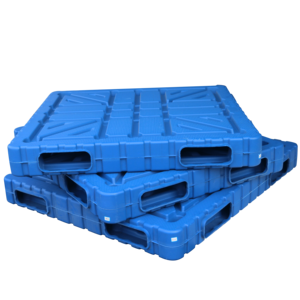
NEXARA High Quality 1210*1200*150mm One-Piece Blow Molding Euro Pallet Heavy Duty Warehouse Storage Pallet Rack Solution
Engineered for gravity flow tracks with anti-slip bottom skids, high shock resilience, and zero underside flexure during roller contact.
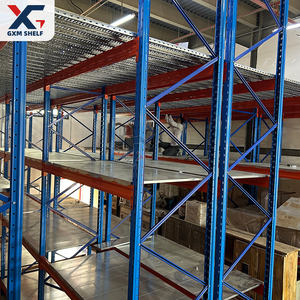
Mezzanine Floor Racking Attic Shelf Warehouse Rack System Shelving Storage Warehouse Rack Numbering System
Structural steel platforms combining lower gravity picking lanes with upper carton collation and high-bay intermediate storage.
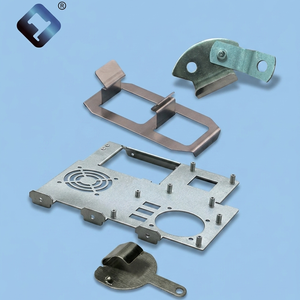
Custom Sheet Metal Enclosure, Precision Steel Server Rack & Control Box Fabrication, SPCC/Stainless Steel OEM Manufacturer
Industrial PLC control housings and automated brake monitoring electrical cabinets designed for automated flow racking interfaces.
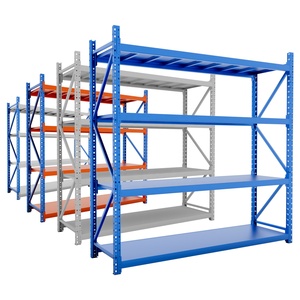
Factory Direct 4-Layer 800kg Medium Heavy Duty Pallet Racking System Steel Adjustable Longspan Warehouse Storage Pallet Racks
Heavy duty Q235B upright structures adapted for secondary split-case gravity carton beds, picking funnels, and high load stability.
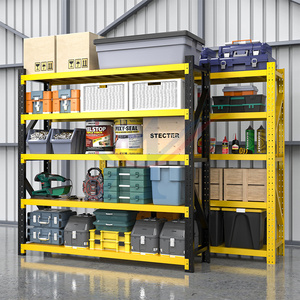
Custom Medium Duty Steel Shelving 200 Kg Layer Garage Black Yellow 4 Tier Powder Coated Industrial Warehouse Storage Metal
Modular boltless industrial racking with impact-resistant electrostatic epoxy finishes for active picking front replenishment lanes.
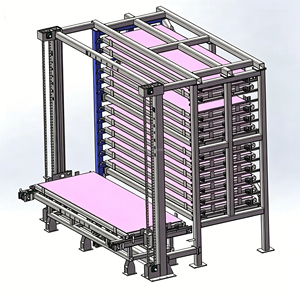
Durable Anti-Rust Heavy Duty Steel Electric Sheet Metal Rack Drawer Type Storage System Automated Retrieval Warehouse Shelving
Motorized roll-out drawer racks handling raw heavy sheet steel and dies, integrating seamlessly with dynamic flow transfer cranes.
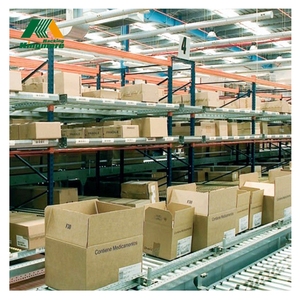
Customized Gravity Carton Flow Pallet Roller Rack System
Engineered full-width cylindrical steel rollers, centrifugal speed controllers, and pallet separators delivering true FIFO inventory velocity.
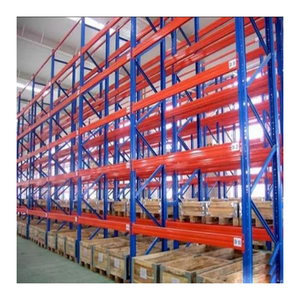
Mracking 500-5000kgs Per Layer Heavy Duty Rack Adjustable Metal Pallet Rack Warehouse Storage Racking System for Sale
Ultra-high load capacity structural racking engineered with heavy-gauge uprights to support high-density inclined pallet flow tracks.
Kinematics, Load Dynamics & Structural Safety of Gravity Pallet Flow
Gravity feed pallet racking (Pallet Flow) utilizes natural kinetic potential energy to drive dense, high-turnover unit loads without electrical consumption. Below is an engineering analysis of how Guangzhou Heda Shelves resolves complex friction, speed governing, and line pressure factors.
Precision Incline Physics & Dynamic Slope Ratios
The standard operating gradient for heavy industrial gravity flow channels ranges from 2.5% to 3.5% (approximately 1.5° to 2.0° decline), depending on pallet bottom construction (GMA wooden runners, perimeter plastic bases, or corrugated steel skids). If the incline is under 2.5%, high rolling resistance causes pallet hang-ups; if the incline exceeds 4.0%, excessive acceleration risks terminal impact damage.
Our engineers formulate roller pitch using the formula: Pitch = Pallet Depth / N (where N ≥ 3 runners supported at all times). HEDA heavy-gauge cylindrical steel rollers utilize sealed precision ball bearings pre-lubricated with synthetic low-temperature lithium grease, maintaining an ultra-low rolling friction coefficient (μ = 0.015 - 0.025) even in refrigerated or deep-freeze (-30°C) logistics facilities.
| Structural Parameter | HEDA Standard Specification |
|---|---|
| Decline Gradient | 2.8% - 3.2% (Adjustable by bracket shims) |
| Steel Profile Grade | Q235B / Q355B High-Tensile Structural Steel |
| Roller Diameter / Wall | Φ60mm / Φ76mm × 2.0mm - 3.0mm Zinc-Plated |
| Centrifugal Brake Pitch | 1 Brake Roller every 1 - 2 Pallet Positions |
| Design Standard Reference | AS 4084-2023, EN 15512:2020, RMI MH16.1 |
| Pallet Weight Range | 250 kg to 1,800 kg per pallet lane |
Centrifugal Speed Regulators
Internal planetary gearing expands centrifugal brake pads against the internal roller shell as rotational velocity increases, safely capping pallet glide velocity at a constant, controlled 0.25 to 0.30 m/s regardless of total pallet weight.
Automatic Pallet Separators
Positioned at the discharge pick face, heavy-duty mechanical separator latches lock the upstream pallets 300mm behind the front pallet. This eliminates cumulative hydrostatic line pressure, enabling forklift drivers to extract the lead pallet without back-pressure resistance.
Seismic & Wind Structural Load
All frame columns feature cold-formed continuous multi-bend omega (Ω) geometries. Baseplates and anchoring are specifically calculated against site seismic acceleration factors, adhering strictly to New Zealand NZS 1170.5 and Australian AS 4084 requirements.
Future Procurement Trends in Industrial Pallet Flow Infrastructure
Global supply chain directors are shifting from transactional spot purchasing to lifecycle-resilient capital procurement. Our market intelligence team highlights four pivotal trends driving high-density gravity system investments through 2030.
1. Cold-Chain Densification & Low-Carbon Storage
With refrigeration power costs compounding globally, cold storage operators are phasing out wide-aisle selective racking in favor of 10-to-25 deep gravity pallet flow lanes. Eliminating aisles shrinks conditioned cubic space by up to 60%, drastically slashing HVAC thermal transmission loads and driving Net-Zero warehouse compliance.
2. Decoupled Automated AMR & AGV Pick Buffers
Autonomous Mobile Robots (AMRs) and automated counterbalanced forklifts demand deterministic, physically stable pick faces. Modern distribution hubs procure gravity flow staging beds at shipping docks as dynamic mechanical buffers, isolating high-speed AGV drop-offs from outbound truck staging lines without expensive conveyor controls.
3. Total Cost of Ownership (TCO) Over Upfront CapEx
Procurement managers are rejecting unbranded lightweight Chinese flow racks that warp under operational abuse. The focus has decisively shifted to structural steel durability: 3.0mm wall cold-rolled frames, pre-galvanized roller beds, and dual-bearing speed controllers that eliminate maintenance callouts over a 15-to-20 year system lifecycle.
Technological Trajectories Shaping Gravity Flow Racking
How Guangzhou Heda Shelves is integrating modern mechanical metallurgy, magnetic contactless braking, and Industry 4.0 IoT analytics into classic gravity feed frameworks.
Eddy-Current Magnetic Brakes
Replacing conventional friction pads with permanent neodymium magnetic eddy-current retarders. These non-contact braking rollers experience zero mechanical friction wear, produce zero brake dust, and dynamically increase braking torque proportionally to pallet velocity without degradation.
Self-Powered IoT Flow Track Monitoring
Embedded micro-generators inside selected rollers convert rotational energy into telemetry signals. Real-time sub-surface sensors report pallet transit speeds, identify localized roller stalls, and map lane inventory occupancy directly to the warehouse WMS via wireless LoRaWAN gateways.
Hybrid Gravity-AS/RS Staging Architecture
Coupling high-density gravity storage channels with high-speed automated storage and retrieval system (ASRS) stacker cranes. The gravity lane buffers rapid crane output cycles, dampening software latency while maintaining deterministic queue sequences at high-throughput shipping gates.
Why Global Tier-1 Enterprises Partner With Guangzhou Heda Shelves
Established in 2001, Guangzhou Heda Shelves Co., Ltd. operates a premier 30,000 m² advanced manufacturing facility. We engineer, certify, and supply world-class intralogistics racking infrastructure with complete OEM/ODM customization and verified global standards compliance.
Verified Quality Management & International Standards
We do not treat engineering compliance as an afterthought. Our structural production lines are independently verified under ISO 9001:2015 Quality Management System (Cert No. 18624Q00169R0M) and European CE Certification (No. 2435-CPR-8605159), along with full RoHS compliance for environmentally sustainable finishing.
For international installations across Australia, New Zealand, and Oceania, our in-house civil and structural engineers formulate load-deflection matrices in accordance with AS 4084 (Steel Storage Racking) and NZS 1170.5 seismic displacement parameters. We provide local certifiers with complete section property calculations, weld radiographies, and mill test certificates (MTC) for seamless council approval.
| Audit Domain | Heda Factory Verification Benchmark |
|---|---|
| Factory Floor Space | 30,000 m² Integrated Heavy Fabrication Facility |
| Monthly Throughput | 30,000 Metric Tons cold-formed steel capacity |
| Engineering Staff | 300+ Structural Designers, Welders & QC Technicians |
| Coating Performance | Swiss Gema Automatic Electrostatic Powder Lines (80-120μm) |
| Export Biosecurity | Full ISPM-15 Certified Heat-Treated Packaging & Steel Stillages |
| Trade Agreements | Preferential COO under ChAFTA, NZ-China FTA & RCEP |
Our 10-Step In-House Precision Manufacturing Workflow
Verifying yield and tensile chemical properties of raw Q235B/Q355B coils.
Automated longitudinal shearing to ±0.1mm dimensional tolerance.
Hydraulic multi-die column perforation on continuous 50mm / 75mm centers.
Gradual 24-station roll forming maintaining uniform residual stress.
Online optical curvature tracking with burr-free flying hydraulic cutoff.
Deburring and seam preparation for high-adhesion joint weldment.
Automated CO2 gas metal arc welding (GMAW) for high-strength connector jaws.
9-stage automated chemical immersion bath for oil removal and anti-corrosion keying.
Thermosetting polyester powder baked at 200°C for durable impact resistance.
Load cell test sampling, barcoding, and custom ISPM-15 export stillage crating.
Frequently Asked Questions: Gravity Feed Pallet Racking Procurement
Clear, technically rigorous answers to the critical structural, regulatory, and mechanical questions asked by logistics engineers and international procurement authorities.
What are the exact criteria for calculating roller pitch and speed controller intervals?
Pitch ≤ Length of bottom runner / 3. For standard 1200mm deep GMA or Euro pallets, this dictates a center-to-center roller pitch of 150mm to 200mm. Centrifugal speed controller spacing depends on the overall incline gradient (usually 3.0%) and maximum pallet mass; standard engineering guidelines require one speed controller roller positioned every single pallet length (approx. 1.2m to 1.5m intervals) for loads exceeding 1,000 kg, or every two pallet positions for lighter goods under 600 kg.