Top-Tier Heavy-Duty Racking Systems for Modern Warehouses
Engineered for extreme structural integrity, high cycle turnover, and seamless automated integration across global logistics hubs.
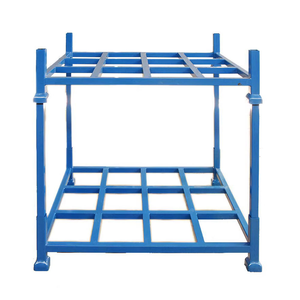
Modular hot-dip galvanized post racking for flexible seasonal storage. Detachable upright columns eliminate permanent floor anchoring while supporting dynamic stack loads in cold and outdoor staging areas.
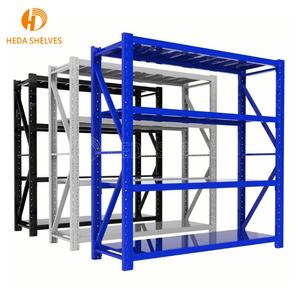
Thickened cold-rolled steel shelving optimized for manual picking, batch-sort operations, and distribution mezzanine infills. Fully adjustable 50mm pitch beam configuration with anti-shearing locking pins.
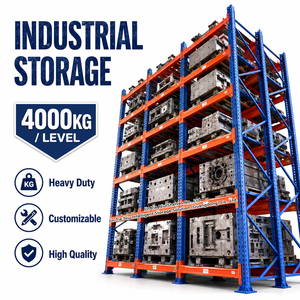
Engineered to support extreme unit payloads up to 4,000 kg per beam level. Utilizing box-beam geometry with interlocking connectors to withstand repetitive counter-balanced and reach-truck loading cycles.
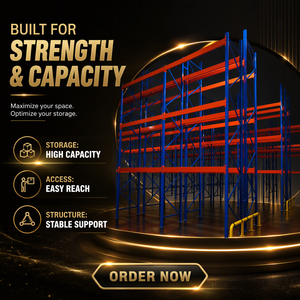
Maximizes vertical footprint utilization up to 15 meters clear height. Configured with magnetic wire guidance or mechanical side rails to support articulated or turret-mast trucks at sub-1.6m aisle clearance.
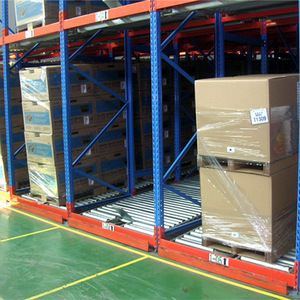
Strict first-in, first-out (FIFO) dynamic gravity roller design. Features integrated brake drums, speed controllers, and pallet separators coated with specialized ESD electrostatic dissipation powders for FMCG/pharma safety.
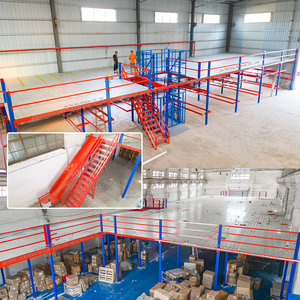
Heavy structural H-beam mezzanine flooring engineered to double warehouse cubic capacity without site expansion. Custom designed stairwells, pallet drop gates, and decking options engineered for high distributed loads.
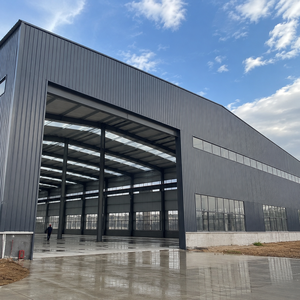
Turnkey architectural steel-structure sheds featuring castellated honeycomb beams for prolonged clear-span column spacing. Engineered for quick on-site bolt erection, seismic stability, and harsh wind load compliance.
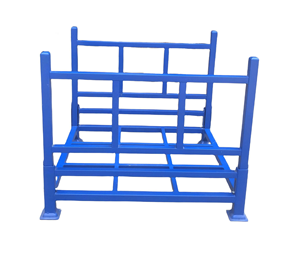
Collapsible stillage storage cages offering efficient backhaul logistics and high-density stacking. Features automated robotic lock hinges, multi-tier post stacking cups, and hot-dip weather-resistant marine finishing.
Why Global Importers & Enterprise Factories Rely on HEDA Shelves
Direct-from-source manufacturing backed by comprehensive testing certifications, advanced robotic cold-roll lines, and compliance engineering.
Standards-Aware Structural Design
We engineer racking systems according to AS 4084 (Steel Storage Racking), FEM 10.2.02, and ANSI/RMI MH16.1 guidelines. Full stress-strain finite element analysis (FEA) and seismic compliance calculation packs are supplied directly for local third-party engineering sign-off.
Verified Quality Certifications
Transparent verification credentials: CE Certification No. 2435-CPR-8605159 and ISO 9001:2015 Management System No. 18624Q00169R0M. All shipments pass rigorous mill-test raw steel inspections (Q235B / Q355B structural coil grades).
Biosecurity & Port-Ready Packing
Heavy goods pre-racked into heavy-duty structural steel stillages or ISPM-15 heat-treated wood pallets to streamline clearance through Australian DAFF, New Zealand MPI, US CBP, and European customs without transit quarantine holdups.
Free 3D CAD & BIM Layouts
Turnkey spatial calculations balancing aisle clearances, mast collision envelopes, and flue spaces tailored to your fleet.
Continuous Automated Forming
10-stage cold profiling, computerized continuous hole punching, and continuous robotic welding seams for tight deflection tolerances.
ChAFTA & Direct FTA Processing
Authorized Certificate of Origin documentation allowing importers to access reduced or zero-duty preferential customs tariffs.
Industrial Racks Procurement Trends for Global Supply Chain Directors
Actionable analytical insights on overcoming macroeconomic cost inflations, lead-time variances, and shifting safety mandates.
Total Cost of Ownership (TCO) Over Price Per Ton
Tier-one logistics procurement directors have moved beyond comparing raw unit costs. TCO frameworks now evaluate steel yield strength (500 MPa high-tensile cold profiles), upright profile cross-section rigidity, and automated electrostatic powder coating thickness (>60μm). Higher tensile steel lowers project tonnage shipping expenses while elevating cumulative shelf deflection margins.
Near-Factory Direct Customization & Hybrid SKUs
With modern warehouses handling volatile multi-channel retail and oversized e-commerce freight, fixed racking designs represent an operational risk. Modern tenders increasingly demand hybrid racking configurations—combining heavy pallet reserve storage on upper tiers with integrated dynamic carton live-storage and pick-mezzanines on lower levels.
Automation-Ready Interfaces (ASRS & AMR Integration)
Procurement managers are future-proofing new installations for automated guided vehicles (AGVs) and Autonomous Mobile Robots (AMRs). Racking tenders now mandate tighter column straightness tolerances (≤1/1000), specialized floor anchor pull-out ratings, and precise sensor bracket attachments to accommodate future automation retrofits without re-purchasing steel structures.
Technological Trajectories: The Future of Industrial Warehouse Racking
How material science, four-way radio shuttles, and circular manufacturing are transforming modern distribution environments.
4-Way Shuttle Racking
Transitioning from traditional 2-way radio shuttles to multi-directional 4-way robotic fleets. Shuttles transition across transverse and longitudinal tracks via automated lifts, eliminating dead space and maximizing high-density storage up to 90% floor occupancy.
IoT Structural Health Sensors
Integration of strain gauges and optical sensor clips directly on critical upright frames. Real-time monitoring provides alert telemetry when forklift impact strikes occur or when beam deflection thresholds exceed safe allowable working limits.
Low-Carbon Green Steel Coils
Global corporate ESG guidelines demand low-emission manufacturing. We utilize high-scrap electric arc furnace (EAF) rolled steel, chrome-free nano-ceramic washing pretreatment lines, and zero-VOC thermosetting powder formulations.
High-Elastic Dynamic Coatings
Specially modified polyurethane powder treatments formulated for deep-freeze cold logistics (-35°C). Resists brittle fracture and micro-cracking caused by cyclic thermal shock and pallet skid gouging inside refrigerated blast warehouses.
Frequently Asked Questions (FAQ) for Global Racking Buyers
Direct answers to critical technical questions regarding load factors, international standards compliance, shipping packing, and engineering validation.
How do you ensure imported Chinese pallet racking complies with Australian AS 4084 / European EN 15512 codes?
Our senior engineering department designs every racking system using cold-formed steel section calculations adhering to the limit state design principles specified in AS 4084-2023, EN 15512:2020, and RMI MH16.1. We provide comprehensive mechanical property sheets, section moduli, moment capacities, connection shear test results, and complete 3D structural stress analysis data. This engineering pack enables your local certified professional engineer (CPEng/PE) to verify structural integrity and issue formal sign-off for local council or municipal regulatory occupancy permits without requiring structural re-modelling.
Can your structural platforms and mezzanine floors handle specific seismic zone criteria (e.g., New Zealand NZS 1170.5)?
Yes. For seismically active regions such as New Zealand, Japan, the US West Coast, and the Pacific Rim, racking cannot be selected purely off standard catalogue load tables. We incorporate your specific site seismic hazard factor (Z), subsoil class, and ductility factors into our layout design. Structural provisions include oversized thickened baseplates, high-grade anchor bolts (Hilti/Fischer certified embedment), cross-directional tubular spine bracing, and heavy back-to-back row spacers to absorb cyclical dynamic ground accelerations without frame collapse.
What critical data must a warehouse facility provide to receive a full 3D CAD proposal and quotation?
To produce an exact, production-ready CAD layout within 24 to 48 hours, our structural design team requires: (1) An architectural warehouse CAD or PDF floor plan identifying building column grids, roll-up doors, dock levelers, fire egress routes, and light/sprinkler clearance levels; (2) Clear underside height from finished slab to lowest ceiling obstruction; (3) Pallet specifications (width, depth, height, and overall gross weight including pallet overhang); (4) Material handling equipment profile (forklift turn radius, maximum collapsed/lift height, and required operating aisle clearance); and (5) Operational velocity profile (FIFO vs. LIFO rotation preferences and total pallet SKU diversity).
How do you prevent freight damage, finish scratching, and container biosecurity rejections during ocean transit?
Export packaging follows strict heavy-machinery standards: All upright columns and horizontal cross-beams are individually interleaved with corrugated pearl-cotton spacers and edge guards to prevent powder-coat abrasion caused by container sea vibration. Bundles are secured using high-tensile polyester strappings attached to custom steel cradles or fumigated solid timber compliant with ISPM-15 IPPC debarking and heat-treatment rules. Container floors are thoroughly inspected and cleared of organic debris prior to loading to guarantee seamless entry past strict quarantine entities including Australia's DAFF and New Zealand's MPI.
What is the typical manufacturing turnaround and ocean freight transit duration from Guangzhou to overseas ports?
Standard manufacturing lead-time for bespoke multi-container racking projects (1 to 10 full 40'HQ containers) spans approximately 15 to 25 working days from final approved CAD sign-off. Shipping transit times from our direct South China embarkation ports (Nansha / Shekou / Yantian) average: 12-18 days to Australian East Coast ports (Sydney, Melbourne, Brisbane); 16-24 days to New Zealand (Auckland, Tauranga); 18-28 days to US West Coast hubs; and 25-35 days to European principal gateways (Rotterdam, Hamburg, Felixstowe). Full container tracking and digital bill of lading notices are provided upon dispatch.