Warehouse Rack
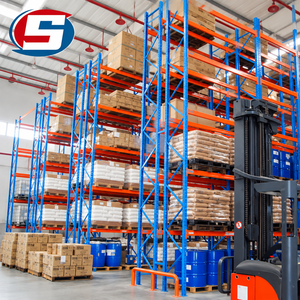
Engineered to comply with rigorous international safety benchmarks (FEM 10.2.02, AS 4084, and ANSI MH16.1), our manufactured lines undergo strict metallurgical testing and automated roll-forming quality checks.
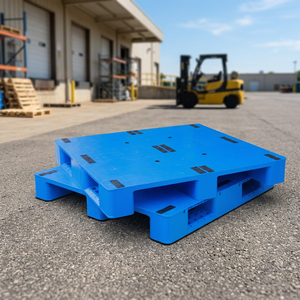
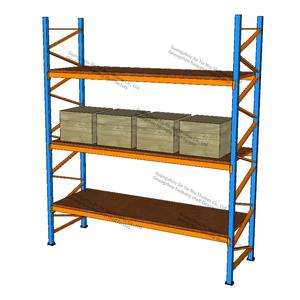
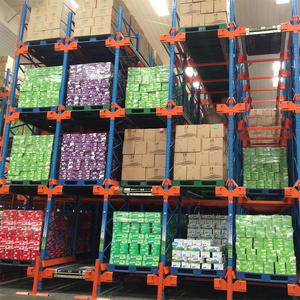
In modern high-throughput intralogistics, industrial steel shelving and pallet racking are critical structural equipment rather than simple storage hardware. Procuring racking systems from Chinese manufacturers requires deep technical scrutiny of material properties, profile geometry, deflection ratios, and structural stability under static and dynamic loading. As industrial supply chains adopt vertical cubing strategies, understanding the difference between commercial gauge metal and certified structural steels becomes paramount for operational safety, insurance underwriting, and building code compliance.
Engineering Rule of Thumb: High-yield cold-rolled steel coils (such as Q235B and Q355B) ensure precise dimensional tolerances and predictable mechanical behavior under severe seismic or impact conditions, strictly adhering to global codes including AS 4084 (Steel Storage Racking), EN 15512 (RMI), and ANSI MH16.1.
Steel grade determines yield strength, tensile resilience, and cold-temperature ductility. Our upright columns and structural step beams utilize certified Q235B (yield strength ≥ 235 MPa) for ambient distribution centers and high-tensile Q355B (yield strength ≥ 355 MPa) for high-bay configurations over 12 meters. This guarantees extreme resistance to torsional buckling and beam sag under heavy concentrated pallet loads.
Standard shelving deflection limits are calculated at L/200 for manual picking and L/250 to L/300 for automated or shuttle-driven operations, where horizontal alignment tolerances are minute. The safety factor for upright frame load calculation is kept at a minimum of 1.65 to 1.95 according to FEM 10.2.02 codes, safeguarding against sudden impact damage from rough forklift docking operations.
Corrosion mitigation starts with a 7-stage automated chemical immersion: acid pickling, zinc phosphating, and nano-ceramic passivation, followed by electrostatic thermosetting polyester powder coating baked at 180°C–200°C. This yields a dense 60–90 μm dry film thickness (DFT) providing over 500 hours of continuous salt-spray resistance (ASTM B117), ideal for coastal or cold storage humidity.
The global logistics infrastructure landscape is shifting rapidly toward volumetric density, carbon lifecycle accountability, and automated warehouse integration. Procurement specialists must align their purchasing strategies with these long-term macro shifts.
Traditional wide-aisle selective racking is increasingly being superseded by Automated Two-Way and Four-Way Radio Shuttle Racking. Driven by soaring warehouse land values in Australia, the US, and Europe, companies are utilizing shuttle channels up to 40 meters deep. This eliminates operator forklift driving inside the rack channels, reducing structural damage, labor expenditure, and cycle times by up to 45%. Future procurement demands precise track tolerances (±1.5mm) and standardized docking interfaces for Autonomous Mobile Robots (AMRs).
Standardized catalog procurement has ended. Forward-thinking enterprise buyers now demand custom Finite Element Analysis (FEA) compliant with region-specific seismic provisions (e.g., NZS 1170.5 for New Zealand, AS 4084:2023 for Australia, and FEMA 460 for North America). Factors including base-plate anchorage thickness, ductility factor ($\mu$), and floor response spectra dictate the column profile and diagonal bracing geometries required to avert progressive collapse during ground accelerations.
The explosion of biopharmaceuticals, fresh fruit exports, and frozen proteins requires cold store shelving designed for temperatures ranging from 0°C down to -30°C. Standard commercial steels risk cold brittleness and micro-cracking at welded joints. High-performance steel with low-temperature Charpy V-notch impact toughness (e.g., Q235D/Q355D) paired with duplex anti-corrosive powder coatings or hot-dip galvanizing (HDG to ISO 1461) has become the gold standard in cold store procurement.
Global carbon border adjustments (CBAM) and corporate ESG initiatives require quantifiable lifecycle carbon disclosures (EPD - Environmental Product Declarations). Modern tier-1 factories utilize electric arc furnace (EAF) scrap-recycled steel, heavy-metal-free zirconium conversion pre-treatments, and powder coating systems with 98% overspray reclaim rates, drastically diminishing embodied carbon metrics per stored pallet position.
Evaluate system suitability across floor-space utilization, selectivity, loading capabilities, and material handling equipment (MHE) integration to optimize your procurement budget.
| System Classification | Space Utilization | SKU Selectivity | Typical Payload / Tier | MHE Requirements | Recommended Industry Usage |
|---|---|---|---|---|---|
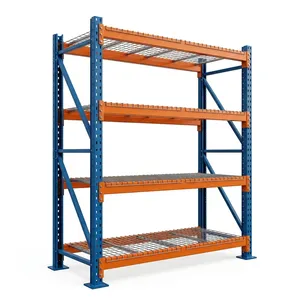
| Selective Pallet Racking | 40% – 50% | 100% Direct | 1,000 – 4,500 kg | Counterbalance, Reach Truck | General 3PL, FMCG, High-SKU Retail |
| Radio Shuttle System | 75% – 85% | Channel FIFO / LIFO | 500 – 1,500 kg | Standard Reach + Semi-Auto Carrier | Food & Beverage, Cold Stores, Bulk Batches |
| Drive-In / Drive-Through | 65% – 75% | Low (Last-In First-Out) | 1,000 – 2,000 kg | Counterbalance (In-rack Drive) | Seasonal Harvest, Homogeneous Raw Materials |
| Heavy Duty Cantilever | Variable (Open Front) | 100% Side Access | 500 – 3,000 kg / Arm | Side Loader, Multi-Direction Forklift | Structural Timber, Extrusions, Piping, Sheet Metal |
| Rack-Supported Mezzanine | Up to 200% Floor Area | 100% Hand Pick | 300 – 1,000 kg / m² | Pedestrian, Conveyor, Goods Lift | E-commerce Fulfillment, Apparel, Auto Spare Parts |
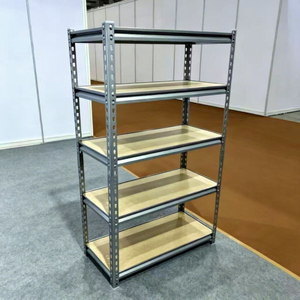
| Modular Boltless Shelving | Manual Footprint | 100% Hand Pick | 150 – 500 kg / Shelf | Manual Hand Picking / Carts | Workshops, Hardware Stores, Archive Storage |
Founded in 2001, Guangzhou Heda Shelves Co., Ltd. has spent over two decades evolving from a regional fabrication workshop into a premier tier-1 engineering enterprise, supplying end-to-end warehouse storage solutions worldwide.
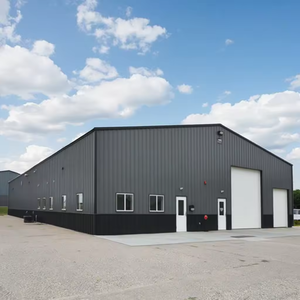
Operating across a modern 30,000 m² industrial plant with a 30,000 tons/month processing volume, our facility hosts automatic continuous cold-roll profiling lines, CNC automated column punching presses, and robotic welding stations. We control all manufacturing phases in-house—eliminating subcontracting variability and preserving tight dimensional tolerances across every beam, upright, and footplate.
We eliminate technical import barriers by providing transparent, third-party audited compliance credentials:
Our dedicated engineering office features over 30 structural engineers who turn your building shell drawings into complete 2D CAD engineering plans and photorealistic 3D warehouse renderings in as little as 24 to 48 hours. We calculate clear working heights, flue spaces, forklift turning radius paths, and sprinkler clearances before steel is ever cut.
Shipping structural racking requires strict packing engineering to avoid sea-freight salt corrosion, coating abrasion, or container unloading delays. We utilize heavy-gauge dedicated steel stillages or strict ISPM-15 heat-treated wood with clear certification marks, fully compliant with Australian DAFF, New Zealand MPI, and US CBP biosecurity standards.
Our trade compliance division streamlines the customs clearing process by issuing clean Bills of Lading, detailed packing lists, Mill Test Certificates (MTC EN 10204 3.1), and Certificates of Origin (under ChAFTA, RCEP, and Form E). This enables our international partners to capture preferential tariff rates and eliminate port clearance demurrage costs.
In addition to executing turnkey projects, we serve as the manufacturing backbone for regional racking distributors, material handling suppliers, and structural engineering integrators across Oceania, the Americas, Europe, and the Middle East. We provide custom punching dies, private-label color powder coating, branded box packaging, and localized engineering calculations.
Straightforward, technical answers to the most common engineering, verification, and logistics questions asked by international procurement directors and logistics executives.
Every batch of prime hot-rolled and cold-rolled steel coils procured from tier-1 mills (such as Baosteel, Shougang, or Ansteel) arrives with Mill Test Certificates (MTC) verifying chemical composition and mechanical properties. Before slit coils enter continuous roll-forming lines, our internal QC laboratory conducts tensile, yield point, and elongation testing according to GB/T 700 / ASTM A36 standards. Traceable batch numbers are maintained throughout manufacturing so complete material compliance can be audited at any stage.
Yes. Our engineering division works with structural modeling software that models the 3D frame geometry, effective length factors, member buckling curves, and connection rigidity in direct alignment with regional standards: AS 4084 (Steel Storage Racking) for Australia and New Zealand, EN 15512 / FEM 10.2.02 for the European Union, and ANSI/RMI MH16.1 for North America. We provide section property tables, maximum load capacity charts, and anchor pull-out calculation data packs to facilitate rapid sign-off by your local registered professional engineer (PE / CPEng).
For high-seismic regions, racking systems require ductile frame behavior to dissipate ground motion energy without catastrophic frame collapse. We calculate site-specific seismic demand using client-provided ground acceleration parameters (spectral response $S_s$ and $S_1$ or NZS 1170.5 hazard factor $Z$). Our engineers increase upright column steel thicknesses, enlarge heavy-duty baseplates from standard 6mm to 10mm–16mm thickness, implement twin M16/M20 chemical capsule anchoring, configure heavier diagonal bracing profiles, and add rigid top-tie bracing across rack rows to control lateral inter-story drift.
Uprights and beams are bundled with protective corrugated paper separation strips, edge cardboard protectors, and high-tensile polyester strapping to eliminate metal-on-metal abrasion during long ocean transit. Structural components are bundled onto custom heavy-duty steel channel stillages or ISPM-15 compliant heat-treated timber bunks, enabling fast container stuffing and destuffing via forklift slippers. Each bundled unit is wrapped in multi-layer water-resistant polyethylene stretch film containing vapor corrosion inhibitor (VCI) pouches to safeguard coated surfaces against condensation across differing climate zones.
Standard selective racking or longspan shelving orders (1 to 5 full 40ft HQ containers) carry an in-plant production lead time of 15 to 25 calendar days following technical CAD drawing sign-off. High-volume projects (over 20 containers) are delivered in staged rolling dispatches. Ocean shipping from South China ports (Guangzhou, Shenzhen, Foshan) takes roughly 12 to 18 days to Australia/New Zealand, 18 to 28 days to the US West Coast, and 28 to 38 days to Northern Europe. We coordinate container booking and loading to ensure vessels depart without customs delays.
Yes. If you operate an existing warehouse system and require matching upright post profiles (e.g., standard teardrop 50mm pitch, 75mm diamond hole, 76.2mm British standard pitch, or Omega upright shapes), our tooling workshop can manufacture precision custom punch dies and roll tooling sets. Our engineers perform 3D optical coordinate measurement of your physical sample to ensure slot pitch, hook geometry, and connector locking pins mate seamlessly with your existing beam inventory.
Our continuous automated coating line enforces three quality gates: (1) Dry Film Thickness (DFT) testing across beam webs and upright returns using calibrated magnetic induction gauges to ensure 60–90 μm coverage; (2) Cross-hatch adhesion testing according to ISO 2409 / ASTM D3359 (Class 0 / 5B rating requirement without paint peeling); and (3) Impact resistance testing (direct reverse impact up to 50 kg·cm) to verify polymer cure elasticity and prevent micro-chipping during everyday forklift pallet impacts.
Planning a new logistics distribution center, upgrading an existing picking mezzanine, or seeking a certified OEM steel shelving manufacturer? Connect directly with our senior application engineering team for free 3D CAD modeling, system load computations, and transparent ex-factory pricing within 24 hours.