Engineered Industrial Storage Systems & Heavy-Duty Units
Constructed with high-tensile structural cold-rolled steel, each system is FEA-modeled and certified for dynamic load tolerances, aggressive seismic environments, and rapid pallet turnover cycles.
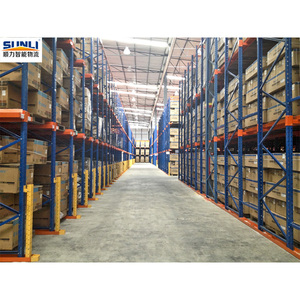
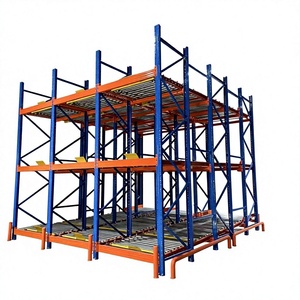
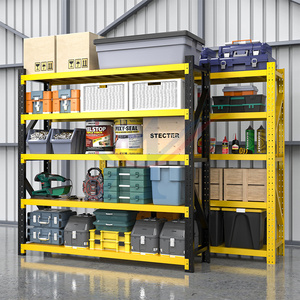
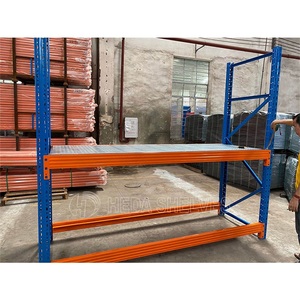
Engineering Excellence in Heavy Industrial Racking: The Information Gain Whitepaper
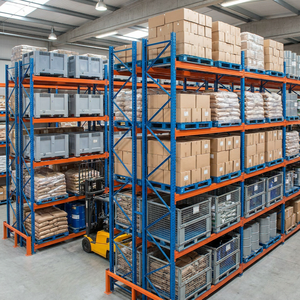
In global industrial logistics, warehouse infrastructure is no longer evaluated simply as bent sheet metal sold by the gross ton. Modern supply chain operations demanding rapid fulfillment, high-density cubic storage utilization, and integration with autonomous mobile robots (AMRs) and automated storage and retrieval systems (AS/RS) require structural storage systems engineered with exact metallurgical tolerances. As China's leading industrial storage racking systems manufacturer and global exporter, Guangzhou Heda Shelves Co., Ltd. (HEDA Shelves) provides international procurement directors and distribution hub operators with structural racking assemblies that combine high-yield certified steel with mathematically validated mechanical stability.
When engineering high-bay racking systems exceeding heights of 12 meters, dynamic horizontal forces generated by variable seismic accelerations, localized frame impact from reach trucks, and deflection under non-uniform pallet loads become primary design criteria. Unlike commodity fabricators who down-gauge raw strip to achieve fragile price points, our manufacturing methodology incorporates continuous roll-formed cold-drawn Q235B and high-yield Q355B carbon steel. Every upright column cross-section incorporates multiple stiffening bends and continuous return lips that dramatically elevate torsional rigidity and suppress local buckling phenomena under maximum compression loads.
Comprehensive Technical Specification & Structural Matrix
Procurement teams must carefully map rack geometry, clearance limits, and steel profiles to material handling equipment (MHE). Below is an engineering comparison matrix defining structural performance attributes across core industrial configurations:
| Racking Topology | Standard Steel Grade | Payload Rating (Per Level) | Aisle Width (AST) Requirement | Volumetric Storage Efficiency | Seismic Compliance Standard |
|---|---|---|---|---|---|
| Selective Pallet Racking | Q235B / Cold-rolled | 1,000 kg – 4,500 kg | 3,200 mm – 3,800 mm | 40% – 45% (Direct 100% Selectivity) | AS 4084 / FEM 10.2.02 / RMI MH16.1 |
| Drive-In / Drive-Through | Q235B / High-tensile | 800 kg – 2,000 kg / lane | Drive-in lane (MHE specific) | 65% – 75% (High-density LIFO/FIFO) | NZS 1170.5 / EN 15512 |
| Gravity Pallet Flow (FIFO) | Q235B + Galvanized Track | 500 kg – 1,800 kg / pallet | Separate load & pick faces | 70% – 85% (Automatic rotation) | AS 4084:2023 / CE Certified |
| Radio Shuttle Cart System | Q355B Continuous Profile | 500 kg – 1,500 kg / unit | 3,000 mm transfer aisle | 80% – 90% (Deep lane automation) | CE 2435-CPR-8605159 / ISO 9001 |
| Structural Cantilever Lines | Q235B / Q355B Hot-rolled H | 1,000 kg – 6,000 kg / arm | Adjustable for long loads | Specialized for timber, pipes & bar steel | AISC 360 / AS 4100 / EN 1993 |
| Heavy Structural Mezzanine | Hot-rolled H-Beam + Q235B | 300 kg – 1,500 kg / m² | Open span layout (custom grid) | Doubles or triples usable floor footprint | BCA / AS 1657 / OSHA Compliant |
Future Procurement Trends in Industrial Storage Racking (2025–2030)
The procurement landscape for industrial warehouse storage systems is undergoing structural transformations driven by automation, global sustainability directives, and localized seismic risk management. Supply chain strategists and logistics asset managers must evaluate these emerging vectors:
Automation-Ready Rack Geometries
Warehouses are phasing out manual forklift handling in favor of AMR shuttles and AGVs. Racking procurement now specifies beam deflection thresholds of 1/300 or 1/400 span length rather than historical 1/200 limits, ensuring optical guidance lasers and sensor arrays retain millimeter-accurate calibration during high-frequency cycles.
Decarbonized Powder Finishing
Global ESG directives dictate stringent volatile organic compound (VOC) caps and reduced carbon footprints per metric ton. Next-generation procurement favors electrostatic dry powder formulations applied over phosphorus-free nano-ceramic conversion coatings, offering corrosion resistance superior to standard salt spray ratings with lower embedded energy.
Performance-Based Seismic Design
Seismic mandates across the Pacific Rim, Australia, and the Americas have made generic off-the-shelf racking obsolete. Global procurement tenders mandate site-specific response spectrum analysis (RSA), customized anchor bolt ductility calculations, and oversized baseplates capable of dissipating lateral earthquake shocks without structural progressive collapse.
Technology & Manufacturing Trends in Industrial Cold-Rolled Steel Storage
The manufacturing of heavy industrial racking has evolved from semi-manual shearing and mechanical press braking into fully integrated, multi-stage automated production lines. At our 30,000 m² production facility in Guangzhou, China, manufacturing precision is governed by real-time sensor feedback and closed-loop CNC controls.
1. Automated Continuous Roll-Forming Lines: The load capacity of an upright frame begins with roll design. Cold strip steel passes through progressive forming stations (ranging from 18 to 26 consecutive roll passes). This gradual transformation prevents micro-fissures in cold-worked radii, preserving the tensile yield strengths of steel up to 355 MPa. The integrated hydraulic punching head executes pitch perforations at 50mm, 75mm, or 76.2mm with absolute positional tolerances within ±0.1mm along a 12-meter upright length.
2. Robotic Beam Connector Welding: Racking failure frequently occurs at the connection node between the horizontal load beam and the vertical upright. Our automated robotic welding cells utilize multi-axis positioners to execute continuous, deep-penetration gas metal arc welds (GMAW) connecting structural beam profiles to forged 3-claw or 4-claw locking brackets. Each joint is engineered with a proprietary safety pin lock to prevent accidental beam dislodgement under violent upward impact from forklift forks.
3. Advanced Pre-Treatment & Electrostatic Coating: To guarantee an operational lifecycle exceeding 15 years in demanding distribution environments, our automated coating facility employs a 9-stage pre-treatment line featuring ultrasonic degreasing, multi-stage rinsing, acid pickling to eliminate scale, and automated zirconium-based nano-passivation. Following pre-treatment, racking profiles enter automatic reciprocator powder coating booths where cured epoxy-polyester coatings achieve an even dry film thickness (DFT) of 70–110 microns, delivering high resistance to abrasion, chipping, and chemical spillage.
Certified 10-Step In-House Manufacturing Workflow
Consistent quality in industrial storage systems requires strict process control. Our factory operates a transparent, traceable production protocol from incoming raw coil metallurgy to export container loading:
Why Global Buyers Partner with Guangzhou Heda Shelves Co., Ltd.
Choosing an offshore racking manufacturer requires absolute confidence in structural reliability, engineering capability, and export compliance. Since our establishment in 2001, Guangzhou Heda Shelves Co., Ltd. has grown from a specialized metal fabrication shop into an international warehouse engineering powerhouse with over 300 experienced engineers, structural modelers, and technical manufacturing specialists.
1. Certified International Compliance: We verify all structural calculations against regional statutory codes. Our facility holds European CE Certification (Certificate No. 2435-CPR-8605159) under EN 1090-1 / EN 15512, ensuring CE-mark compliance throughout the EU and UK. Our production operations are certified under the ISO 9001:2015 Quality Management System (No. 18624Q00169R0M), while raw materials and finishes undergo strict testing to maintain RoHS environmental compliance. For clients across Australia and New Zealand, our engineering department provides structural layout data aligned with AS 4084:2023 principles and seismic design parameters referencing NZS 1170.5.
2. Free 3D CAD & Finite Element Simulation: We do not ask clients to commit to a purchase order before reviewing complete technical designs. Within 24–48 hours of receiving a client's facility floor plan, clear height limitations, slab specifications, pallet footprints, and forklift turning radiuses, our engineering design office develops complete AutoCAD layouts and 3D visual renderings. We calculate rack row upright deflection, baseplate floor load distribution, and fluespace clearances free of charge.
3. Comprehensive Ocean Export Logistics & Customs Preparation: A racking system cannot add value if it arrives damaged or held up in customs. We utilize specialized export packing protocols: components are secured in custom-engineered steel crates or palletized on heat-treated ISPM-15 compliant timber. Every shipment is organized by bay number and clearly tagged with laser-printed labels to expedite assembly on site. In addition, our documentation department prepares Commercial Invoices, Packing Lists, Certificates of Origin (including Form A, Form E, or ChAFTA preferential certificates), and Mill Test Certificates (MTC) to facilitate immediate customs clearance at ports in North America, Europe, Australia, and the Middle East.
Frequently Asked Questions: Global Industrial Storage Procurement
The following technical FAQ provides detailed answers to key questions raised by logistics planners, warehouse operators, and procurement specialists when sourcing industrial racking systems directly from China:
Transform Your Warehouse Cubic Storage Efficiency Today
Send us your warehouse CAD floor plan, ceiling clear heights, and pallet specifications. Our structural engineers will prepare an optimized 3D layout, complete load calculation tables, and an itemized factory-direct quote within 24 hours.