High-Density Live & Heavy-Duty Warehouse Storage Solutions
Explore our specialized industrial rack configurations manufactured from certified Q235B/Q355B structural steel, tailored for global third-party logistics (3PL), cold-chain hubs, and distribution centers.
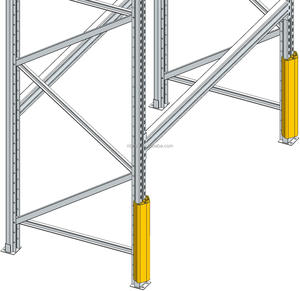
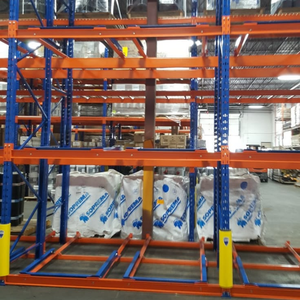
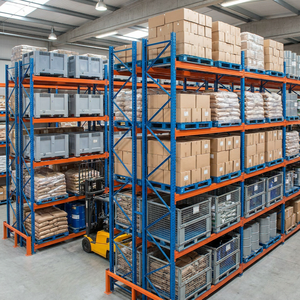
Engineering Architecture of Live Pallet Racking Systems
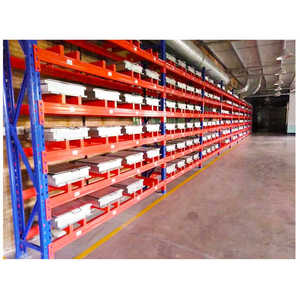
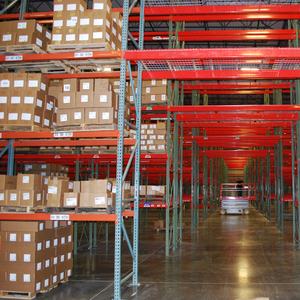
Live pallet racking—frequently designated as gravity flow racking or pallet flow storage—operates as an autonomous dynamic storage medium leveraging gravitational potential energy to orchestrate flawless First-In, First-Out (FIFO) inventory cycles.
Slope Gradient Calibration
The inclination angle defines system equilibrium. Standard industrial lines use an engineered gradient between 2.8% and 3.5% (approx. 1.5° to 2.0°). Too steep, and pallet impact velocity breaches safety thresholds; too shallow, and startup inertia causes line stoppage.
- Calculated for 500kg to 1500kg payloads
- Zero electrical power requirement
- Ambient & -30°C freezer oil variations
Centrifugal Speed Controllers
Uncontrolled gravity causes kinetic velocity escalation ($v = \sqrt{2gh}$). Our factory embeds internal gear-driven centrifugal brake rollers every pallet position along the flow bed, restricting descent speeds strictly beneath 0.25–0.30 m/s regardless of pallet load.
- Internal mechanical governor
- Direct dynamic contact surface
- Zero back-pressure runaway risk
Pallet Separation Separators
In deep lanes exceeding 10 pallets, combined line back-pressure on the discharge pallet can reach thousands of kilograms, jamming forklift extraction. Our mechanical load separators detach the lead pallet from upstream stock until removal.
- Automatic spring-lock release
- Protects forklift mast mechanisms
- Essential for lanes > 5 pallets deep
| Storage System Type | Inventory Logic | Floor Space Utilization | Throughput Capability | Forklift Aisle Travel | Relative CAPEX / Position |
|---|---|---|---|---|---|
| Live Pallet (Gravity Flow) | Strict FIFO | Ultra-High (Up to 80%) | Rapid / Continuous Discharge | Minimal (Dedicated In/Out Aisle) | Moderate to High |
| Selective Pallet Racking | Random / FIFO | Low to Medium (35-40%) | High (100% Direct Accessibility) | Extensive (Aisle for Every Row) | Low Baseline |
| Drive-In Racking System | LIFO (Rarely FIFO) | High (60-70%) | Low to Moderate (Forklift Enters Lanes) | High Inside Racking Bay | Low to Moderate |
| Push Back Cart System | LIFO Only | High (65-75%) | Moderate (Front-Face Loading) | Single Aisle per Bay | Moderate |
| Radio Shuttle Racking | Flexible FIFO / LIFO | Ultra-High (Up to 85%) | High (Semi-Automated Shuttle) | Aisle-Face Only | High (Robotics & Batteries) |
Future Procurement & Technological Trends (2025–2030)
Global logistics demands have evolved from passive steel shelving into high-performance kinetic infrastructure. Sourcing professionals must evaluate total lifecycle economics, carbon footprints, and robotics interoperability.
IoT-Enabled Kinetic Flow Telemetry
Next-generation pallet flow lanes are integrating micro-generator sensor nodes within speed controllers. These self-powered sensors monitor roller revolutions, ambient temperatures, and pallet movement velocities, delivering real-time blockage alerts to the central Warehouse Management System (WMS).
Autonomous Vehicle Discharge Interfaces
Forklift operators are increasingly being replaced by Automated Guided Vehicles (AGVs) and Autonomous Mobile Robots (AMRs). Live pallet discharge faces are now engineered with optical sensor reflectors, high-tolerance docking guides, and dynamic safety interlocks for automated extraction without human intervention.
High-Strength Micro-Alloyed Q355B Steel
Procurement teams demand lower embodied carbon per pallet position. By shifting to high-yield Q355B structural steel profiles, our engineers reduce material gauge thickness by 14% while retaining higher static yield strengths, reducing oceanic shipping mass and Scope 3 carbon metrics.
Guangzhou Heda Shelves Co., Ltd.: 25 Years of Precision Engineering
Established in 2001, Guangzhou Heda Shelves Co., Ltd. has matured into China’s premier engineering and export hub for heavy-duty warehouse storage infrastructure. Operating from an integrated 30,000 square meter production complex, our team of more than 300 experienced engineers, structural fabricators, and QA inspectors oversees the manufacturing of world-class racking systems.
Unlike trading brokers, Heda Shelves manages every stage under strict ISO 9001:2015 certified quality controls: from cold-coil uncoiling and 100-ton hydraulic column punching to automated roll-forming, robotic welding, pre-treatment pickling, and Swiss Gema electrostatic powder coating.
Official Verifiable Credentials
Our manufacturing plant submits to routine independent third-party audits. Procurement teams are invited to verify our certification credentials directly with international registrars:
Frequently Asked Questions by Industrial Sourcing Teams
Detailed engineering answers to the most rigorous inquiries submitted by logistics directors, structural consultants, and warehouse supply chain managers.
What pallet types are compatible with gravity live flow systems?
Pallet bottom construction is the single most critical variable. Full perimeter wood pallets (GMA, Euro 1200x800mm, and Australian standard 1165x1165mm) with sound bottom runners parallel to flow direction work best. Plastic pallets require specific cross-runner ribs or center-track roller configurations. Defective pallets with broken bottom boards must not enter dynamic lanes to prevent jamming.
How do live racking systems perform inside -30°C cold storage freezers?
Standard commercial rollers seize in sub-zero environments due to grease crystallization. Heda Shelves engineers cold-chain live racking using low-temperature synthetic lubricants, sealed stainless-steel ball bearings, and customized polyurethane-sleeved brake rollers that maintain consistent friction coefficients down to -30°C without freezing or sliding.
Can you provide AS 4084 engineering calculations for local sign-off in Australia?
Yes. Our engineering department designs beam sections, column profiles, and baseplate anchorage referencing AS 4084 (Steel Storage Racking) criteria. We supply complete sectional modulus data, mechanical yield certificates, 3D CAD models, and load-rating plaque blueprints so your locally registered Australian engineer (RPEQ / CPEng) can verify compliance seamlessly.
What is the maximum lane depth achievable in pallet flow systems?
While theoretical limits extend past 25 pallets, best operational practice recommends lane depths between 10 and 18 pallets. Any lane deeper than 4–5 pallets strictly necessitates our automatic separation mechanisms to eliminate accumulating hydraulic line pressure against the picking face, protecting both personnel and forklift handling equipment.
How are export shipments packed to comply with strict biosecurity rules?
Australia (DAFF) and New Zealand (MPI) enforce strict biosecurity import controls. We eliminate biological quarantine risks by packing components on custom welded steel stillages or ISPM-15 certified heat-treated and IPPC-stamped dunnage. All packing lists, fumigation treatment logs, and certificates of origin accompany shipments to prevent customs holds.
What is the standard production and shipping lead time from South China?
Factory fabrication for customized live pallet racking projects typically requires 20 to 30 calendar days depending on tonnage and bespoke roller bed configurations. Sea transit from Guangzhou/Shenzhen ports to Oceania or Southeast Asia takes 12 to 22 days, while transits to European and North American ports run approximately 28 to 38 days.
How are speed controller rollers distributed along the flow lane?
The spacing formula depends on gross pallet mass ($m$), rail slope angle ($\theta$), and pallet bottom flatness. As a benchmark, an 8-pallet lane loaded with 1,000kg pallets features a speed controller roller installed at every single pallet pitch (approximately every 1.2 to 1.4 meters), ensuring continuous velocity damping before kinetic inertia accumulates.
What documentation and warranty coverage do you furnish upon dispatch?
Each export order includes a Comprehensive Engineering Dossier containing mill test certificates (MTC 3.1) verifying steel chemical analysis, powder coat cross-hatch adhesion test reports, installation assembly drawings, and a certified 5-year structural warranty covering structural weld and beam deflection integrity under rated loads.
Initiate Your Engineering Consultation & CAD Design
Planning a new logistics hub or upgrading an ambient or cold storage facility? Send us your architectural floor plan, clear ceiling heights, and pallet specifications. Our senior structural engineers deliver a comprehensive 3D layout, static load calculations, and turnkey factory quotation within 24 hours.