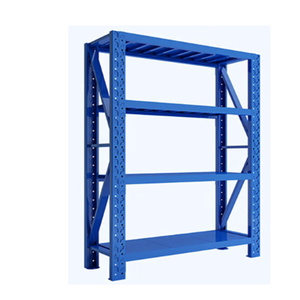
Industrial Storage Rack Systems & Engineered Infrastructure
From selective pallet access to cold-chain automated 4-way shuttles, explore our field-tested racking configurations customized for dynamic global supply chains.
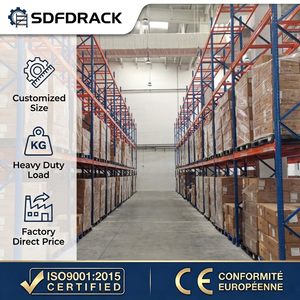
Heavy Duty Warehouse Pallet Racks Customized High Load 1000kg-5000kg Industrial Storage Selective Steel Pallet Racking System
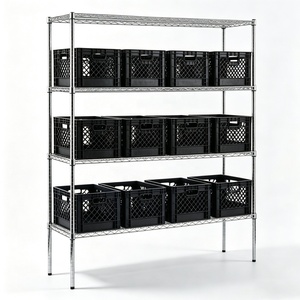
Commercial Warehouse Storage Rack Adjustable 4 Tiers Industrial Heavy Duty Galvanized Metal Wire Shelving
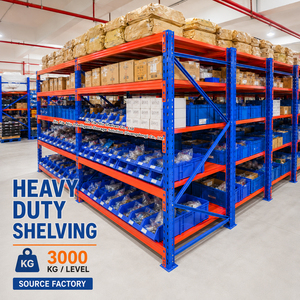
3000KG Custom Steel Deck Storage Rack for Plastic Bins and Small Parts Warehouse Shelves Racking System
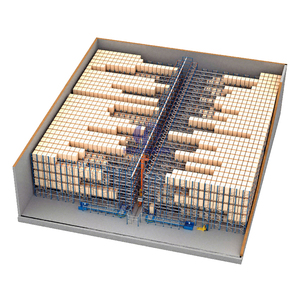
Heda Shelves Cold Storage Shuttle Rack ASRS Radio Shuttle Racking Pallet Racking System 4-Way Shuttle Racking
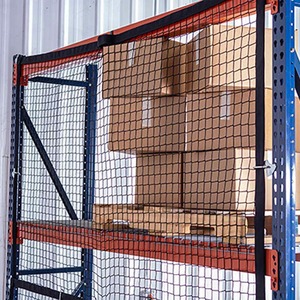
Heavy Duty Rack Safety Net HDPE Nylon Pallet Netting for Warehouse Protection
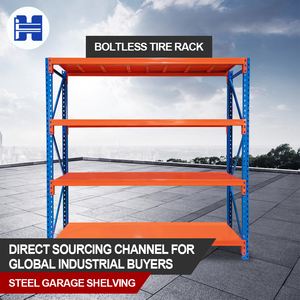
Long Span Medium Duty 5 Layer Durable Steel Industrial Shelving Racking Boltless Warehouse Storage Rack System Adjustable OEM
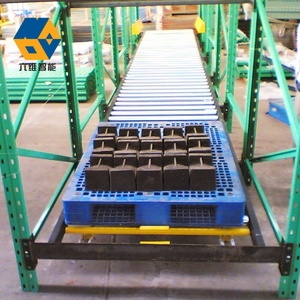
Hot Sale FIFO Gravity Flow Roller Shelf Rack System Industrial Warehouse Storage Industrial Flow Gravity Pallet Racking
Engineering Authority
Structural Integrity, Steel Metallurgy, and Load Engineering Whitepaper
A rigorous examination of Chinese cold-formed structural steel manufacturing, seismic resilience metrics, and global compliance criteria.
Procuring industrial pallet racking systems from China requires an analytical evaluation that moves beyond surface-level unit costs. Modern warehouse intralogistics systems carry substantial static and dynamic operational loads under demanding working cycles. As a leading manufacturer established in 2001, Guangzhou Heda Shelves Co., Ltd. builds its engineering framework on cold-rolled high-strength Q235B and Q355B structural steel alloys. Through multi-pass automated cold-roll forming, we achieve exact structural profiles that minimize cross-sectional deformation and residual material tension, directly elevating the buckling load limits of upright columns.
Material Yield Analysis
We source certified hot-rolled steel coils exclusively from premier domestic mills. Each production heat number undergoes spectrographic chemical testing to ensure carbon, manganese, and phosphorus balances match international ductility requirements under high seismic loading.
Torsional Beam Stability
Our box beam and interlocking stepped beam designs utilize double-C nested profiling, robotically welded to precision 3-, 4-, or 5-claw connectors. This structural configuration delivers exceptional torsional resistance, eliminating beam rotation under 1,000 kg to 5,000 kg pallet loads.
Corrosion Surface Systems
Components undergo an automated 10-stage pre-treatment line encompassing ultrasonic degreasing, hot-water washing, acid pickling, zinc phosphating, and electrostatic thermosetting polyester powder coating baked at 180°C–200°C for durable industrial performance.
Future Trends in Global Warehouse Rack Procurement
Strategic analysis of intralogistics development, environmental regulations, and automation adaptation over the next decade.
ASRS & Autonomous Shuttle Integration
Conventional static racking is increasingly giving way to 4-way radio shuttle systems and Automated Storage and Retrieval Systems (ASRS). Buyers are shifting procurement capital toward high-tolerance racking channels engineered with sub-millimeter straightness to support autonomous navigation and IoT pallet shuttles.
Standardized Total Cost of Ownership (TCO)
Leading corporate procurement heads prioritize Lifecycle TCO over initial FOB quotes. The integration of high-resilience upright impact protectors, hot-dip galvanized cold-chain rails, and boltless tool-free repositioning has significantly slashed maintenance cycles and operational downtime.
Seismic Harmonization & Climate Adaptation
With warehouse development expanding across seismically active zones (such as New Zealand NZS 1170.5 and US RMI standards) and coastal microclimates, procurement specifications require engineering verification of base-plate anchoring shear values, dynamic dissipation bracing, and heavy-micron marine-grade finishes.
Factory-Direct Manufacturing Advantages
Direct supply line integration, certified compliance standards, and custom CAD layout engineering developed over two decades of export service.
Compliant AS 4084 & International Standards
Our structural design team references Australian Standard AS 4084-2023, FEM 10.2.02, and US RMI guidelines, providing verified section property calculations and load capacity plates for localized engineer approvals.
Free 3D Layout & Dynamic CAD Modeling
We provide full warehouse floor space optimization layouts within 24 hours. Our designs account for clear building heights, fire sprinkler flue spaces, turning radii, and exact forklift specifications to maximize pallet storage density.
Verified CE & ISO 9001:2015 Certifications
Our manufacturing operations are audited and certified under CE Certificate No. 2435-CPR-8605159, ISO 9001:2015 Quality Management System No. 18624Q00169R0M, and comprehensive RoHS environmental guidelines.
Biosecurity-Compliant Export Packaging
Every order is pre-packed using customized steel stillages or ISPM-15 heat-treated export timber. This ensures streamlined customs and quarantine clearance with Australian DAFF, New Zealand MPI, and global customs authorities.
End-to-End Multimodal Logistics Routing
Direct port shipping from Guangzhou and Shenzhen to key global hubs (including Sydney, Melbourne, Auckland, Rotterdam, and Los Angeles) ensures reduced transshipment friction, complete export documentation, and preferential trade duties.
Full OEM & Private-Label ODM Manufacturing
We support international racking distributors, systems integrators, and engineering contractors with customized hole punch patterns (diamond, teardrop, teardrop-inverse), custom color matching, and private-label brand packaging.
Frequently Asked Questions on Racking Procurement
Expert answers addressing the practical structural, financial, and logistical concerns of warehouse engineering and purchasing teams.
Q. How do you verify load capacities under AS 4084 / FEM standards?
We execute finite element analysis (FEA) complemented by physical destructive testing of column profiles and beam-to-upright connectors. We supply complete sectional modulus data, moment-rotation curves, and deflection test certificates for review by local structural certifiers.
Q. Can your uprights and beams accommodate non-standard pallets?
Yes. Our automated punch lines and customizable beam spans support Australian Standard pallets (1165 mm × 1165 mm), European EUR-pallets (1200 mm × 800 mm), North American GMA pallets (48 in × 40 in), as well as custom IBC containers and wire mesh decking.
Q. What anti-corrosion protection is specified for cold-store environments?
For sub-zero cold stores operating between -20°C and -30°C, we specify low-temperature resistant epoxy-polyester hybrid powder formulations, or heavy-duty hot-dip galvanization (HDG) per ISO 1461, preventing micro-cracking and zinc peeling caused by thermal contraction.
Q. What documentation accompanies containerized export shipments?
Every commercial export consignment is supported by a detailed packing list, commercial invoice, mill test certificates (MTC), Bill of Lading (BL), Certificate of Origin (COO), and comprehensive assembly engineering schematics.
Q. What is the typical lead time from CAD approval to vessel departure?
Standard selective and medium-duty shelving configurations require 15 to 20 production days. High-density shuttle systems, automated ASRS racking, and customized mezzanines average 25 to 30 days, backed by our monthly manufacturing capacity of 30,000 tons.
Q. How do you provide on-site installation support overseas?
We supply color-coded component tagging, step-by-step 3D installation manuals, and exploded structural diagrams. For large-scale logistics centers, our engineering directors can provide remote video verification or deploy on-site technical supervisors to guide local work crews.