Safety Decking
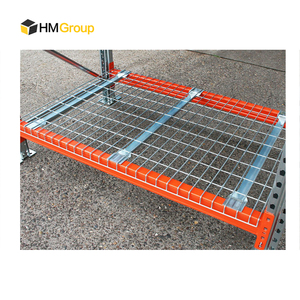
From robotic automated high-bays to heavy-gauge cold storage facilities, examine our factory-direct structural beam profiles, wire mesh decking, flow platforms, and specialized load-bearing solutions engineered for global export.
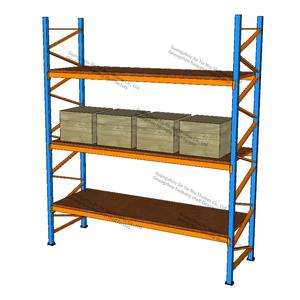
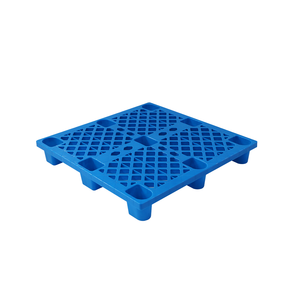
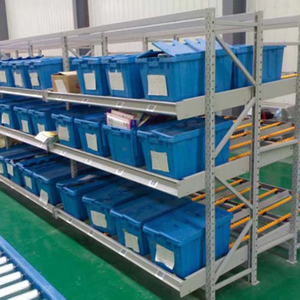
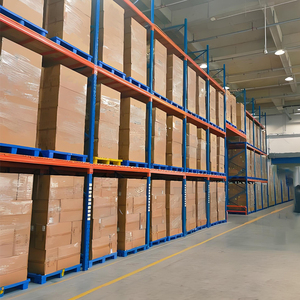
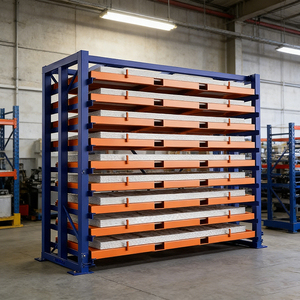
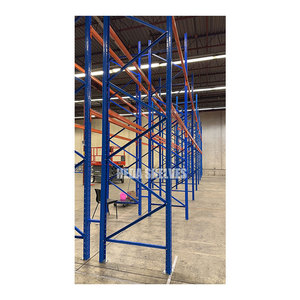
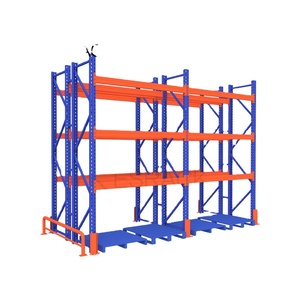
In high-density industrial intralogistics, the cross beam (also designated as the load beam or shelf longitudinal girder) is the primary structural horizontal element subjected to permanent combined flexural, torsional, and shear stresses. Selecting the optimal beam cross-section and connection mechanics dictates the total seismic resilience, deflection threshold, and structural safety margin of the entire warehouse storage envelope.
Chinese heavy-duty beam fabricators primarily manufacture two predominant profile types tailored to global logistics specifications:
A. Continuous Seam Interlocking Twin-C Box Beams: Fabricated from two high-tensile cold-rolled C-channels that are pressed, nested face-to-face, and joined using continuous automated seam MIG welding. The closed tubular cross-section yields exceptional polar moment of inertia ($I_z$) and torsional rigidity ($J$), effectively eliminating torsional buckling when supporting oversized pallets, steel drums, or asymmetric container bases.
B. Cold-Roll Formed Step Beams: Featuring an internal horizontal recess (step ledge, typically 12.5 mm, 20 mm, or 25 mm deep). Step beams are specifically engineered to integrate drop-in wire mesh decking, galvanized shelf panels, or chipboard retainers flush with the top beam flange. This flush profile prevents snagging during high-speed forklift pallet placement and meets strict North American NFPA sprinkler penetration standards.
The beam-to-column connection is not a simple pinned joint; it operates as a semi-rigid joint whose rotational stiffness ($K_b$) determines the effective buckling length of upright frames. Top-tier Chinese manufacturers engineer beam connector claws using hot-rolled structural steel stamped with 3-claw, 4-claw, or 5-claw configurations:
The theoretical maximum mid-span deflection ($\delta_{max}$) for a symmetrically loaded dual-pallet pair under a total uniformly distributed load ($q$) across clear span ($L$) with elastic modulus ($E = 2.05 \times 10^5 \text{ N/mm}^2$) and second moment of area ($I_x$) is expressed by:
| Profile Dimension (H × W mm) | Material Thickness (mm) | Span Length (mm) | Max UDL / Pair (kg) | Deflection Limit ($\delta$) | Compliance Standard |
|---|---|---|---|---|---|
| 80 × 50 Interlocking Box | 1.5 mm (Q235B) | 2300 mm (2 Pallet) | 1,800 kg | < 9.5 mm (L/242) | AS 4084 / FEM |
| 100 × 50 Interlocking Box | 1.5 mm (Q235B) | 2700 mm (Standard 2P) | 2,200 kg | < 11.2 mm (L/241) | AS 4084 / CE / RMI |
| 120 × 50 Interlocking Box | 1.8 mm (Q355B) | 2700 mm (Heavy 2P) | 3,200 kg | < 9.8 mm (L/275) | High-Density Cold Store |
| 140 × 50 Heavy Twin-C | 2.0 mm (Q355B) | 3300 mm (3 Pallet) | 3,500 kg | < 13.0 mm (L/253) | AS 4084 / Seismic Class |
| 160 × 50 Structural Box | 2.0 mm / 2.5 mm | 3900 mm (4 Pallet) | 4,500 kg | < 15.5 mm (L/251) | AS/RS & Heavy Dies |
Established in 2001, Guangzhou Heda Shelves Co., Ltd. operates a premier 30,000 m² smart production base producing over 30,000 metric tons of certified racking monthly for Australia, New Zealand, North America, the Middle East, and Europe.
Full finite element structural calculations, yield test reports, and factory certifications (CE No. 2435-CPR-8605159; ISO 9001:2015 No. 18624Q00169R0M) supplied directly to your site certifiers.
Our 300+ strong engineering team translates warehouse architectural CAD plans into optimized 3D layouts, pallet position breakdowns, and beam deflection models within 24 business hours.
Multi-axis Panasonic robotic welding workstations ensure complete penetration welds on beam connector claws and dual-profile joints, eliminating cold laps and catastrophic fatigue ruptures.
10-stage automated pickling, phosphating, and nano-ceramic conversion coating lines capped with electrostatic Swiss Gema powder coating (60–80 μm), exceeding 500-hour ASTM salt spray ratings.
Custom-fabricated structural steel stillages or heat-treated timber bundles meeting Australian DAFF and New Zealand MPI requirements, eliminating quarantine delays at maritime destinations.
Custom color-matching (standard RAL 2004 Pure Orange, RAL 5015 Sky Blue, or bespoke fleet colors), laser logo engraving, and certified load capacity warning plaques for regional system integrators.
As automated material handling scales globally, cross beam manufacturing is undergoing rapid shifts in metallurgy, dimensional precision, and sensor integration.
High-bay Automated Storage and Retrieval Systems (AS/RS) and automated guided vehicles (AGVs) demand strict beam sweep, camber, and twist tolerances under ±1.0 mm to guarantee high-speed optical crane sensor navigation.
Procurement teams are shifting away from plain carbon steel toward cold-formable, micro-alloyed high-yield steels, reducing beam self-weight by up to 18% while simultaneously increasing seismic energy dissipation properties.
With global cold chain logistics expanding, beam connectors and weld zones undergo Charpy V-notch impact testing at -30°C to prevent brittle fracture phenomena prevalent in blast freezing operations.
Next-generation cross beams integrate discrete fiber-optic or piezoelectric strain gauges communicating over LoRaWAN networks, notifying facility managers when beam deflection thresholds approach critical design fatigue limits.
Authoritative answers to the most common structural, regulatory, and maritime export questions faced by industrial procurement managers.
Calculating the correct beam profile requires three fundamental engineering inputs: 1. Clear span length ($L$), determined by pallet width plus standard 75–100 mm clearances; 2. Total uniformly distributed load (UDL) per level (e.g., two 1,200 kg pallets require a minimum 2,400 kg UDL rating); and 3. Deflection criteria ($L/200$ for standard forklift bays or $L/250$ for robotic automated systems).
Our structural engineers assess the required Section Modulus ($Z_x$) and Moment of Inertia ($I_x$) using finite element models (FEA), then select an interlocking twin-C box beam (such as 100×50×1.5mm or 120×50×1.8mm) that guarantees elastic stress remains well below the allowable limit ($f_b \le 0.66 \times f_y$) under dynamic impact factors.
Yes, unconditionally. We fabricate cross beams with reference to the structural limit state principles outlined in AS 4084:2023 (Steel Storage Racking) and supply comprehensive structural engineering documentation. For New Zealand seismic zones (Wellington, Christchurch, Auckland), we integrate seismic ductility factors into beam-to-column connector design, utilizing 4-claw and 5-claw connectors with increased throat thickness welds.
We provide full section properties, connector shear moment rotation test curves ($M\text{-}\theta$), and yield data enabling your local Chartered Professional Engineer (CPEng) to issue building consent compliance certificates quickly.
Box Beams: Made from twin nested cold-rolled C-channels seam welded top and bottom. They possess exceptional torsional rigidity, making them the worldwide industry standard for selective, drive-in, and heavy-duty pallet racking where pallet runners sit directly on top of the beam flange.
Step Beams: Cold-rolled with an integrated step shoulder (typically 20mm). Designed specifically for North American teardrop applications and multi-tier picking towers to allow wire mesh decking or steel shelving panels to seat flush with the upper beam edge.
Open Tube / C-Beams: Lighter, single roll-formed profiles suitable only for light-to-medium industrial shelving (under 800 kg/level) where lateral torsional buckling is not an operational hazard.
For standard indoor distribution centers, our components undergo automated chemical degreasing, zinc phosphating, and electrostatically applied thermo-hardened polyester powder coating (60–80 μm thickness) cured at 200°C.
For humid coastal distribution hubs (ISO 12944 C3/C4 atmospheric corrosivity categories) or open fertilizer yards, we supply Continuous Pre-Galvanized Coil Beams or Hot-Dip Galvanized (HDG) Beams (meeting ASTM A123 / ISO 1461, achieving 70–100 μm zinc deposition) that withstand decades of condensation and aggressive moisture cycles without bubbling or rust bleed.
Every commercial export order includes a full commercial export documentation packet: Bill of Lading (B/L), Detailed Packing List (with piece counts, bundle weights, and individual mark numbers), Commercial Invoice, and Mill Test Certificates (EN 10204 3.1) confirming steel chemical and mechanical properties.
To reduce import tariffs for overseas buyers, we issue official Certificates of Origin (e.g., ChAFTA COO for Australia, NZ-China FTA COO for New Zealand, or Form E for ASEAN nations), commonly enabling zero-tariff (0%) preferential import duties.
Submit your warehouse CAD floor plan, clear ceiling heights, pallet dimensions, and operational weight specifications. Our licensed storage engineers will generate complete 3D layouts, structural moment calculations, and factory-direct pricing within 24 hours.