Engineered Racking & Dynamic Storage Solutions
Explore our precision-fabricated heavy-duty warehouse storage racks, dynamic flow systems, and industrial shelving. Every system is built from certified high-tensile Q235B/Q355B structural steel, finished with high-adhesion electrostatic anti-rust powder coating, and calibrated for rigorous logistics cycles.
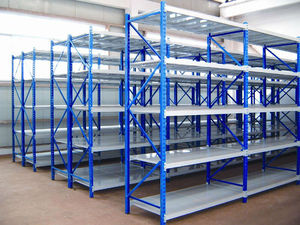
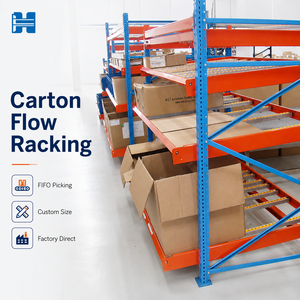
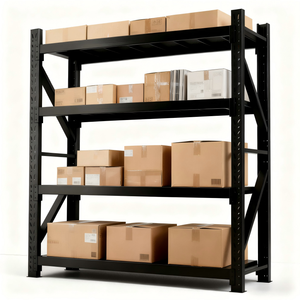
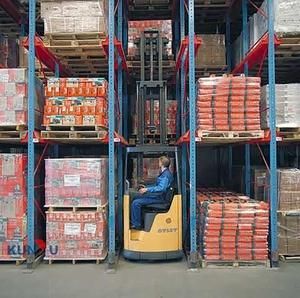
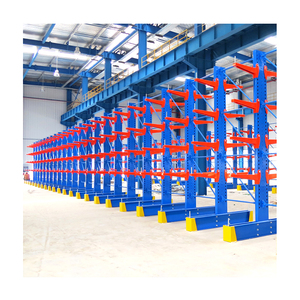
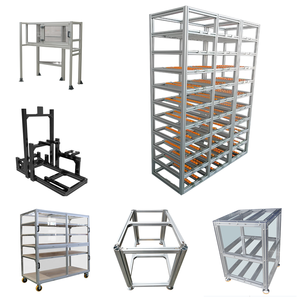
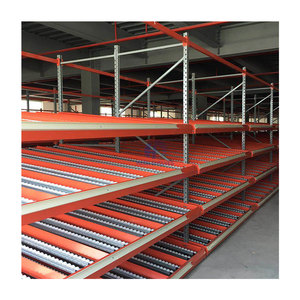
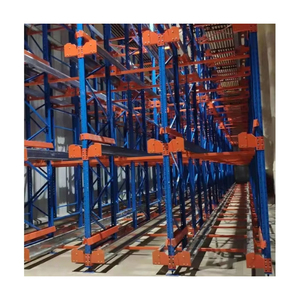
The Engineering Architecture of Double Deep Pallet Racking
Double Deep racking bridges the gap between single-selective accessibility and high-density consolidation. By placing two pallet positions back-to-back along each operating aisle, double deep systems eliminate 40% to 50% of forklift aisles while retaining 50% immediate pallet selectivity.
Cold-Formed High-Tensile Steel Profiles
Upright columns are precision roll-formed from certified Q235B and Q355B structural steel coils. Featuring multi-bend omega (Ω) cross-sections with continuous 50mm, 75mm, or 76.2mm pitch perforations, the section geometry maximizes the moment of inertia, minimizing torsional deflection and increasing buckling resistance under severe vertical axial loads.
Reach Truck Kinematics & Pantograph Integration
Double deep operation requires specialized pantograph-reach or telescopic-fork material handling equipment. Our engineers tailor aisle widths (typically 3,100mm to 3,400mm) and beam vertical clearances to match mast deflection curves, camera-assisted viewing systems, and fork tilt limits, ensuring error-free entry into the second pallet depth.
Seismic Bracing & Global Standards Compliance
Engineered in compliance with Australia's AS 4084, European FEM 10.2.02, and American RMI MH16.1 specifications. In seismic regions such as New Zealand and the Pacific Rim, base plates, chemical anchor embedment depths, spine row spacers, and horizontal diagonal portal bracing are computationally calibrated to absorb seismic shear forces.
| Storage System Type | Space Utilization | Pallet Selectivity | Operating Philosophy | MHE Requirement | Capital Cost Ratio |
|---|---|---|---|---|---|
| Double Deep Pallet Racking | 65% – 70% (High) | 50% Immediate Access | FILO / Batch FIFO | Pantograph Reach Truck | Moderate (Optimal ROI) |
| Standard Selective Racking | 40% – 45% (Low) | 100% Direct Access | Strict FIFO | Standard Counterbalance | Baseline (Lowest) |
| Drive-In / Drive-Through | 75% – 85% (Extreme) | 15% – 20% (Poor) | LIFO | Standard / Reach Truck | Moderate-High |
| Radio Shuttle System | 80% – 90% (Maximum) | Automated Lane-Level | FIFO or LIFO | Shuttle Cart + Forklift | High (CapEx Intensive) |
| Gravity Pallet Flow | 70% – 80% (High) | 100% Face-Lane Access | Pure Automatic FIFO | Standard Reach / Counterbalance | High (Roller Tracks) |
Future Procurement Trends in Warehouse Pallet Racking (2025–2030)
Warehouse storage systems are transforming from passive steel frames into dynamic, automated, and digitally integrated infrastructure. Global supply chain shifts, land inflation, and stringent safety standards demand next-generation racking procurement strategies.
Automation Retrofitability & AMR Integration
Modern procurement contracts now mandate "Automation-Ready" racking. Facility planners choose double deep and narrow aisle frames with tighter manufacturing tolerances (±1.0mm) to allow seamless retrofitting of Autonomous Mobile Robots (AMRs), Automated Guided Vehicles (AGVs), and automated reach trucks without replacing the steel superstructure.
Carbon Footprint Accounting & Green Steel
Tier-1 international enterprises require Environmental Product Declarations (EPD) for structural racking. Procurement is prioritizing manufacturers that utilize recycled scrap content, electric arc furnace (EAF) steel smelting, zero-VOC powder coating lines, and closed-loop phosphating effluent treatment systems.
Digital Twin Integration & Structural Health IoT
Smart racking infrastructure is emerging. Laser impact sensors embedded in upright protectors instantly report forklift collision strain to cloud-based warehouse management systems (WMS). Real-time load-cell telemetry prevents beam overloading and optimizes scheduled AS 4084 structural safety audits.
Why Global Tier-1 Distributors Source From Our Factory
Founded in 2001 in Guangzhou, China, Guangzhou Heda Shelves Co., Ltd. has established itself as an engineering-driven powerhouse in industrial storage systems. We deliver direct factory pricing backed by institutional-grade testing and export logistics excellence.
Custom 3D CAD & Structural Calculations
Our certified structural engineering division creates custom 3D spatial simulations and CAD schematics based on your facility layout, clear ceiling heights, and pallet parameters (such as Australian standard 1165×1165mm, European 1200×800mm, or US 48×40 inch pallets), providing section modulus data for quick local engineer sign-off.
Rigorous 10-Step In-House Manufacturing
Every component is produced inside our 30,000 m² workshop: raw steel coil uncoiling, high-speed CNC precision punching, automatic roll forming, robotic welding of beam connectors, nine-stage acid pickling and phosphating, followed by 200°C curing electrostatic powder coating for lasting corrosion protection.
Complete Biosecurity & Export Compliance
We eliminate customs clearance issues. All consignments destined for Australia, New Zealand, Europe, and North America are shipped on custom steel stillages or ISPM-15 heat-treated certified timber pallets to ensure immediate DAFF and MPI clearance without fumigation holdups.
Need an AS 4084 / FEM Compliant Double Deep Layout Plan?
Send us your warehouse CAD floor plan, slab load capacities, and forklift specs. Our senior engineering team will return a complete 3D spatial rendering, load capacity matrix, and factory-direct quotation within 24 hours.
Double Deep Pallet Racking: Frequently Asked Questions
Comprehensive engineering and procurement answers for warehouse executives, supply chain engineers, and commercial racking importers.
What is the space efficiency gain of Double Deep versus Standard Selective?
Double Deep racking increases storage density by 30% to 40% compared to standard single-selective layouts. By setting racks back-to-back in four-row blocks instead of two-row sets, the overall floor layout saves roughly one operating aisle every two blocks, drastically increasing total pallet capacity.
What specific forklift machinery is required to handle double deep bays?
Double Deep racking requires specialized material handling equipment fitted with a scissor pantograph mechanism or hydraulic telescopic extending forks. Operators commonly deploy heavy-duty electric reach trucks equipped with dual-depth camera guidance and fork height selectors to ensure smooth entry into back pallet positions.
Can HEDA Shelves double deep racking comply with Australian Standard AS 4084?
Yes. We regularly design and supply racking engineered to AS 4084-2023 principles. We furnish comprehensive structural calculation dossiers, beam deflection certificates (limiting deflection to L/200), steel mill material test reports, and English safe-working load plaques suited for local certification.
How does your factory accommodate seismic site engineering (NZS 1170.5)?
For high-risk seismic environments like New Zealand or the American West Coast, our engineering team reinforces upright section gauges, widens structural base plates, thickens anchor bolts, and integrates longitudinal top-tie beams and horizontal portal bracings based on local spectral acceleration coefficients.
What is the typical production and delivery lead time for export orders?
Standard fabrication lead times for 5 to 20 full 40-foot HQ shipping containers average 20 to 25 business days. Sea transit from South China to major Australian and New Zealand ports (Sydney, Melbourne, Brisbane, Auckland) ranges between 14 and 22 days, with door-to-port logistics fully tracked.
How are bottom levels structured: on the floor or on bottom beam tiers?
In double deep installations, ground pallets are rarely staged straight on the concrete slab because reach truck outriggers cannot fit around back pallets. We provide heavy-duty bottom beams or reinforced guide-rail stillages situated 150mm to 200mm above finished slab level to allow unrestricted fork carriage entry.