Featured Industrial Warehouse Storage & Turnkey Systems
Precision-manufactured in our 30,000 m² facility with certified structural steel, designed for maximum volumetric density, rapid material flow, and turnkey global compliance.

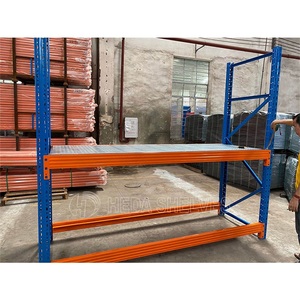
Architectural Overview: The Paradigm Shift in High-Density Pallet Logistics
In contemporary industrial warehousing and supply chain logistics, space utilization efficiency and operational cycle velocity represent the primary determinants of logistics profitability. As land acquisition overheads and industrial facility leasing costs increase globally, enterprise distribution centers are systematically abandoning traditional selective racking and legacy drive-in systems in favor of semi-automated Radio Shuttle Racking Systems. Recognized as the definitive benchmark for ultra-dense pallet buffering, radio shuttle technology leverages self-powered robotic shuttles traveling along dedicated galvanized guide rails within storage channels, dramatically compressing floor surface wastage while eliminating forklift transit into the rack interior.
From an intralogistics engineering perspective, radio shuttle racking combines the structural density of drive-in racking with the high throughput velocity of dynamic flow systems. Forklift operators are strictly confined to the perimeter transfer faces—loading or retrieving pallets from the entry consoles—while the high-precision shuttle transports, indexes, and positions loads within deep channels exceeding 40 to 60 meters in length. This electromechanical isolation directly resolves the single greatest cause of industrial racking structural failure: repetitive forklift mast and chassis impact along internal uprights.
85% Volumetric Utilization
Reduces interior operating aisles down to standard perimeter corridors. Increases physical storage capacity by up to 200% compared to standard wide-aisle selective pallet racks.
High-Velocity Throughput
Operating at traverse speeds up to 1.1 m/s (unloaded) and 0.8 m/s (fully loaded at 1,500 kg), cutting forklift cycle travel times by greater than 40% across active cross-dock shifts.
Decoupled Impact Risk
Forklifts never penetrate storage lanes. Structural frames maintain integrity over decades, virtually eradicating catastrophic beam collapses and ongoing rack repair overheads.
Electromechanical Anatomy & Material Engineering Standards
A mission-critical radio shuttle installation requires uncompromising metallurgical tolerances and intelligent machine design. Chinese precision manufacturers such as Guangzhou HEDA Shelves Co., Ltd. design systems around heavy-gauge cold-formed high-tensile carbon steel (Q235B and Q355B structural grades). These profiles undergo continuous automated roll-forming to prevent micro-fissuring and yield stresses along critical bend radii.
The system comprises three synergistic modules: the custom-engineered structural racking grid, the specialized roll-formed dual-lip guide rails, and the autonomous radio shuttle carrier. The guide rail serves a dual mechanical function: its upper horizontal flange guides the pallet skids during dynamic staging, while the recessed lower internal track provides traction and precise alignment for the polyurethane drive and idler wheels of the shuttle cart.
| Engineering Parameter | Standard Ambient Specification | Cold Chain & Deep Freeze (-30°C) | Governing Structural Standard |
|---|---|---|---|
| Payload Rated Capacity | 500 kg – 1,500 kg per pallet position | 500 kg – 1,500 kg (derated for subzero torque) | EN 15512 / AS 4084 / FEM 10.2.02 |
| Shuttle Travel Speed | 0.8 m/s (Loaded) / 1.1 m/s (Empty) | 0.6 m/s (Loaded) / 0.9 m/s (Empty) | IEC 60034 Drive Dynamics |
| Structural Steel Grade | Q235B / Q355B Cold-Formed High-Yield | Q355D / Q355E Low-Temp Charpy-V Rated | EN 10025 / GB/T 1591 Structural Codes |
| Battery Chemistry & Life | LiFePO4 Lithium Iron (24V/48V 60Ah) | Heated LiFePO4 / Titanate Subzero Matrix | UN38.3, CE, IEC 62133 Certification |
| Continuous Operating Cycle | 8 – 10 Hours on single quick charge | 6 – 8 Hours (Integrated internal heaters) | Industrial Duty Class S1 |
| Rail Deflection Ratio | ≤ L / 400 under maximum pallet static load | ≤ L / 500 under dynamic movement | AS 4084-2023 Elastic Limit Standards |
Engineering Insight: Critical Rail Alignment Tolerances
Unlike standard static racking where deflection tolerances are primarily structural safety considerations, radio shuttle guide rails must maintain a horizontal gauge tolerance within ±1.5 mm across the entire length of the lane. Any longitudinal torsion or beam twist can trigger optical misalignment or shuttle track pinch, causing carrier stoppage. HEDA Shelves utilizes dedicated CNC spacer brackets with laser alignment fixtures during factory pre-assembly.
Comparative Matrix: Radio Shuttle vs. Alternative High-Density Systems
Warehouse planners must rigorously assess storage systems against specific key performance indicators (KPIs): capital investment per pallet position, SKU selectivity, stock rotation modes (FIFO vs. LIFO), and structural damage exposure. The technical matrix below illuminates why radio shuttle technology represents the superior middle ground between mechanical drive-in systems and fully automated crane-based AS/RS solutions.
| Evaluation Factor | Selective Racking | Drive-In Racking | Radio Shuttle Racking | Unit-Load AS/RS Crane |
|---|---|---|---|---|
| Floor Area Utilization | Low (35% - 40%) | High (65% - 75%) | Maximum (80% - 85%) | Maximum (85% - 90%) |
| Inventory Access Mode | 100% Direct Selective | Strict LIFO (Last-In, First-Out) | Configurable FIFO & LIFO | Dynamic FIFO / WMS Managed |
| Pallet Cycle Throughput | Medium (High Forklift Transit) | Very Slow (Bottlenecks) | Rapid (Simultaneous Shuttle) | Ultra-High Automated |
| Forklift Rack Impact Rate | Moderate (Aisle collisions) | Severe (Internal impacts) | Negligible (External only) | Zero (Unmanned system) |
| CapEx per Pallet Position | $40 – $75 (Baseline) | $70 – $110 | $110 – $180 | $450 – $950+ |
| Cold Storage Operating TCO | Extreme Thermal Waste | Moderate (Slow pick cycle) | Optimal Energy Footprint | High Initial CapEx Amortization |
Future Sourcing & Procurement Trends (2025–2030)
Global procurement teams evaluating Chinese manufacturers for multi-year capital projects are adjusting their evaluation frameworks in response to emerging technological developments and geopolitical supply chain pressures. Sourcing managers no longer evaluate racking solely on steel weight per ton; they analyze comprehensive automation roadmaps and regulatory interoperability.
Migration toward 4D Multi-Directional Shuttles
While 2D shuttles move along single longitudinal axes, forward-thinking operators are specifying hybrid racking profiles adaptable to 4D shuttles that shift across both axes via vertical hoists without requiring manual forklift relocation.
WCS & IoT Fleet Orchestration
Shuttles are transitioning from handheld radio-frequency remotes to cloud-connected, API-driven Warehouse Control System (WCS) integration. Shuttles automatically execute batch waves, pallet sorting, and ABC inventory re-profiling overnight.
Green Steel & Scope 3 Decarbonization
Tier-1 Western infrastructure projects require audited Environmental Product Declarations (EPDs). Sourcing is rapidly shifting toward manufacturers using Electric Arc Furnace (EAF) steel and closed-loop non-toxic powder coating lines.
Guangzhou HEDA Shelves Co., Ltd.: 25 Years of Engineering Authority
Founded in 2001, Guangzhou HEDA Shelves Co., Ltd. has evolved into an international powerhouse in warehouse storage engineering, operating a dedicated 30,000 m² state-of-the-art facility staffed by over 300 experienced engineers, structural designers, and fabrication specialists. Producing in excess of 30,000 tons of structural steel storage solutions monthly, HEDA Shelves delivers turnkey OEM and ODM storage systems to multinational logistics hubs, government infrastructure reserves, and cold-storage distribution networks across Australia, New Zealand, Europe, and the Americas.
Verified Global Accreditations
Every structural profile is strictly manufactured under CE Certification (No. 2435-CPR-8605159), ISO 9001:2015 Quality Management Systems (No. 18624Q00169R0M), and full RoHS compliance, ensuring smooth local regulatory sign-offs.
Free 3D CAD & BIM Engineering Support
Our senior engineering department develops comprehensive 3D layout renderings, structural finite element analysis (FEA), and detailed CAD floor plans customized to your pallet profiles within 24 hours of receiving site blueprints.
Precision In-House Manufacturing
From automated CNC punching lines and cold continuous profile roll-forming to multi-stage acid pickling, phosphating, and electrostatic epoxy-polyester powder coating, all manufacturing stages are controlled in-house for zero defect rates.
Oceania & Global Export Logistics
Turnkey ocean freight forwarding to major global ports (Sydney, Melbourne, Brisbane, Auckland, Rotterdam, Long Beach) packed on ISPM-15 certified timber or custom steel stillages, avoiding biosecurity and customs delays.
Frequently Asked Questions (FAQ) for Strategic Sourcing
1. How does your radio shuttle racking comply with regional standards like Australian AS 4084 or European EN 15512?
Our engineering division designs steel structural matrices in strict alignment with AS 4084:2023 (Steel Storage Racking), European FEM 10.2.02, and EN 15512 codes. We provide verified calculation packs, cross-sectional properties, steel yield certificates (EN 10204 Type 3.1), and deflection metrics so that local Registered Professional Engineers (RPEQ / CPEng) can review, verify, and apply regulatory engineering certification stamps smoothly.
2. Can the radio shuttle system operate reliably in cold storage and blast freezers down to -30°C?
Yes. For cold chain facilities down to -30°C, we specify low-temperature impact-resistant steel (Q355D or Q355E with verified Charpy V-notch toughness), high-torque sub-zero brushless motors, low-temperature synthetic lubricants, and IP65-sealed electronic enclosures. Crucially, shuttle batteries are upgraded to low-temperature LiFePO4 cells equipped with internal thermal management heating elements to prevent rapid voltage drops.
3. What pallet tolerances and structural quality are mandatory for shuttle operations?
Radio shuttle racking accommodates standard timber pallets (such as Australian 1165 x 1165 mm, Euro 1200 x 800 mm, or GMA 48 x 40 inch) as well as plastic skids. Pallets must maintain sound bottom runner boards with maximum deflections not exceeding 20 mm under load. Broken, split, or excessively bowed pallets can snag on optical sensors or contact shuttle guide surfaces, triggering automated safety e-stops.
4. Can the system switch dynamically between First-In, First-Out (FIFO) and Last-In, First-Out (LIFO)?
Yes. The physical layout dictates operating flexibility. When configured with access aisles at both the front and rear of the racking bank, the system operates in true FIFO mode—loading from the rear and dispatching from the front, ideal for perishable food, pharmaceuticals, and date-sensitive goods. If the rack is backed against a facility wall, it operates seamlessly in high-density LIFO mode.
5. What safety protocol occurs if a radio shuttle battery depletes or stalls inside a deep lane?
HEDA shuttles feature multi-tier low-power warning alerts. When battery levels drop below 15%, the shuttle automatically refuses new inbound load commands, completes its current cycle, and returns to the aisle entrance console while signaling an audible alarm. In the rare event of a mid-lane mechanical stop, we supply a dedicated manual steel recovery cart with tether hook that couples to the stranded unit and returns it to the perimeter safely.
6. How are seismic acceleration forces calculated for earthquake-prone regions such as New Zealand?
For installations in high-seismic zones (governed by NZS 1170.5 or US RMI seismic specifications), our engineers calculate dynamic modal analysis based on local spectral acceleration coefficients. We engineer seismic adaptations including enlarged baseplate footprints, high-shear chemical resin anchor arrays, reinforced heavy-duty horizontal back-bracing towers, and mechanical anti-drop pallet safety stops along every rail section.
7. How does HEDA Shelves manage biosecurity packaging for Australia (DAFF) and New Zealand (MPI)?
Non-compliant timber packaging can cause costly border holds, onshore fumigation, or container re-export. We bundle structural components on custom all-steel stillages or certified heat-treated timber bearing visible ISPM-15 stamps. We provide complete documentation packs including Commercial Invoices, Packing Lists, Bills of Lading, and Certificates of Origin (Form COO) to maximize FTA duty preferences.
8. What are typical factory lead times and ocean shipping durations for a 2,000+ pallet project?
For an average 2,000 to 5,000 pallet position project, factory fabrication (roll forming, robotic welding, powder coating, and robotic shuttle testing) requires approximately 25 to 35 calendar days. Ocean freight from South China ports (Nansha/Shenzhen) to Oceania ports (Sydney, Melbourne, Auckland) typically takes 14 to 22 days, while shipping to European or North American West Coast hubs takes 25 to 35 days.
9. What is the expected cycle life of the LiFePO4 batteries, and how does charging work?
Our heavy-duty lithium iron phosphate (LiFePO4) power cells provide over 2,500 to 3,000 full discharge-recharge cycles while maintaining greater than 80% original capacity—translating to 6 to 8 years of active service under standard two-shift operations. We provide fast-charging wall docks (recharging a depleted pack in 3 hours) and recommend a 2-battery-per-shuttle rotation strategy for continuous 24/7 operating availability.
10. Can our local installation crew assemble the system, or do you provide supervision?
Both models are fully supported. Every project ships with complete 3D assembly guides, numbered component tags, and anchor torque documentation. For turnkey client convenience, HEDA Shelves can dispatch bilingual commissioning field engineers to lead on-site installation, supervise rail laser alignment, test the shuttles, and deliver certified operator maintenance training.
Engineering Your High-Density Automated Warehouse
Connect directly with HEDA Shelves' technical applications team. Provide your warehouse dimensions, clear ceiling heights, pallet load weights, and handling velocity targets to receive a comprehensive, verified 3D CAD layout and detailed budgetary analysis within 24 hours.