Heavy-Duty & High-Density Warehouse Racking Systems
Manufactured with high-tensile cold-rolled steel (SS400/Q235B & Q355B), automated profile roll-forming, and electrostatic powder coating. Optimized for standard logistics pallets, chilled cool-rooms, and multi-tier picking hubs.
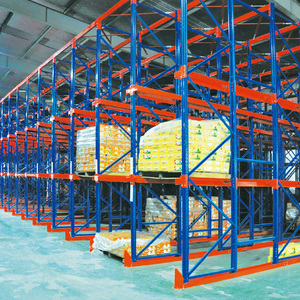
Durable 5-Layer Cold Rolled Steel Drive-In Warehouse Racking with Reinforced Structure for Bulk Goods Storage
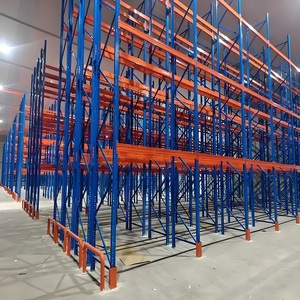
Heavy Duty Industrial Rack Adjustable Steel Garage Storage Shelving Rack for Warehouse Stacking Double Deep Pallet Rack
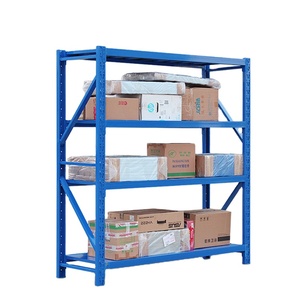
JIAMEI Storage Shelving Warehouse Storage Rack Long Span Shelf Rack
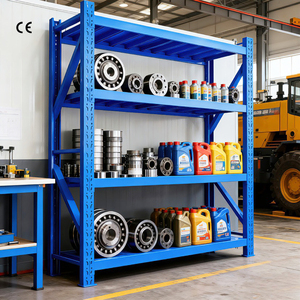
5-Layer Iron Multi-Level Steel Rack Racking System Commercial Industrial Warehouse Storage Shelving Units
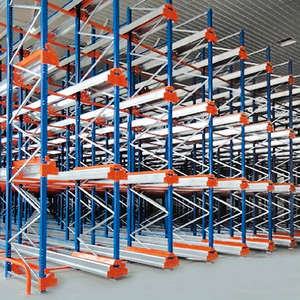
Reinforced Radio 5 Layer Shuttle Racks Heavy Duty Industrial High Density Storage Racking for Cold Storage
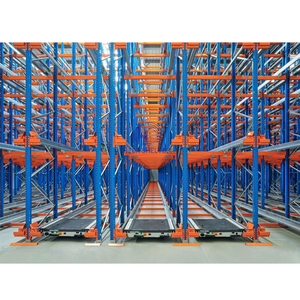
Warehouse High-Density Shuttle Rack System Asrs 4-Way Shuttle Racking Four Way for Cold Storage Shuttle Rack FIFO & LIFO
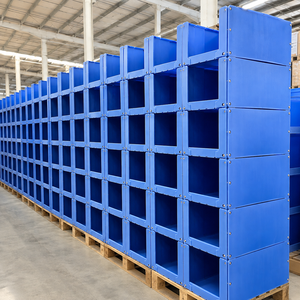
PP Corrugated Plastic Stackable Picking Bins Front Opening Warehouse Shelf Storage For Industrial Parts
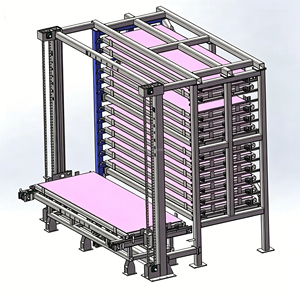
Durable Anti-Rust Heavy Duty Steel Electric Sheet Metal Rack Drawer Type Storage System Automated Retrieval Warehouse Shelving
Global Structural Standards & Deflection Verification
Specifying warehouse storage racks requires an exhaustive engineering audit. As China’s premier manufacturing exporter, Guangzhou Heda Shelves Co., Ltd. builds structural systems that strictly align with European FEM codes, Australian AS 4084 regulations, and American RMI MH16.1 specifications.
Certified Metallurgy: Q235B & Q355B
We source certified prime hot-rolled coils slitted and cold-formed to precision cross-sections. Steel yield strengths conform to EN 10025-2 S235JR and S355JR equivalents ($f_y \ge 235\text{ MPa}$ and $f_y \ge 355\text{ MPa}$). Every heat batch undergoes ultrasonic flaw testing, spectrographic chemical analysis, and charpy impact tests to guarantee no brittle transition in sub-zero freezers.
Deflection Limits: L/200 Under Limit State
Under serviceability limit states (SLS), beam deflection is strictly restricted to $\le L/200$ (where $L$ is the clear beam span between columns). In automated shuttle and ASRS installations, tighter tolerances of $L/300$ or $L/400$ are engineered to safeguard robotic laser sensors against spurious beam sag errors and rail disengagement.
Seismic Dissipation & Dynamic Ductility
In high-seismic zones across New Zealand (NZS 1170.5) and the Americas, our upright frame geometry integrates ductile diagonal bracing, oversized high-grade floor baseplates, and dual wedge anchor anchoring. Computer-modeled nonlinear finite element analysis (FEA) ensures high energy dissipation without catastrophic column buckling.
Engineering Comparison: Storage Density vs. SKU Selectivity
Choosing the right racking typology directly impacts warehouse construction footprint, material handling equipment (MHE) capital expenditures, and hourly pallet cycle throughput.
| Racking Architecture | Space Utilization | SKU Selectivity | Operating Principle | Forklift Cycle Speed | Cold-Store Feasibility | Relative CAPEX / Pallet |
|---|---|---|---|---|---|---|
| Selective Pallet Racking | 40% – 50% | 100% Direct | FIFO / Individual | Very Fast (Direct Aisle) | Moderate (High Volume Loss) | Low Baseline ($) |
| Double Deep Pallet Racking | 55% – 65% | 50% Direct | FILO / Batch | Moderate (Reach Forklift) | Good | Low-to-Medium ($$) |
| Drive-In Racking | 70% – 78% | Low (Lane Bulk) | LIFO / Bulk SKU | Slow (Mast Drives Inside) | Very Good (High Density) | Medium ($$) |
| Radio Shuttle Racking | 80% – 85% | Configurable Lane | FIFO or LIFO | High (Cart Self-Transports) | Optimal (Sub-Zero -25°C) | Medium-High ($$$) |
| 4-Way Shuttle ASRS | 88% – 95% | Automated SKU | Dynamic 3D Matrix | Ultra-High (Fully Robotic) | Superior Energy Saving | Advanced High ($$$$) |
| Heavy Cantilever Racking | 50% – 60% | 100% (Long Goods) | Direct Crane / Forklift | Fast for Timber/Pipes/Steel | N/A (Ambient & Yards) | Medium ($$) |
Future Procurement Trends in Warehouse Logistics
Global supply chain disruptions and escalating urban land costs are radically transforming how enterprise warehouse directors purchase storage racking. Here are four foundational procurement shifts.
From Passive Steel to ASRS Precision Substrates
Conventional racking is rapidly giving way to robotic rack architectures designed for Automated Guided Vehicles (AGVs), Autonomous Mobile Robots (AMRs), and 4-Way Shuttles. Modern tenders now demand rack verticality tolerances within $\pm 1.5\text{ mm}$ across a 20-meter height, requiring computerized CNC multi-spindle punching and laser welding.
Zero-Fossil Sub-Zero Thermal Footprint Optimization
With refrigerated warehouse power costs rising globally, the priority is eliminating open forklift aisles. Dense automated radio shuttle and dynamic flow lanes reduce the cooled airspace per pallet by up to 45%. Future cold store designs require specialized cold-resistant lithium-ion battery carriages and pre-treated low-temperature steel coatings.
Environmental Product Declarations (EPD) in Steel
Western and Oceania buyers increasingly require supply chain audits that verify lower embodied carbon. HEDA Shelves utilizes scrap-recycled electric arc furnace (EAF) steel feedstocks, closed-loop zero-discharge phosphating baths, and non-toxic TGIC-free polyester powder finishes certified to EU RoHS and REACH environmental mandates.
Building Without Girders: Clad-Rack Megastructures
Enterprise logistics hubs in e-commerce and pharmaceutical verticals are bypassing traditional brick-and-mortar buildings in favor of rack-supported clad warehouses. The racking frames themselves act as the building's structural columns, carrying roof and wall envelopes, shortening project build cycles by over 30%.
Guangzhou Heda Shelves Co., Ltd. at a Glance
Established in 2001, HEDA Shelves has expanded over 25 years into China’s foremost engineering powerhouse for heavy industrial storage. Operating from a modern 30,000 m² high-capacity production center, we empower global brand distribution hubs with turn-key structural storage.
Independently Verifiable Credentials
We publish our valid certificates transparently: CE Certification No. 2435-CPR-8605159 and ISO 9001:2015 Quality Management System No. 18624Q00169R0M. Clients can verify these with European notified bodies and ISO accreditors before contracting.
Compliant Biosecurity Export Packing
Exporting to Australia (DAFF), New Zealand (MPI), and North America requires strict quarantine compliance. Racking is packed in heavy-duty steel stillages or ISPM-15 heat-treated, certified timber dunnage to ensure frictionless biosecurity clearance without costly terminal quarantine delays.
Complete 3D CAD & Load Verification
Our in-house design office delivers detailed 3D AutoCAD drawings, structural moment calculations, and loading placards free of charge. Your local structural engineers receive full cross-sectional properties for straightforward regional building permit verification.
Our 10-Stage Precision Fabrication Workflow
Every upright post, box beam, baseplate, and diagonal brace passes through a tightly monitored, automated manufacturing process that eliminates human alignment errors and guarantees weld integrity.
Coil Inbound Inspection
Ultrasonic thickness gauge testing, chemical composition analysis, and tensile elongation testing on steel coils.
CNC Slitting & Cutting
Computerized high-speed rotary slitting lines trim coil strips to tight width tolerances of $\pm 0.1\text{ mm}$.
Automated Punching
High-tonnage progressive die punching presses forge teardrop, diamond, or metric butterfly column pitch holes without micro-fissures.
Multi-Roll Cold Forming
Continuous 18-to-24-stand precision roll forming machines contour open steel sections into rigid, closed omega profiles.
Robotic Laser Welding
Heavy-duty robotic arms fuse multi-hook beam end connectors to interlocking box beams with continuous CO₂ gas-shielded welds.
Surface Polishing & Blast
Shot blasting and centrifugal surface deburring remove micro-scale mill residues, providing an optimal surface anchor profile.
Pickling & Phosphating
A multi-stage chemical pre-treatment bath degreases and coats the steel with a dense zinc-phosphate anti-corrosion barrier.
Electrostatic Powder Line
Automated Swiss Gema powder application guns deposit 60–80 microns of epoxy-polyester powder uniformly across all surfaces.
200°C Thermal Curing
Computerized infrared baking tunnels cross-link the powder coating at 200°C, producing an impact- and abrasion-resistant finish.
Export Pack & Verification
Dimensional tolerance audits, cross-hatch adhesion testing, strapping onto heavy steel stillages, and export staging.
Frequently Asked Questions by Global Racking Buyers
Detailed technical answers covering structural engineering sign-offs, customs duties, ocean freight containerization, and installation management.
1. How does HEDA Shelves ensure compliance with AS 4084:2023 and EN 15512 standards?
2. What is the difference between Q235B and Q355B steel in racking load capacity?
3. How do you prevent corrosion and transit damage during 30+ day ocean voyages?
4. Can your automated radio shuttles and 4-way systems operate reliably at -25°C?
5. What container stowage factor can we expect when importing from China?
6. What design inputs are required to generate an accurate 3D CAD layout?
Ready to Optimize Your Warehouse Layout & Secure Direct Factory Pricing?
Connect directly with our senior structural logistics engineers. We provide complete 3D warehouse CAD designs, seismic load calculations, and comprehensive FOB/CIF shipping quotations within 24 hours.