Engineered Heavy-Duty Storage & Cantilever Systems
From uninterrupted structural arms for timber, pipes, and rebar to full-facility pallet arrays and multi-level platforms, inspect our precision-formed industrial portfolio.
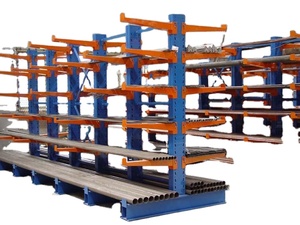
Heavy Duty Steel Cantilever Racking System with Corrosion Protection 3-Layer Design for Long and Narrow Items
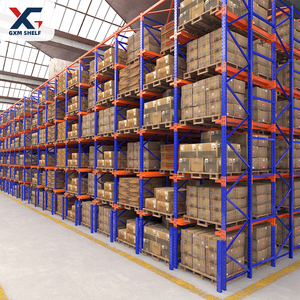
GXM Industrial Rack Heavy Duty Warehouse Rack Boltless System Storage Pallet Shelving Industrial Shelves Drive-in Rack
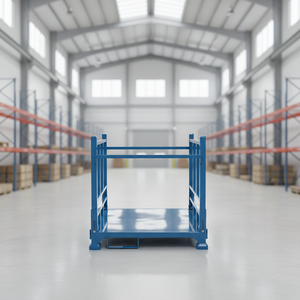
Portable Foldable Steel Pallet Stacking Rack with Brushed Finish Light Duty for Profile Storage and Logistics
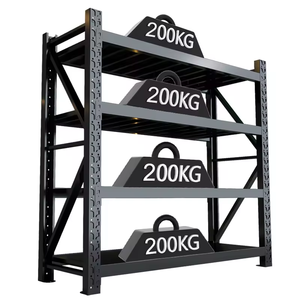
Wholesales Rack Corrosion-Resistant for Long-Lasting Use in Warehouse Premium Steel Shelving Rack
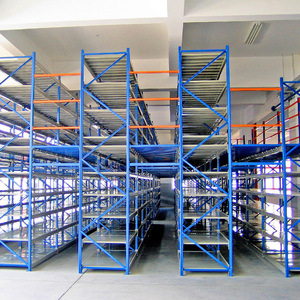
Industrial Customized Steel Mezzanine Attic Platform Warehouse Picking Rack Corrosion Protection Storage Shelves High Load
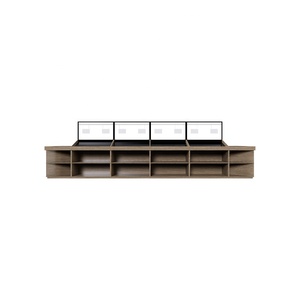
Produce Display Island Rack Multi-Tier Heavy Duty Metal Wood Weigh-Able Display Shelf for Dried Fruits Candies Supermarket Bulk
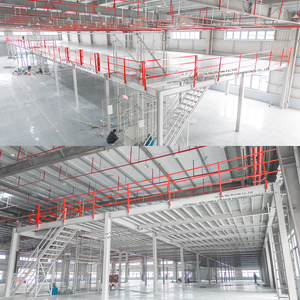
Steel Structure I-Beam Platform Mezzanine Racking For Factory Storage Expansion 300KG 500KG 1000KG Per Square Meter Weight
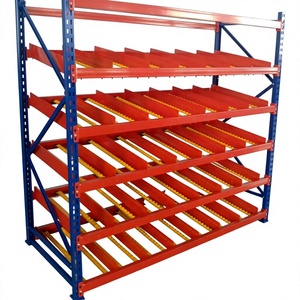
Gravity Carton Level Tilt Flow Rack FIFO Warehouse Roller with Cold-rolled Steel for Order Picking Assembly Line Storage
Precision Cantilever & Logistics Infrastructure from China
As warehouse footprints expand and vertical cubic capacity becomes paramount, industrial logistics demands storage architectures that reconcile exceptional load tolerances with uncompromising material handling accessibility. Cantilever racking represents the gold standard for storing elongated, irregular, and heavy stock—such as structural steel beams, extruded aluminum profiles, timber lumber, bar stock, and industrial piping. Unlike conventional pallet racks constrained by front vertical columns, cantilever systems eliminate loading barriers, facilitating straight-line forklift articulation and dense linear buffering.
Operating since 2001, Guangzhou Heda Shelves Co., Ltd. has established itself as an engineering-driven powerhouse within the global racking fabrication landscape. With our dedicated 30,000 m² state-of-the-art manufacturing plant and a specialized technical team exceeding 300 certified engineers, welders, and logistics planners, we export high-integrity steel systems across Oceania, Europe, Southeast Asia, and the Americas. Delivering over 30,000 tons monthly, our operations align directly with international engineering criteria, providing transparent structural calculations, traceable raw materials, and verified load configurations.
Every structural cantilever column and roll-formed arm exiting our Guangzhou fabrication bays undergoes rigorous quality governance. Fully certified under CE (No. 2435-CPR-8605159), ISO 9001:2015 (No. 18624Q00169R0M), and RoHS regulatory standards, our load designs satisfy strict regional benchmarks, including standard references for Australian/New Zealand AS 4084, European FEM 10.2.02, and American RMI provisions. When sourcing direct from our fabrication facility, enterprise buyers bypass multiple intermediary tiers, obtaining engineered documentation, FEA stress modeling, and production transparency from bill-of-materials allocation to final container loading.
Structural Integrity: Roll-Formed vs. Hot-Rolled Structural Cantilever Systems
Procurement decisions for cantilever racking must hinge on detailed mechanical evaluation rather than raw initial unit cost. Choosing between cold roll-formed sheet steel and hot-rolled structural steel (I-beams and H-sections) determines structural deflection limits, seismic survivability, impact resistance against material handling collisions, and lifecycle longevity.
| Evaluation Parameter | Cold Roll-Formed Cantilever | Hot-Rolled Structural Cantilever (I-Beam) |
|---|---|---|
| Primary Steel Grade | Q235B cold-formed coiled sheet | Q345B (S355JR equivalent) hot-rolled section |
| Arm Load Bearing Capacity | Light to medium: 250 kg to 800 kg per arm | Heavy to ultra-heavy: 1,000 kg to 3,500+ kg per arm |
| Impact Resistance (Forklift Strike) | Moderate; vulnerable to localized torsion damage | Exceptional solid flange rigidity; absorbs kinetic impact |
| Column Height Adaptability | Up to 6,000 mm safely | Engineered systems exceeding 12,000 mm clear heights |
| Environmental Resistance | Electrostatic powder coating (interior dry) | Hot-dip galvanised (HDG) per ISO 1461 for harsh/outdoor |
| Target Cargo Profiles | PVC conduit, trim moulding, lightweight tubing | Structural I-beams, steel plate bundles, master timber packs |
The connection joint between the upright column and the horizontal cantilever arm represents the system's primary stress concentration zone. Our systems deploy specialized taper-lock arm connectors with high-tensile Grade 8.8 structural fastening bolts or pivoting safety-pin architectures. Pivoting arms absorb vertical uplift energy from accidental forklift tines without transferring permanent rotational torque to the central column shaft, preventing catastrophic cascade collapses.
Future Procurement Trends in Industrial Storage (2025–2030)
Warehouse infrastructure sourcing is shifting rapidly from fragmented catalog selection toward integrated engineering-procurement-construction (EPC) paradigms. Procurement directors evaluating global manufacturing partners must factor three macro-trends transforming the racking domain.
Automation & AGV Integration
Transitioning from conventional counterbalanced forklifts to 4-way multidirectional automated guided vehicles (AGVs) requires millimeter-level column verticality tolerances and integrated arm-sensor safety reflectors.
Data-Verified Carbon Neutrality
Global supply chains mandate certified Environmental Product Declarations (EPD). Modern procurement demands high-yield recycled scrap ratios and energy-efficient closed-loop electrostatic powder coating lines.
Direct Digital Twin Design
Eliminating paper floor plans, procurement teams require native BIM (Building Information Modeling) and automated 3D CAD stress models integrated directly with structural warehouse foundations and sprinkler arrays.
Furthermore, shifting climate exposures and coastal distribution logistics have sparked surging demand for duplex protective finishes—combining an underlayer of thermal hot-dip galvanising with an external architectural-grade thermosetting powder barrier. This multi-stage finish prevents premature oxidation across humid maritime, fertilizer processing, and open-air yard environments.
Why Global Supply Chains Partner with Guangzhou Heda Shelves
Procuring heavy steel installations from an overseas manufacturer requires full assurance across mechanical consistency, production capacity, packaging integrity, and international logistics execution. We address every phase with clear engineering protocols.
3D Layouts & FEA Calculations
Our engineering division provides complete 3D modeling and CAD drawings within 24 hours, integrating pallet dimensions, forklift turn radiuses, clear heights, and structural building columns.
Full Seismic Adaptations
Engineered for extreme environmental parameters, our systems incorporate augmented baseplates, heavy floor anchoring bolts, and high-ductility diagonal bracing systems matching NZS 1170.5 and seismic zone demands.
Biosecurity-Compliant Packing
Eliminating port delays, goods are palletized onto heavy steel stillages or ISPM-15 heat-treated dunnage, simplifying border inspections by Australian DAFF, New Zealand MPI, and international customs authorities.
10-Stage Precision Fabrication
In-house production governs raw coil slitting, automatic column punch presses, profile roll-forming, robotic welding, acid-wash pickling, phosphating, and powder bake lines with complete traceability.
Comprehensive Trade Compliance & OEM Capability
We supply verified Certificates of Origin, packing lists, mill test certificates (MTC), and bill-of-lading support facilitating preferential tariff execution under ChAFTA, RCEP, and global trade frameworks, alongside private-label distributor packaging.
ISO 9001:2015 Monitored
Standard Operating Procedures dictate steel gauge tolerance testing, weld ultrasonic spot-checks, and coating cross-hatch adhesion verification.
CE Certified Compliance
CE marking under standard 2435-CPR-8605159 confirms structural load performance, deflection stability, and safety factor calculations.
Pre-Engineered Marking
Every component leaves our warehouse clearly stamped and tagged corresponding to installation blueprints for error-free assembly on site.
Frequently Asked Questions: Sourcing Cantilever Racks from China
Detailed engineering, commercial, and operational answers addressing the core questions raised by procurement managers, operations executives, and structural engineers.