Factory-Engineered Inventory Systems
Engineered Double Deep Racking & High-Density Systems
High-capacity, structural rack designs certified for regional seismic requirements, extreme warehouse clear-heights, and heavy-payload logistics.
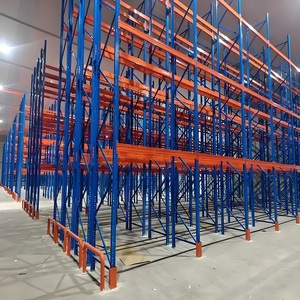
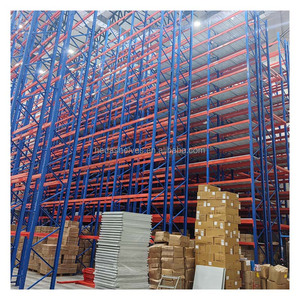
Engineering Dynamics: Maximizing Volumetric Efficiency via Double Deep Pallet Racking
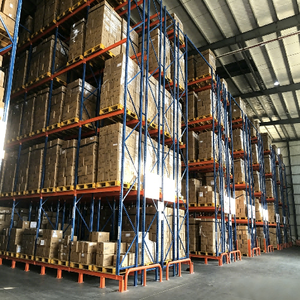
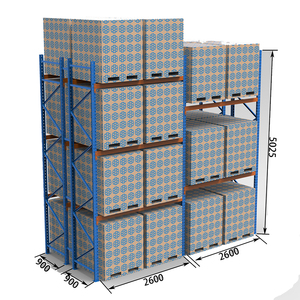
Double deep pallet racking serves as the strategic equilibrium point between pure selectivity and high-density volumetric utilization. Built by setting two standard single-entry pallet racks back-to-back, this configuration eliminates 50% of the working operating aisles typical of single selective setups. The result is a direct 30% to 40% gain in net volumetric storage density without the complex mechanization overhead required by drive-in or dynamic flow solutions.
From a structural mechanics perspective, double deep layouts impose distinct engineering constraints that demand precise manufacturing quality. Because rear pallets must be accessed over the front pallet positions using specialized reach trucks equipped with pantograph mechanisms or telescopic double-deep forks, the system experiences higher torsional and deflection loads during high-bay elevation cycles. Upright frames manufactured by Guangzhou Heda Shelves Co., Ltd. leverage structural Q235B and Q355B cold-rolled steel, shaped via multi-stage cold bending and high-precision CNC roll-forming lines. This structural profile guarantees maximum rigidity, cross-sectional inertia, and strict conformance to deflection criteria under full operational load (FEM 10.2.02 and AS 4084-2023 design metrics).
+40%
Storage Density Increase
50%
Fewer Operating Aisles
30,000 t
Monthly Factory Capacity
10,000+
Global Projects Installed
The operating principle utilizes a FILO (First-In, Last-Out) stock rotation per individual channel pair. Warehouses with batch tracking, cold chain operations, FMCG distribution, and third-party logistics (3PL) hubs experience immediate operational ROI because double deep infrastructure offers lower procurement capital expenditure than automated shuttle systems while outperforming bulk floor-stacking by eliminating bottom-tier crush hazards.
| Racking Architecture | Floor Space Utilization | Pallet Accessibility (Direct) | Forklift Equipment Needed | Capex Profile per Pallet |
|---|---|---|---|---|
| Standard Selective | 35% – 40% | 100% Direct Access | Standard Counterbalance / Reach | Baseline Economy |
| Double Deep Racking | 55% – 65% | 50% (FILO by lane) | Pantograph / Deep-Reach Mast | Optimal Cost / Density Index |
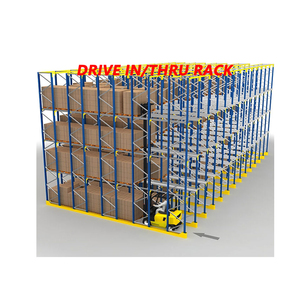
| Drive-In Racking | 65% – 75% | 10% – 15% (Batch only) | Standard Drive-In Compatible | Moderate (High Rack Hazard) |
| Radio Shuttle System | 75% – 85% | Automated Lane Batch | Standard Forklift + Shuttle Unit | Advanced Automation Tier |
Future Procurement Trends in Double Deep Racking Systems (2025–2030)
Industrial logistics engineering is shifting toward modularity, life-cycle durability, and smart warehousing integration. Enterprise procurement managers evaluate racking vendors based not only on steel price per ton, but also on total cost of ownership (TCO), seismic compliance documentation, and surface coating resilience.
Steel Grade Traceability
Global supply chains require Mill Test Certificates (MTC) certifying high-yield cold-rolled steel, verified grain composition, and yield strength exceeding EN 10025 specifications to reduce frame mass while maintaining load ratings.
Seismic Design Calibration
Export projects to regions such as Australia, New Zealand (NZS 1170.5), and the Americas require structural dynamic finite element analysis (FEA), upgraded footplates, dual-anchor spacing, and reinforced upright bracings.
Eco-Coating & Anti-Corrosion
Pre-treatment stages such as automated pickling, phosphating, and heavy-metal-free electrostatic powder coating (RoHS compliant) prevent structural oxidation in cold stores, chiller warehouses, and high-humidity coastal ports.
Furthermore, modern warehouses increasingly pair double deep racks with visual fork-camera systems, wireless laser height guides, and telemetry-linked reach trucks. These additions reduce impact damage to rear guide beams and ensure rapid, accurate pallet placement even at picking heights over 10 meters.
Manufacturing Authority: Guangzhou Heda Shelves Co., Ltd.
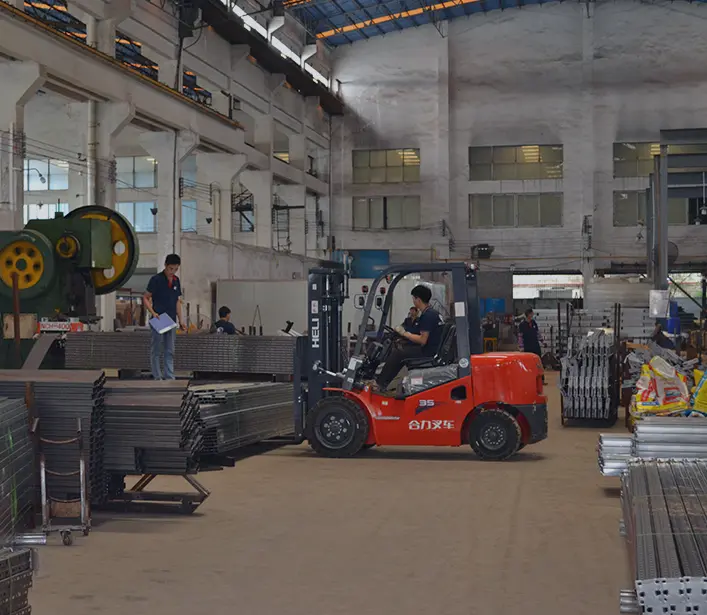
Established in 2001, Guangzhou Heda Shelves Co., Ltd. is a premier Chinese manufacturer and exporter of heavy-duty warehouse racking, industrial shelving, and logistics storage systems. With an expansive manufacturing base of over 30,000 m² and an experienced technical workforce of 300+ professionals, HEDA delivers an industrial output reaching 30,000 tons per month.
Operating certified production lines verified by CE (Certificate No. 2435-CPR-8605159), ISO 9001:2015 Quality Management (No. 18624Q00169R0M), and RoHS Compliance, we supply distributors, procurement agencies, and warehouse owners across Australia, New Zealand, Europe, Southeast Asia, and the Americas.
Our in-house 10-step production protocol governs every stage: raw material chemical validation, precision high-speed steel cutting, automated column punching, CNC roll profiling, robotic welding, pre-treatment pickling, phosphating, and thermosetting electrostatic powder coating. Every order is inspected prior to export packing using ISPM-15 treated wood and reinforced steel stillages.
Technical & Procurement FAQ: Double Deep Pallet Racking
What forklift configuration is required for double deep racking?
A specialized deep-reach forklift or reach truck fitted with either a pantograph scissor extension or telescopic hydraulic double-deep forks is required. When designing the floor layout, aisle widths are typically planned between 2.8 and 3.4 meters depending on chassis dimensions and turning radius.
How does HEDA guarantee compliance with AS 4084 / FEM standards?
Our engineering division prepares structural calculations, section property verifications, and custom load-deflection tables for each project. Uprights and beams are designed to meet Australian AS 4084, European FEM 10.2.02, and American RMI guidelines, complete with required safety factors and load plaques.
What parameters are required to generate a customized 3D CAD design?
We require the warehouse architectural floor plan (clear height, column layout, door docks, and sprinkler levels), pallet specifications (width, depth, overall height including cargo, and maximum pallet weight), and the forklift model's reach and turning specs. Our team delivers 2D/3D CAD layouts within 24 to 48 hours.
How are components packed to clear international biosecurity inspections?
All international sea-freight orders are packaged on custom steel stillages or ISPM-15 heat-treated, certified timber frames. Detailed commercial invoices, packing lists, Mill Test Certificates, and Certificates of Origin (supporting preferential tariffs under ChAFTA, RCEP, etc.) accompany every shipment.