Engineered Warehouse & External Racking Systems
From high-density intelligent shuttle corridors to hot-dip galvanised exterior cantilever yards, explore heavy-duty systems direct from China’s leading certified factory.
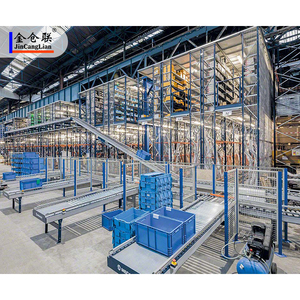
Express Remote Control Shuttle Robot Pallet Racking System
- FIFO & LIFO Automated Pallet Run
- Up to 1,500 kg / pallet handling
- Deep lane space efficiency +80%
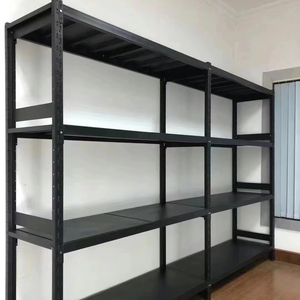
High Quality Metal Warehouse Storage Shelves Pallet Racking
- 100-500kg Capacity / Level
- Floor-mounted modular beam shelf
- Boltless fast interlock assembly
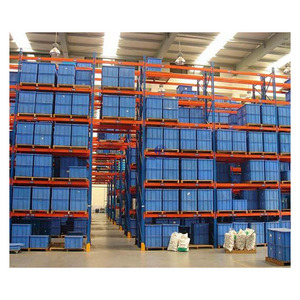
HEDA Factory Heavy Duty Selective Steel Pallet Racking System
- 100% Immediate Pallet Accessibility
- Up to 4,500 kg / beam tier load
- Certified Q235B & Q355B Steel
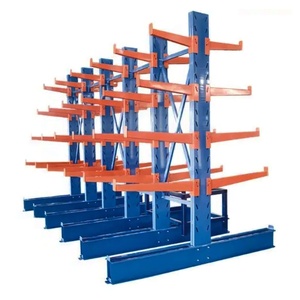
Heavy Duty Cantilever Racks System for Pipe & Timber Storage
- Single & Double Sided Columns
- Arms rated 500kg - 3,000kg each
- Outdoor Galvanised Finish Available
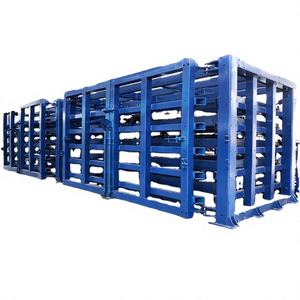
Electric Mobile Pallet Racking System with ESD Protection
- Motorised Bogie Track Rails
- Double Storage Capacity in Footprint
- Integrated Optical Safety Sensors
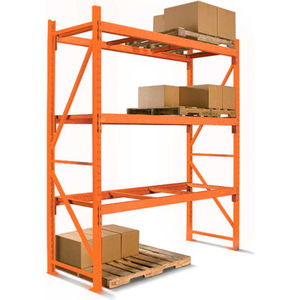
Heavy Duty Galvanized & Powder Coated External Pallet Rack
- Weatherproof Outdoor Coating
- Adjustable 50mm / 75mm Pitch
- Hot-Dip Galvanising ISO 1461
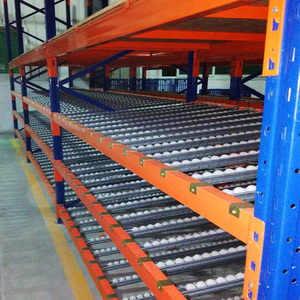
High-Throughput Gravity Pallet Flow Racking with Speed Braking
- Strict FIFO Automatic Inventory Turn
- Integrated Centrifugal Brake Rollers
- Eliminates Forklift Travel in Bays
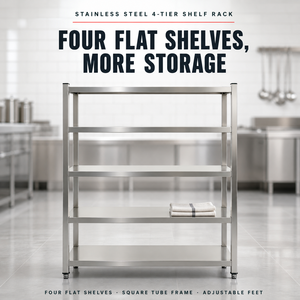
Stainless Steel Commercial Heavy Duty 4-Tier Storage Shelves
- Grade 304/316 Rustless Integrity
- Ideal for Cold Rooms & Cleanrooms
- Acid, Alkali and Washdown Proof
Engineering External Pallet Racking Systems: Wind Loads, Metallurgy & Seismic Safety
Deploying industrial racking outside the protective perimeter of an enclosed warehouse introduces radically hostile structural demands. Unlike interior selective racks, an external pallet racking structure operates as an exposed civil engineering asset subject to dynamic aero-elastic phenomena, multi-axial seismic ground acceleration, diurnal thermal cycling, and acute chemical-atmospheric corrosion. Sourcing successfully from a Chinese manufacturer requires vetting not merely the steel fabrication footprint, but the mathematical and structural rigor behind cold-formed section geometries, anchoring mechanics, and galvanizing standards.
Critical Failure Mechanism in Outdoor Pallet Racking
Over 82% of outdoor rack structural catastrophic incidents originate from under-calculated dynamic wind overturning moments and localized salt/moisture crevice corrosion at base plate-to-anchor interfaces—not from vertical dead-load overcapacity.
1. Aerodynamic Wind Loads & Fluid Dynamic Vortex Shedding
In external storage yards, pallets loaded with shrink-wrapped freight act as solid sail planes. Under severe atmospheric wind events (calculated via AS/NZS 1170.2, ASCE 7-22, or Eurocode EN 1991-1-4), lateral drag coefficients ($C_d$) can spike from 1.2 to over 2.0 depending on the aspect ratio of the rack face. When high-velocity gusts traverse open bays, vortex shedding generates transverse harmonic oscillations that loosen standard friction-grip beam clips.
HEDA Shelves eliminates this vulnerability through finite-element-optimized multi-hook connector brackets manufactured from 4.0mm heavy-gauge structural steel. Integrated with M10 grade 8.8 tensile safety through-bolts rather than spring-loaded safety pins, our connections resist uplift forces generated by sudden leeward suction. Furthermore, for outdoor canopied rack configurations (roofed racking shelters), our engineering team integrates dedicated aerodynamic pressure-relief slots and diagonal K-bracing nodes across longitudinal frame spines.
2. Anti-Corrosion Metallurgy: Hot-Dip Galvanizing (HDG) vs. Thermoset Duplex Systems
Atmospheric classification per ISO 9223 dictates the survival lifespan of steel in exterior applications. While standard indoor warehousing utilizes electro-statically applied polyester powder coatings (yielding 60–80 microns of decorative coating), outdoor yards exposed to C3 (urban/industrial), C4 (coastal/chemical), and C5-M (marine offshore) environments demand true metallurgical alloying:
| Corrosion Protection Method | Average Coating Thickness | ISO 9223 Atmospheric Class | Salt Spray Resistance (ASTM B117) | Expected Maintenance-Free Service Life |
|---|---|---|---|---|
| Standard Electrostatic Powder Coating | 60 – 80 μm | C1 – C2 (Indoor Climate Controlled) | 250 – 500 Hours | 1 – 3 Years (Degrades rapidly outdoors under UV) |
| Continuous Pre-Galvanized Coil (Sendzimir) | 15 – 25 μm (Z275 g/m²) | C2 – Mild C3 | 400 – 600 Hours | 3 – 7 Years (Edge cut rust creep vulnerability) |
| Batch Hot-Dip Galvanizing (HDG per ISO 1461) | 70 – 100 μm (500-700 g/m²) | C3 – C4 (Outdoor Heavy Industrial) | 1,500 – 2,500 Hours | 20 – 35 Years (Full metallurgical zinc-iron alloy) |
| Duplex Protection (HDG + Fluorocarbon Powder) | 120 – 160 μm Composite | C5-I / C5-M (Coastal & Severe Chemical) | 3,500+ Hours | 40+ Years (Impervious synergistic barrier) |
3. Geotechnical Anchoring Mechanics & Slab Overturning Moments
Unlike indoor super-flat concrete warehouse floors engineered to TR34 standards, external yard pavements are often sloped (1.5% to 2.5% for stormwater run-off) and composed of fiber-reinforced slabs or outdoor asphalt over aggregate sub-bases. Placing multi-tier external racking on non-engineered exterior slabs invites severe differential settling and anchor pull-out failure.
To mitigate this, HEDA provides customized civil interface packages. We calculate the exact center-of-gravity moment arm and deploy oversized 12mm–20mm structural ductile baseplates anchored with mechanical torque-controlled wedge expansion anchors (Hilti / Fischer equivalent) or chemical epoxy capsules (M16/M20 Grade 8.8 studs). Shimming protocols utilize solid zinc-alloy leveling plates to prevent galvanic corrosion between the base plate and concrete moisture interface.
Future Global Procurement Trends in Industrial Racking (2025–2030)
How supply chain executives, industrial developers, and logistics procurement teams are optimizing asset lifecycle expenditure.
1. Convergence on Rack-Clad Building Technology
Warehouse construction costs have surged globally. Procurement teams are moving toward Rack-Clad Cladding Systems—where the heavy-duty external pallet racking itself forms the primary structural skeleton supporting roofs and insulated sandwich side panels, saving up to 35% in steel and civil timelines.
2. Digital Twin Verification & Traceable Steel Chemistry
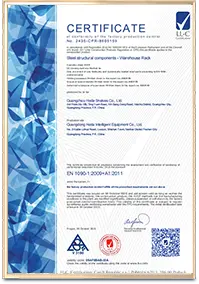
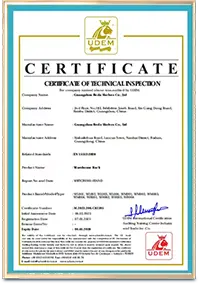
Institutional buyers no longer accept unverified steel certificates. Tier-1 buyers demand EN 10204 Type 3.1 mill test certificates tracing raw strip coils directly to prime mills (e.g., Baosteel, Shougang) with verified Charpy V-notch impact toughness values at -20°C for sub-zero performance.
3. Total Cost of Ownership (TCO) Over Initial CapEx
Replacing failed outdoor racks within 4 years creates catastrophic disruption. Procurement models increasingly utilize 20-year TCO calculations: factoring galvanizing micron depreciation (1.5–2.5 μm/year in C3 zones) against long-term operational resilience and zero structural re-painting downtime.
Emerging Technology Trends in Modern Storage Fabrication
Continuous roll-forming automation, advanced robotics, and intelligent sensors driving the next generation of pallet racking systems.
Ultra-High-Strength Cold-Formed Steel Profiles
By transitioning from traditional mild structural steels to micro-alloyed ultra-high-strength steels with yield points exceeding 450 MPa, modern upright sections reduce dead weight by 18% while enhancing section modulus and torsional-flexural buckling resistance under complex combined axial-bending loads.
All-Weather Weatherproof Shuttle Robotics
Radio shuttle carriers now feature IP67 ingress protection, internal lithium heating packs for -30°C cold-chain operation, and dual LiDAR obstacle scanners. This allows deep-lane pallet shuttle racking to be positioned in open external covered yards without risking electronic component failure.
Structural Health Monitoring (SHM) Telemetry
Modern outdoor installations can now incorporate wireless base-plate strain gauges and tri-axial tilt accelerometers. These battery-powered IoT nodes stream live deflection and seismic vibration metrics directly to facilities management dashboards, identifying forklift impact damage immediately.
25 Years of Engineering Excellence & Direct Factory Muscle
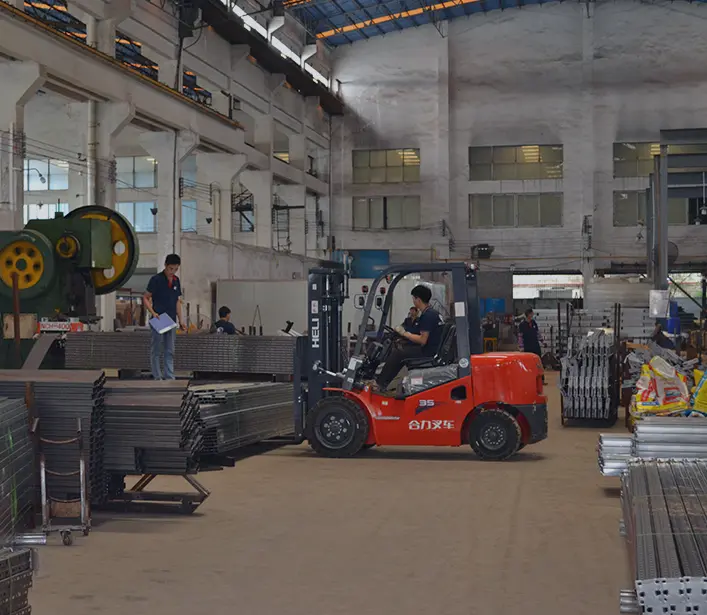
Established in 2001, Guangzhou Heda Shelves Co., Ltd. has grown into an international manufacturing powerhouse operating a 30,000 m² state-of-the-art production base with an monthly output exceeding 30,000 metric tons. We are not brokers or trading agents; we are an engineering-driven manufacturer deploying 30+ automated roll-forming lines, computerized continuous punching machines, and robotic welding stations.
From high-bay selective pallet systems in Western Australia to seismic-rated installations in New Zealand and heavy cantilever setups throughout North America, we engineer each rack to exact geographic site coordinates, clear ceiling heights, and forklift turn radius parameters.
Frequently Asked Questions: Sourcing External Racking from China
Essential answers covering engineering standards, steel certifications, civil works, logistics, and compliance.
How does HEDA calculate wind overturning and snow loads for external racking?
Our structural design engineers model the proposed external rack using 3D Finite Element Analysis (FEA) software. We calculate site-specific aerodynamic wind drag coefficients per AS/NZS 1170.2, ASCE 7-22, or EN 1991 standards based on your location’s design wind speed (e.g., 45–60 m/s gusts), topography, and terrain category. We determine required base plate thickness, anchor bolt diameter, frame bracing frequency, and recommend upper canopy tie-backs to ensure an ultimate limit state safety factor exceeding 1.5.
What is the standard specification for your Hot-Dip Galvanizing (HDG)?
For outdoor external components, we follow ISO 1461 and ASTM A123 standards. After laser cutting, punching, and forming, entire frames and beams undergo multi-stage chemical degreasing, acid pickling, and fluxing before being fully immersed in molten zinc at ~450°C. This forms a true metallurgical alloy coating with an average thickness of 70 to 85 microns (500–600 g/m²), offering superior corrosion resistance and self-healing cathode protection that far surpasses pre-galvanized sheet steel.
Can you provide verifiable third-party steel mill test certificates (MTC)?
Yes. Every batch of cold-formed uprights, box beams, and cantilever columns is produced from certified prime steel coils (Q235B and Q355B equivalent to S235JR and S355JR under EN 10025, or Grade 50 under ASTM A572). We deliver full EN 10204 Type 3.1 Mill Test Certificates indicating precise chemical composition (Carbon, Manganese, Silicon, Phosphorus, Sulfur) and mechanical tensile, yield, and elongation parameters.
Are your systems engineered to satisfy Australian AS 4084 and New Zealand seismic codes?
Absolutely. HEDA has decades of experience exporting to Australia, New Zealand, and Oceania. We engineer selective, drive-in, and cantilever racks in strict alignment with AS 4084-2023 (Steel Storage Racking) and NZS 1170.5 seismic parameters. We supply complete section modulus data packs, member utilization ratios, and base plate shear/uplift reactions to enable effortless sign-off by your local registered certifying engineer (RPEQ, CPEng).
What civil foundation preparation is required for outdoor pallet racking?
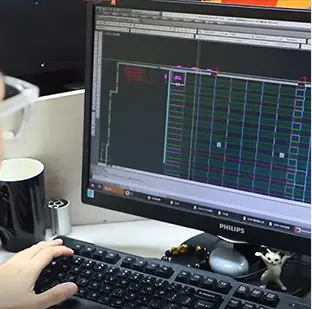
External racks cannot be anchored directly into unreinforced asphalt or thin yard paving. We require a concrete strip footing or a reinforced concrete slab (minimum C25/30 or 32 MPa concrete) with a depth of at least 150mm to 200mm, engineered to withstand the calculated uplift tension and punching shear loads. For yards with slope gradients over 1%, our engineers integrate custom stepped baseplates or stepped upright elevations into the CAD layout.
How do you bundle and pack large steel orders to satisfy biosecurity (DAFF / MPI)?
Export logistics are managed with military precision. Structural members are packed on heavy-duty custom steel stillages or ISPM-15 heat-treated, fumigated timber bearers with clear international IPPC stamps. Beams and uprights are interleaved with corrugated card and strapped with tensioned PET strapping to prevent transit abrasion. Detailed container manifest pack lists, commercial invoices, and ChAFTA / RCEP Certificates of Origin are provided with every sea-freight booking.
What is the typical production and shipping timeline for large volume orders?
Standard engineering layout validation and 3D CAD modeling take 24–48 hours upon receipt of warehouse dimensions. Factory fabrication for typical 5 to 20 container orders (approx. 200–800 tons) is completed within 18–25 working days. Ocean freight from South China (Nansha / Shenzhen ports) to Australian, European, or North American base ports averages 14–28 days depending on the shipping loop, delivering a total project turnaround of 6 to 8 weeks.
Request Your Custom Engineering Calculation & 3D Layout
Connect directly with HEDA’s senior structural racking engineers. Provide your basic facility parameters to receive a complimentary 3D layout, load table verification, and factory-direct quotation within 24 hours.