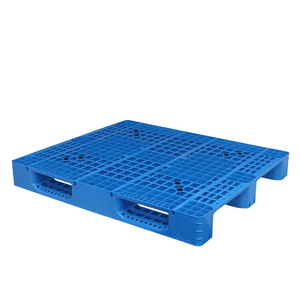
NEXARA 1311 Euro Pallet Three Runners Colorful Stacking Grid Storage
- Dimensions: 1300 × 1100 × 160mm
- Base Design: 3 Runners (Bottom Grid)
- Payload: Static 4000kg / Dynamic 1200kg
- Suitability: Gravity Flow & High-Bay
Factory-direct structural steel configurations designed to optimize warehouse volumetric density, maintain strict first-in, first-out (FIFO) inventory turnover, and withstand demanding forklift operational duty cycles.
Demystifying the critical mechanical engineering parameters required to achieve fail-safe pallet flow, eliminate pallet runaway hazards, and neutralize cumulative line pressure.
Gravity pallet flow racking—commonly termed gravity racking, pallet flow racking, or dynamic roller storage—relies on pure gravitational potential energy converted into controlled kinetic displacement. Unlike static selective racking or semi-automated shuttle options, gravity racking eliminates electrical motors inside the storage cube, delivering zero-power stock replenishment along dedicated decline tracks. When engineered correctly, this system produces an unbeatable First-In, First-Out (FIFO) inventory sequence where loading occurs exclusively at the rear charge face and picking is executed along the front discharge face.
Tracks are engineered with a precise gravitational slope between 3.2% and 4.2% (approximately 1.8° to 2.4°). Insufficient slope leads to stalled pallets mid-lane; excessive slope induces dangerous downhill momentum that risks impact damage at the picking face.
Internal gearing inside centrifugal brake rollers engages progressively as linear velocity exceeds 0.25 m/s. The braking resistance scales quadratically with speed, clamping maximum pallet travel velocity precisely below 0.30 m/s regardless of pallet gross weight.
In deep-lane configurations exceeding 5 pallets deep, the accumulated static back-pressure against the discharge pallet can reach tens of kilonewtons. Mechanical separator locks isolate the discharge pallet from upstream stock until the front unit is fully lifted by the forklift.
A primary failure mode in under-engineered dynamic gravity systems imported from unqualified sources is roller deformation under sustained point loads. When a 1,200kg industrial pallet sits static on a 3-roller wheel track over several weeks, localized indentation on thin-walled galvanized rollers causes bearing brinelling. Guangzhou Heda Shelves Co., Ltd. resolves this by deploying heavy-gauge high-frequency welded steel tubular rollers (∅60mm × 2.0mm or ∅76mm × 3.0mm) fitted with precision labyrinth-sealed, greased-for-life deep groove ball bearings (6001/6002 2RS series).
Furthermore, roller pitch configuration must ensure that a minimum of three roller shafts continuously support each bottom skid runner across the pallet’s displacement vector. For standard Australian 1165 × 1165mm four-way pallets, Euro 1200 × 800mm or Industrial 1200 × 1000mm blocks, roller spacing is calculated mathematically using the formula:
Roller Pitch (P) ≤ Min Pallet Bottom Runner Length (L_runner) ÷ 3.2
Where bottom pallet timbers are cracked, missing, or warped past 8mm tolerances, full-width twin-flanged steel rollers or full-bed zinc-plated gravity skate wheel assemblies with side guide curbs prevent lane derailment and ensure the unit continues tracking straight along the lane center axis.
25 years of specialized structural fabrication, rigorous quality certifications, automated roll-forming lines, and comprehensive engineering support across Oceania, North America, and Europe.
Our in-house structural engineering team provides complete 3D warehouse layout models and FEA stress distribution calculations within 24 to 48 hours of receiving floor plan clear dimensions, ensuring beam deflection limits stay strictly below L/250.
Manufactured in full conformity with AS 4084-2023 (Steel Storage Racking - Australia), FEM 10.2.02 (European Materials Handling Federation), EN 15512, and RMI ANSI MH16.1 specifications. Includes fully traceable mill test certificates (MTC).
Backed by accredited CE Certification (No. 2435-CPR-8605159), ISO 9001:2015 Quality Management (No. 18624Q00169R0M), and independent RoHS compliance. Every production batch undergoes ultrasonic weld testing and coating adhesion cross-hatch checks.
Custom seismic baseplate engineering and frame diagonal reinforcement tailored to New Zealand NZS 1170.5, California UBC/IBC, and international earthquake risk zones, utilizing high-tensile anchor studs and ductile steel grades.
Full adherence to Australian DAFF and New Zealand MPI border biosecurity standards. Bundles are bound on all-steel stillages or certified ISPM-15 heat-treated timber dunnage with complete pest-free inspection verification.
Direct factory supply chain bypassing intermediaries. We furnish global distributors and EPC contractors with private labeling, pre-labeled modular assembly bundles, multi-lingual installation manuals, and direct remote engineering supervision.
Spectrographic verification of hot-rolled Q235B/Q355B coils.
High-precision laser & CNC sheer cutting to tight tolerances.
Automated diamond/teardrop continuous punching stations.
Multi-stage 24-station rolling mills for continuous upright ribs.
Digital laser verification of camber, sweep, and dimensional skew.
Automated dual-torch robotic welding of beam connector brackets.
8-stage chemical pickling, degreasing, and zinc phosphating.
Automated powder coating cured at 200°C for chip resistance.
Physical bay mock-up testing and roller track roll-testing.
Steel framed stillages, corner wrapping, and export containerizing.
A holistic technical comparison for warehouse logistics directors evaluating storage density, operational speed, mechanical complexity, and total cost of ownership (TCO).
| Storage System Type | Rotation Principle | Volumetric Space Utilization | Forklift Aisle Requirements | Mechanical / Electrical Complexity | Relative Capex per Pallet | Optimal Industry Application |
|---|---|---|---|---|---|---|
| Gravity Pallet Flow Rack | Strict FIFO | 65% – 75% (High) | 2 Aisles (Charge & Discharge) | Passive Mechanical (Rollers/Brakes) | Medium – High | FMCG, Cold Chain, Pharma, High Turnover |
| Standard Selective Rack | FIFO / LIFO (Random) | 35% – 45% (Low) | Aisle every single rack bay | Zero (Pure Static Steel) | Lowest Capex | High SKU Count, Retail 3PL, Multi-Client |
| Radio Shuttle Cart Racking | FIFO or LIFO | 70% – 82% (Very High) | 1 or 2 Aisles | High (Batteries, PLC, Sensors, Carts) | High Capex | Massive SKU Volume, Deep Bulk Storage |
| Drive-In / Drive-Thru | LIFO (Strict) | 60% – 70% (High) | Single Access Point per Lane | Zero (Forklift Drives into Racking) | Low – Medium | Seasonal Bulk Crop, Low SKU Diversity |
| Push-Back Cart Racking | LIFO (Strict) | 55% – 65% (Medium-High) | Single Front Access Aisle | Low-Medium (Nested Carts on Inclines) | Medium Capex | 2–6 Pallet Depth Buffer Storage |
*Data compiled based on 10,000+ warehouse engineering implementations by Guangzhou Heda Shelves Co., Ltd.
How evolving dark warehouses, cryogenic cold-storage investments, high-yield metallurgical advances, and automated guided vehicles are shaping the next generation of gravity racking systems.
Human forklift drivers are increasingly replaced by Autonomous Mobile Robots. Next-generation gravity flow pick faces feature laser-guided optical docking sensors, anti-rebound mechanical detents, and millimeter-level alignment tolerances at discharge stations.
With the rapid expansion of global chilled pharmaceutical and frozen food logistics, gravity racks are moving toward specialized silicon-based cryogenic bearing lubricants (-40°C operating tolerance) and corrosion-proof hot-dip galvanized finishes that prevent structural embrittlement.
Procurement managers face stringent Scope 3 emissions reporting. Sourcing trends prioritize manufacturers utilizing electric arc furnace (EAF) low-carbon steel, heavy-metal-free VOC-free electrostatic powder coatings, and zero-timber reusable steel stillage packaging.
Emerging mega-distribution centers are trialing smart rollers equipped with self-powered piezoelectric vibration micro-sensors. These communicate roller bearing wear, brake retarder resistance fatigue, and lane deceleration metrics directly to the warehouse WMS platform.
Authoritative answers to technical, commercial, compliance, and shipping inquiries faced by logistics managers, EPC contractors, and racking importers.
Guangzhou Heda Shelves Co., Ltd. designs all pallet racking systems strictly in accordance with AS 4084:2023 (Steel Storage Racking) structural limit state design codes. For every commercial project across Australia and New Zealand, we generate comprehensive structural engineering packs containing raw material yield certs (Q235B ≥ 235 MPa, Q355B ≥ 355 MPa), column section modulus properties, beam weld shear test data, baseplate anchorage calculations, and site-specific seismic action calculations referenced to NZS 1170.5:2004 or AS 1170.4. This enables local registered structural engineers (CPEng / NER) to review and provide rapid site compliance certification.
Gravity flow systems demand that bottom runners make continuous, unhindered contact with the roller tracks. If wooden pallets suffer from warped bottom boards, protruding nails, or broken runners, the pallet may hang up or veer off-center. In warehouses where pallet quality cannot be 100% standardized, HEDA recommends deploying three continuous heavy-duty roller tracks instead of two, increasing roller diameter to 76mm, installing heavy-duty lateral guide flanges, or implementing secondary slave pallet boards / plastic slave trays to guarantee consistent flow characteristics.
The allocation of centrifugal brake rollers depends on lane depth, pallet mass variation (e.g., 400kg min to 1200kg max), and environmental temperature. A standard empirical rule of thumb is one brake roller positioned at every pallet storage position along the lane, starting from the second position behind the discharge stop. For extreme high-mass loads (>1,200kg) or cold-room environments, brake roller frequency is increased to ensure velocity never exceeds 0.3 m/s, avoiding uncontrolled impact shocks.
Production lead time at our Guangzhou factory averages 20 to 30 calendar days depending on tonnage and customized powder coating or galvanizing schedules. Transit times from Guangzhou or Shenzhen ports to major international ports (Sydney, Melbourne, Auckland, Los Angeles, Rotterdam) span approximately 14 to 28 days. To prevent costly customs and biosecurity clearance quarantines (such as Australian DAFF or NZ MPI biosecurity hold-ups), all export cargo is secured onto custom steel stillage cradles or timber certified and stamped under ISPM-15, accompanied by full fumigation certificates, clean shipping container declarations, and certificates of origin (COO) facilitating preferential trade duties under ChAFTA and RCEP.
Gravity flow systems possess very few failure points due to their passive mechanical design. Routine preventative maintenance involves quarterly inspection of the discharge pallet separation lock springs, checking roller shafts for debris entanglement (e.g., plastic stretch-wrap shreds), testing centrifugal retarder resistance by hand-spinning, and inspecting beam safety locking pins. HEDA supplies modular drop-in replacement roller assemblies and brake cassettes, enabling simple maintenance swap-outs in under 3 minutes without disassembling structural rack uprights.
Our senior warehouse structural engineers are ready to convert your architectural floor plan into an optimized, high-density FIFO dynamic storage layout. Receive detailed 3D CAD drawings, beam deflection tables, and factory-direct pricing within 24 hours.