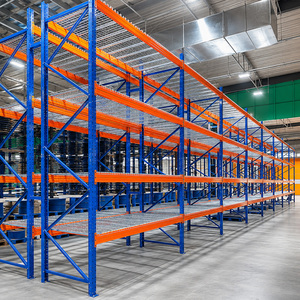
High Density Pallet Racking for Automotive Distribution
- Optimized for uneven SKU geometries
- Reinforced beam locks against dynamic forklift shock
- Heavy-duty box profiles up to 4,500 kg/level
High-yield steel architectures custom-tailored for ambient 3PL, FMCG distribution, cold-chain preservation, and heavy fabrication storage.
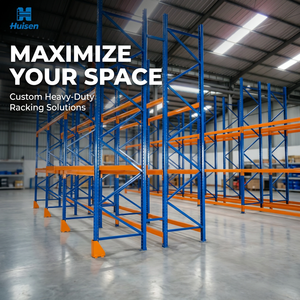
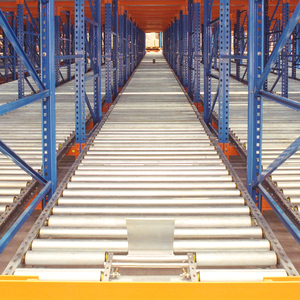
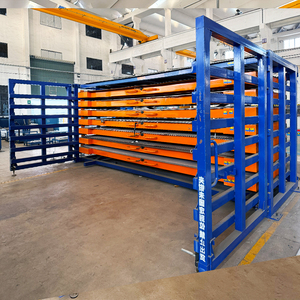
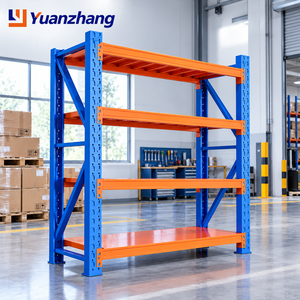
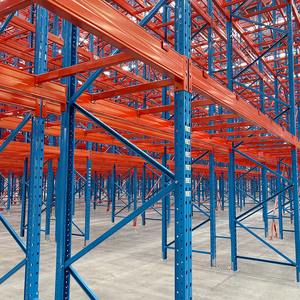
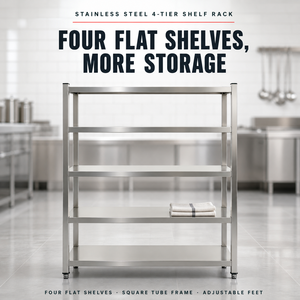
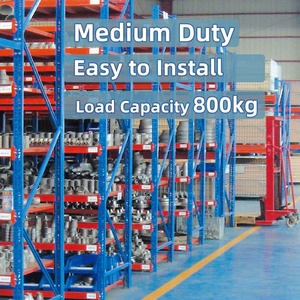
Modern industrial supply chains operate under an unrelenting mandate: maximize volumetric cubic yield while mitigating catastrophic structural failure risks. Selecting a certified industrial pallet racking factory is not merely a transaction of steel tonnage; it is a structural commitment directly affecting warehouse worker safety, seismic survivability, material handling efficiency, and operational profitability. As warehouses scale toward vertical clear heights exceeding 12 meters, structural calculations must account for static gravity loads, dynamic forklift impacts, seismic torsional resonance, and local building envelope interactions.
Engineering Benchmark: High-yield Chinese cold-rolled structural steel (Q235B and Q355B grades) undergoes automated continuous 18-station roll forming to achieve tighter profile tolerances, superior tensile yield ratios (minimum 235–355 MPa), and structural integrity validated under AS 4084, FEM 10.2.02, and RMI MH16.1 specifications.
The foundation of racking longevity begins with material chemistry. Standard commercial steel often presents inconsistent carbon equivalents, which cause microscopic cracks during sharp corner radius cold roll-forming. At our automated production facility, our engineers source exclusively from certified top-tier steel mills (such as Baosteel and Shougang). Upright columns undergo strict elongation tests (minimum 26% plastic strain reserve) ensuring dynamic loads do not produce brittle buckling failures under heavy cyclic warehouse traffic.
| Steel Grade & Property | Yield Strength (MPa) | Tensile Strength (MPa) | Operating Temperature | Ideal Application |
|---|---|---|---|---|
| Q235B Carbon Steel | ≥ 235 | 370 – 500 | -10°C to +50°C | Standard selective, multi-tier mezzanine, hand-loaded longspan |
| Q355B Low-Alloy Steel | ≥ 355 | 470 – 630 | -20°C to +50°C | Ultra-high-bay VNA, heavy cantilever, high seismic zones |
| Special Sub-Zero Alloy | ≥ 345 (Impact tested) | 490 – 650 | -35°C to Ambient | Deep-freeze blast cold storage rooms, automated shuttle freezer cells |
Strategic enterprise procurement requires forward-looking risk management. Between 2026 and 2030, global logistics networks are experiencing unprecedented shifts driven by land cost surges, labor scarcity, and stringent climate-related supply chain mandates:
1. The Migration to High-Density Automated & Semi-Automated Cells: Conventional wide-aisle selective racking (requiring 3.2m to 3.8m transfer aisles) is increasingly being converted into Radio Shuttle Racking, Very Narrow Aisle (VNA) systems, and Pallet Flow Gravity lanes. Facilities are actively converting idle floor space into revenue-generating pallet positions without expanding warehouse footprints.
2. Tight Integration with Warehouse Execution Software (WES) & AMR Fleets: Pallet racking must now feature pinpoint dimensional tolerances (down to ±1.0mm upright deviations) to guarantee uninterrupted interaction with autonomous reach trucks and Automated Guided Vehicles (AGVs). Off-spec steel deflection can lead to automated sensor trip shutdowns, causing systemic warehouse bottlenecks.
3. Decarbonization and Anti-Corrosion Longevity: Global procurement managers are eliminating solvent-borne wet paint systems due to volatile organic compound (VOC) compliance and chipping hazards. Pre-treatment via automated 9-stage phosphate immersion followed by thermosetting electrostatic powder coating ensures high salt-spray resistance (exceeding 500 hours ASTM B117) and eliminates particulate shedding in pharmaceutical and dry food distribution centers.
One of the most frequent points of failure in imported warehouse racking systems is neglect of site-specific horizontal seismic base shear forces. In seismic zones such as New Zealand (NZS 1170.5), the Pacific Rim, and the western Americas, racking uprights cannot simply rest on standard baseplates. Structural frames must incorporate heavy footplates with high-tensile epoxy anchor chemical bonding, enlarged diagonal bracing node gussets, and high-ductility top frame portal ties.
Furthermore, standardizing on regional pallet geometries—such as Australian standard 1165 × 1165 mm timber pallets, European 1200 × 800 mm, or North American 48 × 40 inch GMA pallets—requires specific beam clear-span calculations to avoid excessive sag under point-loading. Our engineering center utilizes computerized finite element analysis (FEA) to simulate localized buckling, frame portal stiffness, and second-order P-Delta sway effects long before steel hits the roll-forming tooling.
From initial structural layout simulations to seamless container loading, discover the manufacturing rigors that have protected over 10,000 worldwide projects since 2001.
Our 30+ engineering specialists translate raw architectural CAD files into optimized 3D warehouse layouts, calculating pallet capacity, turning radials, flue spaces, and maximum beam deflection profiles within 24 hours.
From raw uncoiling, automatic multi-station CNC punching, roll cold bending, and robotic laser welding to pickling, phosphating, and electrostatic powder curing, every stage is executed in-house for complete quality control.
Complete traceability backed by CE Certification (No. 2435-CPR-8605159), ISO 9001:2015 Quality Management System (No. 18624Q00169R0M), and verified compliance with global RoHS environmental safety directives.
To eliminate quarantine rejections at ports of entry, all components are banded into rigid steel stillages or crated with certified ISPM-15 heat-treated dunnage, ensuring smooth customs processing at DAFF, MPI, and European customs.
Save on landed import taxes. We generate compliant commercial invoices, packing declarations, bills of lading, and official Certificates of Origin supporting ChAFTA, RCEP, and bilateral trade pact frameworks.
We supply racking distributors, system integrators, and industrial shelving brands with private labeling, custom RAL color combinations, punch configurations, step-by-step erection manuals, and project supervision.
Direct technical answers to essential questions asked by international supply chain directors, industrial real estate developers, and warehouse operations managers.
Beam load calculations follow standard limit state design principles under uniform distributed load (UDL) scenarios in compliance with AS 4084 and FEM 10.2.02. Maximum allowable vertical beam deflection is capped at L/200 (where L is the clear span distance between columns), preventing disengagement of mechanical safety locking pins. Certified physical destructive test reports for beam-connector assemblies are provided alongside customized computer-modeled load signage for every installed run.
Yes. When deploying racking into earthquake-prone regions, our design engineering team calculates site-specific dynamic response spectra based on geotechnical soil classifications and peak ground acceleration parameters. We reinforce structural safety by integrating high-moment capacity footplates, heavier cold-rolled frame diagonal bracing profiles, enlarged slab chemical anchoring patterns, and upper spine cross-aisle portal ties, providing a calculation package suitable for local certified professional engineer (PE) sign-off.
Standard indoor ambient facilities utilize our automated 9-step pickling, phosphating, and electrostatic powder coating line (dry film thickness of 60–80 microns), delivering high impact and scuff protection. For outdoor yards, coastal Pacific environments, or humid cold-room air circulation units, we recommend our hot-dip galvanized finish (HDG conforming to ISO 1461, minimum 70–85 microns coating thickness) or marine-grade 304/316 stainless steel to eliminate oxidation and rust bleed.
To deliver an optimized CAD schematic and quotation within 24 hours, our engineering department requires: (1) Warehouse architectural DWG/PDF showing columns, utility drops, and dock door locations; (2) Building clear height to the lowest overhead obstruction or sprinkler head; (3) Pallet dimensions (Width × Depth × Total Height including goods); (4) Maximum gross weight per pallet; and (5) Material handling equipment specifications (forklift model, minimum turning aisle width, and maximum mast extended height).
All upright columns and horizontal beams are nested in purpose-engineered steel logistics stillages separated by corrugated cardboard and protective plastic film wrapping to prevent metal-to-metal rubbing during rough ocean journeys. Hardware components, baseplates, and row spacers are boxed in heavy wooden crates with vapor-phase corrosion-inhibitor (VCI) desiccants. Every container is balanced and strapped to facilitate safe offloading by forklift at destination ports without crane equipment.
Connect directly with our senior racking engineering group. Receive complimentary CAD blueprints, structural static calculations, and direct factory container pricing customized for your facility.