Next-Generation Metal Warehouse Racking Infrastructure
Navigating global supply chain volatility, land acquisition costs, and modern automated material handling integration requires an engineering-first procurement perspective.
In the contemporary logistics ecosystem, warehouse space is no longer merely a physical shell—it represents a dynamic, vertical asset where cubic meter utilization directly dictates operational profitability. As supply chain directors, industrial real estate developers, and third-party logistics (3PL) conglomerates scale their footprints, sourcing heavy-duty metal racking systems from China has evolved from a pure cost-arbitrage tactic into a strategic engineering partnership. The convergence of high-tensile structural steel (such as Q235B and micro-alloyed Q355B cold-rolled coils), robotic laser-punching production lines, and rigorous finite element analysis (FEA) has elevated premier Chinese manufacturers to the apex of global warehouse infrastructure delivery.
However, successful global procurement across strict regulatory zones—including Australia (AS 4084-2023), the European Union (EN 15512 / EN 15620), the United States (ANSI/RMI MH16.1), and high-risk seismic corridors in New Zealand (NZS 1170.5)—demands complete transparency in material traceability, load-deflection calculation protocols, and factory quality audits. This comprehensive engineering briefing provides global supply chain decision-makers with the technical criteria, product recommendations, structural trend forecasts, and verification metrics required to procure industrial metal racking systems that yield long-term reliability and zero catastrophic failure rates.
High-Efficiency Industrial Racking & Commercial Shelving Systems
Explore our certified cold-rolled structural steel storage configurations engineered for extreme static and dynamic warehouse loadings.
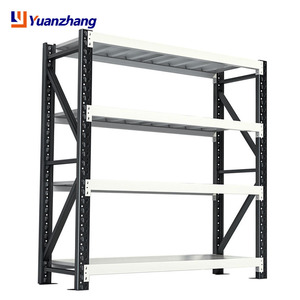
Light Duty Adjustable Metal Shelves, Bolted Structure for Parts & Carton Storage, Small Racks for Workshop & Warehouse
- Load: 100 – 250 kg / Layer
- Finish: AkzoNobel Powder Coat
- Upright: Bolted Cold-Rolled Q235B
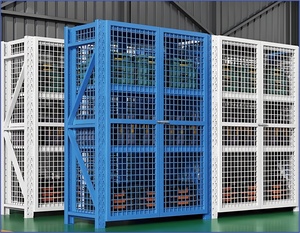
4-Layer Heavy Duty Drive-Through Pallet Rack Powder Coated Steel Adjustable Shelves Customizable Length for Warehouse Storage
- Density: Up to 85% Volume Yield
- Pallet Load: 1,500 kg / Position
- Configuration: LIFO & FIFO Lane Ops
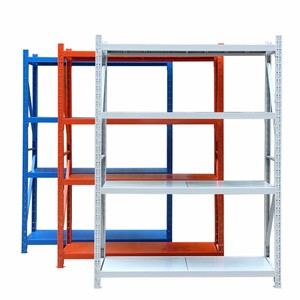
Hotter-shelf Four Layer Blue Color Warehouse Rack Numbering System
- Feature: Barcode & RFID Location Tags
- Layer Span: Modular Beam Adjustment
- Compatibility: WMS Integration Ready
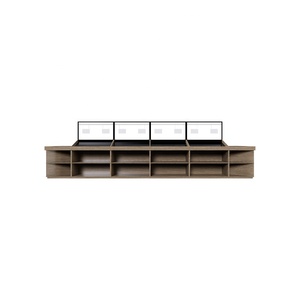
Produce Display Island Rack Multi-Tier Heavy Duty Metal Wood Weigh-Able Display Shelf for Dried Fruits Candies Supermarket Bulk
- Materials: Solid Steel & Hardwood
- Ergonomics: Integrated Scale Mounting
- Capacity: Up to 500 kg Uniform Load
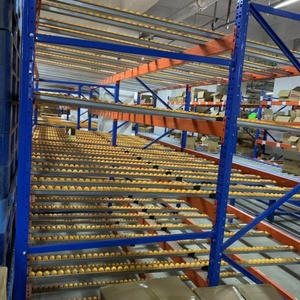
Industrial 5 Layer Heavy Duty Flow Rack Gravity-Fed Storage Solution for Warehouses Picking Efficiency for Boxes and Cartons
- System: High-Tension Roller Tracks
- Pick Speed: +40% Fulfillment Output
- Operation: Strict FIFO Stock Turnover
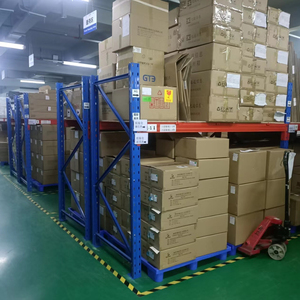
Heavy-Duty Industrial Selective Pallet Rack System Efficient 5-Layer Adjustable Metal Warehouse Racking Bolt Structure Storage
- Selectivity: 100% Direct Pallet Access
- Capacity: Up to 4,000 kg / Beam Level
- Adjustability: 50mm / 75mm Pitch Spacing
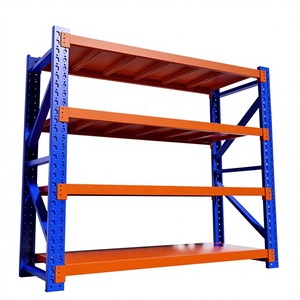
4 Tier Heavy Duty Foldable Boltless Metal Storage Rack Adjustable Industrial Warehouse Storage Shelves Commercial Steel Shelving
- Assembly: No Hardware / 10-Min Setup
- Shelf Load: 300 – 600 kg / Tier
- Coating: Scratch-Resistant Ripple Finish
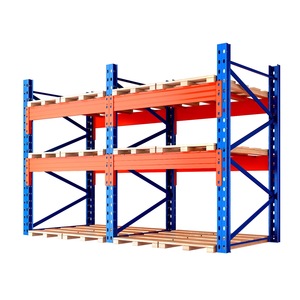
Heavy-Duty Beam-Type Steel Industrial Warehouse Drive-In Storage Racks Detachable Thickened Multi-Tier
- Steel: Thickened Heavy-Duty Uprights
- Application: Cold Storage & Raw Material
- Reinforcement: Top & Back X-Bracing Truss
Engineering Superiority: Why Tier-1 Logistics Firms Partner With HEDA
Operating a modernized 30,000 m² production facility with over 300 technical specialists, our direct-from-manufacturer model mitigates supply chain risks while providing complete structural traceability.
Full Regulatory Certification
Our manufacturing and engineering verification processes hold official CE Certification (No. 2435-CPR-8605159), ISO 9001:2015 (No. 18624Q00169R0M), and complete RoHS compliance. Calculations are fully calibrated to satisfy third-party certified Australian AS 4084 and European EN 15512 safety factor benchmarks.
Free 24-Hour 3D CAD & FEA Layouts
Never commit capital without structural certainty. Our structural design bureau converts your building blueprints, slab load ratings, and material handling vehicle specifications into precision CAD layouts, dynamic 3D virtual walkthroughs, and finite element stress-strain simulations within 24 hours.
High-Precision Automated Cold-Forming
Every upright, step beam, and structural bracing member undergoes fully automated rolling, punching, and forming. Utilizing high-yield Q235B and Q355B steel sourced from premium tier-one domestic mills, we ensure dimensional tolerances of less than ±0.5mm across the entire multi-tier upright column height.
Climate-Resilient Finishing Lines
From dry ambient logistics sheds to sub-zero blast freezers (-30°C) and coastal marine microclimates, we offer high-throughput automatic pickling, phosphating, electrostatic polyester powder coating, and specialized hot-dip galvanizing (HDG compliant with ISO 1461) to halt structural oxidation.
Custom OEM/ODM & Global Private Label
Serving over 100 global distributors and systems integrators, we manufacture custom pitch configurations (50mm, 75mm, 76.2mm teardrop interchangeability), customized beam connector lugs, branded load signs, and bespoke steel racking accessories designed specifically for your target territory.
Biosecurity-Compliant Global Logistics
We eliminate expensive quarantine holding fees at Sydney, Auckland, Long Beach, and Rotterdam. Shipments are bundled strictly on engineered reusable steel stillages or ISPM-15 certified heat-treated timbers, accompanied by verified ChAFTA, Form E, or RCEP Preferential Certificates of Origin.
Global Metal Racking Procurement Trends (2025–2030)
How macroeconomic pressures, warehouse footprint limits, and automation integration are transforming B2B purchasing criteria.
The global metal warehouse racking industry is experiencing an unprecedented structural transition driven by skyrocketing industrial square-meter rental costs, rapid e-commerce SKU diversification, and the mass deployment of Autonomous Mobile Robots (AMRs) and Automated Storage and Retrieval Systems (AS/RS). Purchasing managers can no longer treat steel racking as a static commodity. Based on empirical supply chain data from over 10,000 industrial installations, five critical procurement trends define the market through 2030:
1. Structural Steel Grade Migration (From Standard Q235B to High-Yield Micro-Alloyed Steel): Warehouse ceiling heights are increasing from legacy 8-meter profiles to modern 12–16 meter clear-height facilities. To support massive cumulative column down-loads without excessively widening aisle spaces, procurement specifications are increasingly mandating high-tensile, cold-formed steel profiles with yield strengths exceeding 355 MPa (Q355B / ASTM A572 Grade 50). This transition allows up to a 14% reduction in total steel deadweight while simultaneously elevating rack moment-capacity and seismic impact absorption.
2. Total Cost of Ownership (TCO) vs. Initial Landing Price: Savvy logistics buyers now analyze lifecycle durability over nominal FOB prices. Early failures typically originate in beam connector weld fatigue, poor pre-treatment leading to powder coat delamination in humid coastal hubs, or column damage from forklift impacts. Procuring racking systems equipped with engineered rolled column profile ribs, heavy-duty structural baseplates, and certified weld penetrations provides a 20-year structural lifespan versus the 5-to-7-year replacement cycles common with low-grade unbranded fabricators.
3. Density Optimization: The Accelerated Decline of Pure Selective Racking: While Selective Pallet Racking retains 100% immediate accessibility, its floor space utilization efficiency rarely exceeds 40%. With cold storage and logistics fulfillment facilities carrying unprecedented real estate overhead, procurement is migrating rapidly toward dynamic density configurations—most notably Radio Shuttle Cart systems, Gravity Carton Flow, and Drive-In lanes. Shuttle racking systems alone capture up to 85% of physical room volume while slashing forklift transit times inside picking tunnels by more than 50%.
4. Rigorous Seismic Ductility Engineering: International buyers operating in seismic-active zones—including California, New Zealand (Wellington/Canterbury), the Pacific Rim, and Southern Europe—now require seismic coefficient verification prior to vessel dispatch. Racking manufacturers must provide site-specific non-linear time-history analyses, heavier anchor bolt patterns, widened back-to-back row spacers, and customized base-plate anchor configurations that safely dissipate ground acceleration energies under full operating payload.
| Storage Racking System | Floor Space Utilization | Direct Selectivity | Stock Rotation Logic | Typical Load Rating | Primary Sector Fit |
|---|---|---|---|---|---|
| Selective Pallet Racking | 35% – 45% | 100% Direct | FIFO or LIFO | 1,000 – 4,000 kg / level | High-SKU 3PL, FMCG, Retail Fulfillment |
| Drive-In / Drive-Through | 70% – 85% | Low (Lane Dependent) | Strict LIFO (FIFO Drive-Thru) | 1,000 – 1,800 kg / pallet | Cold Storage, Beverage, Seasonal Stock |
| Radio Shuttle Automation | 80% – 90% | Medium-High | Dynamic FIFO & LIFO | 1,500 – 2,000 kg / pallet | Automated DCs, Food Processing, Pharma |
| Gravity Carton / Pallet Flow | 65% – 80% | High at Pick Face | Guaranteed FIFO | 50 – 1,500 kg / lane | Split-Case Picking, Perishables, E-Commerce |
| Rack-Supported Mezzanine | Double/Triple Floor | 100% Pick Access | Custom Operational | 300 – 1,000 kg / m² | Auto Parts, Apparel, High-Density Assembly |
Technological Innovations in Industrial Steel Racking Manufacture
Examining structural metallurgy, automated robotic welding, and IoT integration driving the next generation of safe warehouse storage.
The manufacturing paradigms governing metal warehouse racking have undergone radical technological modernization over the past decade. Where conventional fabrication previously relied on manual punch presses and hand-welded beam connectors, modern tier-1 Chinese manufacturers utilize fully integrated, continuous roll-forming lines coupled with fiber-laser precision punching. The resulting mechanical interlocks and dimensional accuracies eliminate racking frame torsion, irregular weld stresses, and field-assembly misalignment.
1. Multi-Stage Cold Roll Forming With Continuous Hole Matrixing: Modern upright frames are cold-formed through 22 to 26 continuous rolling passes. Rather than punching hole patterns after forming—which introduces micro-fissures and residual stress concentrations—high-speed hydraulic CNC matrix punchers stamp precision 50mm or 75mm teardrop and diamond pitches into flat steel coil prior to profile rolling. This guarantees that cold-drawn profile bends maintain uniform wall thicknesses and zero structural deformation across column lengths exceeding 12 meters.
2. Automated Robotic MIG/MAG Welding Integration: Beam end-connectors (typically 3, 4, or 5-claw cast or laser-cut configurations) represent the primary shear transfer mechanism in pallet rack integrity. Automated dual-torch robotic welding stations execute controlled-atmosphere continuous fillets along the full connector-to-box-beam interface. This removes human inconsistency, voids, slag inclusions, and porosity, ensuring certified beam moment capacities capable of withstanding severe cyclical forklift shock loads.
3. Advanced Nanotechnology Surface Pre-Treatment: Extended corrosion resistance relies heavily on surface chemistry. State-of-the-art manufacturing replaces traditional heavy-metal phosphatizing with multi-stage silane and zirconium conversion nanocoatings. This creates a dense, eco-friendly chemical anchor layer on the raw cold-rolled steel, dramatically enhancing paint adhesion and surpassing 500-hour continuous salt-spray tests (ASTM B117) without micro-flaking or under-film rust creep.
4. Structural Compatibility With Autonomous Mobile Robots (AMRs) & AGVs: The explosive adoption of goods-to-person AMRs requires racking baseplate geometries, aisle flue clear widths, and bottom-beam clearances to accommodate autonomous under-chassis drive units and floor-guided magnetic or QR-code tracks. Leading Chinese rack designers now integrate CAD-modeled guidance channels, impact-deflecting wrap-around polyurethane column protectors, and sensor bracket fixtures directly into standard production deliverables.
Frequently Asked Questions: Importing Metal Racking From China
Clear, definitive answers to technical compliance, logistics, structural calculations, and quality assurance questions asked by international buyers.