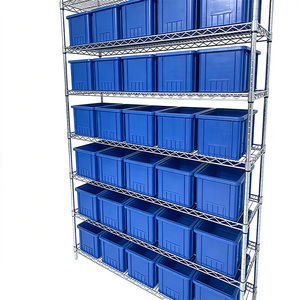
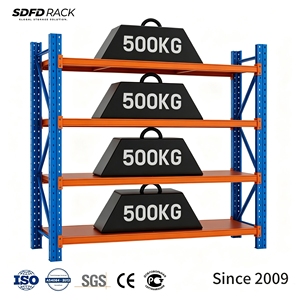
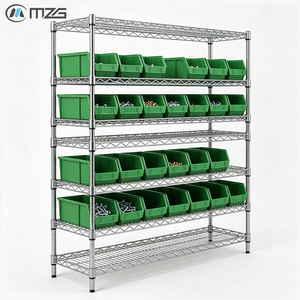
Multi-Tier Heavy
From single-selective and dynamic gravity flow to ultra-narrow aisle conversions and extreme-temperature cold store racks, examine our engineered systems designed and fabricated in our 30,000 m² Guangzhou production facility.
Multi-Tier Heavy
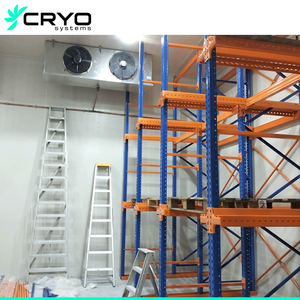
Cold Chain (-30°C)
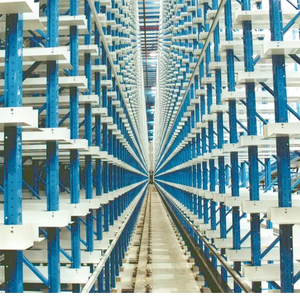
Automated Miniload
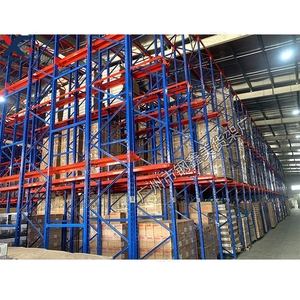
High-Density Drive-In
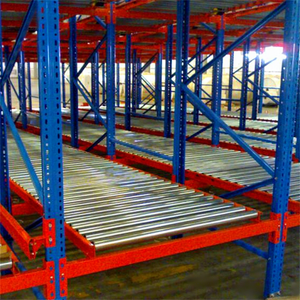
Gravity Flow FIFO
Longspan Shelving
Specialized Handling
Parts Integration
Examining how narrowing warehouse operating aisles from traditional 3,800 mm reaches down to 1,600 mm converts unusable horizontal transit dead-space into vertical cubic revenue volume.
Traditional Selective Pallet Racking systems allocate up to 60% of total footprint space solely to forklift circulation paths. Narrow Pallet Racking (operating in aisle apertures between 1,600 mm and 1,800 mm) preserves immediate, unimpeded direct access to every single SKU pallet position while elevating building footprint storage capacity by 40% to 52%.
By confining heavy material handling equipment to linear guidance corridors, VNA structures routinely extend vertical ceiling clearance usage up to 16 to 18 meters. Our structural columns leverage cold-rolled upright sections designed with enhanced moment of inertia (Ix, Iy) to negate dynamic mast sway and secondary P-Delta buckling stresses at extreme lift heights.
Narrow racking safety relies on exact steering constraints. We supply precision floor-mounted structural steel low-profile guide rails (typically 100×50×5mm angle or custom c-channels anchored at 400mm intervals) or engineer clearance tolerances for high-frequency inductive wire guidance buried flush within the reinforced concrete warehouse floor slab.
Direct comparative benchmarks between Narrow Pallet Racking, Standard Wide-Aisle, Drive-In, and Automated Shuttle racking formats across key warehouse metrics.
| Storage Architecture | Operating Aisle Width | Space Utilization | SKU Selectivity | Floor Flatness Spec | Relative Cost / Pallet |
|---|---|---|---|---|---|
| Narrow Pallet Racking (VNA) | 1,600 mm – 1,850 mm | 85% – 90% | 100% Immediate Direct | DIN 18202 / TR34 DM2 | Moderate (High ROI) |
| Wide Aisle Selective Racking | 3,200 mm – 3,800 mm | 45% – 55% | 100% Immediate Direct | Standard Industrial Free | Baseline Economy |
| Double Deep Pallet Racking | 2,800 mm – 3,200 mm | 60% – 68% | 50% (Pantry Pattern) | Standard Industrial Free | Moderate |
| Drive-In Pallet Racking | Continuous Lanes | 75% – 85% | Low (LIFO Strict Batch) | Standard Industrial Free | Low – Moderate |
| Radio Shuttle Automation | Continuous Deep Lanes | 88% – 95% | High Batch Density | Standard Reinforced Slab | High (Capital Intensive) |
At HEDA Shelves, our narrow aisle upright columns are cold-roll-formed from premium certified high-tensile structural coil steel (Q235B and Q355B grades conforming to GB/T 700 and GB/T 1591, equivalent to ASTM A36 and ASTM A572 Grade 50). Uprights feature a 50mm or 75mm continuous adjustment pitch engineered with multi-flange stiffener ribs that dramatically reduce torsion under asymmetric beam loading conditions. All box beams and step beams utilize automated twin-C interlocking seams with seamless robotic end-connector welding, certified under CE structural steel execution standard EN 1090-1 / EN 15512.
Over 25 years of engineering manufacturing discipline. How Guangzhou Heda Shelves Co., Ltd. eliminates offshore procurement vulnerabilities through strict quality assurance and comprehensive technical deliverables.
Every racking batch ships with traceable mill certificates and certified engineering documentation. Our quality control systems hold verified CE Certification No. 2435-CPR-8605159 and ISO 9001:2015 Registration No. 18624Q00169R0M. Projects for Australia, New Zealand, and North America are pre-engineered to exceed AS 4084-2023, NZS 1170.5, and RMI standards.
We execute all structural fabrication completely in-house across our 30,000 m² plant: CNC uncoiling, multi-station automated hydraulic punching, continuous roll cold forming, 5-axis robotic laser notch cutting, robotic CO2 shielded welding, chemical shot blasting, automated pickling and phosphating pre-treatment, and multi-cyclone electrostatic thermoset powder coating.
Importers encounter zero fumigation or port hold-ups. Pallets and long profiles are strapped on heavy-duty custom steel stillages or heat-treated timber bearing international ISPM-15 verification marks, ensuring friction-free clearance through Australian DAFF, New Zealand MPI, US Customs, and European border inspections.
Every beam connector, baseplate, row spacer, and upright post passes through strict QA gates.
Chemical & tensile verification of raw steel coils from certified primary mills before slitline entry.
High-speed decoiling leveling and programmable precision longitudinal cutting with sub-millimeter tolerances.
Hydraulic automatic punch arrays create teardrop or diamond beam slot patterns at exact 50mm/75mm pitches.
Multi-stand automated cold-roll forming lines impart up to 14 profile bends for extreme upright stiffness.
Multi-jaw connector plates automatically welded to step or box profiles using argon/CO2 shielding gases.
Descaling and surface profiling to Sa 2.5 standard to guarantee permanent powder finish adhesion.
Multi-stage immersion pre-treatment removing microscopic organics and applying a corrosion-inhibiting phosphate skin.
Dual-gun reciprocal electrostatic application of lead-free, RoHS-compliant thermoset epoxy-polyester resin.
The convergence of industrial land scarcity, warehouse automation, and ESG carbon accounting is transforming warehouse procurement priorities worldwide.
Traditional manned man-up VNA turret trucks are rapidly yielding ground to automated narrow-aisle AGVs (Automated Guided Vehicles) and autonomous turret reach trucks. Future-proof procurement requires ultra-tight deflection tolerances: racking designs must limit beam sag strictly to L/300 or L/400 (compared to traditional L/200 standard) to prevent LiDAR sensor misreads and automated optical barcode alignment failures.
Procurement directors are shifting focus away from lowest-initial-bid steel weight metrics toward total life-cycle endurance. Lighter gauge steels pressed beyond critical yield thresholds exhibit catastrophic impact vulnerability. Modern specs mandate high-impact base wrap-around column protectors, heavy tubular upright footings, and thicker anchor baseplates that resist recurring forklift shear damage.
Refrigerated warehouse electricity expenditures are 6x higher per cubic meter than ambient DCs. Operators converting to cold room narrow pallet racking dramatically compress the required cubic volume requiring thermal cooling. Hot-dip galvanization (minimum 65µm zinc thickness conforming to ISO 1461) is outpacing standard coatings in high-condensation cold store logistics.
Clear answers to critical structural engineering, site readiness, concrete slab tolerances, and international logistics questions.
Because Narrow Pallet Racking (VNA) operates with mast lifts extending up to 15m to 18m, standard warehouse "Free Movement" concrete floors are insufficient. Minor slab irregularities amplify significantly at elevated reach heights, risking turret truck collisions with racking beams.
Floors must comply with Defined Movement (DM) specifications outlined in DIN 18202 Table 3 Group 4 or the British Concrete Society's TR34 (Category DM1 for lift heights >13m, or Category DM2 for lifts between 8m and 13m). Alternatively, American ACI 117 F-min numbers (typically F-min 75 to 100) must be validated before installation.
The clear aisle width (Ast) is dictated by the specific material handling vehicle selected, not arbitrary rules of thumb. The calculation is typically: Ast = Pallet Width (or Truck Overall Chassis Width, whichever is greater) + Truck Side Operating Clearance (typically 200 mm to 250 mm total, or 100-125 mm per side).
For standard Euro-pallets (800×1200mm) or Australian standard pallets (1165×1165mm) operated with an inductive wire-guided turret truck, aisle widths typically settle between 1,650 mm and 1,850 mm. Mechanical guide rails typically require an additional 50 mm clearance across the rail face.
Yes. Our engineering department prepares comprehensive structural engineering documentation including finite element section property analyses, moment connection stiffness values, and horizontal shear load verification.
For seismic territories like New Zealand (referencing NZS 1170.5 and AS 4084-2023) or seismically active regions globally, we increase column cross-sectional gauges, install heavy-duty ductile floor anchor baseplates, incorporate dual-plane spine bracing towers, and increase row-spacer density to safely dissipate earthquake lateral loads.
Mechanical Guide Rails: Consist of structural steel angle sections (typically 100×50×5mm or 120×80×8mm) bolted directly to the slab alongside rack bases. Side-guide rollers on the turret truck engage these rails mechanically. Advantage: absolute mechanical physical barrier and simple installation. Disadvantage: floor pallets cannot sit directly on the floor slab; bottom load beams are mandatory, slightly reducing vertical utilization.
Inductive Wire Guidance: Involves cutting a thin groove (~4mm wide × 15mm deep) along the center of each aisle, embedding an antenna wire, and sealing with epoxy. A frequency transmitter guides the truck's steering sensors automatically. Advantage: bottom pallets can sit directly on the floor slab, and picking aisles remain totally clear of tripping obstacles. Disadvantage: higher initial floor installation precision required.
Racking structural profiles are heavy, lengthy, and can easily incur transit damage if improperly secured. We pack all upright frames and horizontal beams into rigid custom-welded steel stillages or bundles protected with composite honeycomb corner boards, corrugated protective wrappers, and heavy tensile strapping.
Any timber elements used for dunnage strictly adhere to international ISPM-15 guidelines, carrying legible HT (Heat Treated) stamps to avoid quarantine delays at destination ports in Australia (DAFF), New Zealand (MPI), Europe, or North America. Furthermore, all customs export documentation (Commercial Invoices, Detailed Packing Lists, Certificates of Origin under Free Trade Agreements) are audited prior to ship sailing.
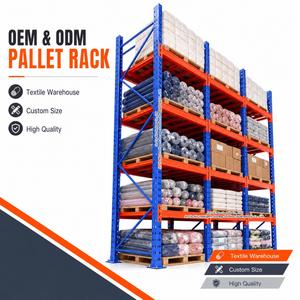
With an ongoing output capacity exceeding 30,000 metric tons per month across our 30,000 m² production base, typical factory turnaround for an engineered VNA pallet racking system (5,000 to 20,000 pallet positions) is 20 to 28 working days following technical drawing sign-off.
We provide full staging schedules and container loading optimization diagrams so installation contractors receive structural uprights, beams, and bracing in sequenced installation priority.
Send our structural engineering team your warehouse architectural floor plan, clear ceiling heights, and pallet load criteria. Within 24 to 48 hours, our senior design engineers deliver a comprehensive 3D CAD racking layout, structural load analysis, and factory-direct quotation.