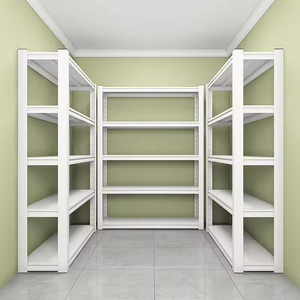
 Lightweight
2000*500*2000mm Warehouse Racking Lightweight 100kg/layer Load Metal Assembled Storage Racking
Capacity:100 kg / layer UDL
Structure:Boltless Assembled
Finish:Thermoset Powder Coat
Precision roll-formed using high-tensile Q235B and Q355B structural steel coils. Each storage module undergo rigorous finite element analysis (FEA) to ensure static equilibrium, torsional resistance, and deflection stability under full design live loads.
Lightweight
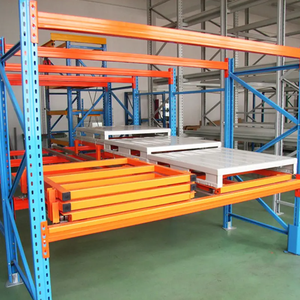 High Density
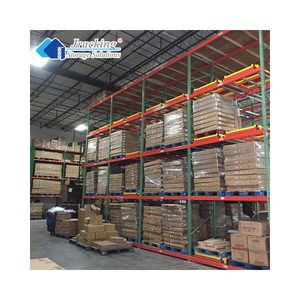 Heavy Duty
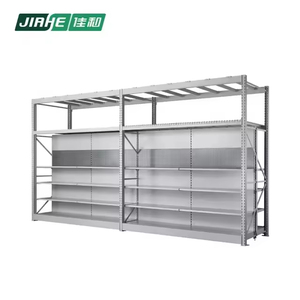 Hybrid
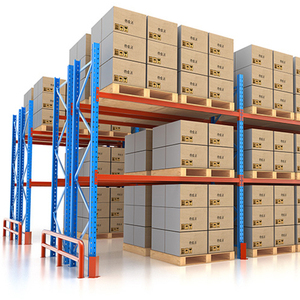 CE Certified
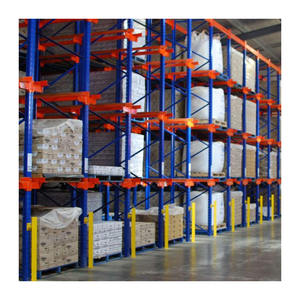 Drive-In
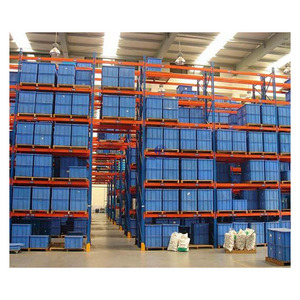 Best Seller
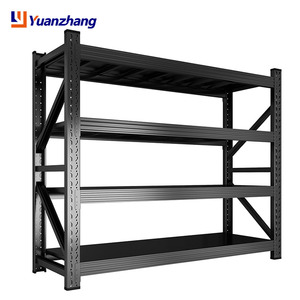 Long Span
Founded in 2001, Guangzhou Heda Shelves Co., Ltd. operates a premier 30,000 square-meter production complex equipped with 8 automated continuous cold roll-forming lines, automated robotic welding cells, and an environmental pre-treatment coating plant delivering over 30,000 metric tons monthly.
Selecting a structural mezzanine or heavy-duty racking supplier is a critical structural engineering decision. An under-designed upright profile or poorly engineered baseplate connection can result in catastrophic warehouse failure under dynamic load or seismic excitation. At HEDA Shelves, we employ a dedicated engineering department of over 300 technical personnel and structural draughtsmen who analyze dead loads, live loads, seismic factors, wind shear (for outdoor cantilever installations), and impact resistance coefficients.
Every steel coil entering our plant is subjected to strict yield point, tensile strength, and elongation testing to ensure full compliance with GB/T 700 Q235B and high-yield Q355B standards (equivalent to ASTM A36 and S355JR). Furthermore, our export products possess authentic international verification including CE Certification No. 2435-CPR-8605159 and ISO 9001:2015 Quality Management System No. 18624Q00169R0M. For clients in Australia, New Zealand, and Oceania, our designs strictly reference AS 4084 (Steel Storage Racking) and NZS 1170.5 seismic displacement parameters, providing verified section properties and load calculations for site verification.
To eliminate dimensional deviations and ensure seamless on-site boltless assembly across overseas projects, our manufacturing facility follows a certified ten-stage industrial quality sequence.
Spectrometric assay & tensile yield testing of prime Q235B coils.
High-precision uncoiling and slitting with sub-millimeter tolerances.
Continuous CNC automated punch presses for 50/75mm teardrop/diamond holes.
Cold continuous roll forming with up to 24 rolling stands for optimum section modulus.
Twin C-profile interlock seam welding to manufacture heavy-duty box beams.
CO2 gas shielded robotic welding of high-strength beam connector claws.
Mechanical shot blasting and deburring to eliminate weld slag and micro-burrs.
4-stage immersion: alkaline degreasing, acid pickling, rinsing, and phosphating.
Electrostatic dry powder curing at 180°C–200°C for exceptional abrasion resistance.
Steel stillages or ISPM-15 heat-treated wood bunks with waterproof stretch film wrapping.
Compare core operational parameters across industrial pallet racking configurations and multi-tier mezzanine platforms to determine the ideal structural architecture for your distribution facility.
| Storage System Type | Space Utilization | Pallet Selectivity | Rotation Principle | Load Rating (Max) | Typical Applications |
|---|---|---|---|---|---|
| Selective Pallet Racking | 40% – 50% | 100% Direct | FIFO (First-In, First-Out) | 1,000–4,500 kg / level | Fast-moving retail, 3PL FMCG, pharmaceutical distribution |
| Double-Deep Pallet Rack | 55% – 65% | 50% Semi-Direct | FILO / LIFO | 1,000–3,000 kg / level | Multi-pallet SKU batches, dry grocery reserve buffers |
| Drive-In / Drive-Through | 70% – 80% | 20% – 30% Dense | LIFO (Drive-in) / FIFO (Drive-thru) | 1,500 kg / pallet slot | Refrigerated cold stores, beverage warehousing, bulk seasonal items |
| Push-Back Rack (Roller/Cart) | 70% – 75% | Lane Selectivity | LIFO Gravity Push | 1,400 kg / cart tier | Medium batch SKUs, food staging, cross-dock buffer lanes |
| Radio Shuttle Automation | 80% – 90% | Automated Deep | Configurable FIFO / LIFO | 1,500 kg / carrier cycle | Sub-zero freezers, meat processing, high-throughput automated DCs |
| Rack-Supported Mezzanine | 200% – 300% Floor Multiplier | 100% Hand Pick | Configurable Multi-Tier | 300–1,000 kg / m² deck | E-commerce fulfillment centers, automotive spare parts, assembly bays |
| Structural I-Beam Mezzanine | Wide Clear-Span Multiplier | 100% Open Span | Full Floor Flexibility | 500–2,000 kg / m² deck | Overhead modular offices, heavy equipment staging, machinery platforms |
The global intralogistics landscape is experiencing a paradigm shift driven by urban land scarcity, rising construction costs, and the rapid rise of automated robotics.
Modern distribution facilities are abandoning isolated static storage. Modern mezzanine floors are engineered with integrated vertical reciprocating conveyors (VRC), spiral carton chutes, and reinforced floor grids capable of carrying autonomous mobile robots (AMRs) directly on the upper deck.
By adopting computerized cold-roll profiling with high-tensile Q355B micro-alloyed steel, upright profiles achieve up to 28% higher torsional rigidity and buckling resistance while reducing structural dead weight, cutting ocean freight costs significantly.
In earthquake-active regions such as New Zealand (NZS 1170.5), Japan, and the American Pacific rim, static-only testing is obsolete. Modern export racking utilizes ductility-engineered anchor base plates, reinforced row spacers, and diagonal bracing towers.
With the rapid growth of refrigerated food logistics and seaside coastal storage, traditional single-coat enamel paint is being superseded by hot-dip galvanization (HDG according to ISO 1461) and thermoset zinc-rich epoxy powder electrostatic cure lines.
Procurement managers, general contractors, and supply chain executives must navigate changing trade rules, total landed cost calculations, and sustainability demands.
Global purchasers are bypassing middleman distributors and sourcing directly from tier-1 Chinese manufacturers with dedicated overseas design capabilities. This direct supply route reduces capital outlays by 30% to 45% while ensuring direct communication with the structural engineering team who models the AutoCAD and Revit layouts.
Direct collaboration also guarantees rapid prototyping, transparent steel traceability certificates, and custom punch pitch matching for legacy system expansions.
Fixed, unalterable warehouse structures are losing favor. Logistics leaders demand boltless, 100% demountable and relocatable mezzanine platforms and bolt-free adjustable racking. As lease terms fluctuate between 3 to 7 years, warehouse infrastructure must be relocatable, reconfigurable, and resalable.
HEDA's modular mezzanine designs enable components to be dismantled, expanded vertically from two tiers to three tiers, or repurposed as standalone heavy-duty pallet racks.
Stringent quarantine inspections (such as Australia's DAFF and New Zealand's MPI) have elevated export packaging to a top procurement metric. Raw timber pallets and unchecked dunnage cause severe port quarantine delays and costly fumigation penalties.
The future lies in all-steel customized stillages, nested steel upright bundles, and strictly certified ISPM-15 treated timber with clear barcode labeling for accelerated port clearance and direct container destuffing.
Authoritative answers to the most common engineering, compliance, freight, and structural questions posed by international racking contractors and facility managers.
A rack-supported mezzanine utilizes the vertical upright frames and horizontal load beams of heavy-duty pallet racks or long-span shelving as the primary structural support columns for the upper flooring. This is exceptionally cost-effective for multi-tier e-commerce and spare parts pick operations. In contrast, a structural steel mezzanine employs heavy universal steel H-beams, structural square hollow sections (SHS), and cold-formed C/Z purlins to create wide, open-span bays below (spanning 6 to 10+ meters unobstructed) suitable for forklift runways, ground-level machinery, and offices.
Our engineering team prepares comprehensive static and dynamic calculations based on the structural principles of AS 4084-2023 (Steel Storage Racking) and NZS 1170.5 (Structural Design Actions - Earthquake actions). We provide full structural section properties (moment of inertia Ix/Iy, section modulus Zx/Zy, radius of gyration), connection stiffness test data, and localized load plaque layout drawings. This transparent data package allows your locally registered Chartered Professional Engineer (CPEng / RPEQ) to review and issue local engineering compliance certificates with minimal friction.
Heavy-duty pallet racking and high-density mezzanines transfer substantial concentrated point loads (ranging from 30 kN to over 150 kN per baseplate) into the floor. In general, an industrial concrete slab must have a minimum thickness of 150mm to 200mm, a compressive strength of at least 25 MPa to 32 MPa (C25/30), and appropriate steel reinforcement (SL82 mesh or steel fiber). Floor flatness according to DIN 18202 Table 3 or ASTM E1155 (FF/FL values) is crucial—particularly for VNA (Very Narrow Aisle) truck operations exceeding 9 meters in height.
In expensive temperature-controlled cold rooms, both systems deliver high volumetric storage density (up to 75% space utilization). However, Push-Back Racks offer significantly higher throughput and worker safety: the forklift operator stays in the main access aisle, pushing pallets onto nested telescoping roller carts on inclined structural channels. In contrast, Drive-In Racks require the forklift driver to physically drive inside the structural bay lanes, increasing the likelihood of upright column collisions and slowing down pallet extraction cycles.
All export shipments leaving our Guangzhou plant are bundled into heavy-duty welded steel stillages or strapped onto IPPC-certified, heat-treated solid timber pallets bearing clear ISPM-15 inspection stamps. Upright frame bundles are padded with heavy-gauge corrugated edge-protectors and wrapped in waterproof multilayer stretch film to prevent saltwater mist corrosion during long ocean transit. Each container includes comprehensive packing manifests, itemized parts tags, and preferential Certificates of Origin (such as ChAFTA, Form E, or RCEP).
Standard factory production for 1 to 5 forty-foot high-cube containers (40HQ) is typically 15 to 22 business days upon final AutoCAD engineering drawing sign-off and color confirmation. Ocean freight transit from South China ports (Nansha, Huangpu, Shenzhen, or Hong Kong) takes approximately 12–16 days to Australian East Coast ports (Sydney, Melbourne, Brisbane), 18–24 days to New Zealand (Auckland, Tauranga), 28–35 days to Western Europe, and 18–25 days to the US West Coast.
Provide our engineering desk with your warehouse parameters, and we will return a certified 3D layout, static engineering capacity report, and complete landed price estimate within 24 hours.