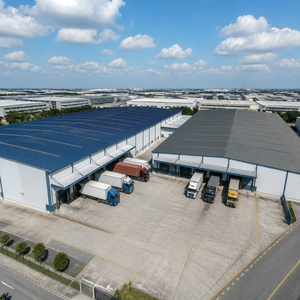
Engineered Product Portfolio
Featured Industrial Pallet Racking & Heavy-Duty Storage Systems
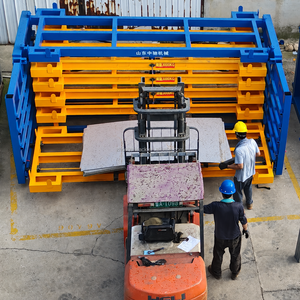
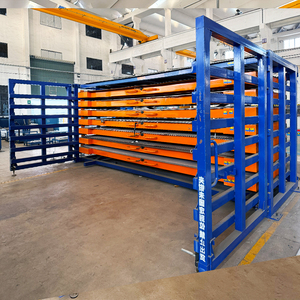
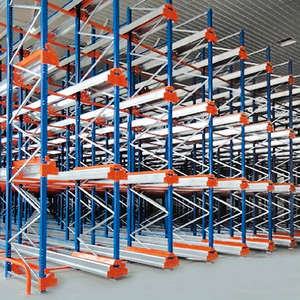
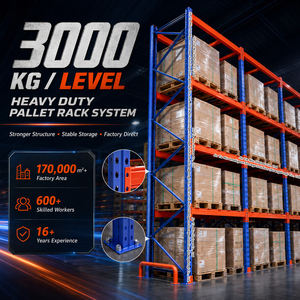
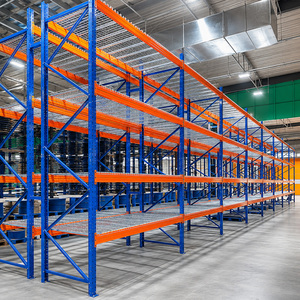
Explore our factory-tested dynamic push-back carts, automated shuttle channels, precision sheet drawers, and structural high-bay framing engineered for maximum volumetric throughput.
2001
Established Year
30,000 m²
Factory Footprint
30,000 t
Monthly Steel Output
10,000+
Global Projects Built
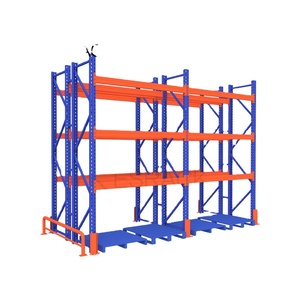
Engineering Principles of Push Back Racking Systems: Mechanics, Clearance & Load Vectors
Push back pallet racking represents a quintessential mechanical compromise between the extreme volume density of drive-in systems and the individual selectivity of standard adjustable pallet racking (APR). By utilizing an inclined rail system combined with a cascading series of nested rolling carts (typically 2 to 6 deep), push back racking operates strictly on a Last-In, First-Out (LIFO) inventory discipline while preserving dedicated single-lane SKU selectivity.
From an applied structural physics perspective, our factory fabricates push back assemblies using certified high-tensile hot-rolled or cold-formed structural steel (Q235B and Q355B grades). The nested cart system rests on structural inclined channel rails sloped precisely at an engineered angle of 1.5% to 3.0% (approximately 1.7° to 2.2°) depending on the anticipated unit load weights (500 kg up to 1,500 kg per pallet) and operational ambient temperature parameters.
| System Attribute | Push Back Racking (2-6 Deep) | Drive-In Pallet Racking | Radio Shuttle Racking | Selective Pallet Racking |
|---|---|---|---|---|
| Aisle Surface Efficiency | High (Up to 75% Floor Utilization) | Maximum (Up to 80% Floor Utilization) | Maximum (80% - 85% Utilization) | Moderate (35% - 40% Floor Utilization) |
| Inventory Rotation | LIFO (Per Dedicated Lane) | LIFO / Strict Batch FIFO | Flexible FIFO & LIFO Automated | Pure 100% Direct Access FIFO |
| Forklift Mast Infiltration | Zero (Loads Handled from Face Aisle) | High (Forklifts Enter Rack Bay) | Zero (Shuttle Traverses Rails) | Zero (Immediate Pick from Aisle) |
| Impact Damage Vulnerability | Extremely Low (Protected Frames) | High (Upright Collision Exposure) | Low (Minimal Structural Contact) | Medium (Corner Post Strikes) |
| Cycle Throughput Velocity | Fast (Push/Gravity Return Mechanism) | Slow (Cautious Maneuvering Inside Lanes) | Ultra-Fast (Automated Carriage) | Rapid (Standard Immediate Hooking) |
Structural Safety Margins and Seismic Resilience
As an OEM/ODM primary manufacturing facility in China, our engineering layouts comply explicitly with international static and dynamic load standards, including AS 4084 (Steel Storage Racking), RMI (MH16.1), and European EN 15512:2020. In regions susceptible to significant seismic acceleration—such as New Zealand (NZS 1170.5) or coastal Pacific active zones—push back racks require distinct kinematic safeguards:
- Positive Mechanical End Stops: Welded, heavy-gauge structural safety catches positioned at the picking face to prevent pallet overrun under rapid rebound or deceleration vectors.
- Low-Profile Linked Carts: Heavy-gauge welded steel frames with linked safety interlocks preventing cart jump or derailing caused by unbalanced pallet drops or dynamic fork strikes.
- Seismic Baseplates & Heavy-Duty Uprights: Widened floor plates equipped with M16 to M20 mechanical or chemical anchoring bolts designed to absorb maximum moments of overturning inertia.
Market Forecasting & Technology Shifts
Future Procurement & Development Trends in Push Back Racking (2026–2030)
Strategic analysis for procurement directors, cold-chain operators, and third-party logistics (3PL) infrastructure developers navigating structural material efficiency, automated interfaces, and green warehousing.
Hybrid Push-Back & Autonomous AMR Fleets
Modern distribution facilities are integrating Autonomous Mobile Robots (AMRs) and automated counterbalance forklifts with low-profile push back lanes. Future-ready push-back carts feature precision optical sensors and laser targets that communicate real-time bay fullness to WMS systems, bypassing the capital overhead of fully automated AS/RS cranes.
Ultra-Low Friction Cryogenic Cart Assemblies
With global cold chain and blast freezer real estate operating at historically high per-square-meter refrigeration costs, push back procurement is heavily shifting into -30°C low-temperature environments. Sealed, maintenance-free stainless-steel bearings and cold-resistant synthetic rolling wheels eliminate lubrication freezing and mechanical seizing.
High-Tensile Thin-Walled Section Profiles
Driven by carbon accounting and raw material cost optimization, metallurgical advances allow our factory to utilize high-yield micro-alloyed steel. Structural roll-formed uprights and cart channels yield 25% higher torsional rigidity with reduced gross deadweight, decreasing oceanic freight costs and installation labor overhead.
Guangzhou HEDA Shelves: Factory Direct Engineering Excellence Since 2001
Operating a modernized 30,000 square meter fabrication headquarters with over 300 experienced engineers, CNC tooling specialists, and structural project managers, Guangzhou HEDA Shelves Co., Ltd. stands as an authoritative force among tier-one Chinese racking exporters. We supply bespoke, turn-key storage infrastructure to warehouse developers, distributors, and logistics integrators across Australia, New Zealand, Europe, North America, and the Pacific Islands.
Full In-House Metalworking
From raw coil slitting and automated CNC column punching to cold profile roll-forming, robotic welding, and non-destructive weld-seam inspections, 100% of operations occur on our factory floor.
Surface Treatment Durability
Our automated 10-stage pre-treatment line includes environmental acid pickling, zinc phosphating, and electrostatic epoxy-polyester powder baking (80–120 µm thickness) with verified salt-spray resistance.
Compliance & Export Packaging
Independently audited under ISO 9001:2015 (No. 18624Q00169R0M) and CE (No. 2435-CPR-8605159). Shipments arrive pre-sorted on ISPM-15 compliant treated timber or custom steel stillages for rapid DAFF/MPI biosecurity clearance.
Direct Engineering Answers
Push Back Racking Procurement FAQ: Technical & Operational Inquiries
Key considerations addressed by our Senior Structural Applications Engineers to assist your layout planning, load calculations, and tender evaluation.
What is the practical maximum depth for a push back racking lane?
Push back racking systems are typically engineered between 2 to 6 pallets deep per bay level. While 2, 3, and 4-deep configurations represent the standard commercial sweet spot, 5 and 6-deep setups require higher-capacity forklifts with sufficient pushing breakout force to smoothly displace up to five nested pallet carts uphill. Beyond 6-deep, dynamic radio shuttle cart systems generally offer superior operational cycle speeds and lower mast friction.
How does push back racking compare to drive-in racking regarding maintenance and cycle time?
Push back racking delivers up to 30% to 50% faster cycle speeds compared to traditional drive-in racking. Because forklift drivers never enter the internal rack rack structure, cycle times are not bottlenecked by cautious slow-speed travel down narrow interior channels. More importantly, structural frame damage from mast strikes—a notorious, persistent hidden maintenance cost in drive-in racking—is almost completely eliminated.
Can varying pallet dimensions and bottom runner types be accommodated on the same carts?
Yes. One of the core engineering advantages of our nested push-back cart design is its adaptability to irregular or damaged pallets. Because the pallet rests completely upon a flat welded structural cart rather than two isolated bottom skid rails, standard Australian pallets (1165 × 1165 mm), Euro pallets (1200 × 800 mm), and GMA pallets (48 × 40 in) can safely reside within the same system without dangerous sagging or bottom board separation.
What vertical clearance and incline dimensions are required per level?
Due to the mechanical slope of the nested structural rails, push back systems consume slightly more vertical height profile than selective beam racking. Each nested cart adds approximately 40 mm to 65 mm of height stack-up at the front picking face. Our design engineers calculate beam level pitches factoring in the total run depth, rail angle, cart step heights, and mandatory 100 mm to 150 mm overhead lift-off clearances required by AS 4084 and EN 15512 safety codes.
What engineering documentation does HEDA Shelves provide for local council and certifier sign-off?
Every export project includes a comprehensive engineering dossier: 3D CAD general arrangement drawings, detailed structural calculations including section properties (yield strength, section modulus, buckling resistance), and beam/upright load limit capacity plaques. These technical calculation sheets allow your local registered chartered professional engineer to verify and sign off the site installation rapidly.
Ready to Maximize Your Cubic Warehouse Capacity?
Send our senior engineering group your warehouse floor drawings, building clear heights, and pallet specifications. We deliver verified 3D layouts, structural simulation data, and transparent factory-direct pricing within 24 hours.