High-Performance Warehouse Stacking Racks & Systems
Browse our precision-manufactured heavy-duty stacking racks, modular steel frames, and intelligent storage configurations built with Q235B high-tensile steel.
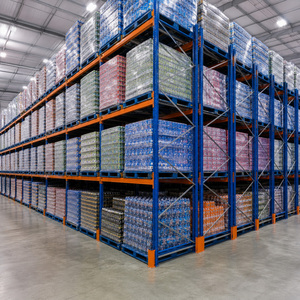
Heavy Duty Warehouse Rack Warehouse Storage Rack Q235B Steel
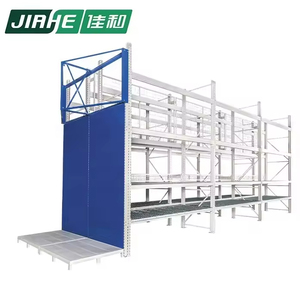
Industrial Shelving Warehouse Heavy Duty Iron Storage Display Stacking Racks
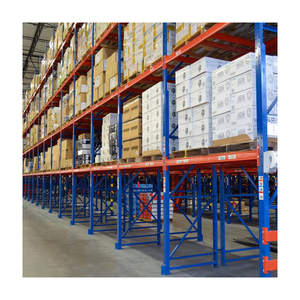
Wholesale Heavy Duty Storage Racks Stacking Selective Steel Pallet Rack
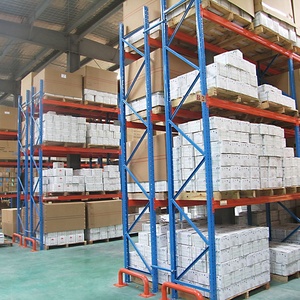
Customizable Boltless Steel Storage Stacking Racks Double Deep Racking
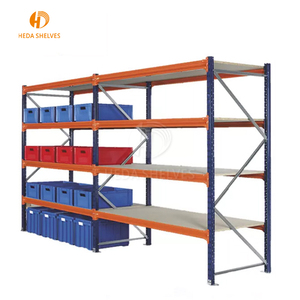
Adjustable Pallet Rack Heavy Duty Shelving Warehouse Storage Racking
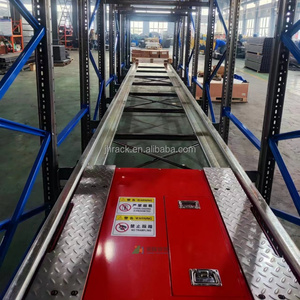
Automated Stackable Metal Shelves Racks Pallet Shuttle Racking System
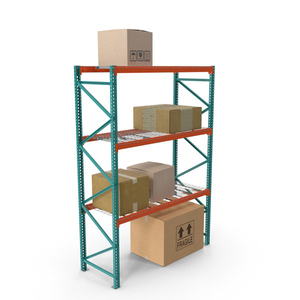
Heavy Duty Steel Beam Pallet Racking Industrial Warehouse Storage Rack 3000kg
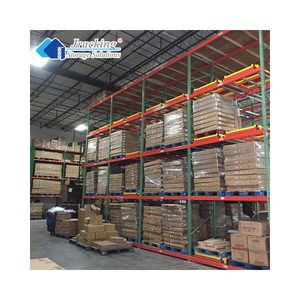
Jracking Warehouse Storage Heavy Duty Pallet Rack System Push Back Steel Rack
Structural Engineering & Metallurgical Integrity in Warehouse Stacking Racks
A rigorous examination of load paths, cold-formed profile geometries, finite element modeling, and anti-buckling safety coefficients.
In modern supply chain architecture, warehouse space optimization is no longer simply about erecting vertical steel; it is a calculated discipline of dynamic load balancing, volumetric density enhancement, and operational kinetic safety. Stacking racks (also engineered as portable nestable frames, modular post pallets, or customizable intubated stack racks) offer an unmatched balance between rigid pallet racking and flexible block stacking. When global logistics directors source stacking rack frameworks from tier-one Chinese manufacturing plants, the evaluation begins at the atomic and structural levels: steel grade integrity, sectional modulus tolerances, and dynamic deflection coefficients under sustained cyclic loads.
Unlike static selective pallet racks that remain permanently anchored into concrete slabs, stacking racks must withstand repeated multi-tier vertical alignment, variable lateral impact from counterbalanced and reach forklifts, and severe torsional stresses induced during high-reach stacking operations. Our engineering methodology integrates prime certified Q235B and Q355B low-alloy carbon structural steel, verified through spectrographic chemical analysis and rigorous tensile testing in accordance with GB/T 700-2006 and international equivalent structural standards (ASTM A36 and AS/NZS 3678). By strictly maintaining yield strengths exceeding 235 to 355 MPa and controlled elongation parameters over 26%, our upright tubular columns and fabricated base corners prevent catastrophic cold-temperature embrittlement and catastrophic stress-strain fracture in intensive operations.
Intubated Post & Cup Locators
Fabricated with precision deep-drawn conical locators or heavy-duty intubated male-female sockets. This geometric alignment design ensures that when stacking 3, 4, or 5 tiers high under maximum design payload, self-centering gravity interlocks eliminate slippage and safely distribute torsional moments down the upright structure.
Finite Element (FEA) Stress Mapping
Every customized base chassis, side brace, and detachable upright tube undergoes rigorous computerized ANSYS FEA simulation. We analyze buckling modes, second-order P-Delta structural effects, and maximum yield stress points under eccentric loading conditions, guaranteeing minimum safety factors of 1.5 to 2.0.
Robotic Continuous Seam Welding
High-precision multi-axis robotic welding cells execute continuous fillet welds between heavy bottom base tubes and socket assemblies. Controlled gas-shielded (Ar/CO₂ mix) welding processes prevent cold-lap flaws, micro-porosity, and thermal distortion, delivering pristine shear resistance under 3000kg individual pallet ratings.
Future Procurement Trends in Warehouse Stacking Racks (2025–2030)
How global procurement directors are re-engineering supply networks, optimizing total cost of ownership (TCO), and adapting to automation.
Procurement leaders across North America, Europe, Australia, and Southeast Asia are shifting from transactional spot purchasing to long-term collaborative engineering agreements. As commercial warehouse real estate lease rates remain historically elevated across primary metropolitan logistics corridors, the total cost of ownership (TCO) equation has superseded basic ex-works product price tags. Forward-thinking enterprises evaluate nesting ratios during empty return transport, corrosion life expectancy in multi-climate cold storage hubs, and modular compatibility with automated guided vehicles (AGVs) and autonomous mobile robots (AMRs).
1. High Nestability Ratios
Modern procurement prioritizes collapsible, detachable, or inverted nesting footprints. By achieving an 80% volume reduction when empty, buyers drastically reduce empty return shipping freights and unlock critical floor space during seasonal lull periods.
2. AMR/AGV Fork Pocket Tolerances
With automated visual and laser-guided forklifts proliferating in mega distribution centers, stacking rack tolerances have tightened from traditional ±5.0mm structural variances to ultra-tight CNC tolerances below ±1.5mm, ensuring frictionless automated insertion.
3. Eco-Powder & Galvanic Finishes
Environmental ESG compliance drives global buyers toward non-toxic, TGIC-free thermosetting electrostatic powders and closed-loop hot-dip galvanizing protocols that resist over 1,000 hours of continuous salt-spray testing without trace environmental contamination.
4. Transparent Mill Certification
Global regulatory scrutiny requires comprehensive raw material traceability. Leading international enterprises demand mill test certificates (EN 10204 Type 3.1) linked directly to heat-stamped coil lot numbers before containers leave the factory dispatch dock.
Technological Innovations Shaping Stacking Rack Manufacturing
From automated high-speed roll-forming lines to AI-driven robotic surface treatment systems, explore China’s next-generation manufacturing technology.
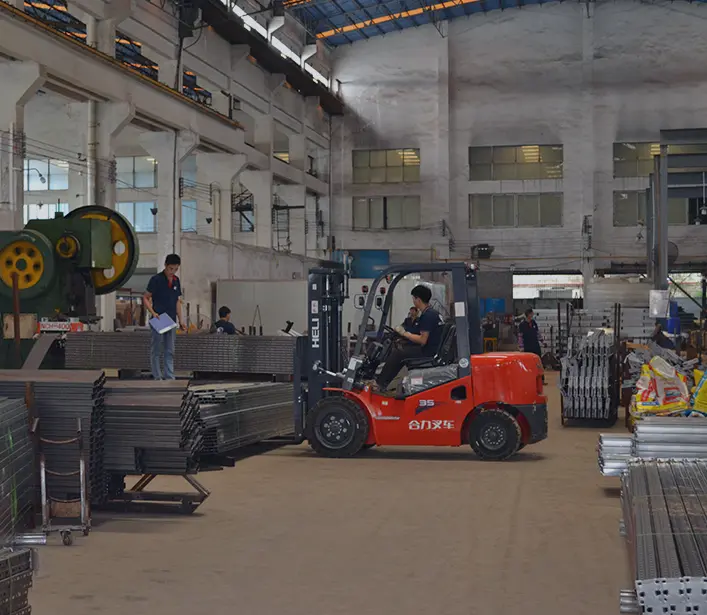
The production of industrial stacking racks in China has evolved beyond simple manual cutting and hand-welding workshops into highly automated, data-driven smart manufacturing facilities. At Guangzhou Heda Shelves Co., Ltd., investments in cyber-physical production infrastructure have eliminated human error, maximized production yields, and made it possible to fabricate heavy structural components with aerospace precision.
One notable breakthrough is the deployment of fully automated laser tube processing centers. Traditional shearing and mechanical punching create micro-cracks, burrs, and dimensional drift along structural upright tubes. Our multi-axis fiber lasers cut circular post apertures, rectangular interlocking tabs, and locating slots with micron accuracy, preventing microscopic stress concentrations and drastically improving fatigue resistance during heavy-duty cyclic loading.
| Storage System Type | Volumetric Density | Selectivity | Structural Modularity | Cold Store Suitability | Floor Slab Civil Requirements |
|---|---|---|---|---|---|
| Portable Stacking Racks | Very High (85%+) | Moderate (Batch LIFO) | Maximum (100% Mobile & Nestable) | Exceptional (No Anchor Heave) | Standard Floor Slab (No Anchors) |
| Selective Pallet Racking | Moderate (40–50%) | 100% Direct Access | Fixed Bolted Structure | Standard | Reinforced Anchored Concrete |
| Drive-In Racking | High (75–85%) | Low (Strict LIFO) | Fixed Semi-Permanent | High (Dense footprint) | High Engineering Slab Verification |
| Radio Pallet Shuttle | Maximum (88–92%) | High (Automated LIFO/FIFO) | Engineered Sub-Structure | Ideal (Reduced thermal volume) | Laser-Leveled High-Spec Concrete |
| Structural Steel Mezzanine | Doubled Usable Area | Custom Area Dependent | Semi-Permanent Free-Standing | Requires Insulation Balancing | Point Load Foundation Pads |
Another transformative technological development is the advanced 10-Stage Surface Treatment Process. Traditional painted racks are susceptible to peeling, subsurface rust creep, and blistering when exposed to fluctuating warehouse temperatures and condensation cycles. By implementing comprehensive chemical immersion pickling, surface phosphating, double ultrasonic de-greasing, deionized water rinsing, and high-voltage electrostatic polyester powder curing at 200°C, the finished coating forms an impenetrable mechanical bond. This guarantees superior abrasion resistance when metal forklift tines brush against beam corners, ensuring pristine structural protection across 15+ years of grueling service.
Why International Enterprise Buyers Partner With Guangzhou Heda Shelves
Over two decades of precision manufacturing, engineering excellence, and reliable supply chain execution across Australia, New Zealand, Europe, and the Americas.
Founded in 2001, Guangzhou Heda Shelves Co., Ltd. has grown into an internationally acclaimed industrial storage manufacturer and global exporter. Spanning a sprawling 30,000 square meter modernized manufacturing base staffed by more than 300 seasoned engineers, metallurgists, and technical production specialists, Heda Shelves delivers a monthly capacity exceeding 30,000 metric tons of structural warehouse storage systems.
Whether engineering dynamic intubated stacking racks, drive-in systems, or multi-tier rack-supported mezzanine platforms, we function not just as an overseas fabricator, but as a dedicated engineering partner. We take comprehensive responsibility: from analyzing warehouse CAD floor plans to conducting seismic calculations, managing export biosecurity compliance, and delivering customized storage equipment that passes stringent third-party safety audits worldwide.
-
Certified Quality Systems (CE & ISO 9001:2015) Fully certified production under CE Certificate No. 2435-CPR-8605159 and ISO 9001:2015 Registration No. 18624Q00169R0M, with strict RoHS material controls.
-
AS 4084, FEM & RMI Seismic-Referenced Engineering Our structural engineers formulate calculations, section modulus parameters, and permissible load tables matching Australian AS 4084, NZS 1170.5 seismic factors, and European FEM 10.2.02 codes.
-
Free 3D Conceptual & 2D CAD Layout Modeling Within 24 to 48 hours of receiving warehouse blueprints, our layout architects deliver fully optimized 3D color visual renders and precision CAD staging layouts free of charge.
-
Biosecurity-Compliant Export Packaging & Fast Freight All export goods are packed on engineered steel stillages or ISPM-15 certified heat-treated skids, ensuring seamless customs clearance through Australian DAFF, New Zealand MPI, and US CBP.


Frequently Asked Questions on Importing Stacking Racks from China
Essential technical, legal, compliance, and logistics clarifications to ensure seamless international procurement and rapid facility commissioning.
What steel grades and mill certifications are supplied with each export batch?
We strictly fabricate our heavy-duty stacking racks and structural columns utilizing certified prime structural steel Q235B (yield strength ≥ 235 MPa) or Q355B (yield strength ≥ 355 MPa). Every containerized consignment is backed by a comprehensive EN 10204 Type 3.1 Inspection Certificate covering chemical composition analysis (Carbon, Manganese, Silicon, Phosphorus, Sulfur) and mechanical tensile, yield, and elongation test data traceable to original mill coil lot numbers.
How do stacking racks comply with local structural standards like AS 4084, ANSI MH16.1, or EN 15512?
While stationary pallet racks fall under fixed anchor standards, portable stacking racks operate under industrial container and portable steel framework criteria. Our engineering department calculates sectional properties, weld shear strengths, and overturning stability factors referencing AS 4084 principles and ANSI MH16.1 load-bearing philosophies, supplying your resident structural engineering consultant with the comprehensive math models required for site sign-off.
What is the typical nesting ratio and how does it reduce ocean freight expenditures?
Our intubated and detachable stack racks achieve a nesting efficiency ratio between 4:1 and 6:1. By detaching post uprights and cradling them inside the formed perimeter base channels, a standard 40ft High Cube (40HQ) maritime shipping container can accommodate up to 250 to 320 fully collapsed modular stacking units. This high packing density drastically lowers per-unit ocean freight rates, mitigating overall landed logistics expenditures.
Can stacking racks be deployed in deep-freeze cold storage (-25°C to -30°C)?
Yes. Stacking racks are particularly advantageous in commercial blast freezers and cold storage facilities because they eliminate structural anchor drilling that can damage vapor barriers and trigger sub-floor frost heave. For sub-zero installations, we utilize impact-tested fine-grain steel grades to prevent low-temperature ductile-to-brittle transition, combined with heavy-build thermoset polyester powder coating or hot-dip galvanization that remains completely unaffected by thermal cycling.
What are the maximum vertical stacking limits under full payload capacity?
Standard production units are rigorously engineered for 3+1 or 4+1 configurations (meaning 3 to 4 loaded racks stacked safely atop a ground base unit, achieving 4 to 5 total storage tiers). With nominal payload capacities ranging from 1,000kg to 2,500kg per individual rack, the bottom unit is structural-certified to support cumulative static loads up to 10,000kg (10 metric tons) with a built-in safety factor exceeding 2.0 under true vertical alignment.
How does Guangzhou Heda Shelves manage strict biosecurity and timber packaging regulations?
To avoid costly quarantine fumigation holds or re-export orders issued by strict biosecurity authorities such as Australian DAFF or New Zealand MPI, we preferentially package all structural rack components onto custom-fabricated, reusable steel stillages. If timber dunage or pallets are requested, we strictly supply ISPM-15 compliant heat-treated wood marked with verified IPPC certification stamps, supported by official phytosanitary documentation.
What is the standard production lead time and maritime transit duration from South China?
Standard production for full container load (FCL) consignments of 1 to 5 containers is completed within 15 to 22 working days. Direct maritime shipping routes from our local port hubs (Guangzhou / Shenzhen) provide rapid transit schedules: 12 to 18 days to major Australian & New Zealand ports (Sydney, Melbourne, Brisbane, Auckland), 14 to 20 days to West Coast North America (Los Angeles, Long Beach, Vancouver), and 25 to 30 days to Western European ports (Rotterdam, Hamburg).
Can we obtain customized base dimensions and fork guide configurations for specialized cargo?
Approximately 65% of our manufacturing volume consists of custom OEM/ODM configurations. Our engineering team customizes internal and external base dimensions (matching Australian 1165×1165mm pallets, European 1200×800mm pallets, or American 48×40in GMA pallets), wire mesh bottom decking, steel side retaining panels, four-way forklift entry guides, and heavy-duty crane lifting lugs engineered to your exact operational parameters.
Accelerate Your Warehouse Capacity With Direct Manufacturer Pricing
Submit your facility dimensions, intended pallet payloads, and racking configuration requirements. Our senior logistics engineers will return a complete 3D layout, static load calculations, and a comprehensive factory quotation within 24 hours.