Featured Industrial Warehouse Storage Systems
From standard Euro/Australian selective pallet frames to high-capacity drive-in racking and drop-prevention netting, explore our precision-manufactured storage equipment direct from our 30,000 m² factory.
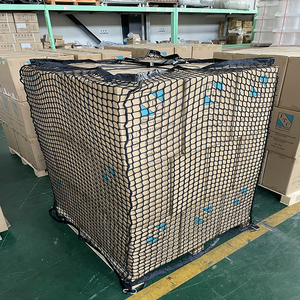
Pallet Rack Safety Climbing Nets Customizable Color Cutting Service ISO/GB Certified Made Nylon/Polyester/Polypropylene
- High-Tenacity Nylon
- Fall Arrest Rated
- ISO/GB Certified
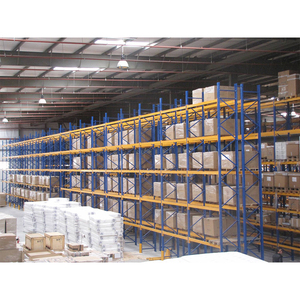
Europe Standard Industrial Steel Storage Pallet Rack
- Q235B / Q355B Steel
- 75mm Pitch Adjustable
- CE EN 15512
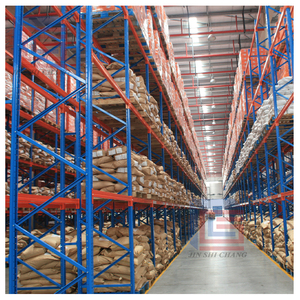
Manufacturer Steel Selective Pallet Rack For Warehouse Storage
- 100% SKU Access
- 1000-4500kg / Level
- Box Beam Profile
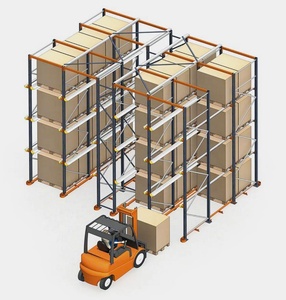
Good Price Q235 Drive in Racking From URGO Storage Rack
- High-Density FILO
- Cold Store Ready
- Top-Tie Bracing
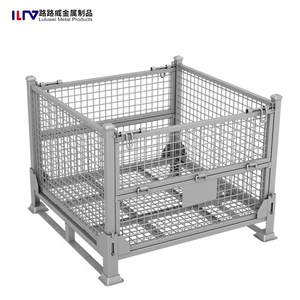
Powder Coating Galvanized Steel Pallet Box Cage Storage Welded Wire Mesh Cage
- Collapsible & Stackable
- Drop-Gate Access
- Zinc Electroplate
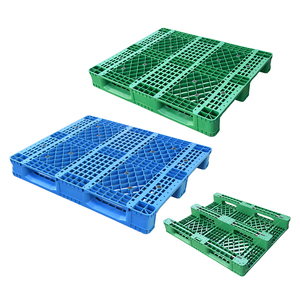
Multilevel Racking Heavy Duty Warehouse Storage Shelf System Euro Pallet Single Faced 4-Way Entry
- Vertical Space X2/X3
- Steel Deck / Grating
- Staircase & Gate Included
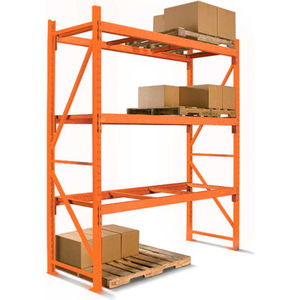
Heavy Duty Selective Pallet Rack Steel Beam Shelving Adjustable Stackable Storage System Galvanized Powder Coated
- Powder Coated / Galv
- Australian 1165mm Fit
- Interlocking Pins
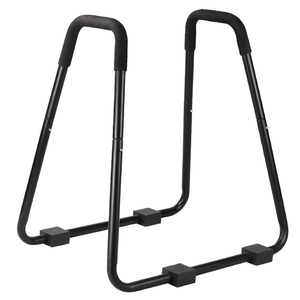
Portable Multi-Function Rack Home Gym Equipment Freestanding Parallel Bar Workout Push Ups Pressing Chest Back
- Modular Cold-Drawn Steel
- High-Adhesion Powder Coat
- OEM Production Available
Structural Typology Matrix: Engineering Modern Warehouse Systems
Selecting industrial storage infrastructure requires balancing structural integrity, spatial footprint, SKU velocity, and material handling equipment (MHE) kinematics. Below is our engineering appraisal of principal pallet shelving architectures.
Selective Pallet Racking
The benchmark standard for high-SKU distribution centers. Offers 100% immediate selectivity with standard counterbalance or reach trucks. Engineered with continuous cold-formed tear-drop or diamond upright profiles and interlocking safety lock pins to resist beam dislocation under heavy fork-truck maneuvering.
Drive-In & Drive-Through
Engineered for homogenous bulk goods and cold-chain consolidation facilities. Eliminates conventional travel aisles to boost floor space utilization up to 80%. Supported by heavy-duty cantilevers and continuous side rails, reducing structural volume while enforcing strict First-In, Last-Out (FILO) or FIFO loading batches.
Gravity Flow & Push-Back
Dynamic accumulator systems utilizing inclined roller beds or nested wheeled carts. Gravity flow drives effortless First-In First-Out (FIFO) replenishment for perishable grocery and pharmaceutical lines, while push-back configurations allow 2-to-6 pallet depths accessible from a single operator aisle.
Radio Shuttle Systems
Semi-automated deep lane handling where autonomous low-profile shuttles transport pallets within internal rack channels. Operators never enter the rack, reducing forklift impact damage to zero and dramatically elevating cycle speeds in deep-freeze environments down to -28°C.
Rack-Supported Mezzanines
Converts cubic dead space into high-value pick floors or administrative zones. Utilizing vertical uprights as structural load columns, our multi-tier mezzanine floors support uniform distributed loads from 300 kg/m² to over 1,200 kg/m², fully integrated with fire suppression flues and perimeter kickboards.
Heavy-Duty Cantilever Racks
Free-standing structural columns engineered for untethered lateral storage of timber packs, structural steel tubing, PVC conduits, and sheet panels. Arms adjust on 100mm pin connections with optional retaining stops and hot-dip galvanized weather protection for external staging yards.
| Racking Topology | Floor Space Utilization | SKU Selectivity | Stock Rotation Logic | MHE Compatibility | Relative Capital Cost |
|---|---|---|---|---|---|
| Selective Pallet Racking | 40% - 50% | 100% Direct | FIFO / LIFO Flexible | Standard Counterbalance / Reach | Low Benchmark |
| Double-Deep Racking | 60% - 65% | 50% Semi-Direct | LIFO | Pantograph / Telescopic Fork Reach | Low - Moderate |
| Drive-In Storage System | 75% - 85% | 15% - 25% Batch | Strict FILO | Narrow Counterbalance / Proportional Lift | Moderate |
| Gravity Pallet Flow | 80% - 90% | Lane Dedicated | Pure Automatic FIFO | Standard Counterbalance at Pick Face | High (Dynamic Rollers) |
| Radio Shuttle Automation | 85% - 92% | Lane Dedicated | Configurable FIFO / LIFO | Standard Forklift (Rack Exterior Only) | Capital / High ROI |
| Multi-Tier Mezzanine | Up to 200% Gain | 100% Manual Pick | Batch / E-Commerce Sortation | Pallet Jacks, Vertical Cargo Lifts, AGVs | Moderate per m² |
Global Procurement Trends: What Enterprise Buyers Must Anticipate (2025–2035)
The industrial logistics footprint is undergoing rapid structural realignments. As land values escalate in key hub cities from Sydney and Auckland to Rotterdam and Long Beach, procurement strategists must align their equipment specifications with the following macroeconomic transitions.
1. Hybrid Automation & AMR / AGV Synergy
Static racks are increasingly required to accommodate autonomous mobile robots (AMRs) and automatic guided vehicles (AGVs). Modern procurement tenders now stipulate precise bottom beam elevations, tighter floor deflection tolerances (under 1/500), and floor-level guidance rails to support hybrid human-machine operations without structural collisions.
2. Performance-Based Seismic Design Mandates
Recent revisions in seismic engineering protocols (including New Zealand's NZS 1170.5 and the United States' IBC/RMI MH16.1) necessitate dynamic modal analysis for racked installations. Procurement engineers now require verified base-plate yield strengths, heavy-duty wedge anchor arrays, and enhanced horizontal bracing to withstand cyclic seismic drift.
3. Low-Carbon Steel & Eco-Coating Verification
Supply chain decarbonization has reached the warehousing sector. European and Australasian corporate ESG mandates now request Environmental Product Declarations (EPDs) for structural steel. Our factory utilizes raw material coils with certified recyclability, zero-VOC electrostatic polyester powder coatings, and heavy metal-free pre-treatment washes.
4. Nearshoring vs. Direct China Sourcing Dynamics
While local assembly branches offer quick delivery for minor patch jobs, direct ex-factory procurement from premier Chinese manufacturers delivers a 35% to 55% capital cost advantage on full-facility fit-outs. By leveraging Free Trade Agreements (such as ChAFTA), buyers eliminate unnecessary intermediary markups without sacrificing engineering compliance.
Guangzhou Heda Shelves Co., Ltd.: 25 Years of Precision Manufacturing
Established in 2001, Guangzhou Heda Shelves Co., Ltd. operates an advanced 30,000 m² heavy-duty steel fabrication plant staffed by 300+ structural engineers, automated roll-forming technicians, and international project managers. With an active production run rate exceeding 30,000 tons monthly, we power warehouse logistics across Australia, New Zealand, Oceania, Europe, and the Americas.
Internationally Audited Certifications
Full compliance with CE Certification (No. 2435-CPR-8605159), ISO 9001:2015 Quality Management System (No. 18624Q00169R0M), and independent SGS/RoHS material test reporting.
Complimentary 3D CAD & Load Verification
Our design desk generates 3D spatial simulations, finite element structural deflection plots, and engineering load notices compliant with regional building codes before coil steel is stamped.
Biosecurity & Heavy Export Packaging
Shipments are banded in heavy-gauge steel stillages or ISPM-15 heat-treated certified timber. 100% compliant with Australian DAFF and New Zealand MPI bio-quarantine entry mandates.
FTA Origin Documentation & Tariff Relief
We supply verified Certificates of Origin (Form COO) under ChAFTA and RCEP frameworks, ensuring zero-duty preferential tariff classifications at your port of destination.
Frequently Asked Questions: Technical Engineering & Global Shipping
Critical engineering criteria, material benchmarks, and compliance protocols addressed by our chief structural engineers for international procurement teams.
1. How does your pallet racking comply with Australian Standard AS 4084 and New Zealand NZS 1170.5?
Our engineering division designs all upright cross-sections, beam connectors, and frame bracing according to limit state design principles set out in AS 4084 (Steel storage racking) and European standard EN 15512. For projects located in active seismic zones (such as Wellington or Christchurch, NZ), we perform second-order structural analysis with reference to NZS 1170.5.
We provide full structural data packages—including section modulus, moment of inertia, ultimate tensile test curves, and anchor pull-out load calculations—allowing your certified local structural engineer to review and sign off on site building permits with complete confidence.
2. What structural steel grades are utilized, and what are your deflection limits?
We source prime hot-rolled and cold-rolled structural steel coils exclusively from premier Tier-1 state mills (such as Baosteel and Ansteel). Primary uprights and load-bearing beams are manufactured from certified Q235B (yield strength ≥ 235 MPa) and high-strength Q355B (yield strength ≥ 355 MPa, equivalent to ASTM A572 Grade 50 or European S355JR).
Our beam deflection safety limits are calculated strictly within L/200 under nominal safe working load (SWL), guaranteeing zero structural buckling or plastic deformation under full rated capacity.
3. What is the surface finish specification for cold-chain freezers versus humid coastal environments?
We apply a multi-stage pre-treatment process: alkaline degreasing, ultrasonic rust removal, pickling, and zirconium-based nanotech phosphating. For indoor ambient and cold-store facilities operating down to -30°C, components are finished with heavy-duty thermosetting polyester powder coating (60–90 microns dry film thickness), preventing embrittlement or micro-flaking.
For open-sided sheds, chemical plants, or humid coastal Pacific Island regions, we provide complete Hot-Dip Galvanizing (HDG) to ISO 1461 / ASTM A123 standards with a minimum zinc coating thickness of 70–85 microns, delivering exceptional C4/C5 marine-grade corrosion immunity.
4. How does your factory handle Australian DAFF and New Zealand MPI biosecurity clearance?
Non-compliance with biosecurity entry rules risks devastating fumigation delays or container re-export. Guangzhou Heda Shelves packs all heavy components using custom-welded steel stillages, reusable steel skids, or ISPM-15 certified heat-treated timber bearing the official IPPC wheat-stamp logo.
Every sea container is cleaned, inspected, and documented with container cleanliness declarations, bill of lading pack descriptions, and commercial packing manifests prior to sealing at our Guangzhou docks.
5. What initial data is required from our engineering team to generate a free 3D CAD proposal?
To produce an optimized CAD floor layout and 3D rendering within 24 hours, our engineering desk requires:
- Warehouse Architectural DWG or PDF: Column grid, clear height to underside of trusses, sprinkler heads, dock doors, and building egress routes.
- Pallet Profile: Dimensions (Length × Width × Height inclusive of overhang) and maximum gross pallet weight.
- Forklift Specifications: Minimum aisle transfer radius, maximum fork reach height, and mast closed height.
- Inventory Dynamic: Estimated SKU count, target pallet capacity, and preference for FIFO or FILO rotation.
6. What are the lead times for custom-manufactured racking orders and container shipping?
Standard fabrication cycle for 2 to 10 High-Cube 40ft (40HQ) containers is typically 15 to 22 business days from technical drawing freeze. Direct vessel sailing times from South China (Nansha / Shenzhen ports) to main international hubs are approximately:
• Sydney, Melbourne, Brisbane: 12–16 days | • Auckland, Tauranga: 16–20 days | • Los Angeles / Long Beach: 14–18 days | • Rotterdam / Hamburg: 28–34 days.
7. Can your company manufacture compatible parts for existing racking systems (e.g., Dexion, Colby, Stow)?
Yes. As an original equipment manufacturer (OEM) with CNC cold-roll tool-die manufacturing capabilities, we can match historical upright punch pitches (such as 76.2mm / 3-inch pitches, 50mm metric European slots, or teardrop configurations). If you supply a profile sample or engineering cross-section drawing, we can produce drop-in replacement beams, uprights, frame spacers, or column protectors that integrate with your installed base.
8. What load capacity safety factors are built into your pallet beams and upright frames?
In adherence to FEM 10.2.02 and AS 4084 standards, our structural calculations apply a minimum material safety factor of 1.5 to 1.65 against structural yield, and a safety margin greater than 2.0 against catastrophic buckling failure. Upright frames feature pre-punched diagonal and horizontal hollow-section bracing joined by high-tensile Grade 8.8 bolts.
9. How do you support the on-site installation process in overseas territories?
Every shipment is packed with bilingual exploded assembly blueprints, component numbering tags, and installation sequencing manuals. We supply load notice warning plaques stamped with safe operating thresholds. For turnkey distribution centers, we can dispatch seasoned installation supervisors to direct your local rigging crew or introduce certified regional installation partners.
10. What warranty and post-installation support do you provide on structural components?
Guangzhou Heda Shelves provides a comprehensive 10-year structural warranty covering manufacturing defects, weld seam separation, and premature paint delamination on all steel pallet racking and mezzanine frameworks. We maintain ongoing digital project archives for rapid reordering of matching accessories, expansion bays, and crash-barrier components.
Accelerate Your Warehouse Capacity with Custom Engineering
Connect directly with our senior structural engineering team. Submit your warehouse floor plan, ceiling clear heights, and pallet specifications to receive a complimentary 3D layout simulation and detailed project quotation within 24 hours.