Featured Warehouse Racking & Heavy-Duty Storage Systems
Direct-manufactured steel racking architectures tested for seismic resilience, certified structural deflection under static and dynamic stress, and optimized for fast-velocity intralogistics distribution centers.
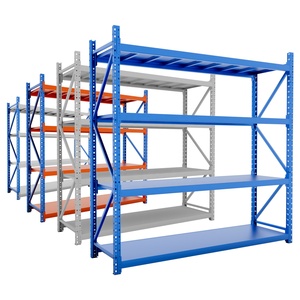
Adjustable Heavy Duty Warehouse Pallet Racking System Steel Longspan Racks
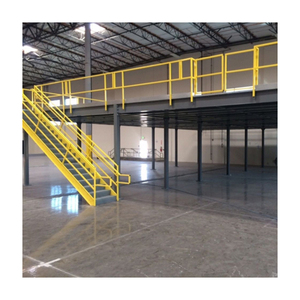
Industrial Storage Mezzanine Pallet Racking 2-Floor Attic Steel Platform System
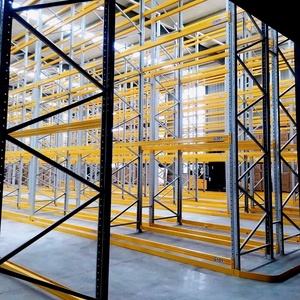
Narrow Aisle Selective Heavy Duty Industrial Pallet Racking System
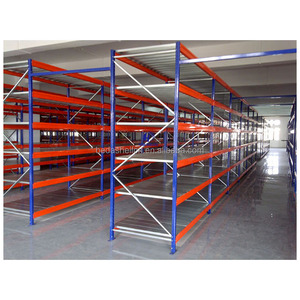
Medium Duty Boltless Warehouse Storage Shelves Metal Shelving System
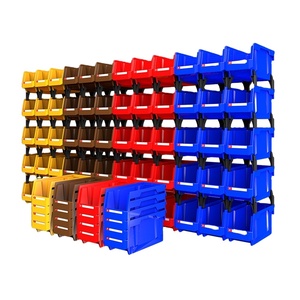
Wall Mounted Stackable Plastic Storage Bin Hardware Rack Shelf Organizer
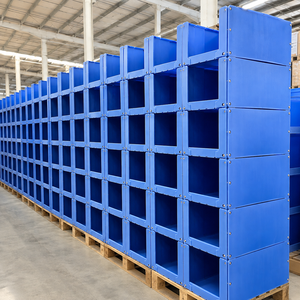
PP Corrugated Plastic Stackable Front-Opening Warehouse Picking Bins
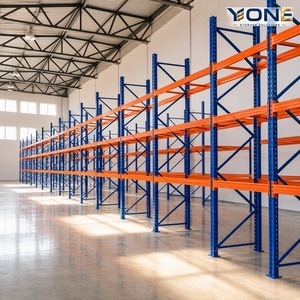
Structural Q235B Steel Heavy Duty Industrial Pallet Storage Racking
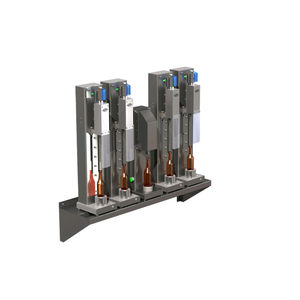
Commercial Wall-Mounted Stainless Steel Shelf with Built-in Drainage Groove
Strategic Product Recommendations & Structural Archetypes
Industrial racking selection dictates warehouse throughput velocity, usable cubic footprint, capital equipment investment (MHE), and operator lifecycle safety. Review our comparative engineering matrix before specifying your facility tender.
| Storage System Archetype | Space Utilization | SKU Selectivity | Handling Logic | Forklift Compatibility | Typical Applications |
|---|---|---|---|---|---|
| Selective Pallet Racking | 40% – 50% | 100% Direct | FIFO (First-In, First-Out) | Standard Counterbalance, Reach Truck | Fast-moving FMCG, 3PL Warehousing, Retail DC |
| Very Narrow Aisle (VNA) | 60% – 70% | 100% Direct | FIFO | Turret Truck, Articulated Forklift, Rail/Wire | High clear-height logistics, high-SKU inventory |
| Drive-In / Drive-Through | 70% – 80% | 20% – 30% Low | LIFO / FIFO Option | Standard Reach or Counterbalance | Cold storage, seasonal goods, homogeneous batches |
| Radio Shuttle Cart Racking | 80% – 90% Max | Medium (Batch) | FIFO or LIFO Automated | Standard Forklift (Loads lane mouth only) | Food & beverage, raw materials, deep freezer rooms |
| Heavy-Duty Cantilever | Custom Span | 100% Direct | Free-Access Lateral | Side Loader, Multi-directional Reach Truck | Structural timber, steel tubing, aluminum extrusions |
| Rack-Supported Mezzanine | 100% Footprint Mult | 100% Hand Pick | Continuous Replenishment | Conveyors, Vertical Goods Lifts, Manual Carts | Apparel e-commerce, auto spare parts, micro-fulfillment |
1. High-Density Radio Shuttle Systems
For cold stores and beverage warehouses where the cost of conditioned cubic space exceeds $1,200/m², radio shuttle semi-automation eliminates internal forklift driving paths. Shuttles transfer pallets across 40-meter-deep bays on precision rails via brushless servo drive motors.
- Reduces forklift upright collisions by up to 88%
- Operational in temperatures down to -28°C without battery drop
- Operates in both FIFO and LIFO dispatch sequences
2. Selective Racking with Seismic Anchoring
When 100% direct pallet selectivity is essential for multi-client 3PL hubs, selective beam racking configured to Australian AS 4084 and New Zealand NZS 1170.5 standards provides absolute agility. Incorporates structural baseplates and grade 8.8 expansion anchors.
- Accommodates variable beam heights at 50mm pitch increments
- Direct integration with wire decking and integrated sprinkler drops
- Certified load calculation plates customized to local certifier specifications
3. Multi-Tier Structural Mezzanines
For facilities with clear heights exceeding 7.5 meters, structural or rack-supported mezzanines eliminate the expense of civil building expansion. Uprights double as vertical load-bearing columns, yielding up to two additional mezzanine floors for manual pick-and-pack modules.
- Engineered for 300 kg/m² to 1,200 kg/m² uniformly distributed loads
- Self-closing swing safety gates and fire-resistant mesh flooring
- Integrated chute, goods hoist, and spiral conveyor mounting
Future Procurement Trends in Industrial Storage Infrastructure
Warehouse logistics is shifting from passive static steel shelving toward dynamic, automated, and digitally traceable racking ecosystems. Supply chain directors are restructuring procurement frameworks around four macro forces.
High-Yield Q355B Cold-Forming
Transitioning from standard Q235B to micro-alloyed Q355B hot-rolled strip steel allows thinner wall gauges with 24% higher structural yield strength. This decreases total steel mass, lowering sea freight charges per container while maintaining identical pallet safety factors.
AMR & AGV Floor Interface Alignment
Modern procurement requires racking baseplates to integrate with autonomous mobile robots (AMRs). Racking leg profiles now incorporate recess clearances for automated floor-level pallet jacks and induction loop charging paths beneath lowest beam tiers.
Low-VOC Hybrid Electrostatic Coatings
Procurement mandates in Europe, Australia, and North America require heavy metals compliance under RoHS and zero-VOC thermosetting epoxy-polyester coatings. Advanced 8-stage pre-treatment ensures salt-spray resistance exceeding 500 hours without hexavalent chromium.
Turnkey Pre-Engineered Data Packs
B2B buyers no longer accept simple mill certificates. Modern tenders demand FEA (Finite Element Analysis) deflection models, seismic calculation dossiers under AS 4084 / FEM 10.2.02, and factory-stamped CAD layouts submitted prior to vessel departure.
Why Top Global Distributors Source from HEDA Shelves
Established in 2001, Guangzhou Heda Shelves Co., Ltd. has spent over two decades engineering precision warehouse pallet racks, multi-tier mezzanine floors, and automated storage solutions. Operating a modern 30,000 square meter fabrication facility with over 300 certified engineers, CNC operators, and quality inspectors, we maintain an annual throughput in excess of 360,000 metric tons of steel storage components.
We operate as an engineering-first partner for logistics integrators, 3PL giants, hardware distribution chains, and regional racking brands across Australia, New Zealand, Europe, North America, and Southeast Asia.
32 continuous cold-roll forming mills ensuring column profile accuracy to ±0.3mm.
Full warehouse capacity optimization models, layout drawings, and bill-of-materials within 24 hours.
Export goods packed onto structural steel stillages or ISPM-15 heat-treated skids to breeze through customs.
Custom beam punching, proprietary connector claw dies, and brand labeling for international distributors.
Accredited Global Certifications
Our quality management protocols and structural designs undergo annual audits by accredited European and international notified bodies.
- CE Factory Production Control No. 2435-CPR-8605159
- ISO 9001:2015 Quality Management No. 18624Q00169R0M
- RoHS Environmental Directives Compliant Non-Toxic
- Australian Standard Reference AS 4084 / AS 1170
- European Racking Code EN 15512 / FEM 10.2.02
From Prime Steel Coil to Containerized Port Loading
Every beam, upright column, and horizontal diagonal brace is fabricated through an automated 6-step manufacturing workflow to eliminate residual stresses and guarantee load-carrying integrity.
Raw Steel Inspection & Slitting
Prime certified Q235B / Q355B hot-rolled coils undergo spectral chemical analysis, tensile testing, and high-precision rotary shear slitting within tightly controlled dimensional tolerances.
Continuous CNC Pitch Punching
Multi-station hydraulic CNC punching presses stamp upright drop-shaped or diamond pitch patterns at 50mm / 75mm intervals with zero cumulative distance deviation over 12-meter continuous sections.
Cold-Roll Profile Forming
Specialized 20-to-28-pass roll mills gradually shape the steel strip into complex omega-shaped multi-fold columns and interlocking box beams, optimizing moment of inertia without work hardening.
Automated Robotic Claw Welding
Custom 3-claw and 4-claw beam connector plates are fused using Panasonic multi-axis robotic CO₂ / Argon gas-shielded arc welders, ensuring deep weld penetration without porosity.
8-Stage Chemical Pre-Treatment
Components undergo immersion degreasing, acid pickling, rust removal, surface conditioning, and phosphating to form a micro-crystalline iron-phosphate layer for permanent powder adhesion.
Thermoset Powder Curing & Packing
Electrostatic Swiss Gema spray guns coat parts with 60–80 micron polyester powder, baked at 200°C. Finished parts are bundled into protective steel frame cassettes for ocean transit.
Frequently Asked Questions for Warehouse Racking Buyers
Detailed technical answers addressing import compliance, seismic engineering parameters, structural load verification, lead times, and factory-direct ordering.
Q1: How does HEDA Shelves comply with Australia’s AS 4084 and New Zealand’s seismic standards?
Our structural engineering department performs structural design calculations in strict reference to AS 4084 (Steel Storage Racking) and NZS 1170.5 (Structural Design Actions - Earthquake Actions). We provide complete component section properties, section moduli, moment capacities, and load calculation sheets. This enables local registered professional engineers (CPEng / RPEQ / NER) to verify and issue structural compliance certificates without delays.
Q2: What is the difference between Q235B and Q355B steel in heavy-duty racking systems?
Q235B has a nominal yield strength of 235 MPa and is the international benchmark for ambient warehouse storage up to 8 meters in height. Q355B (yield strength 355 MPa) possesses enhanced tensile load resistance and elongation. We specify Q355B for high-bay racking systems over 10 meters, heavy-duty drive-in uprights, high-seismic zones, and structural mezzanine support columns to reduce overall steel gauge without sacrificing safety factors.
Q3: How do you prevent biosecurity hold-ups during customs clearance (e.g., DAFF / MPI)?
To eliminate the risk of biosecurity quarantines by Australia's DAFF or New Zealand's MPI, we primarily pack racking uprights and beams onto custom heavy-gauge structural steel stillages wrapped in heavy-duty UV-stabilized shrink film. When timber dunage is requested, we utilize exclusively ISPM-15 certified, heat-treated (HT), debarked timber clearly stamped with registered inspection marks and accompanied by phytosanitary treatment certificates.
Q4: Can HEDA Shelves engineer racking systems for sub-zero freezer cold stores?
Yes. Low-temperature environments cause standard carbon steels to undergo ductile-to-brittle transitions. For freezer warehouses operating between -18°C and -30°C, we utilize impact-tested cold-store-grade steel coils with guaranteed Charpy V-notch toughness at sub-zero temperatures. Furthermore, we apply specialized low-temperature elasticity powder coatings or hot-dip galvanization to eliminate micro-cracking and rust propagation.
Q5: What essential floor and forklift parameters are required to generate a 3D CAD proposal?
To generate an optimized CAD layout within 24 hours, our engineering team requires: (1) Warehouse architectural drawings indicating clear height under roof joists and sprinkler drops; (2) Concrete slab thickness and rebar specifications; (3) Pallet dimensions (Length × Width × Height inclusive of overhang) and maximum gross weight; (4) Forklift model, minimum turning aisle radius (AST), and maximum mast lift height; (5) Total SKU count and dispatch cycle.
Q6: What are standard manufacturing lead times and ocean transit durations?
Standard factory production lead time is 15 to 22 business days for standard 40-foot high-cube containers (approximately 25 tons of racking components per container). Sea freight from South China ports (Shenzhen/Guangzhou) averages 12–16 days to major Australian ports (Sydney, Melbourne, Brisbane), 18–24 days to Auckland/Tauranga, New Zealand, and 20–28 days to the US West Coast and Western European ports.
Request a Customized 3D CAD Warehouse Layout & Factory Quote
Connect directly with HEDA Shelves' senior application engineers. Submit your warehouse dimensions, pallet specifications, and throughput targets to receive an engineered layout, structural bill of materials, and direct FOB/CIF pricing within 24 hours.