Featured Warehouse Racking Systems & Heavy-Duty Beams
Every pallet beam and structural member is manufactured using high-strength Q235B or Q355B cold-rolled structural steel, coupled with automated seam-welding and high-adhesion electrostatic powder coating.
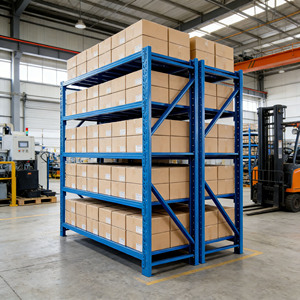
Adjustable Flexible Stainless Steel 5 Long Span Boltless Shelving Units
Electrostatic powder-coated corrosion protection shelving designed for easy boltless interlocking assembly, multi-tier manual handling, and CE-certified structural rigidity.
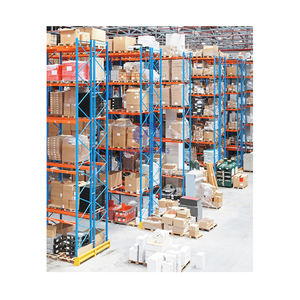
Heavy Duty Selective Pallet Racks with Wire Mesh Decking
Heavy-duty roll-formed box beams paired with drop-in galvanized wire decking for fire safety compliance, loose carton support, and heavy industrial pallet storage.
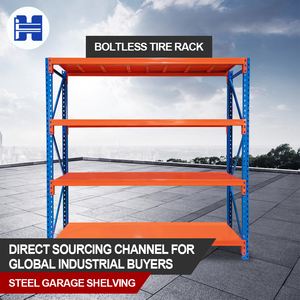
Long Span Medium Duty 5 Layer Durable Steel Industrial Shelving
Customizable 50mm pitch adjustable step-beam racking system engineered for industrial parts warehouses, wholesale distribution, and OEM modular integrations.
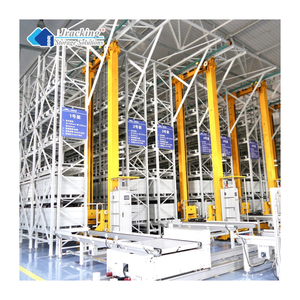
Warehouse Automatic Storage Racking ASRS System for Retail Centers
Ultra-precision mill-tolerance rack beams built to support automated stacker cranes, high-speed shuttle robots, and intense high-bay retail distribution operations.
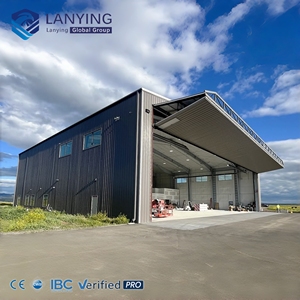
Fireproof Prefab Metal Frame Industrial Storage Workshop Building
Integrated structural steel engineering combining portal frames with high-capacity warehouse rack-clad structures, seismic portal bracing, and durable fireproof treatments.
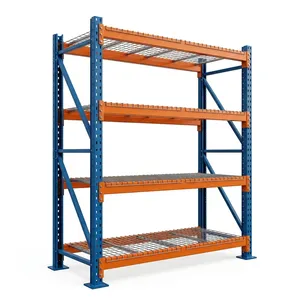
Heavy Duty Steel Pallet Racking System Adjustable Storage Unit
Multi-lug connector claw designs with integrated safety auto-lock pins, ensuring zero inadvertent beam dislodgement under fast forklift cycle loading conditions.
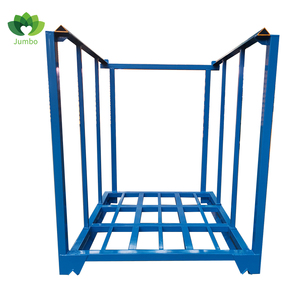
Industrial Heavy Duty Steel Storage Rack with Multi-Level Protection
Plug-in interlocking column and beam assembly featuring 8-stage pickling phosphating anti-rust pretreatment, built specifically for heavy manufacturing and parts stores.
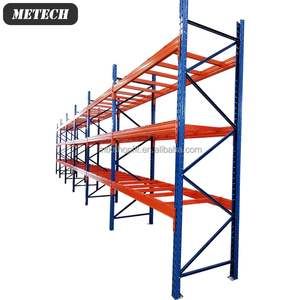
High-Grade Single-Sided Steel Pallet Rack Heavy-Duty Equipment
Reinforced perimeter wall racking configurations designed with asymmetric structural calculation models to counter uneven dynamic loading against warehouse perimeters.
Warehouse Racking Beams: Mechanics, Cold-Roll Profiles & Safety Factors
In modern industrial warehouse engineering, pallet racking beams act as the primary horizontal load-bearing members that convert dynamic pallet weights and live seismic reactions into moment forces against vertical upright frames. The structural integrity of a warehouse does not rest solely on steel thickness; rather, it hinges upon profile roll-forming geometry, sectional inertia ($I_x$), yield stress ($\sigma_y$), and the rotational stiffness of the end connectors ($K_\phi$).
Standard Deflection Ratio Limit: Per EN 15512 and AS 4084, maximum vertical beam deflection under working uniform load ($UDL$) must not exceed $L/200$ for standard pallet racking, and $L/250$ (or tighter $L/300$) for automated ASRS systems to prevent automated forks or high-reach mast collisions.
Box Beams vs. Step Beams: Technical Profile Comparison
Warehouse racking manufacturers primarily provide two roll-formed structural beam configurations: Interlocking Continuous Seam-Welded Box Beams and Cold-Formed Step Beams. Selecting the appropriate profile directly impacts procurement ROI, accessories compatibility, and load ratings.
| Profile Type | Cross Section & Forming | Optimal Decking Interface | Load Range / Pair | Primary Application |
|---|---|---|---|---|
| Roll-Formed Box Beam (Interlocked 'C' Channels) | Double cold-rolled 'C' sections nested and seam-welded automatically via CO2 gas-shielded robotics. | Flat flush drop-in mesh decks, pallet support bars, timber pallets direct onto beam. | 1,000 kg – 5,000 kg (lengths up to 3900mm) | Heavy-duty selective pallet racking, drive-in systems, high-density storage with heavy unit loads. |
| Step Beam (Single-Rib / Open Inset) | Single roll-formed profile with an interior horizontal recess step (usually 20mm to 28mm depth). | Flush-fitting steel shelf panels, drop-in wire decks, or chipboard resting flush with beam crown. | 300 kg – 2,500 kg (lengths 1000mm – 2700mm) | Manual pick operations, retail longspan shelving, carton distribution, e-commerce fulfilment centres. |
| Structural I-Beam (Hot-Rolled Steel) | Solid hot-rolled structural steel profile (Q355B / ASTM A36) with punched end flange plates. | Heavy channel sub-structures, bar gratings, solid steel decking. | 4,000 kg – 10,000+ kg | Structural steel mezzanine floors, extreme cantilever arms, heavy die/mould storage racks. |
Connector Claws & Safety Pin Mechanics
The connector claw (typically 3-claw or 4-claw stamped brackets of 3.5mm to 4.5mm thickness) provides the crucial moment-connection between beam and upright. Our continuous automated punch lines form precision tapered teardrop or diamond connector hooks that wedge downward under load, dramatically reducing horizontal play. Each connector includes an automatic spring steel locking pin rated to withstand minimum 5,000 N vertical shear force, completely mitigating beam dislodgement risks caused by forklift driver positioning errors.
Future Warehouse Racking Beams Procurement Trends
Global logistics shocks, automated warehouse adoption, and carbon compliance are rapidly shifting how enterprise procurement heads negotiate steel racking supply agreements.
1. High-Tensile Thin-Gauge Steel Engineering
Procurement directors are shifting from traditional heavy-gauge Q235B steel to cold-formed high-yield Q355B and automotive-grade high-strength micro-alloyed steels. This metallurgical shift reduces raw steel deadweight by 12-18% without diminishing bending resistance, resulting in substantial sea freight container cost savings per pallet position.
2. Decoupled Containerized Nesting Packaging
Ocean freight volatility has driven buyers to demand engineered nesting geometries. Instead of shipping fully welded bulky frames, suppliers engineer bolted end-frames and stacked beam bundles on custom steel stillages, enabling 40HQ containers to hit maximum payload capacity (26.5 to 28 tons) rather than timing out on volume.
3. Traceable Structural Data Packs & Mill Certs
Procurement is no longer transactional. Australian, European, and American engineering certifiers strictly require mill test certificates (MTC per EN 10204 Type 3.1), showing precise chemical compositions (C, Mn, Si, P, S) and charpy impact tests. Factory-direct suppliers must provide complete FEA finite-element calculation packs for permit approvals.
4. Green Steel & EPD Environmental Declarations
Global 3PL operators and enterprise retailers (e.g., Walmart, Amazon, Bunnings) mandate Environmental Product Declarations (EPDs). Sourcing now benchmarks manufacturers operating closed-loop electrostatic powder coating lines with zero VOC emissions and scrap reclamation efficiencies exceeding 98%.
5. Total Cost of Ownership (TCO) Lifecycle Contracting
Rather than bidding solely on initial FOB metric ton rates, enterprise buyers evaluate beam repairability, connector fatigue resistance under cyclic forklift placement, interchangeable pitch standards (50mm vs 76.2mm vs 75mm), and availability of stock warranty replacements within 48 hours.
6. ASRS & Shuttle-Ready Mill Tolerances
With rapid transition toward 4-way radio shuttles and automated pallet cranes, beam camber and straightness tolerances must be tightened from commercial ±3mm standards down to strict ±1mm per 3-meter section to prevent automated laser navigation interruptions.
Racking Beam Technology & Engineering Innovations
How cutting-edge roll-forming technology, smart sensing, and metallurgy are revolutionizing modern warehouse beam load dynamics.
Continuous Robotic Seam Laser Welding
Transitioning from conventional pulsed gas metal arc welding (GMAW) to fiber laser welding lines. Laser welding achieves 100% full-penetration seams with negligible heat-affected zones (HAZ), avoiding residual thermal stress and yielding higher beam torsional rigidity under off-center pallet placements.
Seismic Energy-Dissipation Connectors
Engineered for high-risk seismic zones (e.g., New Zealand NZS 1170.5, California, Japan). Proprietary ductile connector claws feature sacrificial micro-flexure geometry that absorbs dynamic horizontal earth vibration energy, maintaining upright stability and preventing catastrophic rack progressive collapse.
Smart RFID & Strain-Gauge Integrated Beams
Industry 4.0 integration embedding passive RFID tracking tags and micro-electromechanical strain sensors into beam profile interior cavities. The system detects micro-deflections beyond elastic limits in real time, alerting warehouse managers to overloaded levels via IoT warehouse software.
Duplex Cold-Store & Coastal Anti-Corrosion Finishes
For blast freezers (-30°C) and humid coastal Pacific Island warehouses, standard powder coats risk micro-cracking and under-film rust. Next-gen beams utilize duplex coating: continuous inline thermal zinc pre-galvanizing followed by electrostatic epoxy-polyester copolymer powder coating curing at 200°C.
Universal Modular Connector Pitch Geometry
Eliminating vendor lock-in through precision CNC punching that allows beams to integrate into dual-pitch teardrop, 50mm metric, and 76.2mm British imperial column grids. Importers and warehouse leasing managers can repurpose rack stock across diverse worldwide facilities seamlessly.
Automated Robotic Packing & QR Marking
Every single manufactured beam receives an automated laser-etched datamatrix QR code showing production batch date, steel coil heat number, rated UDL load capacity, and installer assembly zone, significantly streamlining DAFF/MPI port customs clearance and site assembly speed.
Why Global Buyers Partner with Guangzhou Heda Shelves
Established in 2001, Guangzhou Heda Shelves Co., Ltd. operates a specialized 30,000 m² smart manufacturing plant with an engineering workforce of 300+ professionals and an audited monthly output of 30,000 tons.
Audited International Certifications
Fully certified under ISO 9001:2015 Quality Management (Cert No. 18624Q00169R0M, valid to 2027) and CE Certification No. 2435-CPR-8605159. Full RoHS environmental compliance ensures zero lead or hazardous heavy metals in our powder coatings.
Compliant Standards Engineering
Designs directly reference AS 4084 (Steel Storage Racking), FEM 10.2.02, and RMI specifications. We furnish full section modulus calculations, moment of inertia tables, and engineering layout sign-offs for local building certifiers.
Free 3D & CAD Layouts Within 24 Hours
Our senior technical team transforms warehouse floor plans into comprehensive AutoCAD layout drawings and high-fidelity 3D renderings, optimizing aisle clearances around counterbalance, reach, or VNA turret forklift turning radiuses.
Customs & Biosecurity Export Packing
Export packages are secured on bespoke steel frames or ISPM-15 heat-treated certified timber stillages, guaranteeing frictionless biosecurity clearance through Australian DAFF, New Zealand MPI, and US CBP inspection checkpoints without fumigation delays.
Global OEM & Distributor Private Labeling
We supply top-tier international racking distributors and material handling integrators across Europe, the Americas, Australia, and the Middle East, offering custom RAL powder-coating colors, customized stamping, and private label load plaques.
Direct Port Logistics from South China
Located adjacent to major container hubs in Guangzhou and Shenzhen, sea freight reaches key international ports (e.g., Sydney, Melbourne, Auckland, Los Angeles, Rotterdam) within 2 to 4 weeks with complete FTA documentation (ChAFTA / Form E).
10-Stage Precision Beam Manufacturing Workflow
Raw Coil Inspection
Spectrometric & tensile verification of Q235B/Q355B coils.
Slitting & Cutting
High-speed CNC slitting to sub-millimeter strip widths.
Connector Punching
Multi-station 200T high-speed stamping of connector claws.
Cold Roll-Forming
Multi-pass roll former profiling interlocking box & step beams.
Profile Straightening
Multi-roller calibration eliminating camber, bow, and twist.
Automated Welding
Robotic dual-torch CO2 shielding for connector-to-beam joints.
Surface Polishing
Mechanical shot-blasting and slag removal for surface smoothness.
Phosphating Rinse
Automated pickling & silane-phosphating anti-rust wash.
Powder Coating
Electrostatic coating & 200°C tunnel curing (60-80μm thickness).
Final QC & Shipping
Cross-hatch adhesion, weld ultrasound & palletized crating.
Frequently Asked Questions on Sourcing Racking Beams
Essential answers addressing technical compliance, deflection tests, seismic design, and international logistics for commercial purchasers.
How is rated beam load capacity calculated and physically tested?
Beam load capacities are determined in strict accordance with EN 15512 and AS 4084 protocols. Physical static testing employs hydraulic load rams distributing equal loads across two simulated pallets on a beam pair. The beam must sustain 1.5 times the safe working load (safety factor $\gamma = 1.5$) without catastrophic plastic deformation, while vertical deflection under working load must remain strictly within $L/200$ (length divided by 200).
Can HEDA Shelves manufacture beams compatible with existing racking brands?
Yes. We specialize in OEM and replacement manufacturing. We produce universal teardrop connectors compatible with major US/North American systems, 50mm pitch connectors for European styles (such as Dexion or SSI Schaefer compatible patterns), and 76.2mm British standard configurations. Simply share a physical connector sample or CAD profile drawing, and our tooling division can stamp matching connector claws.
What documentation is provided to satisfy regional building certifiers?
Every export project is accompanied by a formal Engineering Structural Data Pack. This includes raw steel Mill Test Certificates (EN 10204 3.1), certified weld procedure specification (WPS) logs, beam sectional property tables (cross-sectional area, moments of inertia $I_x, I_y$, elastic section modulus $W_x$), AutoCAD site layout drawings, and formal calculations that your local Registered Professional Engineer (CPEng / PE) can sign off for occupancy permits.
How do you guarantee beam corrosion resistance in sub-zero cold stores?
Cold storage applications down to -30°C cause standard low-grade powder films to turn brittle and peel, leading to oxidation. For refrigerated facilities, HEDA applies an 8-stage pre-treatment featuring hot acid pickling and micro-crystalline zinc phosphating, followed by low-temperature flexibilized epoxy-polyester powder coats cured at precise thermal curves, ensuring zero micro-fracturing under thermal contraction.
What is the typical shipping lead time and container packing efficiency?
Production lead time for standard orders (2 to 5 containers) is typically 15 to 20 working days. Transit from Guangzhou or Shenzhen ports to Pacific ports (Sydney, Melbourne, Auckland) takes 14 to 22 days, and to US West Coast ports 16 to 24 days. Beams are nested with protective cardboard separators and strapped to rigid steel undercarriages, maximizing container weight capacity up to 27+ metric tons per 40HQ container.
What parameters must I provide to obtain an engineering layout & quotation?
To deliver an accurate 3D CAD proposal within 24 hours, our engineering office requires: (1) Warehouse clear height to roof obstructions or sprinkler heads; (2) Pallet dimensions (width, depth, height including cargo); (3) Maximum weight per pallet load; (4) Forklift model, turning radius, and maximum mast extension; (5) Facility floor plan indicating dock doors, building columns, and designated egress paths.
Request Complete Technical Specifications & Engineering Pricing
Connect directly with HEDA's senior structural racking engineering department. Receive customized beam load charts, certified 3D CAD layouts, and containerized pricing within 24 hours.