High-Efficiency Warehouse Racking & Storage Platforms
Engineered from certified high-tensile Q235B and Q355B structural steel coils. Explore precision-slotted pallet systems, modular industrial mezzanines, automated sheet metal towers, and mold storage racks built for demanding distribution hubs.
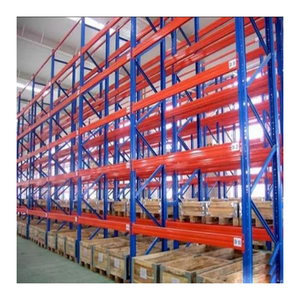
Mracking 500-5000kgs Per Layer Heavy Duty Rack Adjustable Metal Pallet Rack Warehouse Storage Racking System for Sale
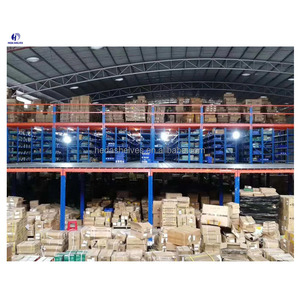
Manufacture Factory Industrial Heavy Duty Multi-tier Warehouse Rack Steel Mezzanine Floor Storage Racking Systems
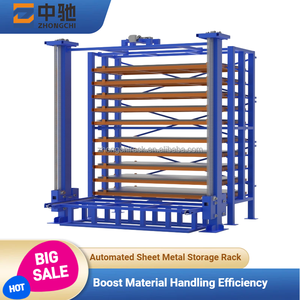
Intelligent Automated Warehouse System Steel Sheet Metal Storage Rack 8-Layer Heavy Duty Corrosion Protection High Load Capacity
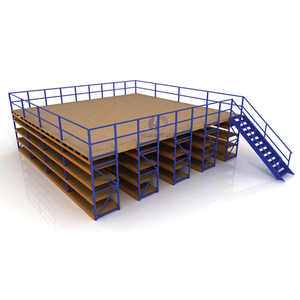
Warehouse Storage Steel Shelving System Metal Mezzanine Racking Industrial Structure Platform
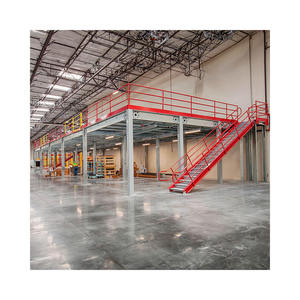
ISO CE Certified Heavy Duty Steel Mezzanine Floor Racking System Multi-level Warehouse Storage Platform Factory Supplier
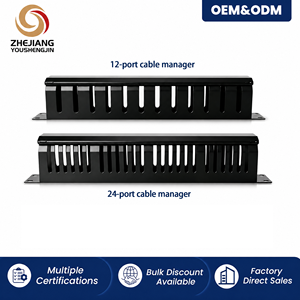
24-Slot Slotted 19 Inch 1U SPCC Metal Cable Organizer With 24 Bar Rack Mount For Server Cabinet And Network Components
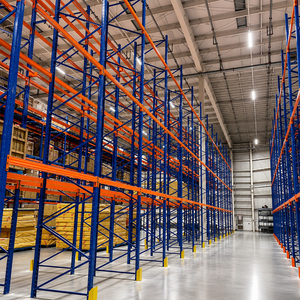
Custom Q235B Steel Pallet Racking System Heavy Duty Pallet Racking System Industrial Racks With 24h CAD Drawing
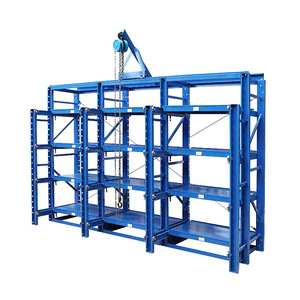
Fully Open Intelligent Mold Rack with Automatic Pull-Out System Heavy Duty Warehouse Stacking Rack for Injection Mold Storage
The Global Sourcing Paradigm: Why Industrial Logistics Procurement Anchors in China
In the contemporary landscape of high-velocity global supply chains, industrial warehouse racking systems have graduated from rudimentary static metal shelving into highly engineered, mission-critical structural frameworks. For logistics directors, supply chain VPs, and third-party logistics (3PL) conglomerates, selecting a qualified manufacturing partner in China represents more than capital expense reduction; it is an optimization of structural integrity, engineering flexibility, and automated compatibility.
China has solidified its position as the world's epicenter of advanced steel roll-forming and racking fabrication due to uncompromised upstream metallurgical integration (direct sourcing of prime cold-rolled coils from Baosteel, Shougang, and Ansteel), robotic continuous roll-forming lines, automated continuous laser-punching systems, and multi-stage chemical pretreatment powder coating facilities. However, cross-border procurement mandates deep technical discernment. Navigating the spectrum of steel grades, cross-sectional moment of inertia, seismic shear calculations, and finite element modeling (FEM) makes the difference between an installation running fault-free for thirty years and an enterprise catastrophe.
Core Engineering Fact: Under severe cyclical load variations, beam deflection is governed by strict structural thresholds. For selective pallet configurations designed to international standards (EN 15512 and AS 4084-2023), the vertical deflection limit cannot exceed L/200 (where L represents clear span between upright frames). Premium Chinese manufacturers ensure second-order P-Delta analysis is performed for every upright profile up to 18 meters.
International Compliance & Structural Engineering Matrix
A premier warehouse racking manufacturer in China must design, fabricate, and test components with direct reference to the jurisdictional standards where the distribution center is constructed. Below is the technical compliance architecture evaluated across global procurement hubs:
| Compliance Standard | Target Jurisdictions | Core Testing Focus & Deflection Benchmarks | Safety Factor Limit | Material Specification |
|---|---|---|---|---|
| AS 4084:2023 | Australia, New Zealand, Oceania | Beam connector semi-rigidity test, upright twist & distortional buckling, seismic ductility factors (NZS 1170.5) | 1.50 – 1.65 | AS/NZS 1365 / Q235B / Q355B Hot-Rolled Strip |
| EN 15512:2020 | European Union, UK (SEMA) | Limit State Design (LSD), stub column compression, second-order 3D global sway analysis, L/200 deflection | 1.40 – 1.50 (Gamma M) | EN 10025 S235JR, S355JR / Cold-Formed Steel |
| ANSI MH16.1:2021 (RMI) | United States, Canada, Mexico | Direct analysis method (DAM), torsional-flexural buckling, beam end lock-out strength, seismic site classes A–F | 1.67 (ASD) / 1.5 (LRFD) | ASTM A1011 / ASTM A653 HSLAS Grade 50 |
| ISO 9001 & CE 2435-CPR | Global Industrial Projects | Factory production control (FPC), chemical composition spectral check, weld penetration, salt-spray 500h+ | Strict FPC Audit | Full Batch Traceability with MTC (3.1 Certs) |
25 Years of Factory-Direct Engineering Authority
Founded in 2001, Guangzhou Heda Shelves Co., Ltd. has evolved into an internationally recognized titan in storage system manufacturing. Our sprawling 30,000 square meter industrial complex is backed by a 300+ strong workforce of licensed structural engineers, CAD draftsmen, and precision machining technicians.
Massive 30,000t Monthly Output
Equipped with 24 high-speed automatic roll-forming lines, 16 automated OTC robotic welding cells, and continuous CNC coil slitting plants. Our scalable capacity guarantees tight delivery schedules for megaprojects exceeding 50,000 pallet positions.
24-Hour 3D CAD & Structural Calculations
Our in-house technical department turns architectural floor plans, sprinkler clearances, and reach-truck turning radii into detailed 3D Revit models and CAD layouts within 24 hours, including section properties for local engineer sign-off.
CE & ISO 9001:2015 Verified
We operate under certified institutional protocols: CE Certification No. 2435-CPR-8605159 and ISO 9001:2015 Quality Management No. 18624Q00169R0M. RoHS compliance ensures zero heavy-metal toxicity across our electrostatic powder finishes.
Severe-Climate & Seismic Engineering
From seismic zone tailoring referencing NZS 1170.5 and California UBC to hot-dip galvanizing (ISO 1461) for coastal humidity and cold-chain blast freezers (-30°C), our modular racking systems survive the most demanding physical operating environments.
Global Biosecurity-Compliant Logistics
Racking units are secured on custom heavy-duty steel stillages or ISPM-15 heat-treated dunnage, eliminating port inspection quarantine delays under Australian DAFF, New Zealand MPI, and USDA standards. Full preferential origin docs (ChAFTA, RCEP) provided.
10-Stage Precision Surface Treatment
Components undergo an automated multi-stage pre-treatment line: degreasing, twin rinses, iron-phosphating, passivation, and deionized wash, followed by Swiss Gema electrostatic powder guns curing at 200°C for superior impact resilience against forklift forks.
Future Procurement Trends in Warehouse Storage Systems
Industrial procurement is shifting from spot-commodity purchasing to strategic lifecycle partnerships. Here is how leading logistics directors are structuring procurement roadmaps over the coming decade.
1. Total Cost of Ownership (TCO) Dominance
Savvy global purchasers no longer rank bids purely on FOB price per kilogram. TCO models now evaluate structural steel yield stability (preventing permanent set under cyclic loading), container cube packing factors (targeting >92% stuffed volumetric density), and pre-notched installation alignments that cut mechanical assembly labor by 25% on-site.
2. Direct-to-Factory Engineering Alliances
Bypassing regional trading intermediaries, enterprise buyers now collaborate straight with manufacturer engineering teams via BIM (Building Information Modeling). Direct factory interaction eliminates design discrepancies, verifies material test reports (MTR) before roll-forming, and unlocks customized section modularity tailored to specialized SKU widths.
3. Decarbonized Steel & Green Procurement
With multinational corporate ESG targets taking center stage, warehouse racking tenders routinely request carbon footprint disclosures. Manufacturers deploying energy-efficient cold roll-forming processes, scrap recycling loops, and closed-circuit heavy-metal-free powder coating lines earn preferential contractor status across North American and European tenders.
Technological & Structural Development Trends in Intralogistics
The convergence of robotics, automated guided vehicles (AGVs), and smart sensors is transforming passive steel racking into dynamically connected warehouse nodes.
AS/RS & Rack-Clad Building (High-Bay) Integration
Rising land costs are pushing facilities to heights between 25 and 45 meters. Rather than erecting a civil building and installing racking inside, contemporary engineering deploys "rack-clad" structures where the racking framework itself constitutes the structural skeleton supporting roof trusses and wall cladding. This architecture cuts civil foundation costs by up to 30% while maximizing vertical cubic capacity.
Pallet Shuttle Fleets & 3D Mother-Child Swarms
Traditional Drive-In systems with slow, high-risk forklift lane entry are being superseded by semi-automated Radio Shuttles and fully automated 4-way shuttle fleets. These carriers traverse along hardened cold-rolled runner rails, executing dynamic SKU batching and deep-lane accumulation at speeds of up to 1.2 m/s while eliminating vehicle rack-impact collisions entirely.
IoT-Enabled Structural Health Monitoring (SHM)
Modern distribution complexes run 24/7/365, making undetected forklift frame impacts extremely dangerous. Next-generation upright columns integrate wireless tri-axial accelerometer nodes and strain gauge sensors. These nodes communicate via LoRaWAN/Zigbee to warehouse management software (WMS), issuing instant alerts if an upright column absorbs an impact exceeding structural safety thresholds.
Cryogenic Metallurgy for Cold-Chain Warehouses
E-commerce grocery delivery and biopharma demand deep-freeze environments (-25°C to -30°C). Conventional structural steels experience ductile-to-brittle transition when exposed to sub-zero temperatures, risking catastrophic shear cracking. Contemporary manufacturers engineer specialized micro-alloyed steels with controlled silicon and manganese ratios, preserving impact notch toughness down to -40°C.
Frequently Asked Questions for Warehouse Racking Buyers
In-depth technical answers addressing the real questions asked by foreign importers, logistics project engineers, and supply chain managers prior to order sign-off.
1. How do Q235B and Q355B steel grades compare to Western standards like ASTM A36 or S355?
Q235B is an industry-standard carbon structural steel featuring a nominal yield strength of 235 MPa and ultimate tensile strength of 370–500 MPa. It is structurally equivalent to ASTM A36 in North America and European EN 10025 S235JR. It provides outstanding cold roll-forming ductility and excellent weldability for standard beam and upright profiles.
Q355B (formerly Q345B) is a high-strength low-alloy (HSLA) steel with a yield strength of 355 MPa, equivalent to European S355JR and ASTM A572 Grade 50. Q355B is deployed for heavily loaded bottom-tier uprights, deep-span mezzanine primary beams, and high-bay AS/RS structures where load-bearing requirements demand thin profile walls to optimize dead-weight without compromising elastic deflection boundaries.
2. How does an offshore manufacturer ensure compliance with AS 4084-2023 or European EN 15512?
Compliance is proven through rigorous physical prototype testing and advanced computational modeling, not merely verbal declarations. A qualified manufacturer carries out stub column compression tests, upright distortional buckling tests, and portal frame testing to calculate the precise semi-rigidity rotational spring constant (kb) of beam-end connectors.
Calculated section properties (cross-sectional area, moments of inertia Ix, Iy, and torsional constants) are incorporated into finite element structural calculations. We supply full structural documentation packs, load capacity plaque designs, and design verification documentation so that a locally registered professional engineer (RPEQ, CPEng in Australia, or PE in the United States) can review and certify the building permit submission.
3. What is the standard surface coating specification, and when should hot-dip galvanizing be used?
For standard indoor ambient distribution warehouses, high-grade electrostatic polyester-epoxy powder coating is the universal standard. Following a 9-stage pre-treatment wash (including degreasing and zinc/iron phosphating), powder is applied at an average thickness of 60 to 80 microns and cross-linked in a 200°C curing oven, providing high impact resistance against pallet scrapes and a salt spray rating exceeding 500 hours.
Hot-dip galvanizing (complying with ISO 1461, delivering 65–85 microns of sacrificial zinc-iron alloy coating) is recommended for: 1) Outdoor cantilever or yard storage racks exposed directly to rain and UV, 2) High-salinity coastal island warehouses, 3) Agricultural chemical/fertilizer facilities, and 4) Blast freezers where extreme condensation and defrost cycles promote oxidation along standard paint perforations.
4. How is export cargo packed to eliminate container sea-transit damage and clear biosecurity?
Racking damage during intermodal ocean shipping happens when loose components rub inside shipping containers. We bundle upright frames and beams into nested steel stillage frames separated by corrugated edge protectors, industrial plastic wrapping, and high-tensile PET strapping. Fasteners, baseplates, shims, and beam safety pins are packed in steel drums or reinforced wooden boxes.
To clear stringent biosecurity inspections (such as Australian DAFF, New Zealand MPI, or US Customs), all timber dunnage used for forklift container unloading is strictly ISPM-15 compliant (fumigated or heat-treated and debarked with clear IPPC branding). We prioritize 100% steel stillages whenever possible, eliminating timber quarantine inspection risks entirely.
5. What key dimensions are required to obtain an accurate layout drawing and quotation?
To produce a fully engineered 3D CAD design and budget within 24 hours, our engineering department needs:
- Facility Floor Plan: CAD or PDF drawing indicating column grid centers, warehouse door clearances, fire exit routes, and slab expansion joints.
- Clear Usable Height: Distance from the finished concrete floor slab to the lowest ceiling obstruction (sprinkler heads, main roof purlins, or lighting bays).
- Palletized Load Parameters: Pallet dimension (W × D × H including overhang) and maximum gross load per pallet (e.g., 1000 kg).
- MHE (Material Handling Equipment): Forklift type (Reach truck, Counterbalance, VNA turret truck), maximum lift height, and minimum aisle turning width requirement (Ast).
6. Can existing warehouse racks be mixed with new components from your factory?
While many global manufacturers utilize 50 mm, 75 mm, or 76.2 mm pitch column punchings (such as standard teardrop, slotted, or hex hole patterns), intermixing structural components from different manufacturers requires careful engineering evaluation. Even if hole patterns match, differences in steel thickness, profile geometry, and connector claw engagement alter the semi-rigid beam-end moment capacity.
We provide exact-profile custom OEM fabrication for plant expansions. If you supply a physical sample or detailed dimensional cross-section drawing of your existing upright and beam connector, our tooling workshop can produce compatible roll-forming dies, backed by structural load capacity testing.
Accelerate Your Storage Expansion With Precision CAD Layouts
Bypass middlemen markups and communicate directly with licensed structural racking specialists. Submit your warehouse parameters to receive a complimentary 3D rendering, detailed component bill of materials (BOM), and factory-direct quotation within 24 hours.
- Free 2D/3D DWG Layouts
- AS 4084 / CE Static Calcs
- Factory Production Audits
- Optimized Sea Container Stowing
Request Technical Proposal
Connect immediately with our industrial engineering team to review clear spans, load capacities, and delivery schedules.
Send an Inquiry