High-Density Live Pallet & Heavy-Duty Warehouse Storage Solutions
Manufactured using high-tensile Q235B and Q355B cold-formed structural steel, our dynamic roller beds and engineered pallet racking systems provide high-throughput logistics depots with rapid pallet cycling, strict inventory FIFO control, and zero intermediate aisle losses.
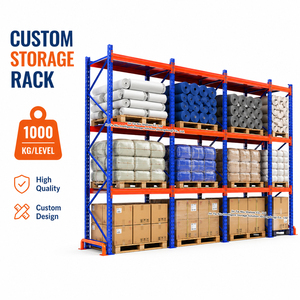
1000KG Warehouse Heavy Duty Pallet Rack Adjustable Storage Racking System Factory Direct
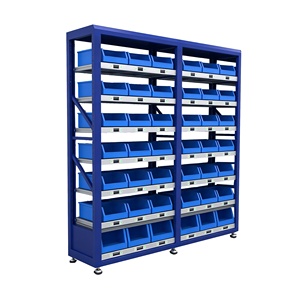
Smart Weighing Shelf Model ZSW-W01 Smart Warehouse Management System SMT Smart Shelf Workshop Line-side Cabinet Quick Access
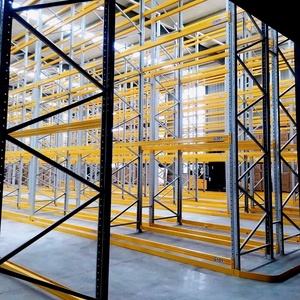
Pallet Racking Warehouse Storage Heavy Duty Industrial Pallet Shelf Narrow Aisle Selective Warehouse Racking System
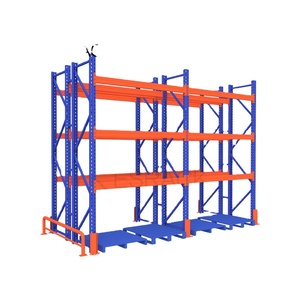
Custom Heavy Duty Industrial Steel Storage Carpet Roll Display Warehouse Beam Pallet Racking Systems Stacking Racks & Shelves
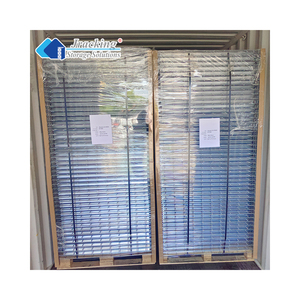
Certified Steel Wire Mesh Decking for Warehouse Pallet Rack Heavy Duty Metal Storage Shelving
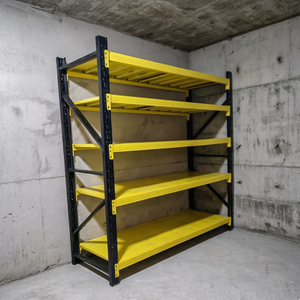
Steel Mezzanine Rack Warehouse Mezzanine Shelving System Pallet Rack Storage Platform Industrial Multi-Level Racking
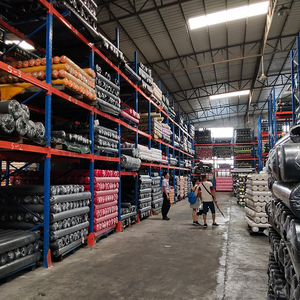
Highly Customizable Free Design Storage Rack For Various Heavy Duty Storing 1000KG 2000KG 3000KG Pounds Tons
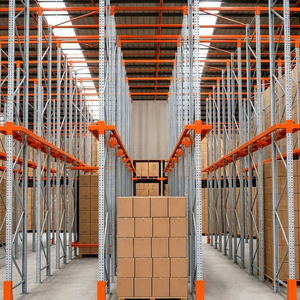
Industrial Heavy Duty Drive in Rack High Density Storage System for Warehouse
The Anatomy of Live Pallet Flow Racking: Gravitational Kinematics & Zero-Energy FIFO
Live pallet racking—frequently designated in modern intralogistics as Pallet Flow Racking or Gravity Roller Racking—harnesses continuous gravitational potential energy to transport unitised pallet loads from the entry loading aisle directly to the discharge picking face. By angling the modular roller beds between 3.0% and 3.5% (approx. 1.7° to 2.0°), pallets glide smoothly on heavy-duty, galvanized steel rollers equipped with internal precision radial ball bearings.
Unlike static drive-in or selective racking arrays that consume up to 60% of floor area in forklift transit corridors, live pallet racking operates with separate loading and offloading aisles. This ensures 100% First-In, First-Out (FIFO) batch turnover, radically shortens forklift transit routes, and prevents cross-traffic collisions.
- Centrifugal Speed Controller Brakes: Strategically spaced at 1-pallet intervals along each lane, our spring-loaded centrifugal brake rollers suppress runaway kinetic acceleration, enforcing a controlled velocity of 0.2 to 0.3 m/s irrespective of pallet mass variations (200kg to 1500kg).
- Mechanical Safety Separator (Load Isolator): Positioned at the discharge picking face, the mechanical separator mechanism disengages downstream pressure from subsequent pallets. This allows forklift tines to withdraw the lead pallet safely without dynamic line-pressure friction or load toppling.
- Entry Self-Centering Guides: Tapered, heavy-gauge steel funnel guides correct minor driver misalignments upon entry, preventing edge pinching and damage to bottom pallet skids or track rails.
Comparative Performance Matrix: Dynamic Pallet Flow vs. Alternative High-Density Systems
Selecting an optimal warehouse racking typology requires a balanced evaluation of spatial footprint utilization, inventory batch turnover rates, forklift operating costs, and capital investment amortization. The following benchmark highlights the unique strengths of live pallet gravity racking.
| Storage System Typology | Floor Space Saturation | Stock Rotation Logic | Operator Picking Velocity | Forklift Fleet Requirement | Energy / Power Demand |
|---|---|---|---|---|---|
| Live Pallet (Gravity Flow) Rack | 80% – 90% Ultra High | Strict FIFO (100%) | Very High (Segregated Aisles) | Standard Counterbalance / Reach | 0 kWh (Pure Gravity Driven) |
| Standard Selective Racking | 40% – 50% Low (Aisle Heavy) | Flexible FIFO / LIFO | Moderate (Extensive Transit Miles) | Standard Counterbalance | 0 kWh |
| Drive-In / Drive-Through Rack | 70% – 80% High | Strict LIFO (Drive-In) | Slow (Mast Maneuvering in Lanes) | Specialized Slim-Mast Trucks | 0 kWh (High Rack Impact Risk) |
| Radio Shuttle Cart Racking | 80% – 88% Ultra High | Programmable FIFO / LIFO | High (Automated Internal Carriage) | Standard Counterbalance | Lithium Battery Charging Cycles |
| Push-Back Cart Racking | 65% – 75% Moderate-High | Strict LIFO | Moderate (Lane Depths 2-6 Pallets) | High-Torque Push-Rated Forklifts | 0 kWh (Mechanical Spring/Gravity) |
Next-Generation Live Pallet Racking: Engineering Trends Shaping 2025–2030
Modern intralogistics procurement is transitioning from static equipment sourcing to holistic, data-integrated warehouse ecosystems. As supply chains navigate higher real-estate costs, labor compression, and strict sustainability mandates, four dominant engineering trends define the future of live pallet gravity flow racking.
1. AGV / AMR Induction Interface Engineering
Manual forklift dispatch at loading faces is rapidly being superseded by Automated Guided Vehicles (AGVs) and Autonomous Mobile Robots (AMRs). Future live pallet lanes incorporate laser-calibrated entry positioning brackets, magnetic alignment sensors, and reinforced bottom beam kick-plates to accommodate millimetric robotic pallet drops without structural wear or sensor blinding.
2. Self-Regulating Smart Centrifugal Braking
Standard friction-based brake rollers are evolving into zero-wear, eddy-current magnetic retardation rollers and self-diagnosing centrifugal controllers. These smart modules regulate descending velocities proportionally based on load resistance, ensuring lightweight corrugated cartons glide just as smoothly as dense 1200kg liquid drum containers without manual slope adjustments.
3. Cryogenic & Cold-Chain Resilient Metallurgy
With the rapid expansion of temperature-controlled pharmaceutical distribution and rapid-chilled food supply chains (-30°C cold stores), conventional steel embrittlement is a fatal risk. Procurement trends demand high-nickel micro-alloyed structural steels (such as certified Q355D/E), specialized synthetic low-temperature lubricants, and dual-layer epoxy-polyester coatings that resist freeze-thaw condensation flaking.
4. Circular ESG Steel Production & EPD Certification
Global blue-chip enterprises and international EPC contractors are requiring documented Environmental Product Declarations (EPDs). HEDA Shelves utilizes scrap-recycled electric arc furnace (EAF) primary coils, closed-loop zero-effluent zinc phosphating lines, and lead-free powder finishes to help clients achieve high BREEAM and LEED green building ratings.
5. Full-Lifecycle Digital Twin 3D BIM Integration
Racking engineering now integrates directly into Autodesk Revit, Navisworks, and building information models (BIM). By providing level of detail (LOD) 300/350 digital components complete with anchor point reaction loads, seismic base shear values, and sprinkler flue clearances, procurement teams eliminate field installation clashes before steel fabrication begins.
6. Hybrid High-Bay Mezzanine Integration
Industrial operations are pairing multi-level rack-supported mezzanines directly above live pallet buffer channels. This design dedicates lower floor levels to high-velocity gravity pallet flow lanes while deploying multi-tier carton flow or manual picking shelving on the upper steel decks, effectively tripling total square-meter productivity.
Guangzhou Heda Shelves Co., Ltd.: 23+ Years of Global Engineering Reliability
Founded in 2001, Guangzhou Heda Shelves Co., Ltd. has grown into one of Asia’s preeminent heavy-duty warehouse racking manufacturers. Operating from our 30,000 square-meter production facility, our 300+ structural engineers, precision machinists, and project directors deliver over 30,000 tons of finished storage structures monthly to global distribution hubs across Australia, New Zealand, Europe, Southeast Asia, and the Americas.
End-to-End In-House Manufacturing Control
Every single beam, upright column, roller frame, and connecting connector is fabricated in-house across our automated production lines. We eliminate subcontractor quality discrepancies by conducting 100% spectral steel chemical inspections, robotic seam welding, and computerized dry-film thickness testing.
Why Global Logistics Contractors & Racking Distributors Choose HEDA
Procuring heavy-gauge warehouse racking directly from China requires guaranteed engineering transparency, rigorous structural traceability, and smooth customs clearance. HEDA Shelves addresses overseas buyer risks through standardized engineering data packs and tailored export protocols:
- Free Tailored 3D CAD & Structural Calculations: We convert your warehouse architectural drawings into detailed 3D AutoCAD layouts within 24 hours, including finite element analysis (FEA) deflection charts and seismic baseplate load reactions.
- Seismic Zone Structural Reinforcement: Engineered to withstand regional earthquake design spectra (such as New Zealand NZS 1170.5 and Australian seismic codes) with augmented frame bracing, enlarged high-ductility base plates, and heavy-duty M16/M20 chemical anchors.
- Biosecurity-Ready International Export Packing: Shipped on heavy steel stillages or ISPM-15 heat-treated certified timber skids, ensuring seamless customs inspection with Australian DAFF, New Zealand MPI, and international ports without quarantine delays.
- Complete Preferential Trade Documentation: Full provision of Certified Mill Test Certificates (EN 10204 Type 3.1), ChAFTA / RCEP Certificates of Origin, commercial packing manifests, and step-by-step 3D erection manuals.
10-Stage Precision Heavy Racking Fabrication Process
From hot-rolled steel coil slit analysis to continuous roll profiling and electrostatic polyester curing, each fabrication stage is strictly managed to eliminate dimension variances.
Coil Spectrometry QC
Verification of yield tensile limits and chemical composition (C, Mn, Si, P, S) against Q235B/Q355B standards.
CNC Laser Slitting
High-speed laser cutting and precision coil slitting with ±0.2mm edge tolerance for flawless continuous forming.
Automated Column Punch
Multi-ton computerized hydraulic punching of teardrop, diamond, or butterfly pitch holes at 50mm/75mm intervals.
Cold Roll Forming
Multi-stage 22-roller cold forming units shaping complex omega (Ω) upright profiles for optimized load inertia.
Box Beam Roll Interlock
Continuous twin-C seam welding producing seamless, torsion-resistant rectangular box beams.
Surface Deburring
Robotic mechanical shot-blasting and edge polishing to eliminate weld spatter and micro-fissures.
Robotic Mig Welding
Automated 6-axis robotic welding of 3-claw and 4-claw beam connector plates for consistent penetration.
12-Stage Pretreatment
Immersion degreasing, ultrasonic water rinsing, pickling, and eco-friendly nano-ceramic silane conversion coating.
Electrostatic Coating
High-voltage Gema powder spray booths applying thermosetting polyester resins, cured at 200°C for superior adhesion.
Final Load QC & Pack
Load deflection testing, cross-cut adhesion inspection, and steel bundling with corrugated protective corners.
Frequently Asked Questions: Technical Engineering & Factory Procurement
Clear, definitive answers to technical, regulatory, structural, and logistics questions commonly asked by procurement managers, logistics engineers, and overseas distributors before ordering live pallet racking.
How do you calculate the precise roller track gradient for various pallet weights?
The typical slope ranges between 3.0% and 3.5% (approx. 1.7° to 2.0°). However, the precise gradient depends on bottom runner quality (hardwood vs. softwood, euro blocks, perimeter base plastic runners), bottom sag, and maximum weight variance. For operations storing mixed loads (e.g., 300kg to 1200kg), we conduct physical test-ramp friction analyses using client-specified sample pallets to guarantee smooth rolling without runaway velocity.
Can your pallet flow racking systems be certified to AS 4084-2023 or European EN 15512?
Yes. Every project engineered by HEDA Shelves can be verified in compliance with Australian AS 4084-2023 ("Steel storage racking") or European standard EN 15512:2020. We provide full section modulus calculations, moment-curvature relationship data, beam deflection limits (L/250 criteria), and layout structural prints ready for your local registered engineer to sign off.
How does the mechanical safety separator operate during high-speed forklift unloading?
The mechanical separator is an automatic, foot-pedal or latch-activated spring mechanism positioned roughly 1200mm behind the lead pallet stop. When the front pallet moves into the pick face, the separator trips upward, physically arresting the next pallet. Once the operator lifts the lead pallet away, the separator releases, allowing the subsequent pallet to roll into the pick position at a controlled velocity.
What prevents dynamic line pressure from crushing front pallets in deep-lane arrays?
In deep lanes (10 to 25 pallets deep), cumulative line pressure can reach several tons without dynamic controls. We integrate heavy-duty centrifugal brake rollers every pallet position (roughly 1.2m intervals) and intermediate mechanical pressure breaks along the lane length. This isolates downhill kinetic force and prevents pallet buckling or structural track overload.
What are the minimum warehouse building requirements for installing live pallet flow?
You need a reinforced concrete slab meeting DIN 18202 Table 3 Group 4 flatness standards or concrete FF/FL numbers exceeding FF45/FL35. Floor thickness typically requires a minimum of 180mm to 220mm of 25–30 MPa non-shrink concrete to accommodate structural chemical anchor pull-out ratings under dynamic seismic and wind load conditions.
How do you pack and secure roller tracks and frames for international sea freight?
Components are packaged on custom heavy-duty steel channel stillages or ISPM-15 stamped, heat-treated wood bunks to prevent ocean transit damage. Uprights and roll frames are nested to maximize 40ft High Cube container volumetric limits (typically 24 to 26 metric tons per 40HQ). All hardware, rollers, and mechanical separators are moisture-wrapped and packed in heavy plywood crates.
Can live pallet flow systems be deployed inside sub-zero food cold stores (-25°C)?
Yes. Our cold-chain live pallet systems utilize specialized low-temperature sealed ball bearings packed with food-grade silicone low-temp grease (-40°C rated), zinc-plated steel or hot-dip galvanised roller tubes, and cold-ductile Q355D structural steel frames. This prevents condensation freezing and mechanical roller lockup in frozen food environments.
What is the standard production lead time and typical ocean freight duration?
Standard factory fabrication for a typical 5 to 20 container project requires 20 to 28 working days. Transit times from our nearby port in Guangzhou/Shenzhen to major hubs: Sydney/Melbourne/Auckland approx. 14–22 days; European ports (Rotterdam, Hamburg) 28–35 days; US West Coast (Long Beach) 15–20 days. Complete shipping schedules and container tracking are supplied for every consignment.
Plan Your Live Pallet Storage Facility with HEDA Engineers
Send us your warehouse CAD floor plan, target clear ceiling height, pallet specifications, and forklift fleet parameters. Our engineering department will design and deliver a custom 3D structural layout, pallet capacity analysis, and direct factory pricing within 24 hours.