Featured Industrial Pallet Racking & High-Density Storage Lineup
Configured with structural push-through stop beams, flush offset safety barriers, and cold-rolled Q235B/Q355B profile members for global logistics compliance.
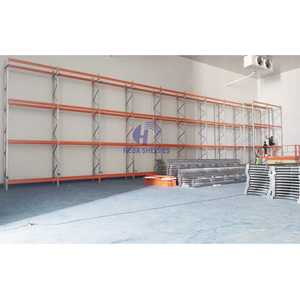 Stop-Beam Ready
Double Deep Pallet Rack Heavy Duty Pallet Storage Racking 1000kg/2000kg/3000kg Per Layer
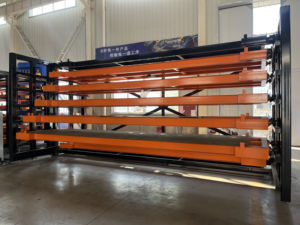 Powder Coated Anti-Rust
Multi-Tier Carbon Steel Powder Coated Anti-Rust Heavy Duty Warehouse Racking System
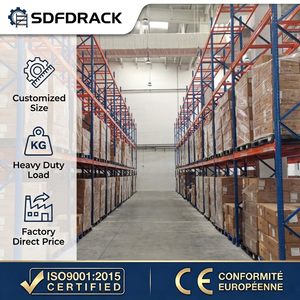 Custom 1000-5000kg
Heavy Duty Warehouse Pallet Racks Customized High Load 1000kg-5000kg Industrial Selective Steel System
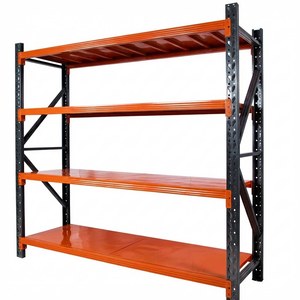 Epoxy Racking
Durable Cold Rolled Steel Heavy Duty Multi-Layer Pallet Rack Storage Solution High Loading Epoxy
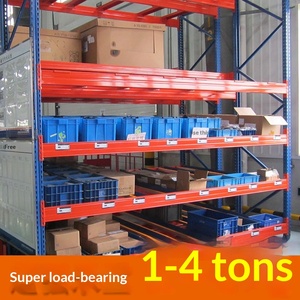 Gravity Flow Braking
Layered Shelf Thickened Large-scale Custom Storage Heavy-duty Structural Steel Gravity Pallet Rack
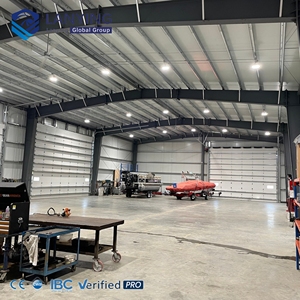 Large Distribution
Versatile Industrial Steel Structure Warehouse For Logistics Distribution Center Cargo Storage
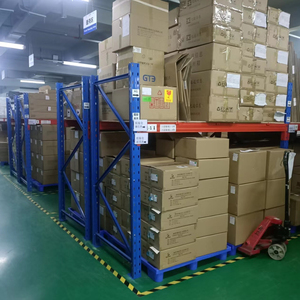 Selective 5-Tier
Heavy-Duty Industrial Selective Pallet Rack System Efficient 5-Layer Adjustable Metal Storage
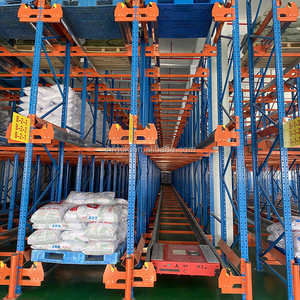 Automated AS/RS
Factory Direct Advanced High-Density Automated Storage & Retrieval System (AS/RS) Pallet Shuttle
Engineering Dynamics of Pallet Racking Push-Through Protection in Modern High-Bay Warehouses
In high-throughput distribution environments, the structural integrity of pallet racking systems is subject not only to static gravitational dead loads, but also to dynamic forklift impact vectors. Among the most frequent yet underestimated operational hazards is the pallet push-through incident. This occurs when a material handler accidentally pushes a unit load beyond the rear load-bearing beam during placement. Without engineered push-through protection devices (pallet backstops, offset stop beams, or steel mesh barriers), the consequences are severe: pallets dislodge into internal longitudinal flue spaces, crush overhead fire sprinkler lines, collapse secondary pallets in back-to-back bays, or punch through warehouse perimeter cladding.
Modern fire and life-safety codes—most notably NFPA 13 (Standard for the Installation of Sprinkler Systems), along with international storage equipment structural provisions under EN 15512, AS 4084-2023, and RMI ANSI MH16.1—mandate strict preservation of vertical flue spaces. The longitudinal flue space (the gap running between back-to-back racking rows, conventionally 150 mm to 300 mm / 6 to 12 inches) serves as a critical fire draft venting chimney. If pallets encroach into this aperture, ceiling sprinklers cannot deliver water downward through the racking framework to arrest deep-seated rack fires. Certified push-through protection systems provide physical stops that guarantee these life-safety tolerances remain uncompromised throughout years of aggressive operations.
Comparative Analysis: Push-Through Protection Archetypes
Specifying the appropriate backstop mechanism requires an engineering trade-off between structural rigidity, pallet overhang geometry, airflow dynamics, and total acquisition cost. The table below delineates the primary engineering solutions manufactured at our Guangzhou production hub:
| Backstop Technology | Structural Profile | Flue Clearance Offset | Impact Energy Dissipation | NFPA 13 Sprinkler Compliance | Optimal Warehousing Environment |
|---|---|---|---|---|---|
| Rigid Tubular Pallet Stop Beams | 50x50mm or 60x40mm RHS cold-rolled steel tubing with drop-in offset brackets | 50 mm, 75 mm, 100 mm fixed offsets | High (up to 6.2 kN concentrated static deflection limit) | Fully Compliant | Heavy-duty selective racking, automotive DCs, industrial machinery parts |
| Heavy Wire Mesh Backstop Screens | 8-gauge (4.0mm) welded steel wire mesh, 50x50mm aperture, clamped to uprights | Flush or 25mm–75mm stand-off brackets | Distributed Area Yield (arrests loose cartons and falling fragmented goods) | Fully Compliant (95% Free Area) | High-bay VNA warehouses, mixed SKU fulfillment hubs, pedestrian aisle safety |
| C-Section Formed Steel Backstops | 1.8mm–2.5mm roll-formed C-channel with slotted mounting eyes | Zero-offset (flush) or 50mm cantilever | Medium (3.5 kN load threshold before plastic deformation) | Compliant | General retail pallet racking, ambient food warehousing, cost-optimized setups |
| Automated AS/RS Kinetic Buffers | Structural hollow profile integrated with polyurethane bumpers & proximity limiters | Engineered per shuttle crane crane acceleration tolerances | Very High (dynamic deceleration absorption without rack twist) | Fully Compliant | High-speed automated shuttle storage, robotic micro-fulfillment cold chain |
Guangzhou Heda Shelves Co., Ltd.: 25-Year Racking Manufacturing Giant
Direct supply from China's primary hub of industrial steel rack manufacturing, delivering verified engineering integrity across 10,000+ completed installations worldwide.
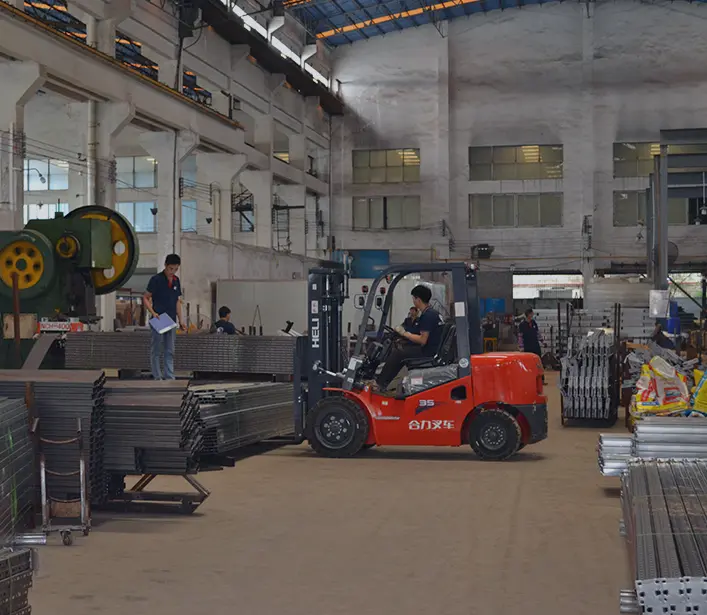
Established in 2001, Guangzhou Heda Shelves Co., Ltd. has grown to operate an expansive 30,000 square meter high-precision manufacturing complex. Backed by an engineering and technical workforce of more than 300 qualified specialists, our factory delivers a continuous production throughput exceeding 30,000 metric tons per month.
We specialize in providing complete pallet racking ecosystems—ranging from standard selective racking to complex multi-tier rack-supported mezzanines, heavy cantilever racking, dynamic gravity flow lanes, and advanced automated radio shuttle systems. Every push-through protection accessory, beam connector, upright frame, and seismic tie-rod is designed, profiled, stamped, welded, and thermoset-coated entirely in-house.
Our facilities operate under verified international credentials, including CE Certification (No. 2435-CPR-8605159), ISO 9001:2015 Quality Management System Certification (No. 18624Q00169R0M), and stringent RoHS environmental compliance for surface treatments.
Precision 8-Stage Push-Through Protection Fabrication Protocol
Future Procurement Trends: Where Warehouse Safety Engineering is Heading (2026–2030)
Strategic guidance for global supply chain procurement executives, structural engineers, and logistics developers navigating structural codes, automation demands, and carbon reduction mandates.
1. Convergence with Autonomous Mobile Robots (AMRs) & AGVs
As automated high-reach turret trucks and pallet handling AGVs displace manual forklifts, push-through protection is shifting from passive impact barriers to active sensor targets. Future stop-beam assemblies will feature pre-punched mounting slots for optical LiDAR reflectors, IoT deflection sensors, and ultra-wideband RFID tags to track pallet placement precision in real time.
2. High-Seismic Dynamic Dissipation Mounts
In earthquake-active jurisdictions (such as New Zealand, the US West Coast, and Japan), rigid backstop beams that transfer rotational kinetic moments directly to upright columns are being retired. Sourcing is accelerating for engineered flex-brackets and slotted dampening stops designed to absorb cyclic horizontal seismic forces without unseating beam safety pins.
3. Strict Flue Space Verification for Insurance Underwriting
Global commercial property insurers (such as FM Global) now demand photographic and digital verification of transverse and longitudinal flue clearances before issuing warehouse coverage. Warehouses lacking certified push-through stops face steep premiums or coverage denials, driving mandatory retrofits across 3PL facilities worldwide.
4. Total Cost of Ownership (TCO) vs. Spot Weight Pricing
Purchasing directors are transitioning from simple "price per kilogram of raw steel" procurement models to full lifecycle engineering assessments. Chinese manufacturers who supply comprehensive structural calculation dossiers, pre-galvanized components for coastal corrosion resistance, and pre-assembled bolt-free safety bars win long-term global contracts.
5. Decarbonized Steel & Eco-Certified Coatings
Cross-border carbon border adjustment mechanisms (such as EU CBAM) are compelling export factories to source lower-emission electric-arc-furnace (EAF) coiled steel and VOC-free, lead-free polyester powders. Sourcing from certified factories guarantees that imported warehouse expansions conform to corporate ESG requirements.
Frequently Asked Technical & Procurement Questions (FAQ)
Direct answers from our senior structural engineers covering structural standards, seismic zones, NFPA flue regulations, and international export logistics.
1. Why is pallet push-through protection mandatory under NFPA 13 sprinkler guidelines?
2. How do your engineers calculate pallet overhang and stop-beam offset clearances?
3. Can your racking backstop designs be certified for high-seismic zones like New Zealand or the Pacific Rim?
4. What is the structural difference between a Pallet Stop Beam and Wire Mesh Safety Decking?
5. What steel raw material grades are used in HEDA Shelves racking and backstop components?
6. How are export shipments prepared to comply with strict Australian DAFF and NZ MPI biosecurity controls?
7. What finishes are recommended for high-humidity, marine, or cold-storage environments?
8. What technical data do you require to generate a free 3D CAD layout and quotation within 24 hours?
Request an Engineered Pallet Racking & Push-Through Safety Layout
Connect directly with Guangzhou Heda Shelves senior application engineers. We provide comprehensive 3D CAD drawings, structural calculation dossiers, FEA safety verifications, and competitive direct-factory export pricing for complete container orders.