Featured Push Back & High-Density Storage Lineup
Engineered for extreme structural reliability, low-profile nesting, and seamless forklift throughput. Explore our primary cold-rolled heavy-duty push back systems and multi-tier structural units manufactured in our 30,000 m² facility.
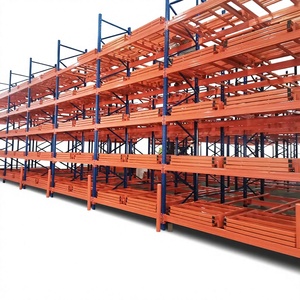
Push-Back Pallet Racking Cold-Rolled Steel Heavy-Duty Intelligent Gravity Dense Storage Rack
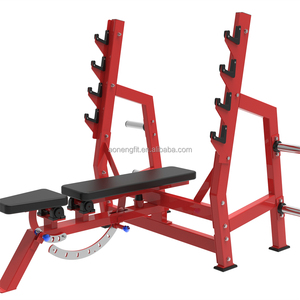
Commercial Multi Function Adjustable Safety Heavy-Gauge Push Back Industrial Framework
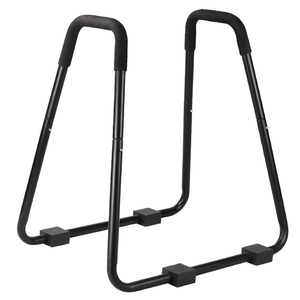
Portable Multi-Function Modular Freestanding Push Rack Heavy Steel Precision Welded Frame
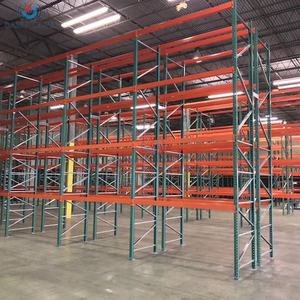
Selective and Push Back Pallet Racking Combination High-Bay Distribution Warehouse System
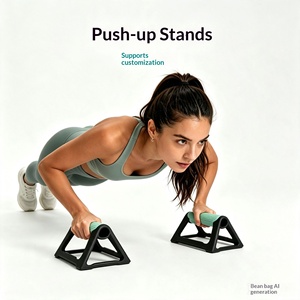
H-Shaped I-Beam Heavy Section Structural Stand Base No Installation Required
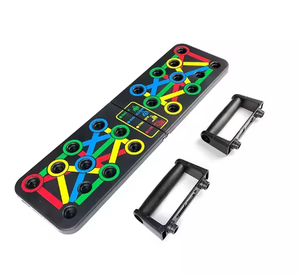
Multifunctional Portable Push Rack Guide Matrix Board Multi-Angle Dynamic Positioning
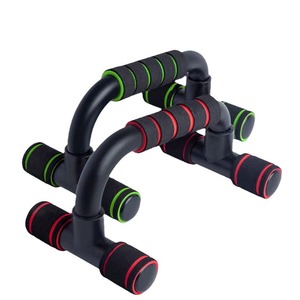
H-Shape Adjustable Custom Heavy-Gauge Support Base Multi-Point Fixture Rack
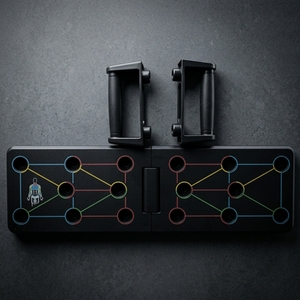
Multifunctional Foldable Heavy Structural ABS/Steel Hybrid Rack Positioning Stand
Founded (25+ Years Industrial Mastery)
Production Workshop Footprint
Monthly Steel Processing Capacity
In-House Engineers & Technicians
The Engineering Principles Behind High-Density Push Back Systems
Unlike static selective racks, a push back pallet racking system is a dynamically loaded gravity-assist mechanism engineered to deliver high-density Last-In, First-Out (LIFO) pallet accumulation without requiring forklift trucks to enter the storage bay.
Nested Cart Rolling Architecture
Push back pallet racks utilize a series of graduated, nested steel carriages riding along inclined structural steel guide channels. In a 4-deep push back system, the first pallet rests on the top nested cart; as a forklift pushes the second pallet in, it physically nudges the top cart backward along a 2% to 3% slope, revealing the second cart beneath. This precision nesting preserves vertical flue clearance and eliminates internal lane motorization.
Gravity Return Kinetics & Gradient
The gravitational slope angle is strictly calculated between 1.5° and 2.5° depending on nominal unit pallet weight (typically 800 kg to 1,500 kg). When the front pallet is unloaded by the forklift operator, natural gravitational force gently advances the trailing carts to the picking face at a controlled speed (<0.3 m/s). This mechanical autonomy completely avoids electrical sensors, battery replacements, and pneumatic complexity inside sub-zero chillers.
Flanged Bearings & Anti-Lift Catches
Each nested carriage incorporates heavy-duty CNC-turned steel wheels equipped with sealed, maintenance-free precision ball bearings. Double-lip flanged wheels lock into structural channel flanges, ensuring that sudden forklift misalignments or asymmetric pallet placement cannot derail the cart. Integrated mechanical anti-lift tabs prevent carts from disengaging under impact during loading or seismic ground excitation.
Push Back Racking vs Alternative High-Density Systems
A quantitative trade-off assessment evaluating floor footprint utilization, throughput cycle times, forklift collision risk, and CapEx per pallet position.
| Storage Racking System | Space Utilization | Stock Management | Forklift Mast Travel | Lane Depth Limits | Structural Impact Risk | Relative Initial CapEx |
|---|---|---|---|---|---|---|
| Selective Pallet Racking | 40% - 50% (High Aisle Footprint) | 100% Direct Access (FIFO) | Aisle-Only, High Elevation | Single / Double-Deep | Low Aisle Strikes | Base (1.0x) |
| Push Back Pallet Racking | 75% - 85% (Aisle-Optimized) | Lane-Specific LIFO | Aisle Edge Face Only | 2 to 6 Pallets Deep | Extremely Low (No Drive-In) | Moderate (1.35x - 1.6x) |
| Drive-In Pallet Racking | 65% - 75% (No Aisles) | Strict LIFO Per Bay | Deep Bay Driving Required | Up to 10 Pallets Deep | Very High (Column Collisions) | Low-Moderate (1.2x) |
| Radio Shuttle Automation | 85% - 90% (Maximum Density) | LIFO / FIFO Versatile | Aisle Edge Drop Point | Deep Lanes (>20 Pallets) | Extremely Low | High (2.2x - 3.5x with Shuttles) |
| Gravity Flow Racking | 75% - 85% (Dedicated In/Out) | Strict FIFO Rotation | Dual Dedicated Aisle Faces | Up to 15 Pallets Deep | Low (Aisle Edges) | High (Full Roller Beds 2.0x) |
Future Procurement Trends for Industrial Racking (2026–2030)
Global supply chain disruptions, rising urban industrial land lease rates, and stringent seismic mandates are fundamentally transforming how supply chain directors specify push back racking systems.
Sub-Zero Cold Chain Expansion
Escalating global demand for frozen food and biopharmaceutical distribution is driving procurement toward specialized -30°C push back installations. Buyers specify synthetic low-temperature wheel lubricants, galvanized anti-corrosive uprights, and thermal-expansion tolerant cart tolerances to avoid roller seizures in flash freezers.
Micro-Alloy Steel & AS 4084:2023
Procurement contracts increasingly mandate high-yield micro-alloyed cold-rolled steel (Q355B and above). Coupled with Australia's revised AS 4084:2023 and New Zealand NZS 1170.5 seismic testing protocols, buyers require verified finite element analysis (FEA) computer modeling to ensure ductility during severe seismic vibrations.
Integrated IoT Load Telemetry
The convergence of passive RFID and miniature Bluetooth Low Energy (BLE) strain sensors on nested cart assemblies allows real-time pallet tracking and lane-level weight verification. Warehouse management systems (WMS) obtain instant inventory counts without manual bar-code scanning, cutting stock audit cycles by 80%.
Decarbonized Circular Metallurgy
Leading European and Australasian multinationals now mandate carbon-border compliant declarations (CBAM). Guangzhou Heda Shelves utilizes certified scrap-electric arc furnace (EAF) steel coils and heavy-metal-free thermosetting powder coatings, drastically lowering the Scope 3 embodied carbon per pallet location.
Guangzhou Heda Shelves Co., Ltd.: Manufacturing Capabilities
Established in 2001, Guangzhou Heda Shelves Co., Ltd. operates a fully integrated 30,000 m² production facility backed by 300+ precision manufacturing personnel, delivering high-density warehousing projects to Australia, New Zealand, Europe, and the Americas.
Verified Global Certifications
Our quality management system is audited and certified under ISO 9001:2015 (Certificate No. 18624Q00169R0M). All structural structural push back assemblies hold CE Certification (No. 2435-CPR-8605159) and RoHS environmental conformance.
Custom 3D CAD Engineering Layouts
Within 24 hours of receiving warehouse blueprints, our engineering office generates comprehensive AutoCAD layout drawings, structural deflection calculations, seismic load estimations, and 3D virtual walkthroughs—completely free of charge prior to contract placement.
Biosecurity-Compliant Export Logistics
To eliminate costly quarantine delays across Australia (DAFF), New Zealand (MPI), and North American ports, all racking components are bundled in custom steel crates or ISPM-15 heat-treated certified timber stillages, complete with Bill of Lading, ChAFTA Form A, and mill test certificates.
Standardized 10-Step Heavy Racking Production Process
Raw Coil QC
Precision Slitting
CNC Punching
Cold Roll Bending
Profile Forming
Surface Polishing
Robotic Welding
Pickling/Phosphating
Powder Coating
Final QC Pack
Frequently Asked Technical & Procurement Questions
Detailed answers to critical engineering, customs clearance, load calculation, and installation inquiries commonly raised by global warehouse directors and racking contractors.
What are the maximum pallet depths and load capacities for push back systems?
Can Guangzhou Heda Shelves provide engineering certification for Australian AS 4084 and New Zealand seismic zones?
What type of forklift is required to operate a push back pallet rack?
How do push back cart wheels perform under deep sub-zero cold storage conditions?
How are biosecurity inspections (DAFF Australia & MPI New Zealand) handled for ocean freight?
What happens if an internal nested cart suffers wheel damage or bearing wear?
Request Your Custom Push Back Layout & Wholesale Quotation
Send your warehouse architectural drawings, clear ceiling heights, and pallet dimension specs. Our senior storage engineering team will return a certified 3D CAD proposal within 24 hours.