White Paper: Engineering Paradigm Shifts in Global Smart Warehouse Racking
Modern international warehousing is transitioning from static, load-bearing metal structures to responsive, sensor-driven intralogistics nodes. Rising land acquisition costs, combined with rapid surges in e-commerce fulfillment SKU complexities, require supply chain architects to demand higher volumetric utility and real-time visibility from steel racks. As an engineering manufacturer established in 2001, Guangzhou Heda Shelves Co., Ltd. builds solutions that balance load capacity, lifecycle resilience, and software compatibility.
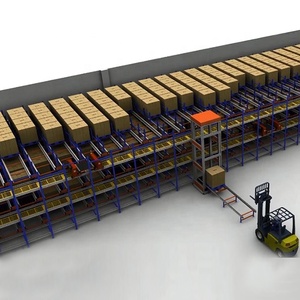
Strategic Insight: Modern warehouse capacity is evaluated by volumetric efficiency and inventory accessibility, rather than footprint alone. Automated Radio Shuttle (ARS) and Four-Way Directional Shuttles yield up to a 68% lift in usable pallet density over standard Selective Pallet Racking by eliminating forklift access corridors.
Current and Future Procurement Trends
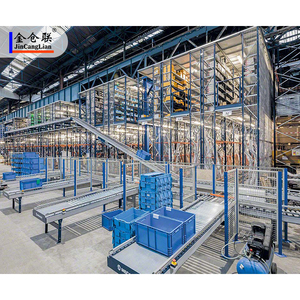
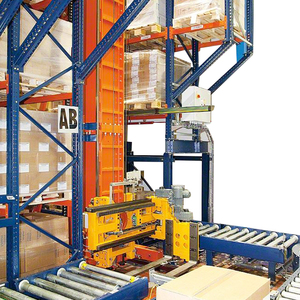
Procurement directors in Australia, New Zealand, Europe, and North America increasingly prioritize total system adaptability over lowest initial capital expenditure. First, systems must integrate cleanly with automated infrastructure. Structural racking designs are built to accommodate autonomous mobile robots (AMRs), automated guided vehicles (AGVs), and stacker cranes, requiring tighter frame vertical deflection limits (often L/600 or stricter).
Second, sustainability benchmarks mandate optimized steel grades. By specifying cold-formed Q355B and high-yield alloy profiles, engineers reduce total steel weight while exceeding required load metrics. This reduces freight carbon footprints and allows lighter slab load requirements without losing rated capacities. Third, finish durability is essential. High-durability thermosetting epoxy-polyester coatings, supplemented by pre-treatment pickling and phosphating, protect against corrosion in extreme cold-storage freezers (-30°C) and high-humidity coastal facilities.
Technology Convergence: The Rise of IoT Racking Nodes
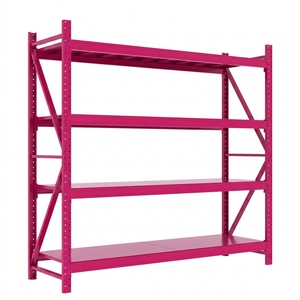
The standard industrial shelf is becoming a data-gathering endpoint. Systems such as our Smart Weight Inventory Heavy Duty Shelves feature digital load-cells under each pallet interface. These sensor assemblies feed continuous weight records straight into existing Enterprise Resource Planning (ERP) and Warehouse Management Systems (WMS).
This automated weight detection verifies SKU picking accuracy instantly, removing manual barcode scans and flagging picking errors or sudden inventory shrink. At the same time, remote-controlled smart radio shuttle carriers use laser navigation and anti-collision optics to work continuously inside deep channels, keeping lift truck drivers outside the rack framework and reducing rack damage by more than 85%.
Compliance Notice: Structural stability depends on matching the steel alloy to the site's environmental conditions. In New Zealand's active seismic zones, base plates, dynamic sway bracing, and expansion anchors must be calculated against NZS 1170.5 criteria to prevent harmonic collapse during an earthquake.
How does your manufacturing engineering align with Australian AS 4084 standards?
Our structural engineers calculate section moduli, connection shear limits, beam deflections, and upright frame load ratings in direct alignment with AS 4084 (Steel Storage Racking) criteria. We provide complete structural engineering packs—including finite element analysis (FEA), static structural calculations, and base plate footprint specifications—so your registered domestic certifier can issue installation clearance rapidly.
What design considerations are implemented for New Zealand seismic zones?
For installations throughout seismic zones like Auckland, Wellington, or Christchurch, our team applies site-specific geotechnical and structural inputs matching NZS 1170.5 standards. Upright thickness is increased, base plates are oversized, floor anchor embeddings are deepened, and engineered high-tensile X-bracing sets are configured across longitudinal runs to damp harmonic loads.
How are containers protected against biological and maritime transit damage?
We pack systems using zero-timber steel cradles or ISPM-15 compliant, heat-treated certified dunnage, ensuring seamless import clearance with the Australian Department of Agriculture, Fisheries and Forestry (DAFF) and New Zealand Ministry for Primary Industries (MPI). Components receive protective surface wrapping, corner shields, and desiccants to prevent salt-fog oxidation during transit.
What foundational details are required to generate an actionable 3D CAD design proposal?
To deliver an optimized CAD schematic and quotation, our design team requires: (1) Architectural slab plan showing column centers, entry apertures, and fire egresses; (2) Clear clearance heights below ceiling purlins or sprinkler heads; (3) Pallet specifications (e.g., standard 1165×1165mm AU pallets or 1200×1000mm ISO bases) including overhang and gross load weights; (4) Forklift specifications including mast height, turning radii, and outrigger constraints; and (5) Ambient temperature conditions.