Featured Industrial Pallet Racking & Material Handling Equipment
Precision roll-formed, load-certified storage platforms designed for third-party logistics (3PL), automotive assembly hubs, refrigerated cool stores, and high-velocity consumer distribution centers.
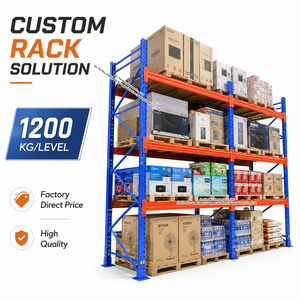
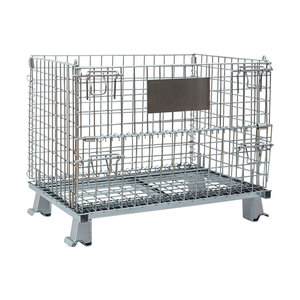
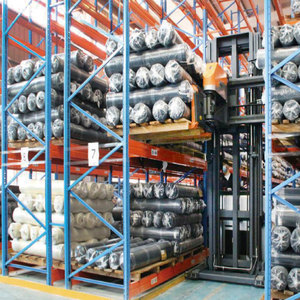
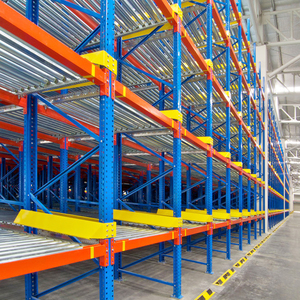
Guangzhou HEDA Shelves: Tier-1 Factory Direct Manufacturing Infrastructure
Backing international supply chain partners with automated cold roll-forming lines, certified robotic welding systems, and structural finite element analysis (FEA) compliant with global building codes.
30,000 m² Facility & 30,000t Capacity
Our specialized manufacturing facility operates 14 automated high-speed roll forming production lines, continuous CNC punching matrices, and multi-robot GMAW welding stations, guaranteeing reliable delivery on mega-distribution projects up to 30,000 metric tons monthly.
Certified Compliance: AS 4084 & NZS 1170.5
Engineered to conform with Australian Steel Storage Racking standards (AS 4084-2023), European FEM 10.2.02, and US RMI specifications. For New Zealand and Pacific seismic zones, dynamic structural analyses incorporate site-specific seismic ductilities ($k_\mu$) and baseplate anchoring loads.
Complimentary 24h 3D CAD/BIM Layouts
Our 30+ dedicated structural engineering design team delivers comprehensive 2D CAD architectural placement drawings, 3D BIM integration files, and finite-element load deflection simulations within 24 hours of receiving site floorplans, column grid grids, and pallet dimensional profiles.
Metallurgical Integrity: Q235B & Q355B Steel
We source exclusively from top-tier primary state-owned steel mills with certified mill test reports (MTR). Every batch undergoes Charpy impact toughness testing, elongation verification, and yield tensile strength testing to resist cyclic operational stresses without brittle structural fracture.
10-Stage Surface Pre-Treatment
Our fully automated pre-treatment includes degreasing, ultrasonic acid pickling, silane conversion, and double deionized rinses, followed by thermosetting pure epoxy-polyester powder coating cured at 200°C. Delivers a hard, impact-resistant finish passing 500-hour ASTM B117 salt spray ratings.
Biosecurity & Containerized Stillage Packing
Components are bundled on customized structural steel stillages or ISPM-15 heat-treated dunnage, ensuring seamless import customs clearance with Australian DAFF, New Zealand MPI, and US CBP inspections. Modular nesting guarantees optimal 40HQ container volumetric capacity utilization.
Industrial Storage Systems: Technical & Operational Evaluation Matrix
An engineering benchmark analyzing selectivity parameters, volumetric warehouse cube utilization, throughput kinetics, and equipment capital expenditures.
| Racking Architecture | SKU Selectivity Ratio | Floor Footprint Utilization | Throughput Cycle Velocity | Forklift Compatibility | Primary Sector Applications |
|---|---|---|---|---|---|
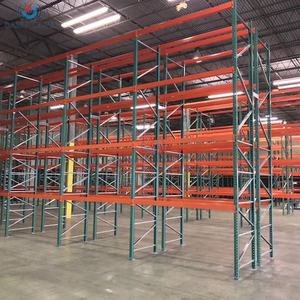
| Selective Pallet Racking | 100% (Instant Pick) | 35% – 45% (Aisle Dependent) | High (Concurrent Access) | Standard Counterbalance, Reach Truck | 3PL, FMCG, Retail Fulfillment Centers |
| Double Deep Pallet Racking | 50% (Two-Deep Indexing) | 55% – 65% (Fewer Aisles) | Medium (Requires Shunting) | Pantograph Reach, Deep-Reach Forklifts | Dry Grocery, Paper Packaging, Cold Store |
| Drive-In / Drive-Through | 15% – 20% (Batch Block) | 65% – 75% (Zero Internal Aisles) | Low-Medium (LIFO / FIFO Lanes) | Counterbalance, Narrow-Chassis Reach | Seasonal Bulk Crop, Cold Storage, Beverage |
| Push Back Racking (Nested Carts) | 25% – 35% (Lane Dedicated) | 60% – 70% (Gravity Fed Face) | High (Forklift Stays in Main Aisle) | Standard Reach / Counterbalance | Food Distribution, Buffer Staging Zones |
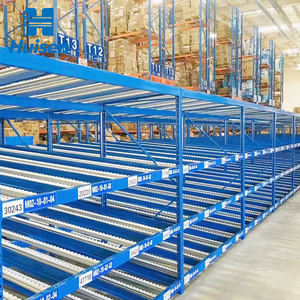
| Dynamic Gravity Flow Racking | 10% – 20% (Strict Lane FIFO) | 70% – 85% (Continuous Sloped Run) | Ultra-High (Separated Feed & Pick) | Counterbalance (Feed), Order Picker (Pick) | Dairy, Pharmaceuticals, Perishables |
| Radio Shuttle Semi-Automated | 20% – 30% (Automated Runner) | 80% – 88% (Deep Automated Lanes) | High (Automated Internal Transport) | Any Standard Forklift Interface | Cold Storage Freezers, High-Bay 3PL Hubs |
Structural Engineering Mechanics of Dynamic vs. Static Warehouse Systems
Selecting the optimal storage topology requires an empirical balance between horizontal building clear heights, floor slab structural load capacities ($kN/m^2$), and operational turnover frequencies. While standard selective pallet racking remains the most universal option due to its unimpeded access to every single stock keeping unit (SKU), modern land valuations and refrigerated energy utility overheads make its low volumetric floor utilization (approx. 40%) uneconomical for modern automated regional distribution centers.
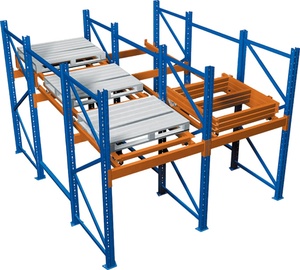
In contrast, gravity roller flow and push-back racking leverage mechanical gravitational gradients (2.5% to 3.5% incline) to advance inventory toward the operational face automatically. In push-back cart architectures, multiple nested carriages ride on heavy-duty structural steel channel tracks. As a forklift inserts a new unit load, it gently pushes back earlier pallets. Upon extraction, gravity glides subsequent loads forward smoothly under constant inertial resistance, eliminating the safety hazards associated with operators driving deep into the racking structure as required by obsolete drive-in frameworks.
Global Procurement Trends Shaping Industrial Racking (2025–2030)
Key structural innovations, supply-chain ESG criteria, and robotic automation tolerances transforming how supply chain directors source pallet storage infrastructure.
Transition Toward Automation-Ready (ASRS & AGV) Tolerances
Global logistics hubs are actively transitioning from manual forklift operations to autonomous mobile robots (AMRs), Automated Guided Vehicles (AGVs), and Automated Storage and Retrieval Systems (ASRS). This transition demands tighter manufacturing beam deflection limits—tightening structural tolerances from conventional Class 400 ($L/200$) to rigid Class 100 ($L/300$ or $L/400$). Column upright perforation alignment must remain true within ±1.0mm per 10 meters of height to prevent optical sensor tripping by laser-guided mast navigation systems.
Low-Carbon Green Steel & Comprehensive Life-Cycle ESG Auditing
Procurement directors across Australasia, Europe, and North America are prioritizing verified carbon footprint tracking. HEDA Shelves addresses this shift by procuring hot-rolled strip steel manufactured via scrap-fed Electric Arc Furnaces (EAF), delivering a 60% reduction in embodied carbon compared to traditional blast furnace basic oxygen systems. Every manufacturing run provides third-party verified Environmental Product Declarations (EPD) aligned with ISO 14025 standards.
Advanced Dual C4/C5 Corrosion Protection for Cold Chains
With massive growth in cold storage pharmaceuticals, aquaculture, and deep-freeze dairy logistics (-30°C), traditional single-coat industrial enamels degrade quickly due to continuous condensation and thermal expansion-contraction cycles. Future procurement specifications require continuous coil pre-galvanization conforming to EN 10346 (minimum Z275 coating mass) or duplex structural finishes combining hot-dip galvanization (ISO 1461) with thermoset hydrophobic topcoats.
Digital Twin Factory Auditing & Structural Batch Traceability
Cross-border wholesale buyers are abandoning non-traceable broker intermediaries in favor of factory-direct partnerships that provide real-time digital quality control monitoring. From raw steel coil heat numbers to ultrasonic weld inspections and computerized powder coating thickness audits (minimum 60–90 μm), automated production transparency ensures that components assembled in overseas facilities conform seamlessly to regional building code audits.
Frequently Asked Technical & Procurement Questions
In-depth answers addressing structural engineering parameters, import certification pathways, seismic safety design, and long-term operating performance.