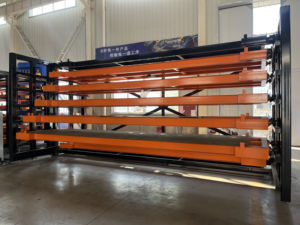
 Heavy-Duty
Precision Structural Manufacturing
Engineered Heavy-Duty Warehouse Racking Portfolio
Direct from our 30,000 m² automated production facility: custom cold-formed structural racks, double-deep profiles, automated shuttles, and integrated mezzanine platforms deployed worldwide.
Heavy-Duty
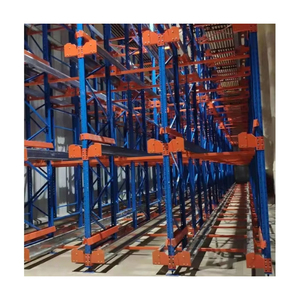 Semi-Automated
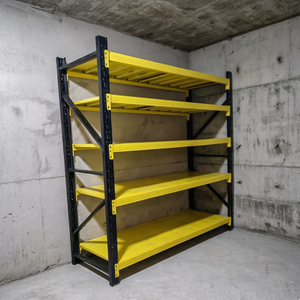 Multi-Level
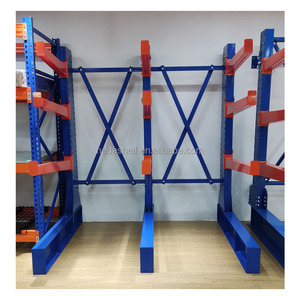 Long Goods
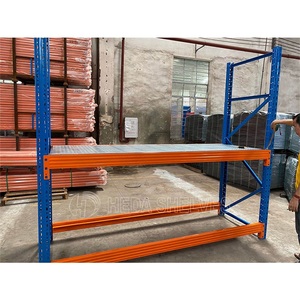 Heavy Pallet
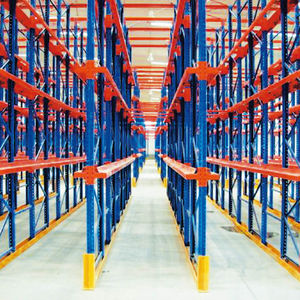 High Density
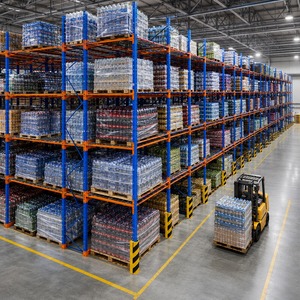 Dynamic FIFO
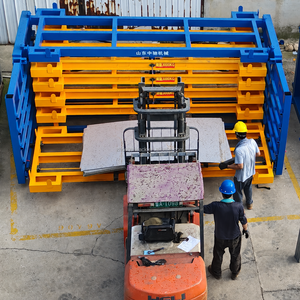 Specialized
2001.
Founded · 25 Years Expertise
30,000m²
State-of-Art Factory Footprint
30,000t
Monthly Fabrication Capacity
10,000+
Global Warehouse Deployments
Engineering Architecture of Custom OEM Double Deep Pallet Racking Systems
In modern industrial logistics, warehouse floor space represents one of the steepest recurring balance sheet liabilities. While conventional single-selective pallet racking delivers 100% instantaneous SKU selectivity, it forces facilities into a punitive volumetric penalty: over 60% of the gross floor footprint is swallowed by operating forklift access aisles. Double Deep Pallet Racking eliminates this compromise by nesting pallets two positions deep in back-to-back configurations, effectively creating a four-pallet deep structural bay served by a single aisle.
As a seasoned custom OEM double deep pallet racking system factory and global exporter, Guangzhou Heda Shelves Co., Ltd. engineers cold-formed profile sections designed specifically to conquer the heightened lateral eccentricities and dynamic tipping moments inherent in extended-reach material handling. By pairing double-deep geometry with specialist pantograph reach trucks or telescopic double-depth attachments, global logistics hubs consistently recapture 30% to 35% of their aisle volume, expanding pallet storage density by up to 60% without expanding facility perimeters.
Key Engineering Metric: Double Deep Pallet Racking delivers an optimal structural equilibrium point—achieving 50% immediate pallet selectivity with an average storage density increase of 55–60% over standard single-selective systems, at approximately one-third the capital outlay (CapEx) of automated AS/RS crane corridors.
1. Kinematic Mechanics & Structural Design Criteria
Double deep racking is not simply two rows of standard selective racks bolted together. Because a reach truck must extend its mast horizontally into the second rack row, structural load transfer vectors change significantly. When the extended reach mechanism deposits a 1,200 kg pallet into the rear position, the supporting beams and uprights experience intense concentrated torsional and rotational forces.
Our OEM engineering group designs upright profiles with high polar moments of inertia, utilizing continuous roll-formed Q235B and Q355B structural steel coils. Uprights feature an 8-bend to 13-bend cross-sectional profile that stiffens the column flanges against local torsional buckling. Frame depth typically spans from 1,900 mm to 2,300 mm, incorporating heavy-gauge horizontal and diagonal structural bracing fastened with Grade 8.8 tensile bolts. High-rigidity row spacers connect back-to-back rows to create a unified, self-stabilizing double-bay truss that dissipates harmonic shock waves during forklift operations and dynamic seismic events.
2. Pallet Support Rails & Deflection Tolerance Control
Rear pallet positioning requires tight visual tolerances for forklift operators. In double-deep layouts, rear pallets sit on beams with limited visual alignment cues. To protect against pallet dislodgement, every custom OEM double-deep tier manufactured by HEDA Shelves integrates heavy-duty roll-formed pallet support guide channels, full-width wire mesh decking with under-beam stiffeners, or heavy guide rails.
Furthermore, under strict adherence to EN 15512 and AS 4084:2023, our beam deflection design thresholds are engineered to not exceed L/200 under maximum allowable static working loads. For deep configurations, our engineering team regularly calculates frame deflection thresholds under L/300 to provide an extra margin of safety against harmonic sway during second-position insertions at elevations exceeding 9,000 mm.
3. Intralogistics Engineering Decision Matrix
Understanding where Double Deep racking sits compared to alternative high-density warehouse systems allows plant managers and procurement teams to make data-driven capital investments:
| Racking Architecture | Floor Space Utilization | Pallet Selectivity | Stock Rotation Mode | Forklift Equipment Requirement | Capital Investment (CapEx) |
|---|---|---|---|---|---|
| Selective Pallet Racking | 35% - 40% (Low) | 100% Immediate Direct Access | FIFO / LIFO Flexible | Standard Counterbalance / Reach | Baseline Standard ($) |
| Custom Double Deep Racking | 60% - 65% (Optimal) | 50% Immediate (2 Pallets/Lane) | FILO (LIFO per lane) | Pantograph Double-Reach / Telescopic | Moderate ($$) |
| Drive-In / Drive-Through | 75% - 80% (Maximum) | 15% - 20% (Batch Access) | Strict LIFO (Drive-In) | Standard Narrow Reach Truck | Moderate-High ($$$) |
| Radio Shuttle System | 80% - 85% (Ultra-Dense) | Lane-Dependent Selectivity | Programmable FIFO / LIFO | Standard Forklift + Automated Carrier | Advanced Automation ($$$$) |
| VNA (Very Narrow Aisle) | 55% - 60% (High) | 100% Direct Immediate Access | FIFO / LIFO Flexible | Specialized VNA Turret Truck / Wire Guide | High Machinery Cost ($$$$) |
4. Critical Warehouse Layout & Forklift Interoperability Parameters
A double-deep storage matrix relies on matching rack tolerances with material handling machinery. Standard reach trucks cannot service double-deep racks; operations require specialized pantograph-equipped double-reach trucks or side-mounted telescopic deep-fork vehicles. Our engineers incorporate the following critical dimensional variables into initial 3D CAD calculations:
- Aisle Clearance: Pantograph reach trucks generally require aisle widths of 2,800 mm to 3,200 mm depending on chassis length, wheel base, and pallet depth (e.g., 1,165 × 1,165 mm Australian pallets or 1,200 × 1,000 mm ISO pallets).
- Bottom Beam Positioning: Unlike selective racking where ground-level pallets can sit directly on the finished concrete slab, double-deep lower bays frequently require a low-elevation beam level (typically 150–200 mm above slab) for the rear pallet position so the forklift reach mechanism clear-straddles cleanly without floor outrigger obstruction.
- Sight-Line Camera & Laser Alignment: When operating above 6,000 mm, forklift masts should integrate wireless fork-carriage cameras and horizontal line lasers. Our beams include color-contrasting visual centering index markings to speed up rear-slot alignment and reduce accidental beam impact.
Market Foresight & Innovation
Procurement & Technological Trends in Heavy Racking
Global supply chain directors are shifting from transactional steel purchasing to integrated structural engineering. Here are the micro and macro trends reshaping commercial pallet racking procurement through 2030.
High-Yield Micro-Alloyed Steels
Rising logistics real estate costs demand higher elevations (exceeding 12 meters), prompting a shift from ordinary mild steel to cold-rolled micro-alloyed structural grades like Q355B and S355MC. These steels deliver a 30% higher yield strength with thinner profile gauges, reducing overall deadweight, cutting ocean shipping tonnages, and dampening seismic inertia forces without sacrificing payload capacity.
Cold Chain Optimization
Cold storage facilities carry power costs up to five times higher than ambient facilities. Double deep systems are now the primary design standard for blast freezers and multi-temperature distribution centers. Double deep configurations eliminate up to half the access aisles, cutting the cubic volume that requires active refrigeration while maximizing storage density for dairy, poultry, and meat exports.
IoT Strain Gauge Structural Monitoring
Enterprise logistics hubs increasingly integrate smart optical strain sensors and MEMS multi-axis impact detectors directly into critical lower upright sections. Connected to warehouse management systems (WMS), these sensors alert safety managers the moment a forklift collision exceeds structural deflection tolerances, preventing progressive catastrophic column collapse.
Factory-Direct Manufacturing Superiority: Guangzhou Heda Shelves Co., Ltd.
Since our establishment in 2001, Guangzhou Heda Shelves Co., Ltd. has developed into a premier tier-one manufacturer and global exporter of high-density warehouse racking and industrial mezzanine platforms. Backed by a dedicated workforce of more than 300 experienced engineers, CNC machine operators, and certified quality control specialists, our 30,000 square meter intelligent manufacturing base delivers over 30,000 metric tons of certified racking monthly to logistics operators across Oceania, Europe, the Americas, Southeast Asia, and the Middle East.
AS 4084 & EN 15512 Compliance
Every double deep system is designed to comply with Australian AS 4084-2023, European EN 15512, and American RMI specifications. We provide complete structural engineering calculations, load application diagrams, and section property tables for review and sign-off by local certifiers.
Verified Certifications
We operate transparently. Our facilities hold valid ISO 9001:2015 Quality Management System Certification (No. 18624Q00169R0M) and European CE Factory Production Control Certification (No. 2435-CPR-8605159), along with full RoHS testing compliance.
Engineered Seismic Bracing
For installations in active earthquake zones such as New Zealand (NZS 1170.5) and the Pacific Rim, we calculate site-specific seismic coefficients, providing enlarged ductile baseplates, double-anchor bolt patterns, and heavy-gauge cross-aisle bracing towers.
Customs & Biosecurity Ready
All export goods ship on custom steel stillages or ISPM-15 heat-treated, stamped timber skids to clear DAFF (Australia), MPI (New Zealand), and US Customs without biological quarantine delays, accompanied by Form E, ChAFTA, or standard COO certificates.
The 10-Stage Precision Manufacturing Workflow
Quality and reliability require rigid production controls. At our automated factory, components move through a 10-stage manufacturing sequence that guarantees structural integrity across every beam, upright, and brace:
- Raw Material Metallurgical Inspection: Every batch of prime cold-rolled steel coils undergoes spectral analysis, yield tensile testing, and elongation verification against Q235B and Q355B standards before entering production.
- High-Speed Precision CNC Slitting: Coils are slit to precision strip widths with tight dimensional tolerances (+/-0.1 mm) to eliminate edge burrs that could compromise weld penetration.
- Automated Multi-Die Column Punching: CNC hydraulic lines punch upright hole matrices (50 mm, 75 mm, or 76.2 mm teardrop pitch) in a continuous single-pass operation to maintain accurate vertical hole pitch over 12-meter lengths.
- Continuous Cold Roll Profile Forming: Slit steel passes through 18-to-24 rolling stages, forming upright columns and step/box beams while preserving structural grain flow and work-hardening high-stress zones.
- Beam Connector Precision Stamping: Heavy 3-claw, 4-claw, and 5-claw beam connectors are stamped from 3.5 mm to 4.5 mm high-strength steel plate, designed to lock securely into columns with high moment resistance.
- Robotic CO2 Shielded Arc Welding: Automated 6-axis welding robots attach connectors to beam tubes, delivering clean, full-penetration welds free of porosity, undercut, or slag inclusions.
- Surface Pre-Treatment & Ultrasonic Degreasing: Components move through a multi-stage immersion and spray tunnel including alkaline degreasing, acid pickling, zinc phosphating, and deionized water rinsing to ensure complete rust removal.
- Electrostatic Powder Application: Automated reciprocating spray guns apply environmentally compliant TGIC-free thermoset epoxy-polyester powder, maintaining an average dry film thickness (DFT) of 60–90 microns.
- High-Temperature Infrared Curing: Coated parts travel through a 180°C to 200°C curing oven, polymerizing the powder into a hard, impact-resistant, cross-linked finish that resists scratching, chipping, and chemical spills.
- Final Quality Assurance & Biosecurity Export Packaging: Certified inspectors run gloss tests, cross-hatch adhesion checks, and ultrasonic thickness tests. Passing components are bundled with protective edge boards, strapped to steel skids, and wrapped in waterproof stretch film for ocean transit.
Due Diligence Guide
Frequently Asked Questions for Double Deep Racking Procurement
Essential technical, structural, and logistical questions evaluated by warehouse managers, consulting engineers, and supply chain executives prior to placing an OEM manufacturing order.
How does Double Deep Pallet Racking fundamentally change warehouse floor capacity compared to standard single selective racking?
In a standard selective racking layout, each storage row requires its own dedicated operating aisle. Double deep racking places two rows back-to-back on either side of the aisle, creating a 4-deep bay cluster between access lanes. This eliminates up to 50% of the interior forklift corridors, reducing aisle floor footprint from roughly 60% down to approximately 35-40% of total facility area. This operational shift provides an average storage density increase of 55% to 60% for identical warehouse dimensions, while retaining 50% immediate pallet selectivity (1 out of every 2 pallets immediately accessible without shifting others).
What specific forklift mast attachments are mandatory for double deep rack systems?
Standard counterbalance and standard reach trucks cannot service double-deep systems. Warehouses must deploy either pantograph double-reach trucks (scissor-mechanism extending carriage) or reach trucks fitted with hydraulic telescopic tele-forks. For elevations over 7,500 mm, forklift fleets should also be equipped with mast-mounted wireless cameras, auto-centering fork tilt sensors, and fork-tip line-projecting laser guides to help operators safely align with second-position pallet slots without bumping rear support beams.
How do international building codes and fire standards (e.g., NFPA 13) address ESFR sprinkler requirements for double deep racks?
Because double-deep rows create a continuous storage depth of 2,200 mm to 2,400 mm, flue space management is essential. Under NFPA 13 and regional fire building codes, longitudinal and transverse flue spaces must remain open and unobstructed (typically 75 mm to 150 mm) to allow early ceiling-level ESFR (Early Suppression Fast Response) sprinkler heat penetration and vertical water distribution. Our OEM factory designs structural pallet backstops and wire mesh decks with integrated pallet positioning tabs to prevent loads from intruding into the central flue corridor, frequently eliminating the need for expensive in-rack sprinkler pipework at lower heights.
Can HEDA Shelves engineer double deep profiles to comply with Australian AS 4084:2023 and New Zealand NZS 1170.5 seismic regulations?
Yes. Our engineering division regularly designs project layouts referencing AS 4084:2023 principles and New Zealand earthquake standards. For high seismic zones (such as Wellington, Christchurch, or the US Pacific Northwest), we increase baseplate surface areas and steel thicknesses, incorporate ductile Grade 8.8 seismic anchoring bolts, integrate double-flanged column stiffeners, and install cross-aisle portal structural ties. We supply complete section properties, load capacity plaques, and 3D finite element calculation packs to assist local independent registered engineers with site sign-off.
What concrete floor slab specifications and flatness ratings (TR34 / DIN 18202) are required?
Double deep systems, particularly those exceeding 8 meters in clear height, impose high point loads on concrete slabs through the baseplates. Slabs must typically provide minimum compressive strengths of 25 to 30 MPa, with reinforcement engineered to absorb baseplate point loads reaching 40 to 90 kN. Regarding floor flatness, while double deep aisles do not require the ultra-strict VNA tolerances of TR34 Superflat specifications, maintaining a floor classification of DIN 18202 Table 3 Line 3 or TR34 DM2 (Free Movement) is recommended to avoid truck lean that could cause mast swaying or binding when inserting loads into deep upper positions.
What are the typical manufacturing lead times, export packing protocols, and ocean freight logistics?
Standard OEM production runs for 10 to 50 container loads typically take 20 to 30 days from final CAD layout sign-off. Cargo is packed on custom steel frames or ISPM-15 compliant heat-treated timber stillages to simplify biosecurity checks by agencies like DAFF and MPI. Transit times from our Guangzhou port to Australian and New Zealand main ports (Sydney, Melbourne, Brisbane, Auckland) range from 14 to 24 days; shipments to US West Coast ports (Los Angeles/Long Beach) average 16 to 22 days; European hubs (Rotterdam, Hamburg) take 28 to 35 days. Complete commercial documentation, including packing lists, bills of lading, and Certificates of Origin, is issued for every export order.
Direct Factory Quotation & 3D Design
Request Your Custom OEM Racking Engineering Layout
Provide your warehouse dimensions, clear operating height, pallet profiles, and reach truck models. Our technical engineering division will generate a detailed structural calculation package, bill of materials (BOM), and 3D CAD layout within 24 hours.
Warehouse Architectural Floor Plan
Clear Height to Sprinkler Obstructions
Pallet Dimensions (W x D x H) & Max Weight
Forklift Model & Extended Reach Height
Connect Directly With Our Engineers
Get accurate factory-direct unit pricing, section data properties, and ocean container load calculations.
Contact Us
Guangzhou Heda Shelves Co., Ltd. · Worldwide Export Support