Precision-Engineered OEM Drive In & Pallet Rack Systems
Fabricated from certified high-tensile Q235B and Q355B structural coil steel, our heavy-duty drive-in and double-pallet systems deliver up to 85% volumetric warehouse efficiency with full compliance to AS 4084, FEM 10.2.02, and RMI standards.
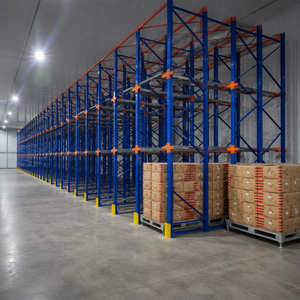
Industrial Drive in Racking System Warehouse Storage High Density Pallet Racking with FILO Q235B Steel Rack
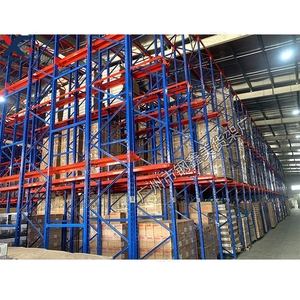
Boltless Metal Steel Stacked Parking System Refrigerated Warehouse Drive-in Rack Double Pallet Rack System
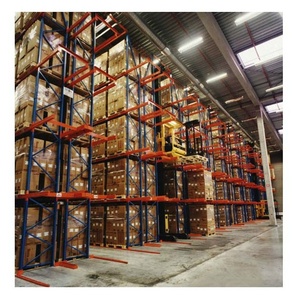
Jracking Warehouse Steel Metal Storage Drive in Rack Storage System
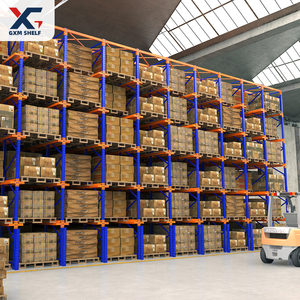
GXM Industrial Heavy Duty Warehouse Rack Boltless Storage Pallet Racking System Shelving Drive-in Rack
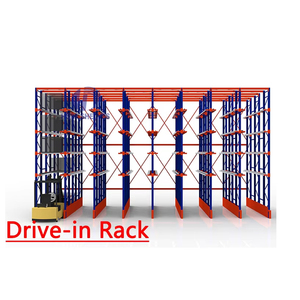
High-Capacity Drive-In Pallet Racking System Drive-Through Pallet Rack for Storage Warehouses
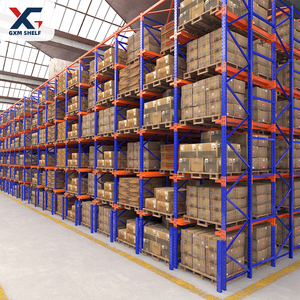
GXM Industrial Rack Heavy Duty Warehouse Rack Boltless System Storage Pallet Shelving Industrial Shelves Drive-in Rack
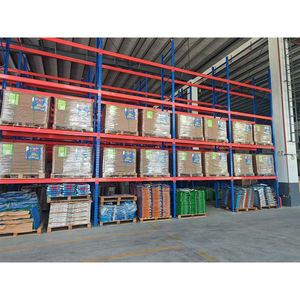
Drive in Rack Warehouse Rack Heavy Duty Metal Drive in Pallet Racking System Heavy Duty Rack Roller Display
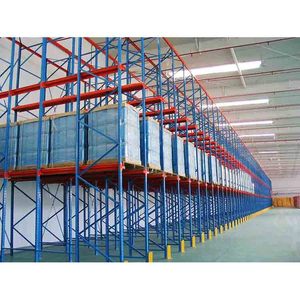
China Factory Direct Heavy Duty Drive-In Pallet Racking System Storage Solution Warehouses Shelving Cargo Storage Equipment
Engineering Principles of Drive-In Racking Systems
Drive-In and Drive-Through pallet rack structures are designed for maximum cubic footprint utilization by removing dynamic aisle space. Because counterbalance and reach forklifts physically enter the storage bays to stage and retrieve pallets, the system relies on unbraced cantilever portal frames with specialized continuous support rails, requiring stringent calculation of longitudinal stability, deflection limits, and mast clearance tolerances.
| Structural Component | Material Specification | Engineering Dimension / Section | Yield Strength / Standard | Manufacturing Tolerance |
|---|---|---|---|---|
| Cold-Formed Upright Columns | Q235B / Q355B Hot-Rolled Strip | 80×60, 90×70, 100×70, 120×95 mm; Thk 1.8–2.5mm | Yield ≥ 235–355 MPa; AS 4084 / EN 15512 | Pitch perforation ±0.1mm (Continuous punch) |
| Cantilever Bracket Arms (Single/Double) | Heavy-Duty Stamped Structural Plate | Formed wrap-around bracket; Thk 3.0–4.5mm | High Moment Resistance; Anti-Twist Pin Lock | Robotic Welded Bracket Fitment ≤ 0.5mm |
| Continuous Pallet Guide Rails | Cold-Roll Formed Galvanized / Painted | Asymmetrical Z-Rail or C-Section with flared entries | Load rating up to 1,800 kg/pallet position | Linear straightness ≤ 1:1000 deflection limit |
| Top Tie & Portal Spine Bracing | Structural Box / Channel Sections | 50×30mm, 60×40mm, Structural Angle Transverse ties | Maintains frame squareness against forklift sway | Welded cleat hole matching to ±0.2mm |
| Heavy-Duty Ground Guide Rails | Hot-Rolled Angle Steel / Structural C-Beams | L75×50×5mm or L100×75×6mm with M12–M16 anchors | Absorbs dynamic forklift tire impact forces | Anchored to slab with Hilti/Fischer anchors |
| Corrosion Protection Treatment | Epoxy-Polyester Resin / Hot-Dip Zinc | Dry Film Thickness (DFT): 60–90 μm / 65–85 μm HDG | ISO 9227 Salt Spray ≥ 500h; Sub-zero cold chain | 100% cross-hatch adhesion tested (ASTM D3359) |
FILO vs. FIFO Kinetic Flow Mechanics
Drive-in systems operate on a Last-In, First-Out (FILO) protocol with single-sided entry, making them ideal for homogenous stock with low turnover velocities. Conversely, Drive-Through architectures provide dual entry and exit faces to deliver First-In, First-Out (FIFO) staging for date-sensitive perishable inventories.
- 60%–85% reduction in non-productive aisle footprint
- Top-tie cross bracing guarantees portal anti-torsion
- Flared rail lead-ins center pallets smoothly
Forklift Impact Dissipation & Guarding
Because lift trucks operate inside the actual rack cube, upright vulnerability is structurally significant. HEDA integrates reinforced column wrap-around bullnose protectors, floor-guided anchor rails, and double-depth front upright boots that isolate heavy dynamic strikes from transfering into main load-bearing frames.
- High-tensile steel column guards anchored directly to slab
- Continuous heavy-angle ground floor truck guidance
- Tapered entry bevels prevent pallet fork snagging
Seismic Dissipation & Finite Element Testing
Engineered with custom frame node analysis under ANSYS and finite element modelling (FEM). For seismically active regions across Australasia and the Americas (NZS 1170.5, AS 4084, and IBC/RMI), column sections, heavy baseplates, and high-ductility anchor studs are customized to resist second-order P-Delta overturning forces.
- Elastic-plastic structural moment connection verification
- Extended footplate designs for dual-stud post-tension slabs
- Certified load plaque documentation included with each bay
Future Procurement & Technology Trends in High-Density Storage
As global real estate lease rates surge and cold-chain cold-store power utility expenses escalate, global supply chain executives are re-evaluating high-density storage infrastructure. Procurement of custom OEM Drive-In racking is shifting rapidly from standard commodity metal purchases toward turnkey, automation-ready structural systems.
1. Cold-Chain Energy Density Optimization
Refrigerated warehouse facilities are the fastest-growing sector for drive-in racking. Cooling empty aisle space represents substantial wasted kilowatt-hour overhead. By consolidating pallet storage into 4-to-8-deep continuous drive-in lanes, chilled facilities reduce thermal volume per stored SKU by up to 40%, generating ongoing operational energy payback.
- Anti-embrittlement cold-rolled steel alloy specifications
- Resilient epoxy powder formulations resistant to frost heave
- Optimized airflow clearances for evaporator ventilation
2. Modular Hybridization to 2D Radio Shuttles
Leading buyers are now procuring Drive-In upright frames designed with multi-functional hole perforations that accommodate quick retrofit to semi-automated Radio Pallet Shuttle channels. When SKU volume spikes, warehouses can transition from manual forklift entry to robotic shuttle carriers without scrapping the foundational upright steel investments.
- Universal bracket geometry for dual rail systems
- Eliminates forklift mast intrusion into racking rows
- Decreases operational structural maintenance costs by 70%
3. Decarbonized Steel & TCO Sourcing Hedging
Procurement teams are moving away from speculative spot-market intermediaries toward direct OEM mill-partnered manufacturers. Through raw coil steel procurement hedging, pre-engineered nesting packaging that fits 27 tons into standard 40-foot High-Cube shipping containers, and documented low-VOC coatings, buyers protect against volatile steel market spikes.
- Complete Mill Test Certificates (MTC) with heat traceability
- Optimized shipping stillages to eliminate ocean transit damage
- Direct factory invoicing supporting bilateral FTA tariff benefits
10-Stage Precision Manufacturing Workflow
Our automated production lines process over 30,000 metric tons of certified structural steel monthly. Every cold-roll formed upright, beam connector, and load rail passes through a rigorously calibrated 10-stage fabrication process ensuring millimetric interchangeability on the assembly jobsite.
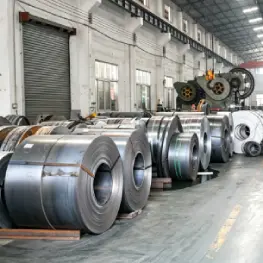
Raw Material Metallurgical Testing
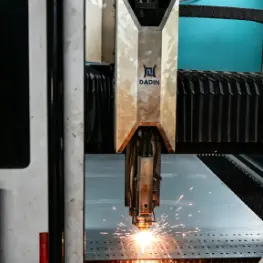
Precision CNC Slitting & Cutting
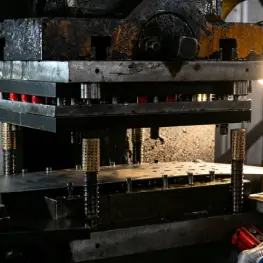
Automated Pitch Column Punching
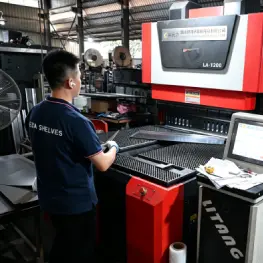
Hydraulic Cold Bending & Forming
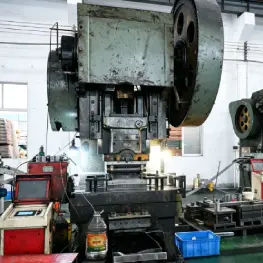
Multi-Station Roll Profile Forming
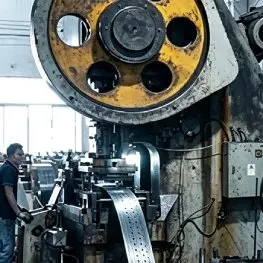
Surface Deburring & Edge Polishing
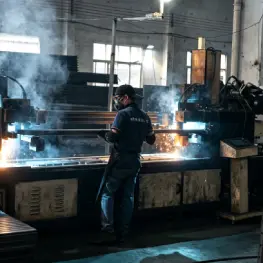
Robotic Automatic MIG Welding
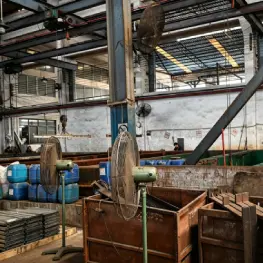
Multi-Tank Pickling & Phosphating
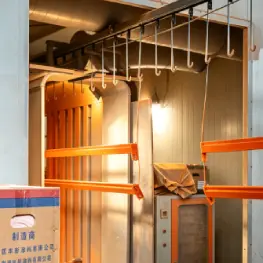
Automated Powder Electrostatic Coating
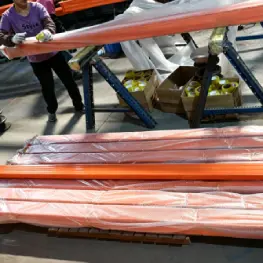
Dimensional QC & Export Stillage Packing
Guangzhou HEDA Shelves Co., Ltd. — Engineering Global Supply Chains
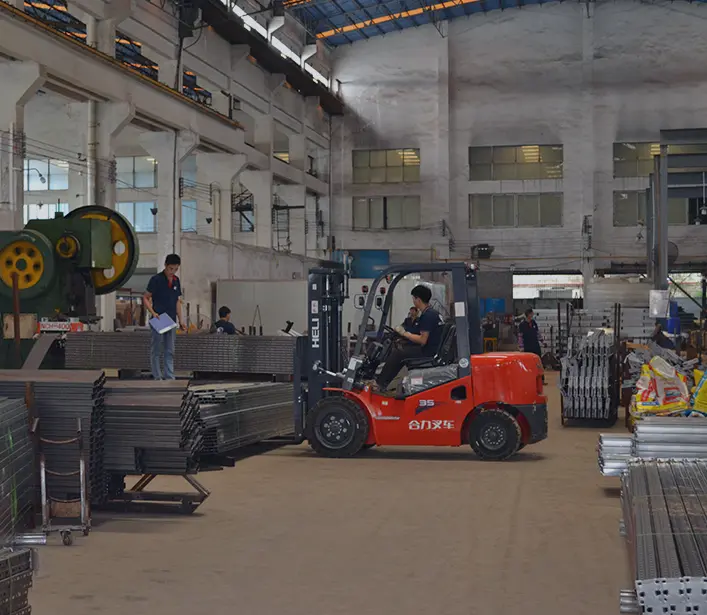
Founded in 2001, Guangzhou HEDA Shelves Co., Ltd. has grown from a specialized steel fabrication workshop into an international logistics equipment manufacturer. Operating a 30,000 m² state-of-the-art facility with over 300 experienced engineers and skilled technicians, HEDA provides complete OEM and ODM supply chain partnership for warehouse rack distributors, EPC contractors, and multinational commercial operations.
We supply verified section property tables, 3D CAD parametric layouts, and anchor bolt shear/pullout engineering calculations tailored to local standards across Australia, New Zealand, Europe, and the Americas.
-
Certified Compliance: CE Certification No. 2435-CPR-8605159; ISO 9001:2015 Management System No. 18624Q00169R0M; AS 4084 (Oceania) referenced.
-
Biosecurity & Strict Quarantine: Export shipments bundled on custom structural steel stillages or ISPM-15 heat-treated dunnage, eliminating port fumigation holds under DAFF (Australia) and MPI (New Zealand).
-
Turnkey Engineering Data: Comprehensive structural engineering calculation dossiers, Finite Element Analysis (FEA), and free 24-hour CAD layout blueprints prior to order deposit.


Frequently Asked Questions on Custom Drive-In Racking
Real-world engineering, logistics, and compliance inquiries addressed by our senior structural engineering team.
Request an Engineered Drive-In Racking Layout & Factory Quotation
Our senior structural design department generates comprehensive 3D CAD parametric drawings, structural capacity charts, and FOB/CIF commercial pricing within 24 business hours. Provide your facility parameters to begin:
Direct OEM Engineering Support
Speak directly with our factory design engineering team for custom OEM fabrication and export pricing.
Send an Inquiry