[email protected] Supplying Australia, New Zealand & the Pacific Islands
ISO 9001:2015 & CE Certified Intralogistics Engineering

Custom OEM Flow Rail Racking Suppliers & Exporters

High-Density Dynamic Gravity Roller Systems, Structural Steel Uprights, & Turnkey FIFO Pallet Flow Engineering Built to AS 4084, FEM 10.2.02, and RMI Industrial Standards.

Export-Grade Product Matrix

Engineered Flow Rail Racking & High-Density Storage Solutions

Precision-formed structural steel storage units, automatic shuttle bays, carton gravity tracks, and cold-formed profile machinery manufactured to custom OEM global specifications.

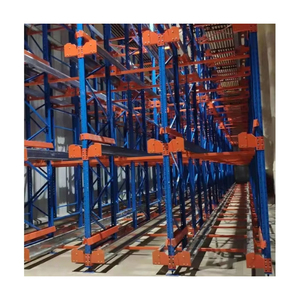
High Efficiency Auto Rack Shuttles Warehouse Pallet Shuttle System
Radio Shuttle Automation

High Efficiency Auto Rack Shuttles Warehouse Racking Stacking Racks Pallet Shuttle System

  • Load Capacity: 500 – 1,500 kg/pallet
  • Operating Modes: FIFO & LIFO Dual Lane
  • Compliance: CE Certified 2435-CPR-8605159
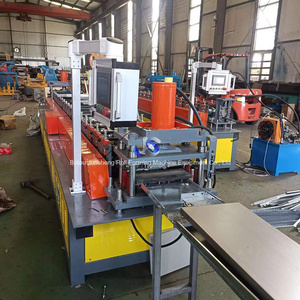
Warehouse Shelf Upright Rack Forming Machine Metal Forming Line
Manufacturing Equipment

Warehouse Shelf Upright Rack Forming Machine Full Auto Storage Rack Shelf Forming Line

  • Steel Strip Thickness: 1.5 – 3.5 mm Q235B/Q355
  • Automation: Full Servo CNC Punching & Rolling
  • Forming Speed: 12 – 18 m/min continuous
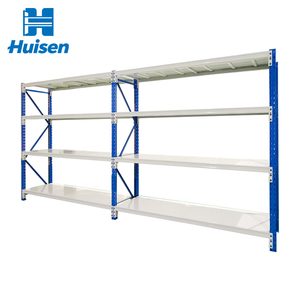
5-Layer Medium Duty Manual Picking Rack Adjustable Beam Design
Manual Picking Racks

High Capacity High-Strength Steel 5-Layer Medium Duty Manual Picking Rack Adjustable Beam

  • Uniform Distributed Load: 300 – 800 kg/tier
  • Pitch Adjustability: 50 mm incremental slots
  • Surface Treatment: Electrostatic thermoset finish
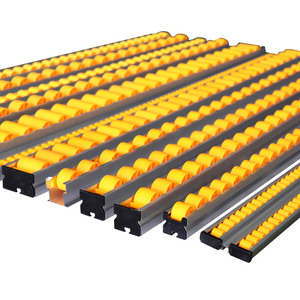
Gravity Flow Rail Roller Track PE ABS Wheel Carton Flow Rack
Dynamic Gravity Flow

Gravity Flow Rail Roller Track PE ABS Wheel 200KG Load Carton Flow Rack FIFO Sliding Shelf

  • Track Roller Rating: High-durability PE/ABS rollers
  • Inclination Slope: 2.5° – 4.5° gravity decline
  • Fulfillment Type: Strict FIFO case & carton feed
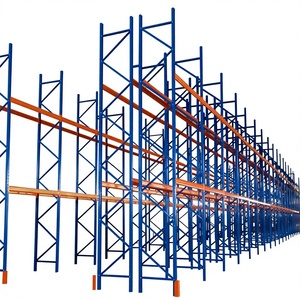
Heavy Duty Warehouse Rack Storage Rack Q235B Steel
Heavy-Duty Pallet Racks

Heavy Duty Warehouse Storage Rack Q235B Structural Steel for Logistics Hubs

  • Load Specification: 1,000 – 4,500 kg per beam level
  • Raw Metallurgy: Certified certified Q235B / SS400
  • Standards: AS 4084 & FEM 10.2.02 compliant
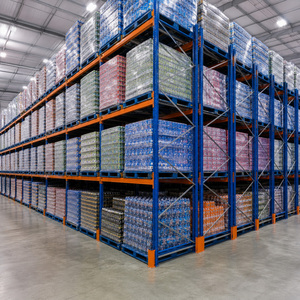
Hongxin Heavy Duty Multi-Level Steel Warehouse Racking Powder Coated
Multi-Tier Systems

Hongxin Blue & Orange Steel Multi-Level Heavy-Duty Racking Warehouse Powder Coated

  • Configuration: Modular high-bay upright frames
  • Locking Design: 3-5 connector rivet safety pins
  • Corrosion Shield: High-adhesion powder coating
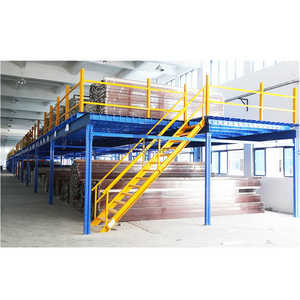
Corrosion-Resistant Steel Mezzanine Storage Racks System
Industrial Mezzanines

Corrosion-Resistant Bolt-Structured Powder Coating Steel Mezzanine Storage Racks System

  • Floor Loading: 300 – 1,200 kg/m² uniform rating
  • Platform Integration: Steel grid, perforated, plywood
  • Safety Features: Integrated kickplates & handrails
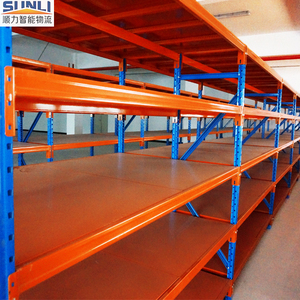
Heavy-Duty Metal Adjustable Steel Shelving Units ESD Protection
ESD Specialized Shelving

SUNLI Factory Heavy-Duty Metal Adjustable 5-Layer Steel Shelving Units ESD Protection Deck

  • Protection: Conductive ESD epoxy dissipation
  • Assembly: Boltless clip-lock rapid configuration
  • Industrial Target: Electronics, pharma, cleanrooms
Technical Whitepaper: Intralogistics Engineering

The Mechanics of Custom OEM Flow Rail Racking Systems

Analyzing the structural kinematics, gravity flow dynamics, mechanical speed dampening, and metallurgical selections required for fail-safe high-density warehouse operations.

Gravity Gradient & Kinetic Velocity Control

Dynamic pallet flow systems rely on natural gravitational force to glide heavy unit loads along inclined roller beds. Engineering the decline gradient requires balancing pallet friction coefficients against uncontrollable acceleration hazards.

Our flow lanes maintain a precision gradient between 2.5% and 3.5% (approx. 1.5° to 2.0° pitch angle). Integrated centrifugal braking rollers engage automatically whenever descending velocity exceeds 0.25 m/s, preventing dangerous pallet runaway impacts at the picking face.

Velocity Threshold: Kept within 0.15–0.30 m/s across lanes up to 30 meters deep.

Cold-Formed Metallurgy: Q235B vs Q355B

Structural integrity begins with mill-certified prime steel coils. Uprights and continuous flow rail tracks endure intense concentrated point loads, dynamic shear stress from moving pallets, and potential forklift collisions.

We utilize hot-rolled Q235B structural carbon steel (yield strength $\ge$ 235 MPa) for ambient warehousing, and high-strength Q355B micro-alloyed steel (yield strength $\ge$ 355 MPa) for sub-zero freezer racking (-30°C) and high-seismic configurations compliant with NZS 1170.5 and AS 4084-2023.

Tensile Strength: 370–500 MPa (Q235B) up to 470–630 MPa (Q355B).

Pallet Separation Mechanics & Safety End-Stops

Line pressure builds progressively behind the front pallet when multiple 1,200 kg pallets accumulate in a single 15-pallet deep lane. Excessive hydrostatic line pressure can cause pallets to jam, splinter wood runners, or launch forward dangerously during forklift extraction.

HEDA OEM flow rails feature mechanical pallet separators. The front pallet triggers a mechanical disengagement latch that locks the trailing queue 150 mm behind it. The secondary pallets advance automatically only when the front load is fully lifted from the retrieval station.

Line Pressure Relief: Eliminates 100% of accumulated deadweight during retrieval.
Engineering Kinematics

Calculating Incline Angle & Roller Spacing

Gravity flow optimization depends on balancing gravitational driving force with rotational bearing drag, pallet bottom deflection, and roller inertia. Our structural engineering department applies empirical dynamic load modeling for each OEM skid geometry:

F_net = m · g · (sinθ - μ_r · cosθ) - F_brake
Where:
• m = Gross pallet mass (kg)
• θ = Lane gradient angle (standard 1.8° - 2.5°)
• μ_r = Rolling resistance coefficient of PE/ABS or galvanized steel rollers
• F_brake = Dynamic counter-torque generated by internal eddy-current or centrifugal dampeners
Strategic Sourcing Intelligence

Global Sourcing Trends in Dynamic Flow Rail Systems

How enterprise supply chains, cold storage operators, and multi-client 3PL distribution hubs are optimizing CapEx, warehouse footprint utilization, and warehouse management system (WMS) throughput.

Total Cost of Ownership (TCO): Selective vs Flow Rails

Industrial warehouse lease rates in major logistics hubs across Sydney, Melbourne, Auckland, Rotterdam, and Los Angeles have surged 40–75% over the past cycle. Static selective pallet racking requires up to 60% of floor space dedicated solely to forklift travel aisles.

Custom flow rail racking eliminates aisle sprawl, reducing overall warehouse floor space requirements by 35% to 50% for equivalent pallet counts. The resulting reduction in land acquisition, facility heating, refrigeration electricity, and forklift fleet sizes offsets initial racking procurement costs within 14 to 22 months.

Footprint Compression: Up to 75% floor area storage density vs 35% for conventional layouts.

Cold Chain Integrity & Perishable FIFO Enforcement

Stringent food safety traceability standards (FSMA, HACCP, and EU 178/2002) mandate foolproof First-In, First-Out inventory control. Standard drive-in systems operate on a Last-In, First-Out (LIFO) model, frequently resulting in buried expired inventory, product spoilage, and costly manual stock reorganizations.

Flow rail storage forces pristine FIFO material handling mechanically. Pallets are inducted exclusively from the rear loading aisle and retrieved from the picking face. In refrigerated and blast-freezer warehouses, condensed storage volume reduces cubic air volume requirements, lowering cooling energy consumption by up to 30%.

Spoilage Reduction: Eliminates stock rotation human error and lot expiration write-offs.

Seismic Engineering & International Code Verification

Procuring racking offshore requires compliance verification against regional structural standards. In Australia and New Zealand, installations must align with AS 4084-2023 (Steel Storage Racking) and NZS 1170.5 (Structural Design Actions - Earthquake Actions).

HEDA engineering packages provide complete section properties, column punching tensile certificates, finite element analysis (FEA) models, and calculation sheets ready for local Registered Professional Engineers (CPEng / RPEQ) to rubber-stamp. Structural uprights feature heavy baseplates and anchor patterns engineered to resist ductile earthquake forces.

Documentation Pack: Load capacity plaques, FEA deflection diagrams, and mill test certificates (MTC).
Storage System Architecture Space Utilization Ratio Stock Rotation Strategy Forklift Travel Time Damage Risk Factor Relative CapEx Index
Gravity Flow Rail (Pallet Flow) 75% – 85% (Ultra High) Strict FIFO (Dedicated Faces) Low (Short, Separated Runs) Minimal (Trucks never enter lanes) Moderate – High
Radio Shuttle Automation 80% – 88% (Maximum) Configurable FIFO / LIFO Low (Automated deep carrier) Very Low (Zero bay entry) High (Robotic carrier battery)
Drive-In / Drive-Thru 65% – 75% (High) Strict LIFO (Drive-Thru FIFO possible) High (Forklift drives deep into rack) Severe (High upright collisions) Low – Moderate
Push-Back Racking (Cart/Rollers) 60% – 70% (Medium-High) Strict LIFO (Aisle access only) Moderate (Front-facing access) Low – Moderate Moderate
Standard Selective Racking 35% – 45% (Low) Unrestricted Access (100% SKU) High (Wide aisle transit distances) Moderate Low (Baseline)
Smart Intralogistics Technology

Technological Advancements in Modern Flow Systems

From self-governing smart magnetic brakes to IoT-connected inventory monitoring and hybrid robotic integration, dynamic gravity storage has evolved into an active component of Industry 4.0 fulfillment.

Non-Contact Eddy-Current Magnetic Braking

Traditional flow systems utilize internal mechanical friction shoes inside centrifugal speed rollers. In high-cycle 24/7 facilities, rubber brake linings wear down, generating maintenance downtime, fine particulates, and inconsistent braking speeds across varying pallet weights.

Next-generation OEM flow lanes integrate frictionless eddy-current magnetic dampeners. As the conductive aluminum rotor spins through an internal permanent magnetic field, counter-electromotive force creates smooth, wear-free deceleration directly proportional to pallet speed.

Zero Mechanical Wear: 100% contactless braking with service lives exceeding 10 years without re-lining.

Carton Flow & Pick-to-Light (PTL) / AMR Synergy

For rapid e-commerce split-case order picking, gravity roller tracks are integrated directly into carton live storage shelves paired with digital pick-to-light LED arrays.

Autonomous Mobile Robots (AMRs) interface directly with roller-track output buffers. Once an order picker or gravity slide transfers totes to the pick face, autonomous tuggers dock seamlessly at the discharge threshold, cutting human warehouse travel distances by up to 70%.

Order Picking Throughput: Achieves up to 450 lines/hour per picking station.

Optical Sensor In-Lane Occupancy Telemetry

Deep-lane gravity storage systems traditionally presented "blind" inventory voids where warehouse managers could not determine the precise number of pallets resting inside a 20-pallet lane without line-of-sight visual confirmation.

Integrated photoelectric retro-reflective sensors and wireless ultrasonic nodes along flow rail track profiles transmit real-time lane occupancy metrics directly to the warehouse WMS. Automatic replenishment alerts trigger before order picking lines exhaust active staging lanes.

Real-Time Visibility: Pinpoint inventory lane accuracy across multi-tier picking structures.
Direct Manufacturing Authority

Why Global Tier-1 Importers Partner with HEDA Shelves

Guangzhou Heda Shelves Co., Ltd. (founded 2001) is a specialized Chinese manufacturer and exporter of heavy-duty pallet racking, dynamic flow systems, and industrial mezzanines.

2001
Established Year
30,000m²
Factory Facility
30,000t/mo
Steel Throughput Capacity
10,000+
Completed Global Projects

Complimentary 3D CAD/BIM Layouts within 24 Hours

Send us your warehouse floor plan, ceiling clear heights, obstacle columns, forklift models, and pallet footprint (Australian 1165 × 1165 mm, Euro 1200 × 800 mm, or US 48 × 40 in). Our 300+ engineering team models complete spatial designs with load calculation schedules free of charge.

Verified ISO 9001:2015 & CE Certified Production

We operate fully certified quality control workflows under Certificate No. 18624Q00169R0M and European CE Certification No. 2435-CPR-8605159. Every batch undergoes ultrasonic weld testing, coating thickness verification (70–90 μm standard), and metallurgical yield load testing.

Full Custom OEM & Private Label Support

We supply leading overseas racking distributors, material handling dealers, and system integrators with white-label and private-branded production. Custom roll-tooling profiles, branded component stamping, bespoke powder coating color matching (RAL standard), and customized packaging are executed seamlessly.

10-Step Automated Production & Surface Treatment

Our factory features an automated manufacturing line: raw steel tensile inspection, precision CNC shearing, automated column punching, continuous profile roll forming, robotic welding, 9-stage pickling and phosphating pre-treatment, and electrostatic thermoset powder curing ovens.

Biosecurity-Compliant Export Crating (DAFF & MPI)

Racking components are bundled in structural steel shipping stillages or export-stamped ISPM-15 heat-treated timber. This ensures zero border treatment holds or fumigation demurrage at major ports like Sydney, Melbourne, Brisbane, Auckland, Tauranga, Long Beach, and Hamburg.

Trade Agreement Preferential Duty Documentation

We supply complete documentation including commercial invoices, detailed packing manifests, bills of lading, and preferential Certificates of Origin under bilateral free trade frameworks (such as ChAFTA for Australia and the NZ-China FTA), enabling clients to import with minimal tariff liabilities.

Procurement Knowledge Base

Frequently Asked Questions: Flow Rail Racking Procurement

Key engineering parameters, operational tolerances, customs considerations, and quality certifications addressed by our chief intralogistics engineers.

What is the standard decline angle and gradient required for pallet flow rails?
The standard slope for pallet gravity flow lanes ranges between 2.5% and 3.5% (approx. 1.5° to 2.0° pitch angle). Plastic pallets and ultra-heavy unit loads (over 1,200 kg) typically require flatter inclines (approx. 2.0–2.5%) combined with closely-spaced centrifugal brake rollers. Rough wooden skid boards with deflection require steeper 3.5% gradients to maintain momentum.
How does HEDA guarantee compliance with Australian AS 4084 and NZS seismic codes?
All HEDA racking systems are engineered with reference to AS 4084 (Steel Storage Racking) principles. For Australian and New Zealand installations, we configure cold-formed upright profiles using certified Q235B/Q355B structural steel, enlarged baseplates, heavy frame bracing, and heavy-duty concrete wedge anchors calculated to meet site-specific spectral acceleration factors ($C_h(T)$) under NZS 1170.5. Complete engineering calculations and section property sheets are provided for local engineer sign-off.
What are the minimum and maximum lane depths for custom OEM flow racks?
We manufacture custom flow lanes ranging from 2-pallet deep push-back tracks up to 25-to-30 pallet deep high-volume gravity dynamic lanes (typically 25 to 35 meters in total run). For lanes exceeding 6 pallets deep, intermediate speed controllers (centrifugal brake rollers) are integrated every two pallet positions, paired with automatic mechanical pallet separators at the exit face to eliminate hydrostatic line pressure.
Can flow rails accommodate non-standard pallets or varying bottom runner designs?
Yes. Flow rail systems can be equipped with either continuous full-width heavy steel rollers or multi-track skate wheel lines. For pallets with perimeter bases, 9-block configurations, or Australian standard CHEP/Loscam 1165 × 1165 mm skids with bottom boards, we engineer 3-track or 4-track wheel bed layouts with entry guide funnels to ensure the pallet skids track centrally without pinching or bottom-board snagging.
What is the typical production and shipping timeline for an export order?
Standard OEM production lead time for an average order (2 to 8 forty-foot high-cube containers) is 20 to 30 calendar days from CAD shop drawing approval. Ocean freight transit from South China ports (Guangzhou / Shenzhen / Nansha) to major destination ports such as Sydney, Melbourne, Brisbane, Fremantle, Auckland, or Tauranga averages 14 to 28 days depending on the shipping line routing.
How does HEDA handle international surface finish requirements for humid or cold environments?
We provide two primary finish options: high-adherence electrostatic thermoset epoxy polyester powder coating (cured at 180°C–200°C with 70–90 μm thickness) for standard ambient and dry inland distribution centers, and continuous hot-dip galvanizing (HDG compliant with ISO 1461, coating thickness 55–85 μm) for sub-zero freezer cold stores, outdoor loading docks, fertilizer warehouses, and humid tropical coastal installations.

Request an Engineered Layout & Direct Factory Quotation

Collaborate directly with our engineering team to maximize your warehouse storage capacity. Provide your floor plan dimensions, clear ceiling heights, and pallet specifications to receive a free 3D CAD simulation, bill of materials (BOM), and direct export pricing within 24 hours.