Custom OEM Pallet Racking In Warehouse Manufacturers & Factory
Precision-engineered industrial pallet racking systems fabricated from certified Q235B/Q355B steel. Supplying high-density selective, shuttle, and automated AS/RS storage structures certified to AS 4084, FEM 10.2.02, and RMI standards worldwide.
Engineered Storage Equipment
Precision OEM Industrial Pallet Racking Systems
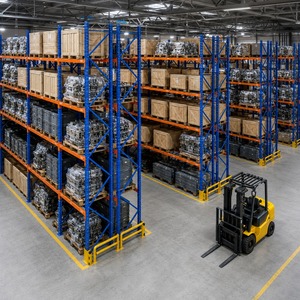
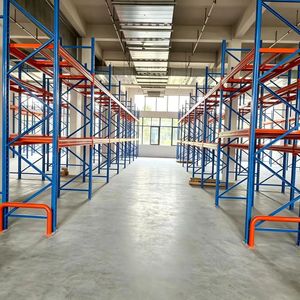
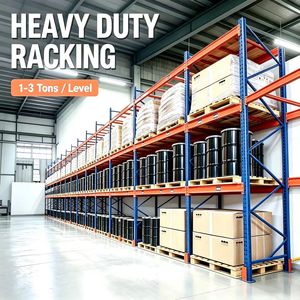
Direct factory supply of structural steel storage racks, high-density shuttle corridors, and automated warehousing infrastructure customized to your building clear height, unit load profiles, and material handling fleet.
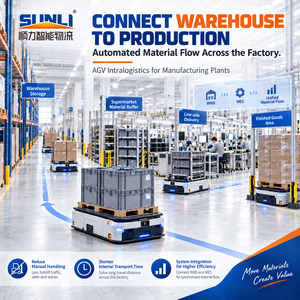
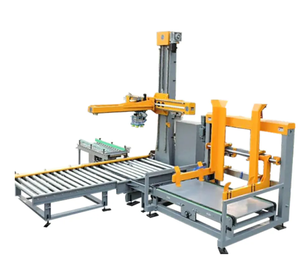
Continuous end-of-line palletizing and dispenser system paired with staging buffer racks to optimize material transfer between picking and storage bays.
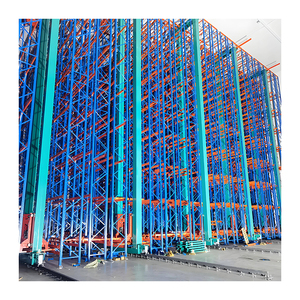
Maximizes cubic storage volume up to 85% by eliminating forklift aisles. Semi-automated electric radio shuttles carry pallets swiftly down galvanized rails.
The Engineering Science Behind Structural Warehouse Racking
Industrial pallet racking is not merely a shelving rack; it is an unbraced or semi-braced structural steel framework subjected to severe dynamic impact, seismic moments, and heavy cyclical dead loads. When sourcing custom OEM pallet racking, global procurement directors must scrutinize cold-formed steel metallurgy, precision punching tolerances, and connection stiffness coefficients.
At our 30,000 m² Guangzhou production facility, all raw structural coil material originates from tier-one steel mills with complete chemical analysis and physical testing documentation (EN 10204 3.1 Mill Test Certificates). We engineer racking members primarily with certified Q235B (yield strength ≥ 235 MPa, tensile 370–500 MPa) for ambient commercial storage and high-tensile Q355B (yield strength ≥ 355 MPa, tensile 470–630 MPa) for deep cold storage or seismic-active warehouse designs.
By controlling every step—from continuous CNC roll forming with cold-rolled multi-rib upright designs to automatic robotic dual-torch welding—we guarantee connection rigidity, dimensional consistency of ±0.5mm across 12-meter upright lengths, and deflection limits strictly adhering to the L/200 or L/250 serviceability threshold under full design working loads.
Certified Steel: Full traceability on Q235B and Q355B coil chemistry.
Robotic Welding: EN ISO 3834 compliant continuous weld penetration.
Dual-Cure Coating: 70–90μm electrostatic powder finish per ISO 12944.
Engineering Dossier: Finite element stress analyses and 3D CAD models.
Independent Quality Verification
We publish our international credentials so engineering consultancies and certified auditors can cross-reference project compliance against international standards:
ISO 9001:2015 Certification: Quality Management System Certificate No. 18624Q00169R0M.
CE Factory Production Control: Structural Racking Certificate No. 2435-CPR-8605159 (EN 15512 standard).
RoHS & REACH Compliance: Certified chemical inertness across all surface finishes and plastic components.
AS 4084:2023 Principles: Structural calculation tables tailored for Australian building certifiers and professional engineers.
NZS 1170.5 Seismic Alignment: Increased base-plate surface area, double-anchor bolt patterns, and row-spacer moment stiffeners for high-seismic zones.
ISPM-15 export stillages, steel strapping, corner guards, and thickness verification.
Technical Decision Matrix
Comparative Performance Analysis of Racking Architectures
Selecting the optimal pallet racking system requires balancing storage density, SKU accessibility, operational throughput, and capital expenditure. Review our engineering matrix below to match your warehouse operations with the appropriate structural configuration.
Forward-thinking supply chain executives and warehouse planners are shifting from lowest-bidder commodity purchasing to total-lifecycle-value procurement. Discover the primary technological and regulatory shifts governing warehouse steel racking over the next decade.
1. Decarbonization & Green Steel
Global corporations mandate Scope 3 emission reductions. OEM manufacturers are adopting Electric Arc Furnace (EAF) steel coils recycled from scrap and low-VOC powder coats backed by verifiable Environmental Product Declarations (EPDs).
2. Dynamic Seismic Engineering
Seismic design revisions worldwide (including AS 4084:2023 and NZS 1170.5) demand site-specific ductility calculations. Procurement now favors high-ductility connection hubs, enlarged footplates, and chemical anchor arrays over rigid anchor bolts.
3. Shuttle & AMR Integration
Warehouses are bridging manual forklifts and full AS/RS through hybrid Autonomous Mobile Robots (AMRs) and radio shuttle systems. Upright column tolerances and floor-level docking ports are custom-machined for robotic positioning sensors.
4. Smart Structural Health Sensors
IoT-enabled strain gauges, optical deflection monitors, and impact acoustic sensors are being embedded directly onto critical upright columns, giving logistics operators real-time alerts if a forklift strike compromises frame safety.
Continuous evolution in cold roll forming mechanics and surface chemical engineering allows us to construct lighter, stronger, and more resilient warehouse storage racks.
Optimized Multi-Rib Profile Geometry
Traditional C-section uprights suffer from torsional buckling under excessive eccentric loading. Our proprietary cold-roll geometry introduces 12 continuous longitudinal cold-worked stiffening ribs across the column cross-section. This architectural innovation elevates upright torsional rigidity by up to 28% without increasing steel mass per meter.
Sub-Zero & Extreme Environment Finishes
In cold chain environments (-30°C freezer stores) and high-humidity coastal facilities, standard paint finishes micro-crack, exposing raw substrate to rapid oxidation. We apply hot-dip galvanization (minimum 65μm zinc thickness per ISO 1461) and anti-microbial thermosetting epoxy coatings that prevent condensation rust and bacterial colonization.
5-Jaw Self-Locking Connector Nodes
The beam-to-column connector is the critical failure point in high-bay racking systems. Our upgraded 5-claw cast alloy and heavy-gauge plate connectors increase rotational joint stiffness. Equipped with high-visibility spring safety locks, they physically prevent accidental beam upward dislodgement during forklift picking maneuvers.
Enterprise Value Proposition
Why Global EPC Contractors & Distributors Partner With Us
Decades of dedicated OEM & ODM racking manufacturing have equipped us to eliminate the common pitfalls of cross-border procurement: unexpected structural non-compliance, delayed port customs clearance, and poorly packed shipments.
Free 3D Layout & CAD Engineering
Our in-house design office transforms your architectural DWG warehouse floor plans into complete 3D layouts, finite element load stress simulations, and optimized aisle-width configurations within 24 to 48 hours—free of preliminary design charges.
Biosecurity-Compliant Export Crating
Shipments bound for strict biosecurity jurisdictions (such as Australian DAFF and New Zealand MPI) are packed exclusively using custom heavy-duty steel stillages or ISPM-15 certified heat-treated dunnage, eliminating costly dockside fumigation and quarantine delays.
Comprehensive Documentation Packs
Every commercial container shipment is delivered with full documentation: Certified Mill Test Reports (MTC 3.1), Certificate of Origin (COO) for preferential tariff treatment under bilateral free-trade pacts (e.g., ChAFTA, NZ-China FTA), and detailed installation drawings.
Technical Knowledge Base
Frequently Asked Questions on OEM Pallet Racking Procurement
How do you verify compliance with AS 4084:2023 for Australian projects?
We supply a comprehensive engineering data package that includes upright frame load-deflection test data, connector moment capacity curves, and baseplate finite element modeling. These calculations allow your registered Australian structural engineer (RPEQ/NER) to easily verify and certify the installation in compliance with AS 4084:2023 and the National Construction Code (NCC).
What is the standard allowable beam deflection criteria under maximum load?
Our standard pallet racking beam calculations are based on an allowable deflection limit of L/200 of the clear beam span under uniformly distributed load (UDL) in accordance with FEM 10.2.02 and AS 4084. For automated AS/RS or sensitive robotic handling systems, we can engineer beams to a tighter L/250 or L/300 deflection limit.
Can your factory engineer racking for high-seismic zones like New Zealand or California?
Yes. For seismic environments, we design under NZS 1170.5 and FEMA 460 guidelines. We engineer heavy-duty footplates with multiple chemical wedge anchor holes, specify thicker-walled upright gauges (up to 2.5mm or 3.0mm Q355B steel), and integrate heavy vertical bracing towers and heavy-section row spacers to absorb horizontal dynamic shear forces.
What are the primary differences between Q235B and Q355B steel in racking?
Q235B is a standard carbon structural steel with a minimum yield strength of 235 MPa, optimal for standard ambient commercial selective racking. Q355B is a high-strength low-alloy steel with a yield strength of 355 MPa, delivering greater load capacity per unit weight, which is essential for very high upright frames (above 10m), heavy dynamic shuttle racks, and extreme-load cold store bays.
What surface finishes do you recommend for sub-zero freezer cold stores?
In cold stores (-18°C to -30°C), thermal cycling creates condensation that attacks micro-pores in standard paint coatings. We recommend either continuous pre-galvanized components with zinc passivate or hot-dip galvanization (minimum 65-85μm zinc thickness) to ensure lifetime corrosion protection without flaking.
What is the typical production lead time and ocean shipping transit?
Production typically requires 20 to 30 days depending on total project tonnage and custom punching requirements. Ocean freight from our South China ports (Guangzhou/Shenzhen) to main ocean destinations takes 12–18 days to Australia/New Zealand, 20–25 days to Western North America, and 28–35 days to European ports.
Do you support private-label OEM manufacturing for overseas racking distributors?
Yes. Over 60% of our production output serves overseas material handling equipment (MHE) distributors and rack installers under private-label OEM agreements. We can customize beam connector profiles, provide customized color schemes (RAL matching), and emboss distributor logos onto upright columns and load notices.
What key technical parameters must a client provide to receive a layout proposal?
To produce an engineered 3D CAD layout, we require: (1) Warehouse architectural drawings showing columns, dock doors, and sprinkler heights; (2) Building clear ceiling height; (3) Pallet specifications (width, depth, overall height including cargo); (4) Maximum unit load weight; and (5) Forklift model, maximum lift height, and minimum aisle turning radius.
Direct Factory Engineering Support
Optimize Your Warehouse Footprint Today
Connect directly with our senior racking structural engineering team. Submit your warehouse floor plan, ceiling clear heights, and pallet specifications to receive a complimentary 3D layout, static calculation pack, and factory-direct quotation within 24 hours.