Product Architecture
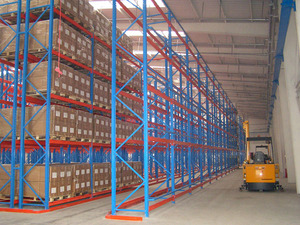
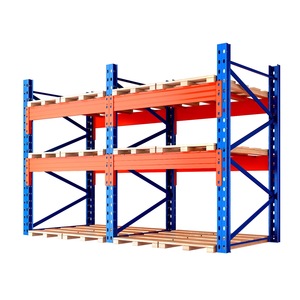
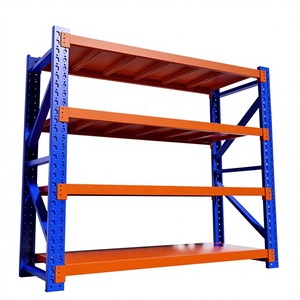
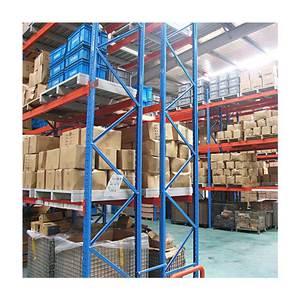
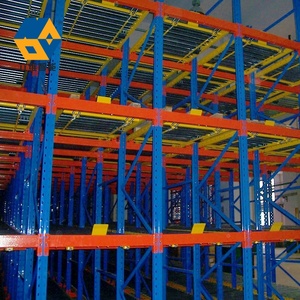
Engineered Heavy-Duty Industrial Pallet Racking Systems
Fabricated with Q235B/Q355B cold-rolled structural steel, optimized for global warehouse compliance including AS 4084, FEM 10.2.02, and ANSI MH16.1 specifications.
2001
Established Experience
30,000 m²
Manufacturing Footprint
30,000 t
Monthly Steel Processing
10,000+
Global Installations
Factory Capabilities
Precision OEM/ODM Racking Manufacturing Direct from Source
Eliminating trade intermediaries: Guangzhou Heda Shelves provides fully integrated design, structural load simulation, automated roll-forming, and strict metallurgical testing.
Certified Structural Engineering
Every custom system is validated with 3D CAD modeling, finite element analysis (FEA), and strict compliance with AS 4084 (Steel Storage Racking), CE (2435-CPR-8605159), and ISO 9001:2015 specifications.
Custom Section Modulus Roll-Forming
Over 10 automated cold roll-forming lines allow bespoke upright omega-profiles, step beams, box beams, and customized perforations accommodating teardrop, diamond, or hex hole patterns for cross-compatibility.
Heavy Industrial Surface Treatment
Automated 9-stage degreasing, ultrasonic phosphating, and electrostatic epoxy-polyester powder coating ensure coating adhesion up to ASTM cross-hatch standards and exceptional resistance against oxidation and humidity.
Direct Procurement Guarantee: Our in-house manufacturing process controls steel coil verification, cold roll-forming, robotic welding, and automated powder baking. This provides brand-name distributors and major project contractors with a 15–28% total landed cost efficiency compared to localized sourcing.
Integrated In-House Manufacturing & Verification Pipeline
1
Raw Coil Assay
Tensile & yield strength checks per batch
2
CNC Slitting
Toleranced coil splitting to precision widths
3
Continuous Punch
High-speed hydraulic pitching alignment
4
Profile Forming
Multi-roller cold rolling profile extrusion
5
Robotic Weld
Seamless 5-point claw plate welding
6
Chemical Bath
Acid pickling, degreasing, and silane seal
7
Powder Coating
Uniform 70–90µm electrostatic deposition
8
Curing Oven
200°C polymer fusion & adhesion testing
9
Load Inspection
Sample deflection tests under 1.5x load
10
Export Stillage
ISPM-15 wooden/steel cradle bundling
Procurement Intelligence
Future Procurement Trends & Industry Evolution for 2026–2030
Data-backed analysis for procurement directors, logistics engineers, and supply chain analysts modernizing fulfillment hubs.
1. Transition to AS/RS & Hybrid High-Bay Structures
Traditional selective racks are increasingly upgraded into automated storage and retrieval systems (AS/RS) and pallet shuttle rails. Factory procurement demands tighter deflection limits (1/200th to 1/300th of span) and standardized beam clearances to support autonomous mobile robots (AMRs) and automated stacker cranes without structural deflection.
2. High-Strength Thin-Walled Cold-Formed Steel
Driven by rising ocean freight and raw material costs, factories are adopting higher yield steels (e.g., Q355B instead of standard Q235B). Advanced roll designs achieve higher moment capacity with reduced profile weight, cutting project steel tonnage by 12–18% while sustaining identical uniform distributed loads (UDL).
3. Seismic Resilience & Stringent Building Certifications
Global warehouse real estate demands compliance with strict building parameters, such as NZS 1170.5 in New Zealand and seismic zone standards across North America and Southern Europe. Procurement focuses on enlarged base plates, heavy ductile anchoring, and engineering calculation dossiers verifiable by licensed local structural engineers.
4. Galvanized & Harsh Environment Specialization
The rapid expansion of cold-chain logistics, sub-zero pharmaceutical storage (-25°C to -40°C), and open-air coastal freight centers has increased demand for hot-dip galvanized (HDG) pallet racks and pre-galvanized components to avoid the thermal shock cracking common to inferior painted steel.
5. Complete Life Cycle Biosecurity & Green Footprint
Cross-border customs enforcement—such as Australia DAFF and New Zealand MPI inspection—requires sustainable, insect-free packaging. Leading factories now supply non-wood recyclable steel stillages, eliminating costly port fumigation fees and reducing the environmental footprint of heavy cargo transit.
6. Digital Twin Layouts & Rapid 3D CAD Validation
Static catalog quoting is giving way to automated 3D BIM/CAD parametric layout simulation. Engineering teams optimize vertical clearance, rack flue space, and forklift turnaround radii within 24–48 hours, eliminating on-site installation rework.
Technical Clarifications
Warehouse Pallet Racking Procurement FAQ
Clear answers to frequent technical, compliance, and logistical inquiries from global project engineers and purchasing teams.
How can overseas buyers verify factory compliance with AS 4084 and ISO standards?
Compliance verification begins with factory-supplied structural calculation packs. Guangzhou Heda Shelves provides mill test certificates for steel grade authentication (tensile and yield tests per ASTM/EN standards), structural section properties (cross-sectional area, moments of inertia), and full finite element analysis (FEA). Additionally, our CE certification (No. 2435-CPR-8605159) and ISO 9001:2015 accreditation (No. 18624Q00169R0M) are audited by third-party authorities, enabling your licensed local engineer to independently verify structural integrity before installation sign-off.
What critical data is required to design a compliant OEM warehouse racking layout?
To generate a reliable 3D CAD layout, our engineers require six core data points: (1) Architectural floor plan indicating column spacing, overhead clearances, dock doors, and building services; (2) Exact pallet parameters including length, width, height, and pallet overhang; (3) Maximum weight per pallet (UDL); (4) Operating forklift specifications, specifically mast collapsed height, maximum lift height, and minimum aisle turning radius (AST); (5) Environmental factors including regional seismic coefficients, temperature ranges (cold store vs. ambient), and humidity; (6) Inventory throughput model (FIFO vs. LIFO).
How do OEM factories handle export packaging and biosecurity regulations?
Cross-border consignments must clear international biosecurity requirements, such as Australia's Department of Agriculture, Fisheries and Forestry (DAFF) and New Zealand's Ministry for Primary Industries (MPI). We bundle racking uprights and beams onto custom steel stillages or heat-treated ISPM-15 compliant timber cradles clearly displaying certification markings. Steel surfaces are packed with anti-chafing separators and stretch-wrap protection, preventing both structural finish damage and pest risk, and eliminating costly port treatment delays.
What is the difference between box beams, step beams, and open-profile beams?
Beam choice depends on the pallet type, loading method, and market profile: Box beams are fabricated from two interlocking C-sections continuous-welded together, delivering superior torsional resistance for heavy, uniform pallet loads. Step beams feature a distinct interior stepped ledge, designed specifically to accept drop-in wire mesh decking, timber shelves, or pallet supports flush with the top beam surface. Open-profile roll-formed beams offer economical, light-to-medium solutions for carton picking and smaller distribution hubs.
How are maritime shipping costs and container loading rates optimized for racking?
Because steel racking is heavy and volumetric, inefficient loading results in excess container usage. Our engineering software calculates mixed loading arrangements for standard 40-foot high-cube (40HQ) containers. Heavy frame components and nested beam profiles are bundled to reach weight limits (typically 26–28 tons per container, depending on destination port regulations) while maximizing container volume, lowering landed freight cost per pallet position.