Featured Industrial Racking & High-Density Storage Assemblies
Direct factory-engineered storage products manufactured with premium Q235B and Q355B high-tensile structural steel. Fully customisable for turret truck access, automated crane integration, and heavy industrial load matrices.
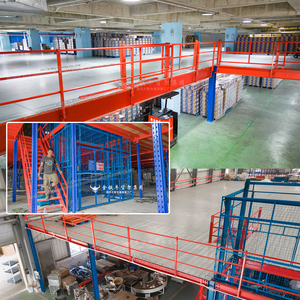
Custom I Beam Steel Structural Platform Mezzanine Floor Racking Loft for Warehouse Storage and Picking Area
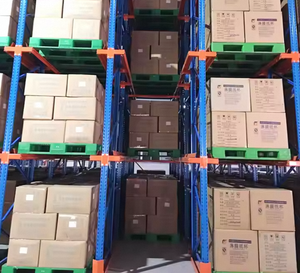
Heavy-Duty VNA Pallet Racking System Metal Drive-In Warehouse Rack Adjustable Features Chinese Supplier Factory Price Corrosion
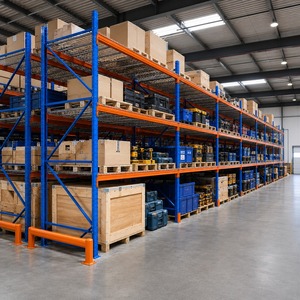
Factory Pallet Racks Industriales Steel Storage Rack Porta Paletes Q235B Steel Schwerlastregal For Logistics Hubs
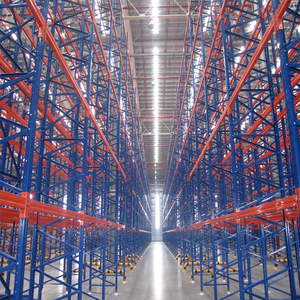
Large Warehouse Rack System with Factory Direct Safety Guard
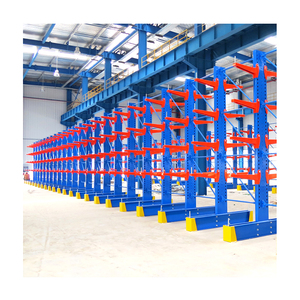
Jracking Heavy Duty High Quality Wire Storage Shelves Warehouse Cantilever Rack for Supermarkets
Wholesale Bodybuilding Commercial Gym Equipment Multi Function Safety Adjustable Chest Push Rack for Arm Back Muscle Exercise
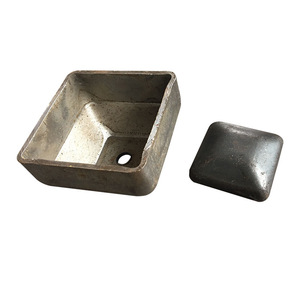
Anti-rust Carbon Steel Shelf Sheet Stillage Stacking Pallet Feet
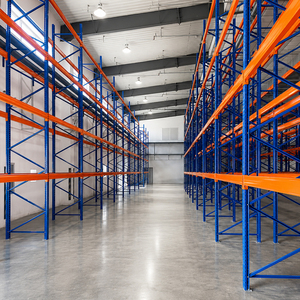
Steel Storage Rack System 1000kg Electrostatic Powder Coating Selective Pallet Racking With Steel Decking For Logistics Center
The Mechanics of High-Bay Very Narrow Aisle Racking
Very Narrow Aisle (VNA) systems represent the definitive engineering answer to skyrocketing industrial real estate costs. By reducing operating forklift aisles from the conventional 3.2–3.8 meters down to a razor-thin 1.5–1.8 meters, volumetric warehouse storage density increases by up to 45% while retaining 100% individual pallet selectivity.
Omega-Profile Upright Geometry
Unlike standard warehouse racking, VNA structural columns undergo a continuous 16-stage roll-forming process to create an Omega (Ω) profile with 12 directional load-bearing folds. This geometry radically elevates the section modulus (Wz) and torsional rigidity (It).
- High-yield structural grade steel (Q355B / S355JR)
- Upright cross-sections ranging from 90mm to 140mm
- Multi-point hook beam connectors with zero-sway tolerances
Turret Truck Guiding Infrastructure
Safe, rapid operation inside an aisle width of 1650mm requires unyielding guidance to prevent high-reach mast strikes. We engineer two discrete guiding systems based on warehouse civil conditions and turret truck kinematics:
- Mechanical Heavy-Duty Angle Rails (100×75×8mm or 125×75×10mm)
- In-ground inductive wire guidance interface channels
- Impact run-in entry horns with ductile cast steel arrestors
Top-Tie & Spine Bracing Architecture
Because VNA racking heights routinely scale between 12m and 18m, structural drift and dynamic horizontal displacement caused by high-level pallet insertion are counterbalanced through engineered horizontal bracing networks.
- Overhead portal tie-beams locking parallel rack aisles
- Vertical K-bracing and cross X-bracing load distribution
- Conforms precisely to FEM 10.2.02 and EN 15512 codes
| Storage Racking System | Operating Aisle Width | Maximum Practical Height | Selectivity Profile | Floor Space Utilization | Forklift Compatibility |
|---|---|---|---|---|---|
| Very Narrow Aisle (VNA) | 1,500 mm – 1,850 mm | Up to 18,000 mm | 100% Individual Pick | 85% – 90% | Man-Up / Man-Down VNA Turret, Articulated, AGV |
| Standard Selective Racking | 3,100 mm – 3,800 mm | Up to 11,000 mm | 100% Individual Pick | 40% – 50% | Counterbalanced, Standard Reach Truck |
| Double Deep Pallet Racking | 2,900 mm – 3,400 mm | Up to 11,500 mm | 50% (LIFO per pair) | 55% – 65% | Pantograph Reach Truck |
| Drive-In / Drive-Through | Non-dedicated aisles | Up to 10,000 mm | Low (Batched LIFO/FIFO) | 70% – 80% | Counterbalanced, Reach Truck |
| Radio Shuttle Racking | Non-dedicated aisles | Up to 16,000 mm | High density lane-based | 80% – 88% | Standard Forklift + Automated Carrier |
The Critical Role of Floor Flatness (EN 15620 & DIN 18202)
When operating a specialized turret truck with a mast extended to 16 meters in a 1600mm aisle, an floor level irregularity of merely 2mm at the wheel base translates to a dynamic mast tilt of over 50mm at the top tier. Unchecked, this results in catastrophic pallet binding, rack-face friction, or collapse.
As an authority OEM manufacturer, Guangzhou Heda Shelves Co., Ltd. supplies section properties, baseplate shim packets (1.0mm to 5.0mm precision laser-cut steel), and high-load anchoring packages designed to interface perfectly with EN 15620 Class DM2 and ACI F-min 75-100 classified superflat industrial floor slabs.
VNA Critical Engineering Clearances Checklist
- Side Clearance (X): Minimum 100mm between pallet profile and upright column.
- Vertical Clearance (Y): 150mm–200mm between top of goods and underside of succeeding beam.
- Longitudinal Flue Space: 100mm continuous separation for NFPA 13 sprinkler water cascade.
- Turret Guidance Tolerance: ±2mm track running deviation along 100m aisle spans.
Future Procurement Trends in Very Narrow Aisle Systems
Global supply chain disruptions, micro-fulfillment demands, and massive logistics wage inflation are shifting procurement priorities. Learn how modern distribution hubs are adapting their VNA storage strategies for the next decade.
Transition to Driverless AGV-VNA Turret Fleets
Procurement contracts are rapidly mandating racking tolerances capable of accommodating autonomous, unmanned turret trucks. OEM racking must integrate continuous optical barcode strips along bottom beam levels, laser positioning reflectors on frame posts, and absolute perpendicular alignment (tolerance under 1/1000 deflection) to support automated pallet retrieval without human intervention.
Micro-Alloy High-Tensile Steels & Thin-Wall Efficiency
As steel prices and international sea freight dictate capital budgeting, procurement directors are turning to high-tensile cold-rolled micro-alloyed steel grades (such as Q355B, S355MC, and Domex). These advanced metallurgical formulations allow for a 12% to 15% reduction in dead-weight steel consumption without sacrificing maximum bending moment capacities or frame buckling resistance.
Embedded Racking Health & Deflection Telemetry
The integration of IoT structural health monitoring inside high-bay narrow aisle racks is shifting maintenance from reactive to predictive. Fiber-optic strain sensors and low-power triaxial accelerometers installed inside hollow upright posts will immediately alert logistics operators to micro-deflections, fork-impact overloads, or foundation subsidence before catastrophic failures occur.
Enterprise Advantages of Our OEM/ODM Export Factory
With over two decades of engineering excellence, Guangzhou Heda Shelves Co., Ltd. serves as the premier custom OEM manufacturer for international logistics integrators, delivering end-to-end reliability from design verification to port delivery.
Global Compliance: AS 4084, FEM & CE
Every VNA structural element is calculated and verified in strict accordance with Australian standard AS 4084:2023, European EN 15512 / FEM 10.2.02, and US RMI MH16.1. Official certified calculation packs and section properties are provided for fast local engineer sign-off.
Independently Audited Certifications
Operate with complete regulatory confidence. We provide verified documentation including CE Factory Production Control Certificate No. 2435-CPR-8605159, ISO 9001:2015 Management System No. 18624Q00169R0M, and comprehensive material mill test sheets for every steel batch.
Seismic Zone Structural Engineering
Operating in seismically active regions such as New Zealand, Japan, or the Western Americas? Our design team incorporates regional seismic coefficient parameters (in compliance with NZS 1170.5 and IBC 2024) through enlarged ductile footplates, high-grade anchor bolts, and specialized spine-link bracings.
Continuous 10-Stage Precision Production
Our 30,000m² factory executes full-lifecycle in-house manufacturing: continuous coil slitting, multi-point CNC punching, precision cold-roll profile bending, robotic beam connector welding, automated 8-stage chemical degreasing/phosphating, and high-adhesion electrostatic powder coating.
Biosecurity-Compliant Export Packaging
International cross-border customs delays are eliminated. All racking components are lashed in custom heavy-gauge steel stillages or ISPM-15 certified heat-treated timber bunks, fully compliant with Australian DAFF, New Zealand MPI, and USDA strict quarantine import standards.
Free 3D Layout & Dynamic Slotting Analysis
Send our senior engineering group your architectural DWG warehouse floor plan. Within 24 business hours, our team returns a full 3D CAD visualization, precise pallet position calculation, forklift turning-radius study, and structural load table completely free of charge.
Frequently Asked Questions by Industrial Racking Buyers
Essential technical, structural, and logistics insights addressing the most critical concerns of warehouse directors, supply chain VPs, and logistics facility managers.
What is the exact minimum aisle width required for a VNA racking installation?
The operational aisle width for a Very Narrow Aisle (VNA) system is governed strictly by the specific model of turret truck (Man-Up or Man-Down) or articulated forklift selected for the facility. Typically, the calculation follows the equation: Aisle Width = Overall Truck Width / Maximum Load Width + 200mm side safety clearance.
For standard Euro-pallets (800×1200mm) handled by guide-rail turret trucks, aisle clearances typically measure between 1,500mm and 1,650mm. For Australian standard pallets (1165×1165mm) or US Industrial pallets (40×48 inches / 1016×1219mm), aisle dimensions generally range between 1,650mm and 1,850mm. Our engineering division coordinates directly with turret truck manufacturers (such as Crown, Jungheinrich, Linde, and Toyota) to ensure 100% mechanical compatibility.
How do we choose between mechanical guide rails and inductive wire guidance?
Both methods offer distinct logistical advantages based on facility ownership and operational workflows:
Mechanical Floor Guide Rails: Constructed using heavy rolled steel angle profiles (typically 100×75×8mm or 125×75×10mm) anchored directly to the concrete slab with chemical studs every 500mm. Mechanical rails provide an impenetrable physical barrier that protects the lowest tier pallets from forklift steering deviations. They allow high drive-in travel speeds without electronic sensor reliance. However, they make low-level floor order picking slightly more cumbersome.
Inductive In-Floor Wire Guidance: Involves cutting a shallow 15mm-20mm channel down the center of each aisle, laying an electrified guidance wire, and sealing it with epoxy resin. Turret trucks detect the electro-magnetic field to steer autonomously. This preserves a completely clean, unobstructed concrete floor slab for rapid manual picking and simplifies cross-aisle foot traffic. However, civil floor cutting costs are higher and vehicle sensors require periodic calibration.
Can your VNA pallet racking comply with Australian Standard AS 4084:2023?
Yes. Guangzhou Heda Shelves Co., Ltd. has an extensive project portfolio throughout Australia (Sydney, Melbourne, Brisbane, Perth, and Adelaide). Our engineering division designs racking layouts strictly referencing AS 4084:2023 (Steel Storage Racking) criteria.
We supply full engineering data packs including section properties, beam load deflections (strictly limited to L/200 under full operational working load), upright frame compression limits, baseplate shear ratings, and factory load safety signs formatted precisely to Australian state SafeWork workplace requirements. This enables your local Australian structural certifier to sign off without engineering revisions.
What seismic parameters are incorporated for earthquake zones like New Zealand or Chile?
For high-bay installations located in seismic zones, dynamic lateral loads represent the primary failure risk. Designing for standard static gravitational forces alone is insufficient. When engineering for New Zealand (referencing NZS 1170.5) or Pacific-rim seismic zones, we calculate the building hazard factor (Z), soil class, and structural ductility factors.
To resist dynamic overturning moments, we engineer oversized baseplates with dual or quadruple high-embedment chemical epoxy anchors, increase the gauge thickness of bottom-tier upright profiles (up to 2.5mm or 3.0mm structural steel), incorporate heavy-duty spine row spacers, and install overhead portal tie-braces across opposing aisles. This creates an interconnected structural diaphragm capable of dissipating seismic energy without brittle frame rupture.
How does high-bay VNA racking interface with warehouse fire sprinkler codes (NFPA 13)?
When rack storage heights exceed 7.6 meters (25 feet), international building and fire protection codes (including NFPA 13 and local building codes) strictly mandate in-rack sprinkler systems or Early Suppression Fast Response (ESFR) ceiling arrays with continuous vertical and transverse flue spaces.
Our VNA systems maintain a minimum 100mm transverse flue space between adjacent pallet positions and a continuous 150mm longitudinal flue space between back-to-back rack runs. Furthermore, our load beams can be pre-punched with internal sprinkler conduit pass-throughs or fitted with galvanized wire mesh decking that exhibits an open aperture area greater than 70%, guaranteeing unrestricted water penetration through all levels during an emergency.
What is the production lead time and global sea freight container packaging process?
Standard OEM manufacturing lead time ranges from 20 to 30 days from engineering approval and CAD sign-off, supported by our robust 30,000-ton monthly capacity. For large-scale distribution centers requiring 50+ sea containers, rolling batch delivery schedules can be arranged to align directly with site slab pouring and erection milestones.
Shipping logistics are meticulously engineered. Upright frames are delivered pre-assembled or nested in compact flat-packs to optimize 40HQ container volumetric capacity. Load beams are bundled with protective corrugated paper cushioning and wrapped in heavy polyfilm to prevent transit vibration scuffing. All packing materials comply with biosecurity laws (ISPM-15 heat-treated dunnage or 100% recyclable steel cradles).
Plan Your Very Narrow Aisle Installation With Certified Engineers
Whether you are developing a brand new automated distribution center or converting an existing standard warehouse to high-density VNA capacity, our engineering team supplies complete 3D CAD layouts, structural calculations, and direct OEM factory pricing.
Contact Us